Your search Latium gave 470 results.

Latium formed the political and religious centre of the Roman world where some of the most important Mithraic communities developed.

Group of inscriptions from Umbria including one entry reassigned to Interamna Lirenas in Latium.
Large base found behind the Palazzo Senense inscribed with a brief dedication to Sol Mithras, CIL VI 713.
Gold lamina from Ciciliano showing a nude, serpent-entwined Aion-Kronos holding a key and surrounded by Greek voces magicae (2nd c. CE).

This marble altar was found ’in the street called di Branco’, behind the palace of the Cardinal of Bologna, in Rome.
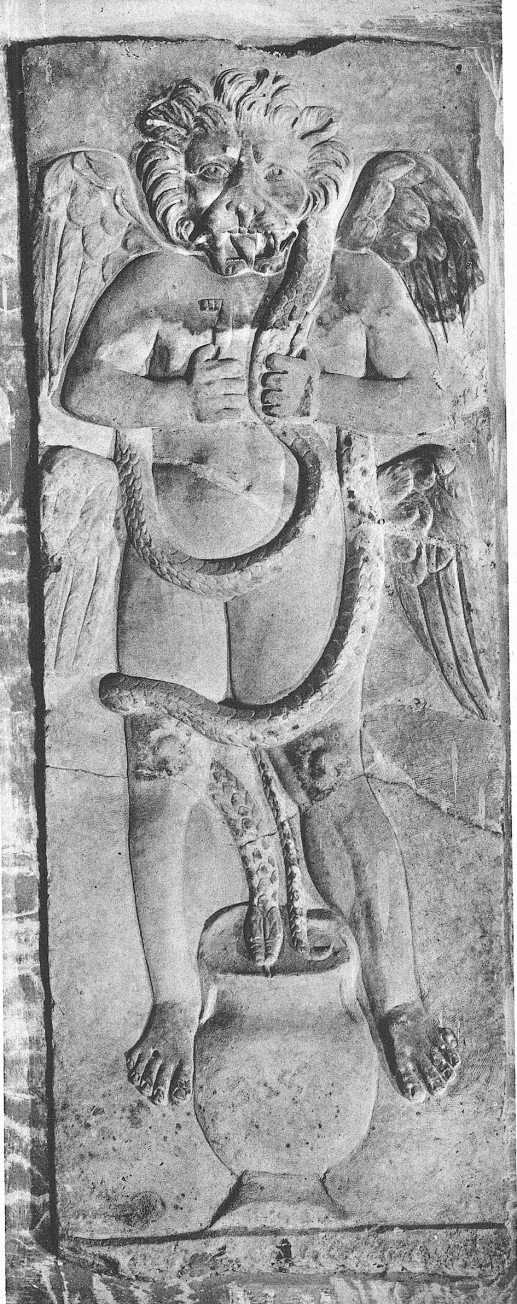
This white marble relief depicting a lion-headed figure from Ostia is now exposed at the Musei Vaticani.

Benefactor of the Imperial Palace Mithraeum and possible member of Ostia’s African community.
Corniculum was an ancient Latin settlement associated with the early historical landscape of Latium.
Labici or Labicum or Lavicum was an ancient city of Latium, in what is now central Italy, lying in the territory of the modern Monte Compatri, about 20 km SE from Rome, on the northern slopes of the Alban Hills.
Ciciliano is a comune in the Metropolitan City of Rome in the Italian region of Latium, located about 35 kilometres east of Rome.
The Pontiae islands, including modern Ponza, formed part of the Roman maritime landscape of Latium and preserve one of the most remarkable Mithraic sanctuaries of Roman Italy, renowned for its rare stucco zodiac and astral symbolism.
Lanuvium (modern Lanuvio) was an ancient city of Latium Vetus, about 32 km southeast of Rome. A member of the Latin League, it was conquered by Rome in 338 BC and remained an active municipium into the Imperial period.
Antium was an ancient coastal settlement in Latium, founded around the 11th century BC. A major stronghold of the Volsci before its conquest by Rome, its territory largely corresponds to modern Anzio and Nettuno.
Pescorocchiano is a comune in the Province of Rieti in the Italian region of Latium, located about 60 kilometres northeast of Rome and about 30 kilometres southeast of Rieti. Pescorocchiano borders the following municipalities: Borgorose, Carsoli


Tracing the links between the cult of Mithras and the Proud Boys’ quest for identity, power, and belonging. How ancient rituals and brotherhood ideals resurface in radical modern movements.
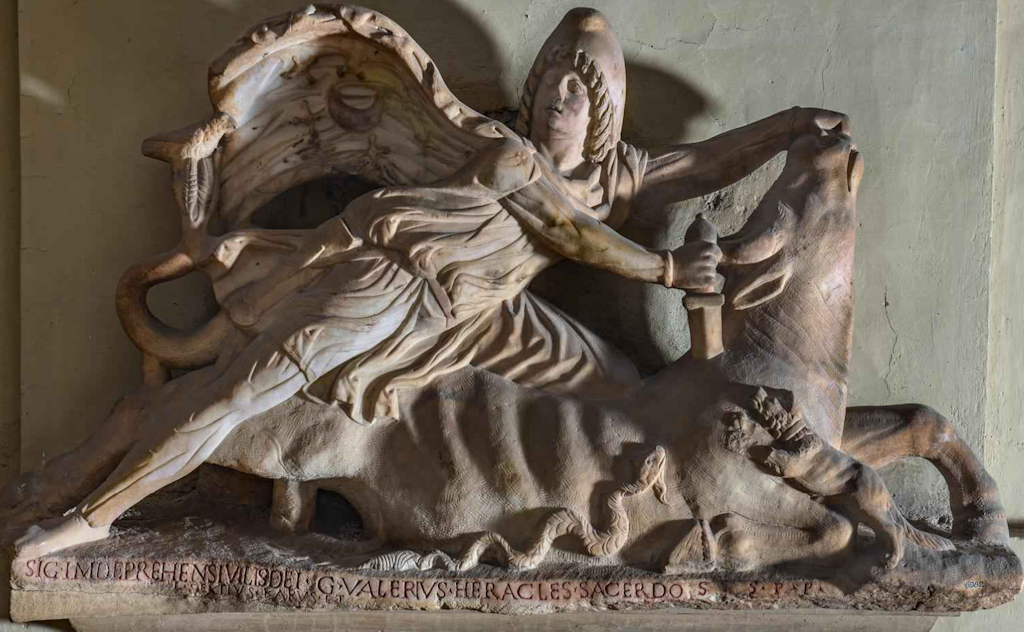
This sculpture of Mithras killing the bull was dedicated to the “incomprehensible god” by a certain priest called Gaius Valerius Heracles.
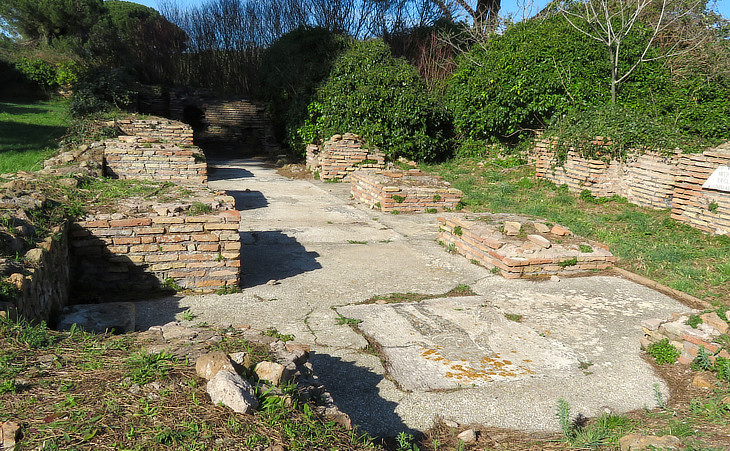
The Mithraeum of the Animals was decorated with a mosaic depicting a naked man, a cock, a raven, an scorpion, a snake and the head of the bull.
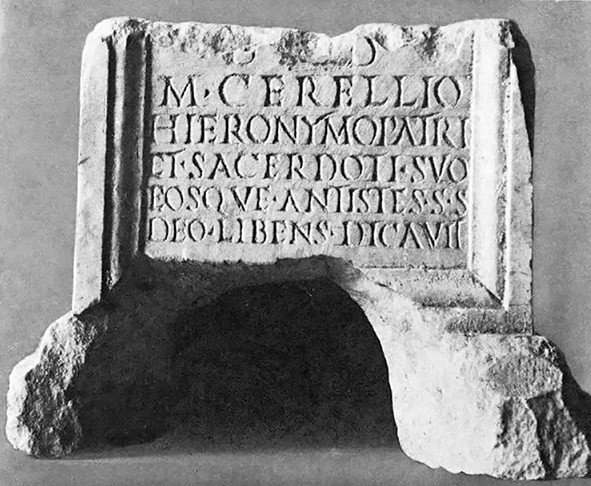
Small marble base recording a donation to M. Cerellio Hieronymo, pater and sacerdos, on behalf of an antistes who dedicated objects to the god, from the Mitreo degli Animali at Ostia.
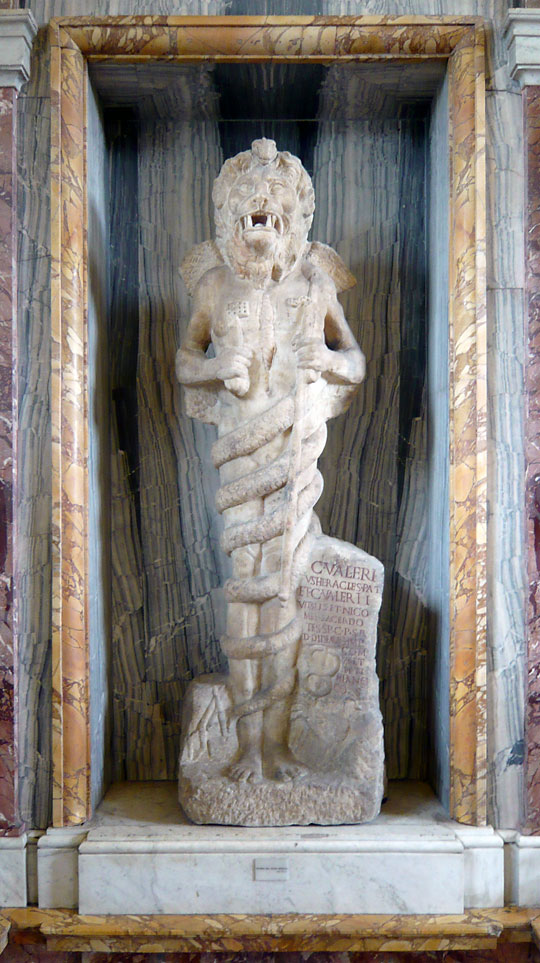
Marble leontocephalic Aion/Arimanus from the now-lost Fagan Mithraeum at Ostia, dedicated in AD 190 by three members of the local Mithraic priesthood.
