Your search Ostia gave 140 results.

Fragments of a green-glazed maiolica krater with silver sheen, probably decorated with a dodekatheon showing Minerva, Jupiter, Dionysus, and Hercules, from the Mitreo delle Sette Porte at Ostia.
Lamp with six wicks, found near the altar before the cult-niche in the Mitreo delle Sette Porte at Ostia.
Marble altar bearing a bust of Sol in radiate crown with Cautopates on the right and Cautes on the left, both cross-legged, from the Mitreo delle Pareti Dipinte at Ostia.
A small two-wick lamp and a larger twelve-wick lamp inscribed Serapiodori inny, from the Mitreo del Palazzo Imperiale at Ostia.
Marble lion's head fastened into a wall, its flat square back indicating it was set into masonry, from the Mitreo del Palazzo Imperiale at Ostia.
A few pieces of tuff worked as rocks, forming a cone representing the remnants of the rock-birth of Mithras, found around the altar in the Mitreo del Palazzo Imperiale at Ostia.
Two marble fragments of a statue of Mithras as bull-killer, preserving the head in Phrygian cap and right hand with dagger, with traces of red paint, from the Mitreo del Palazzo Imperiale at Ostia.
A small hollow edicola of simple square structure near altar K, with an opening for lamp offerings, from the Mitreo del Palazzo Imperiale at Ostia.
Two small tuff altars walled into the corners of the benches, each bearing a representation of a jug, from the Mitreo delle Sette Sfere at Ostia.
A group of small finds from an Ostia Mithraeum, including three tuff altars, two trapezophores, a column fragment, lamps, vases, and a marble Silen.
The inscription is carved into two pieces of marble cornice.
Relief featuring an enigmatic agricultural implement interpreted either as a scythe or an early type of plough.
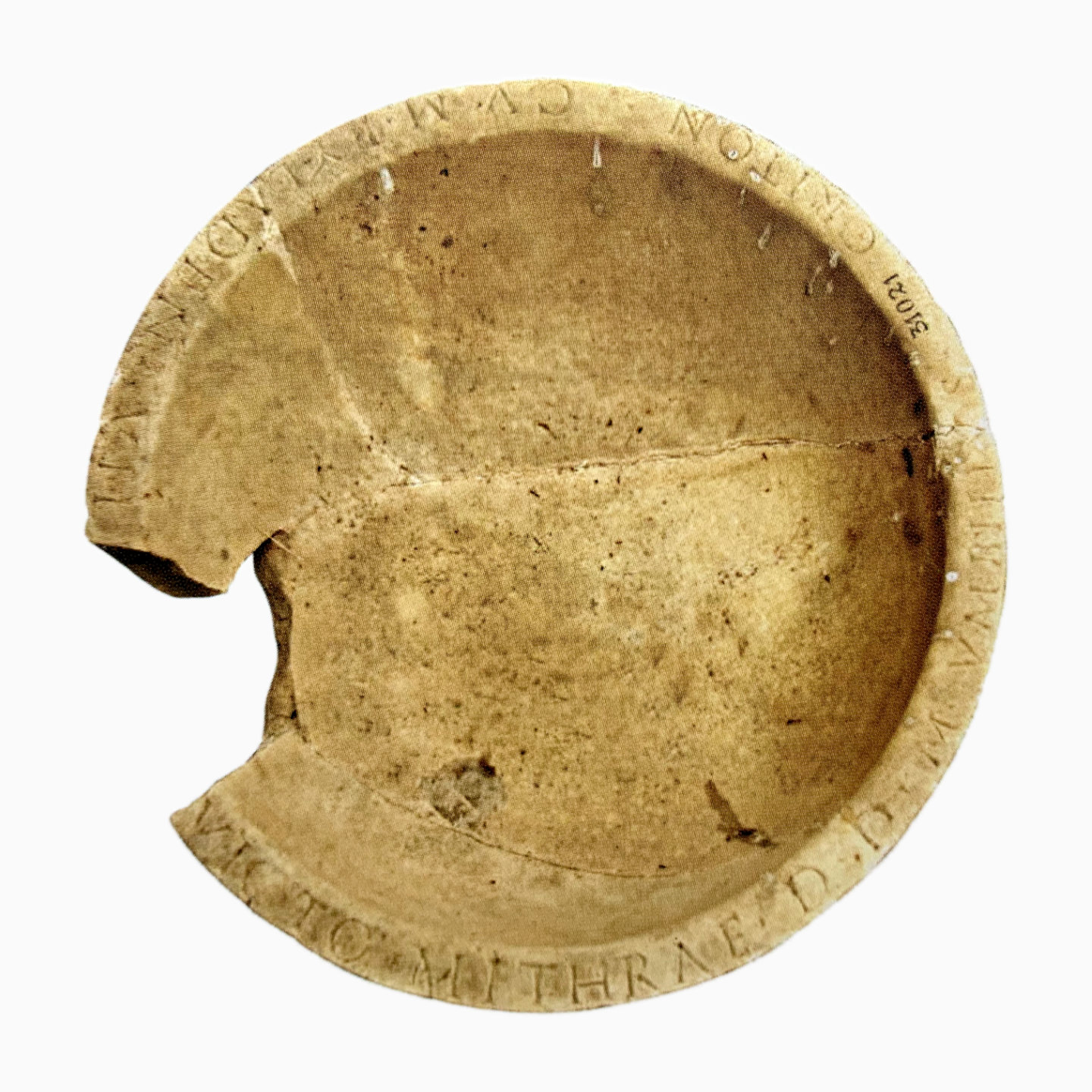
This marble basin found in the Mithraeum of the Footprint bears an inscription of a certain Umbilius Criton, associated with a monumental tauroctonic sculpture also found in Ostia.
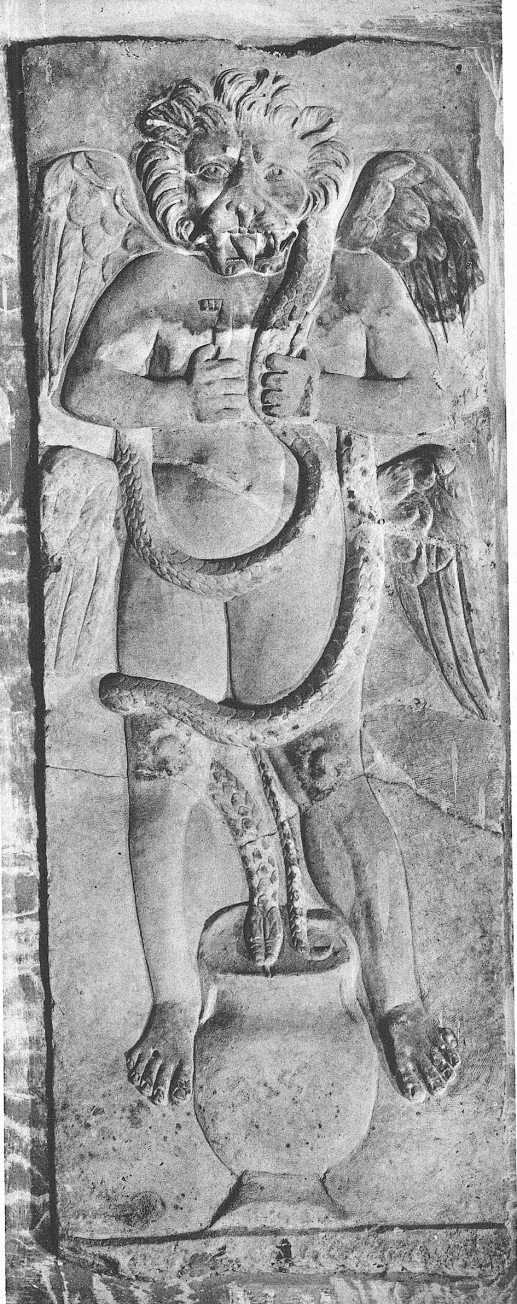
This white marble relief depicting a lion-headed figure from Ostia is now exposed at the Musei Vaticani.
This inscription found in the Mithraeum of the Seven Spheres mentions the Pater Marco Aemiliio Epaphrodito known from other monuments in Ostia.
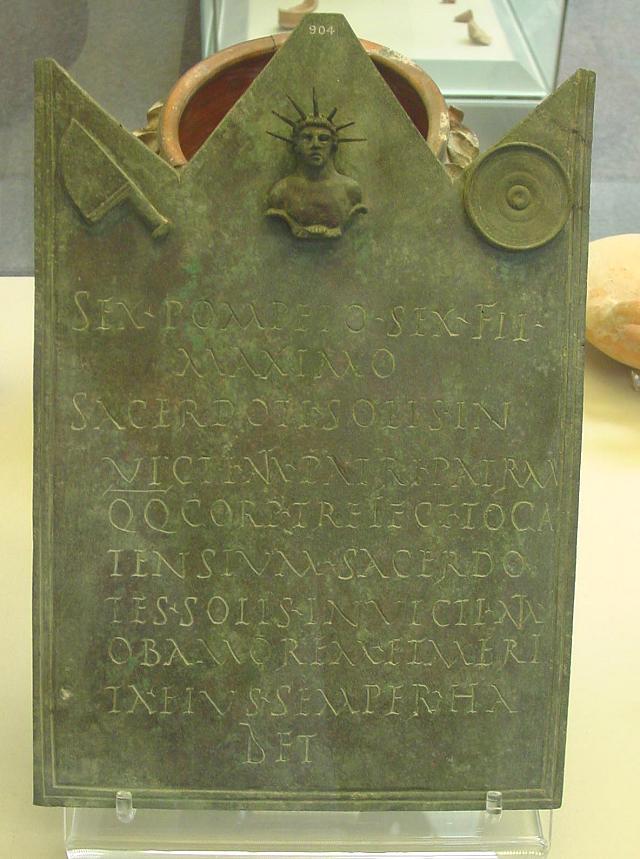
This plaque, now on display in the British Museum, may have come from the Aldobrandini Mithraeum in Ostia.
This marble slab found near the Casa de Diana in Ostia bears two inscription with several names of brothers of a same community
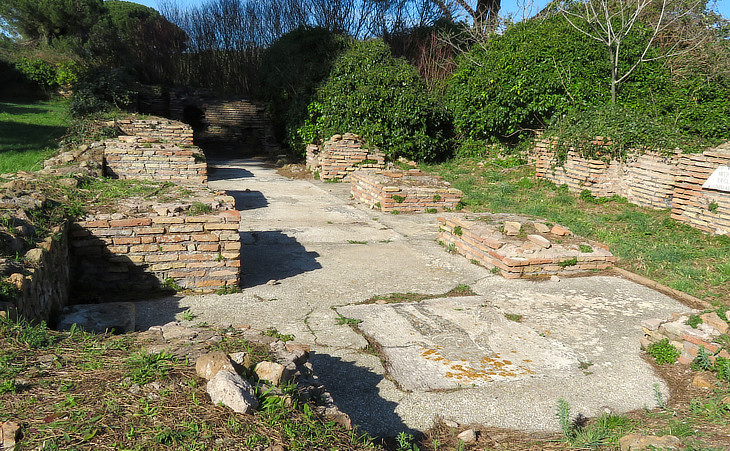
The Mithraeum of the Animals was decorated with a mosaic depicting a naked man, a cock, a raven, an scorpion, a snake and the head of the bull.
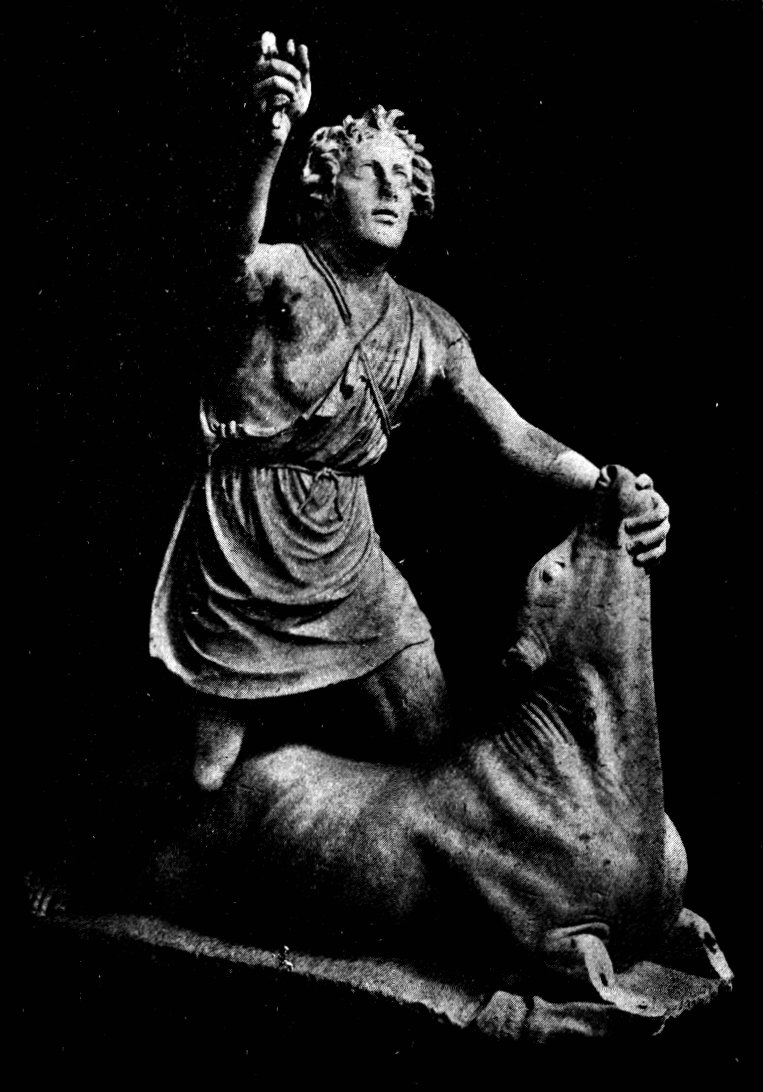
The person who commanded the sculpture may have been M. Umbilius Criton, documented in the Mitreo della Planta Pedis.
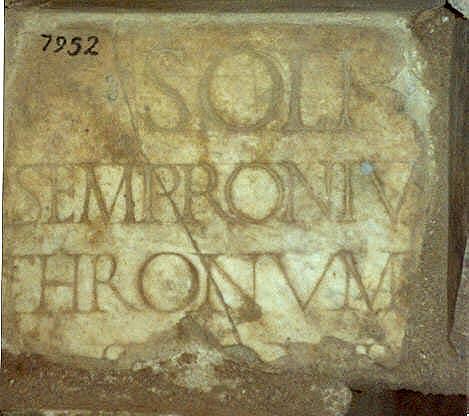
Slab marble indicates that Lucius Sempronius has donated a throne to the Mitreo delle Pareti Dipinte.
