Your search Radcliffe G. Edmonds III gave 138 results.
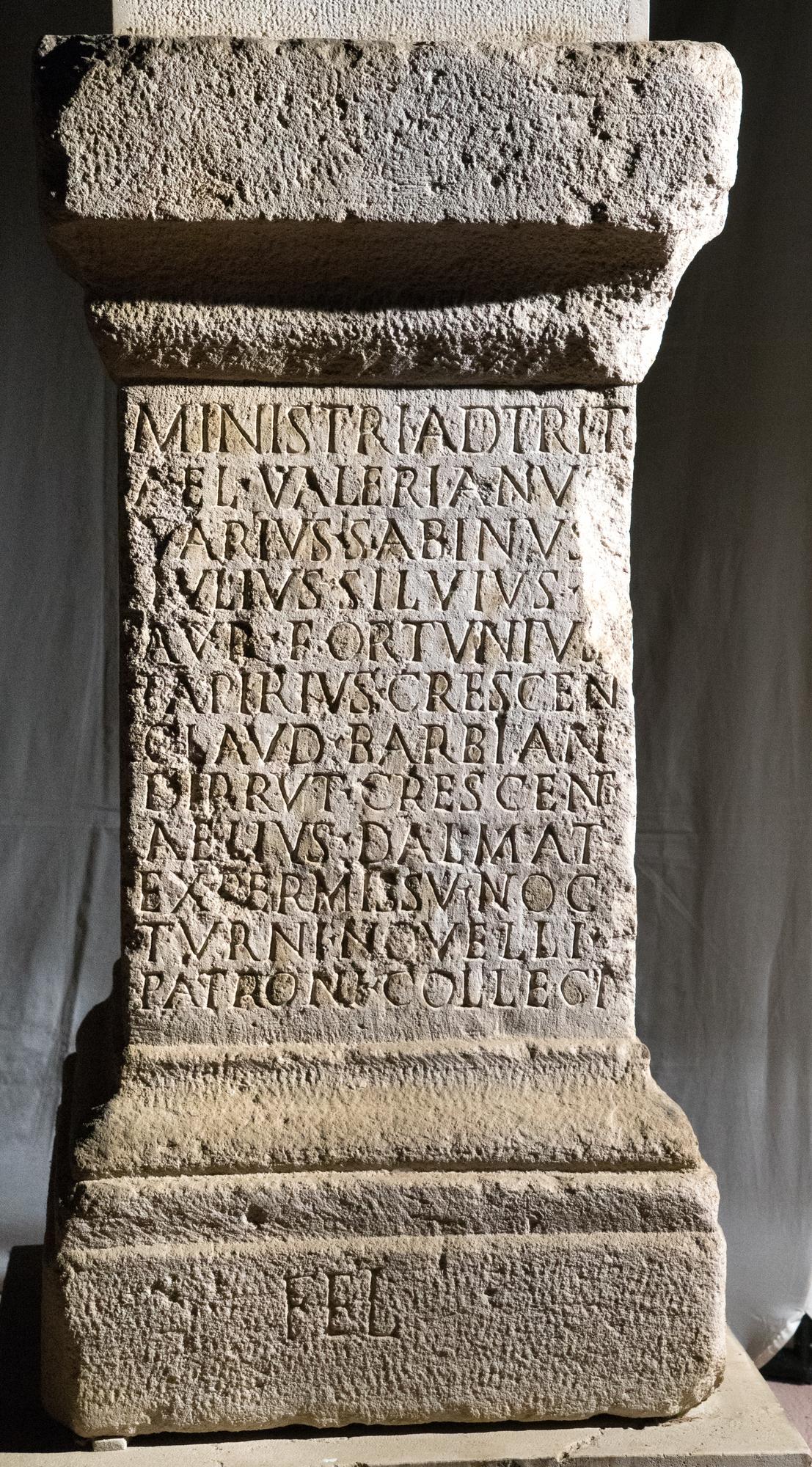
This inscribed limestone altar from Roman Salona preserves several lists of ministers associated with the Tritones collegium during the Tetrarchic period.
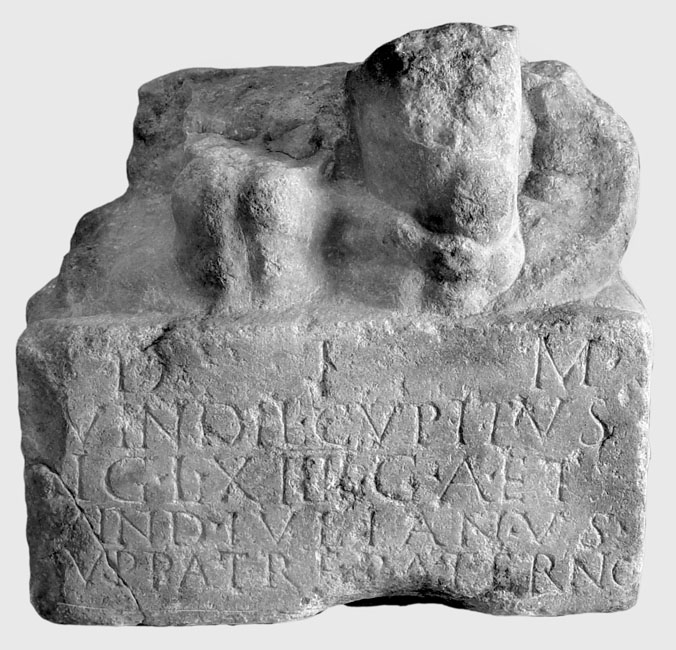
Only parts of the knees of Mithras, emerging from the rock, have been preserved from this monument of Petronell-Carnuntum, Austria.

This altar for the completion of a temple to Sol Invictus by Flavius Lucilianus was found in Fossa, Italy.

This graffito seems to be an account of offerings made by Mithras worshippers in the Cassegiato di Diana.

Found in Illmitz, Austria, in 1959, this altar was dedicated to the unconquered god Mithras by a certain Aelius Valerianus.
This inscription found in the Mithraeum Aldobrandini informs us of certain restorations carried out in the temple during a second phase of development.
In this 4th-century Roman altar, the senator Rufius Caeionius Sabinus defines himself as Pater of the sacred rites of the unconquered Mithras, having undergone the taurobolium.
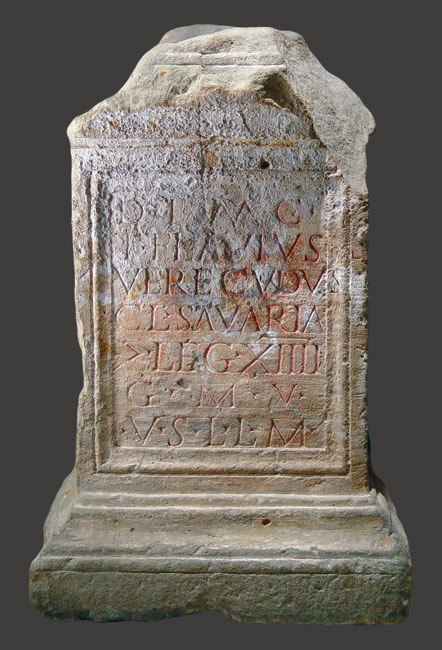
This monument to Mithras and Cautes (or Cautopates) was erected in Carnuntum by the centurion Flavius Verecundus of Savaria.
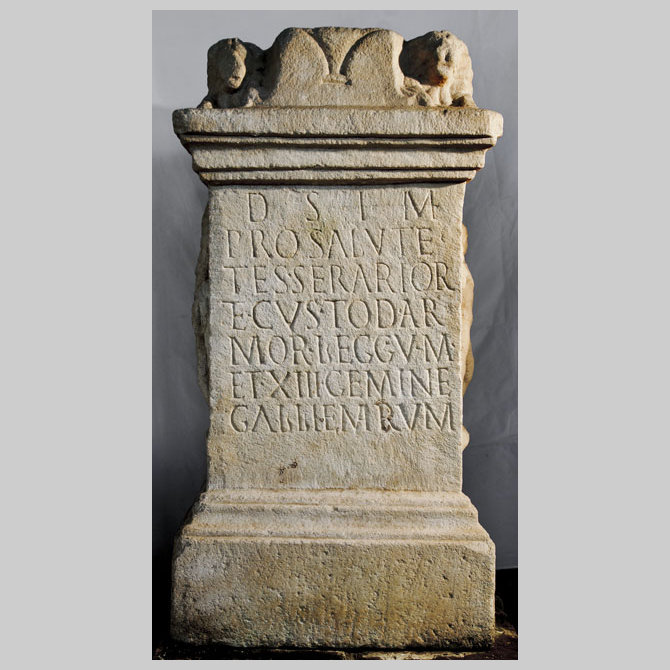
This altar, found in the 3rd mithraeum of Ptuj, bears an inscription and a relief of Sol and a person with a cornucopia.
In the cult niche of the Mitreo del Caseggiato di Diana there is a list of words that could indicate names and measurements.
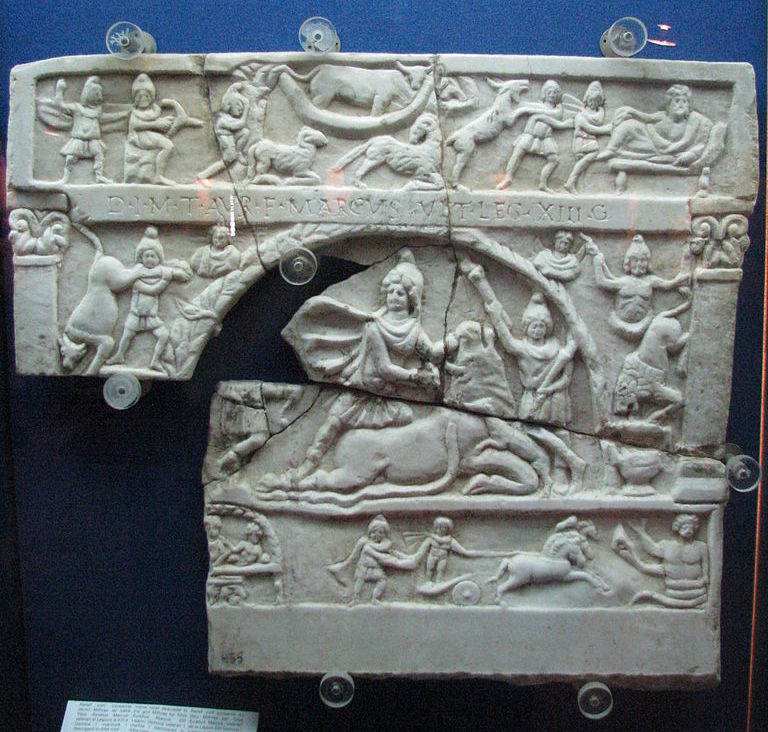
This marble relief from Alba Iulia contains numerous scenes from the myth of Mithras.
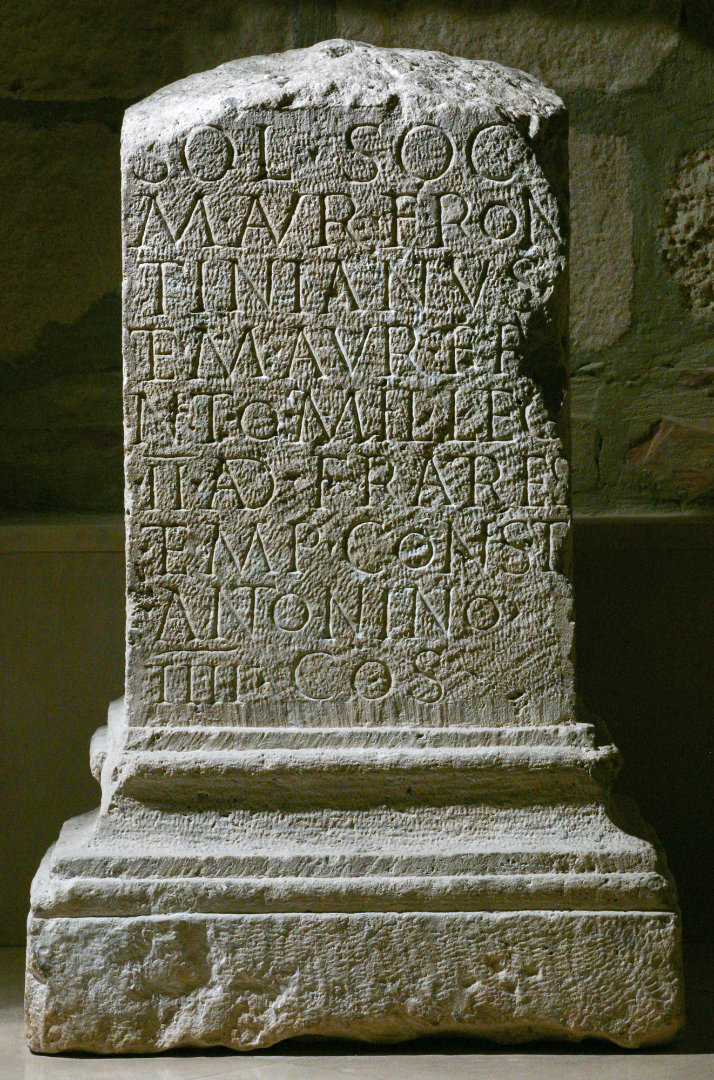
This fragmented altar was erected by two brothers from the Legio II Adiutrix who also built a temple.
The inscription explains the transmission of the fourth Mithraic degree through the Paters of the Mitraeum of San Silvestro.
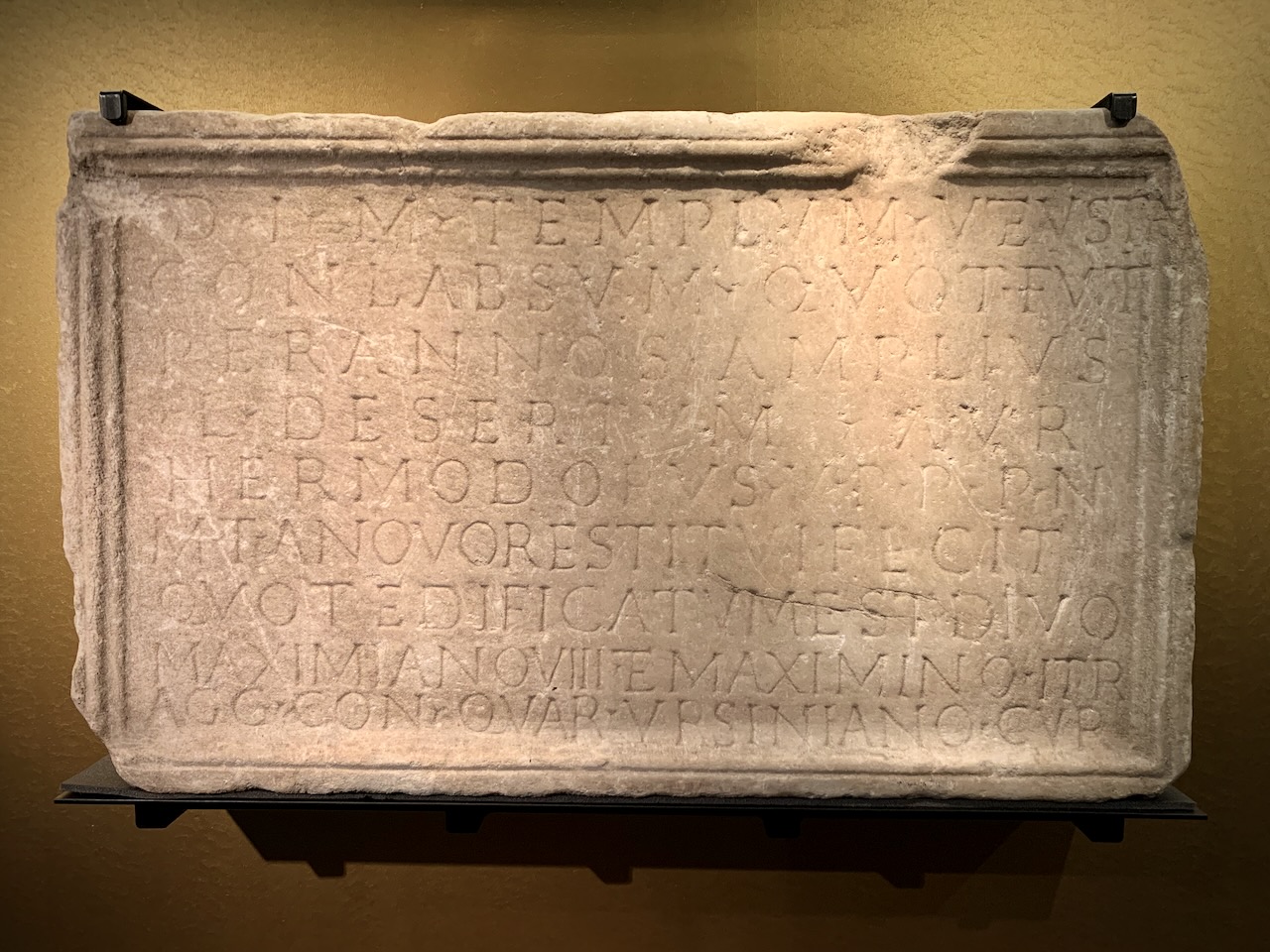
This marble gives some details of the reconstruction of the Virunum Mithraeum.
This monument to the invincible god Mithras was inscribed on the façade of the church of Aiello deil Friuli, Aquileia.
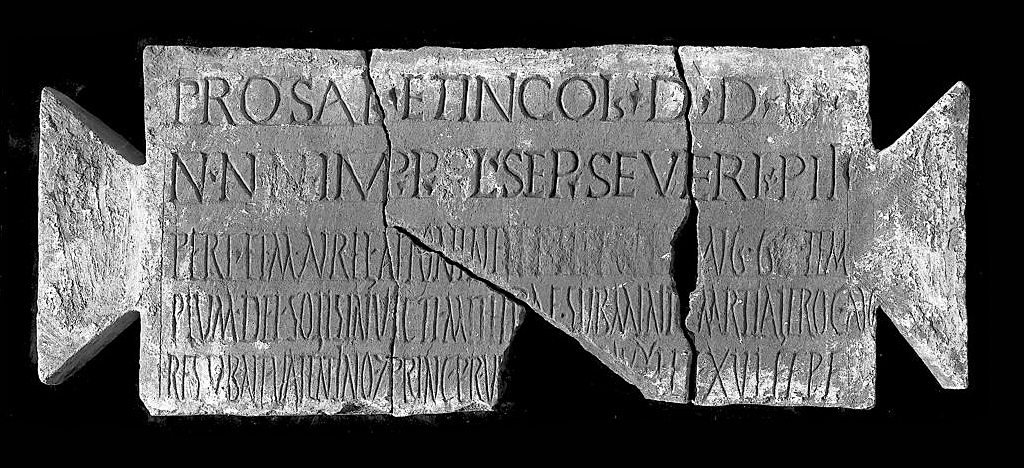
Antonius Valentinus, centurio, made this plaque for the salut des empereurs Septimus Severus and Marcus Aurelius.

This plaque, located on the western staircase of the Palace of Darius, mentions the god Mithra together with Ahura Mazda as protectors of King Artaxerxes III Ochus.
Limestone altar from Oescus, Moesia Inferior, dedicated to Deo invicto by Tettius Plotus, veteran of Legio IIII Flavia Fidelis and pater sacrorum — one of the clearest grade attributions from Moesia Inferior.
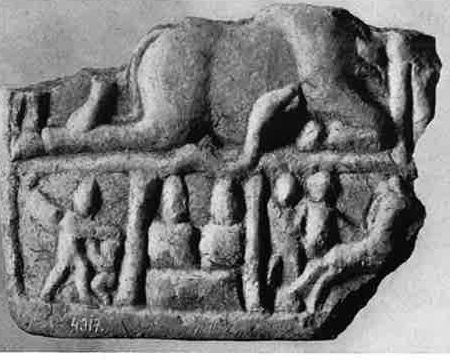
Altar from Eisenstadt, Pannonia Superior, dedicated to Deo invicto Mithrae by Titus Claudius Frontinus, centurion of Legio XIIII Gemina.
Inscription from the Mithraeum at Sopron, ancient Scarabantia, dedicated to Deo Soli invicto Mithrae by Caius Valerius Respectus, IIIIvir Augustalis of the Colonia Scarabantiensis.
