Your search Roma gave 961 results.

Sabratha, in the Zawiya District of Libya, was the westernmost of the ancient "three cities" of Roman Tripolis, alongside Oea and Leptis Magna.

A square base found in 1868 near the Sardagna waterfall at San Niccolò beside the ancient Roman road in Trento (ancient Tridentum), in ground full of debris suggesting a nearby necropolis and possibly a Mithraeum.
Roman military settlement in Germania superior, generally identified with present-day Ober-Florstadt and known for its well-preserved Mithraic sanctuary.
Roman settlement on the southern shore of Lacus Verbanus (Lake Maggiore) in Transpadana, known for Mithraic inscriptions and a cave sanctuary traditionally identified as a Mithraeum.
Wall remnants found deep underground at San Zeno near Trento, possibly indicating a Mithraeum, discovered alongside Roman coins, lost bronze figures and a small gold disc decorated with an ear of corn or a sword.
San Zeno is a locality near Tuenno in the Val di Non, where Mithraic material attributed to Roman Raetia was discovered.
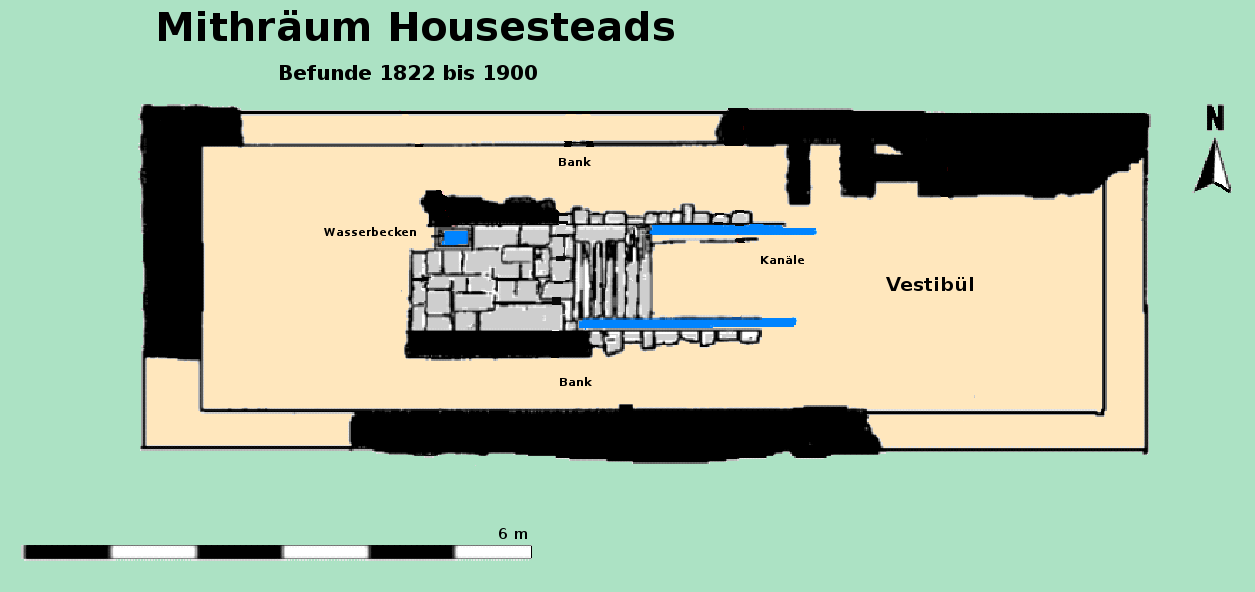
The Housesteads Mithraeum is an underground temple, now burried, discovered in 1822 in a slope of the Chapel Hill, outside of the Roman Fort at the Hadrian's Wall.
Housesteads Roman Fort is the remains of an auxiliary fort on Hadrian's Wall, at Housesteads, Northumberland, England, south of Broomlee Lough.
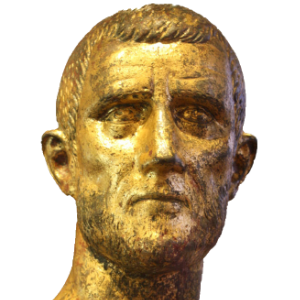
Roman emperor who established the state cult of Sol Invictus and promoted solar worship throughout the Roman Empire.
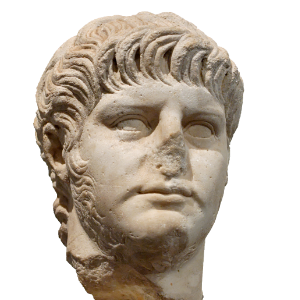
Roman emperor whose ceremonial reception of Tiridates I of Armenia established one of the earliest recorded links between Mithras and the Roman imperial court.
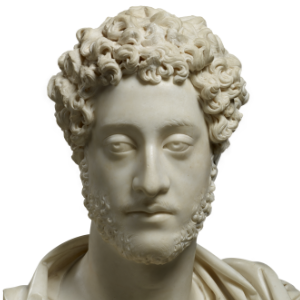
Roman emperor traditionally regarded as the first ruler initiated into the Mysteries of Mithras.
Roman settlement of Dacia superior located in the area of present-day Sibiu in Romania. The site became an important urban and military centre, later developed into the medieval city known as Hermannstadt in German and Nagyszeben in Hungarian.
Fragment of a bull-killing relief showing Mithras, the torchbearer Cautes with upraised torch, and the bust of Luna, found at Labicum in the ruins of a Roman villa.
Small stone block inscribed to Deo Soli, found walled up in an Arabic wall near a Roman spring at Sicca Veneria (modern Kef).
Punic ex-voto to Tanit bearing the formula 'Meqim Elim Mithrahastarni', tentatively interpreted as a Mithras reference but pre-dating the Roman cult.
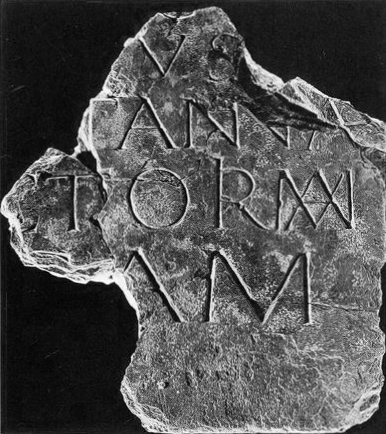
Archaeological material from the Mithraeum of Londinium discussed in Hill’s study of Roman London.
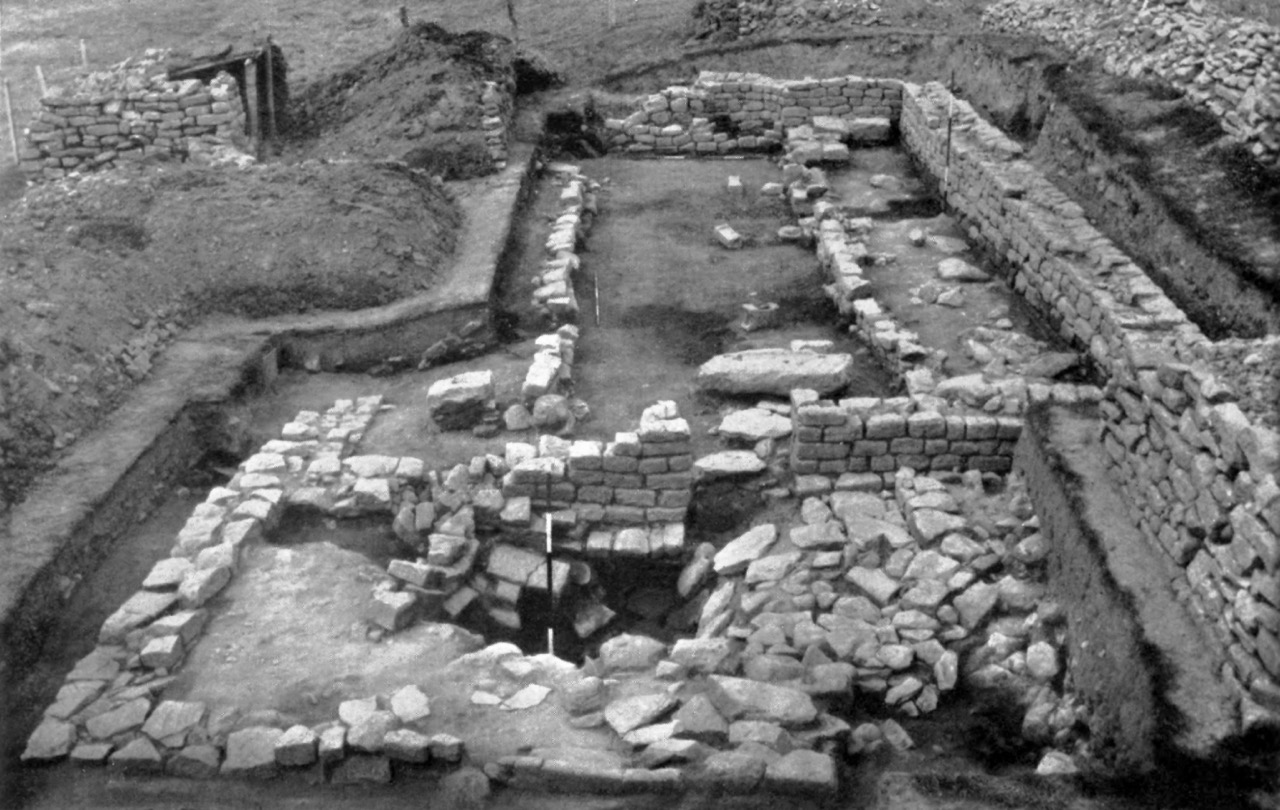
The Mithraeum of Rudchester was discovered in 1844 on the brow of the hill outside the roman station.
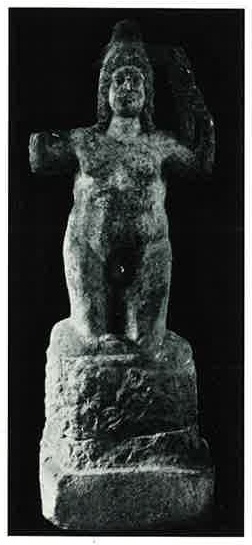
This white marble statue of the rock-birth from Cibinium in Roman Dacia is one of the largest known Mithraic sculptures from the Danubian provinces.
Archaeological context at Acbunar (Mircea Vodă) near Troesmis, Moesia Inferior, where twelve marble pieces, pottery, lamps, and a coin were found 30 metres from a Roman building, suggesting the presence of a Mithraeum.
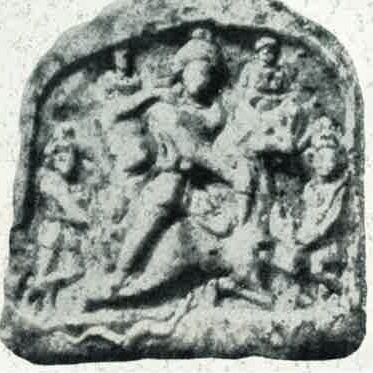
Small marble tauroctony relief from the Roman castellum near Soukhin-Dol, Moesia Inferior, in an arched circular composition depicting the standard bull-slaying scene.
