Your search Roma gave 961 results.
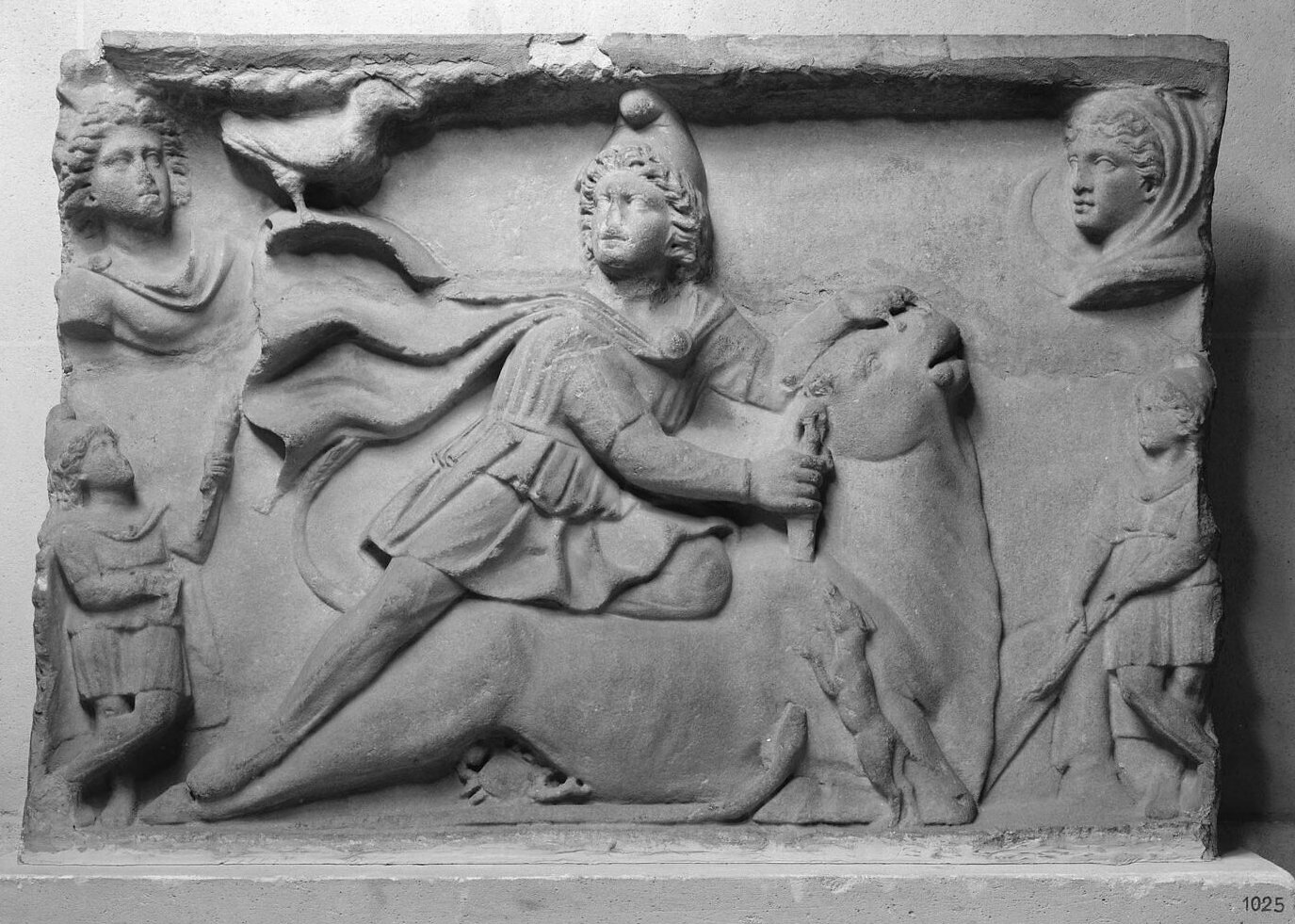
This is one of the three reliefs of Mithras as a bullkiller from the Villa Borghese collection that belong to the Louvre museum, now in the Louvre Abu Dhabi.
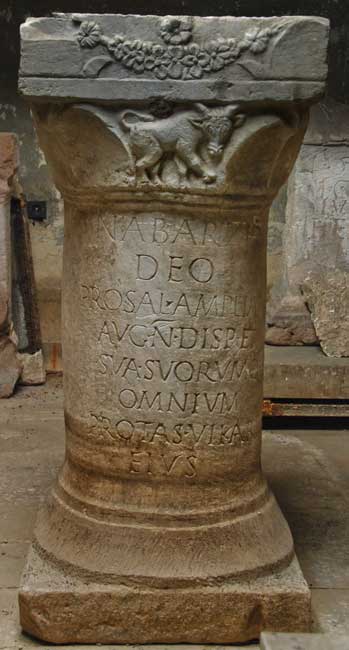
This column found in the Mithraeum of Sarmizegetusa bears an inscription to Nabarze instead of Mithras.
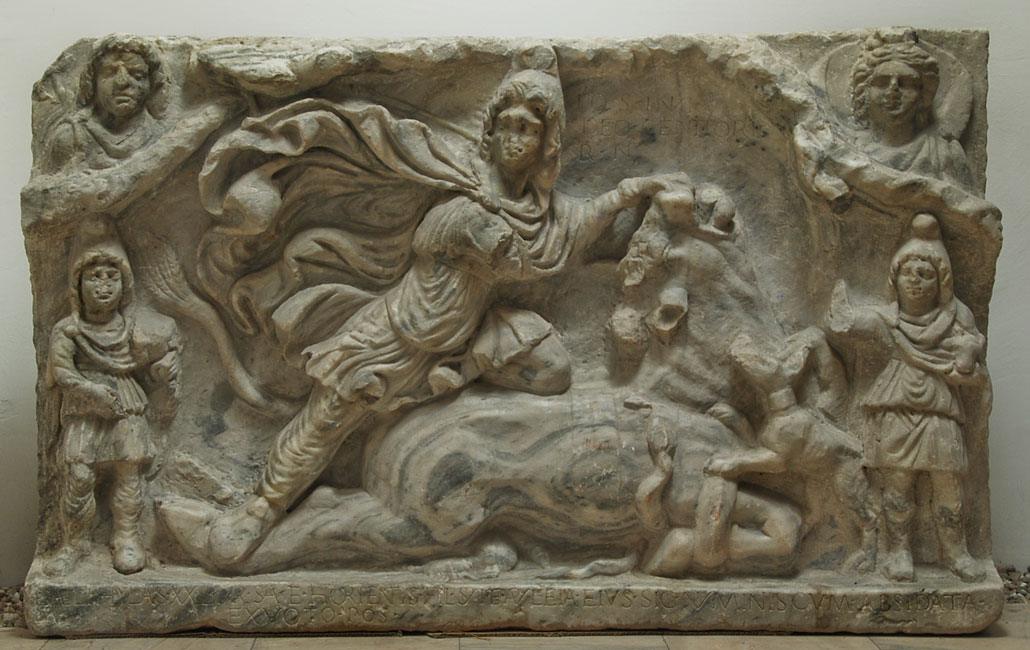
This monument bears an inscription by a certain Lucius Aelius Hylas, in which he associates Sol Invictus with Jupiter.
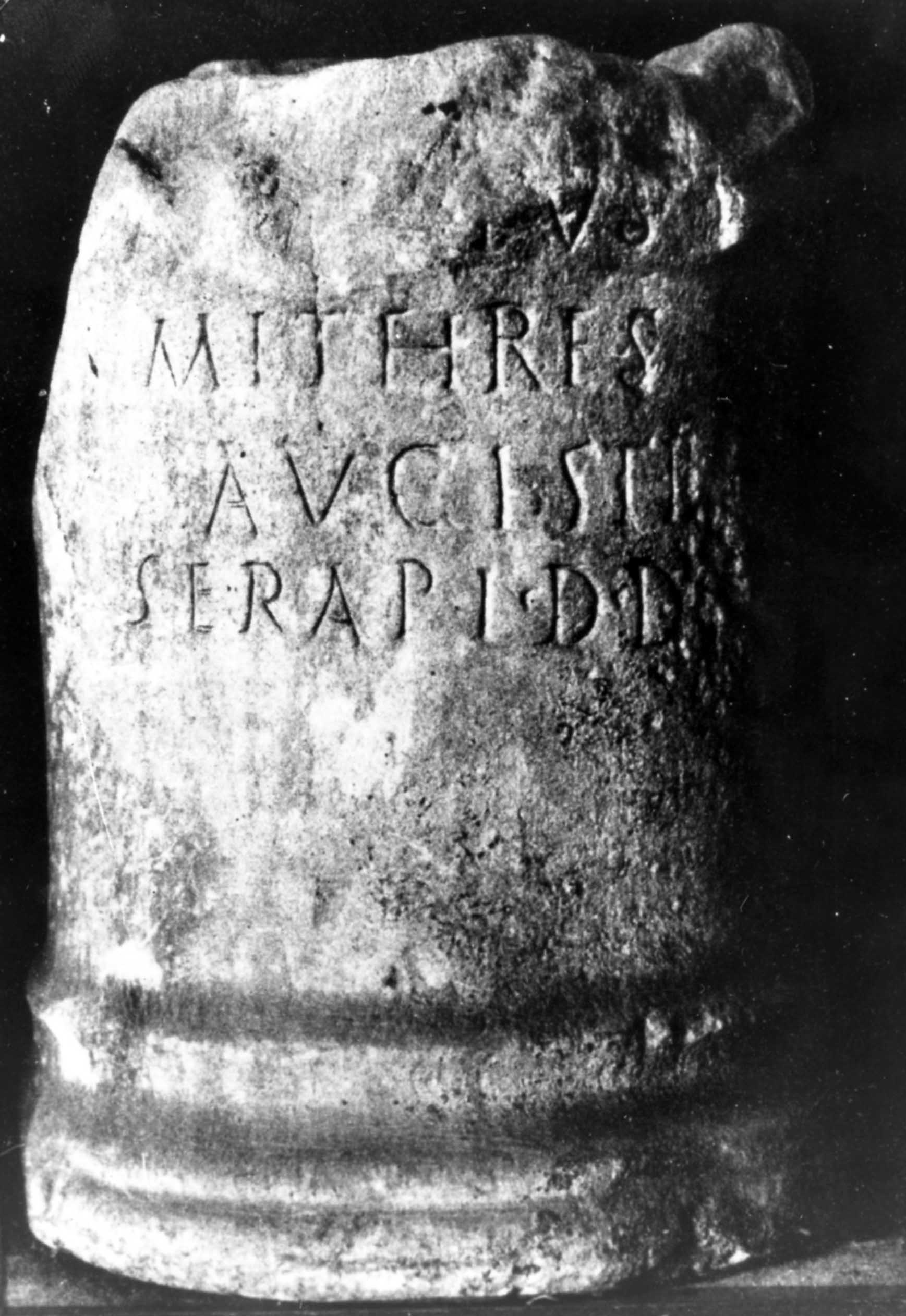
This monument, found in the Domus Flavia in Rome, bears an inscription by a certain Aurelius Mithres.

Second Mithraic monument dedicated by the Kastos family, found not far from the Arco di S. Lazzaro, in Rome.
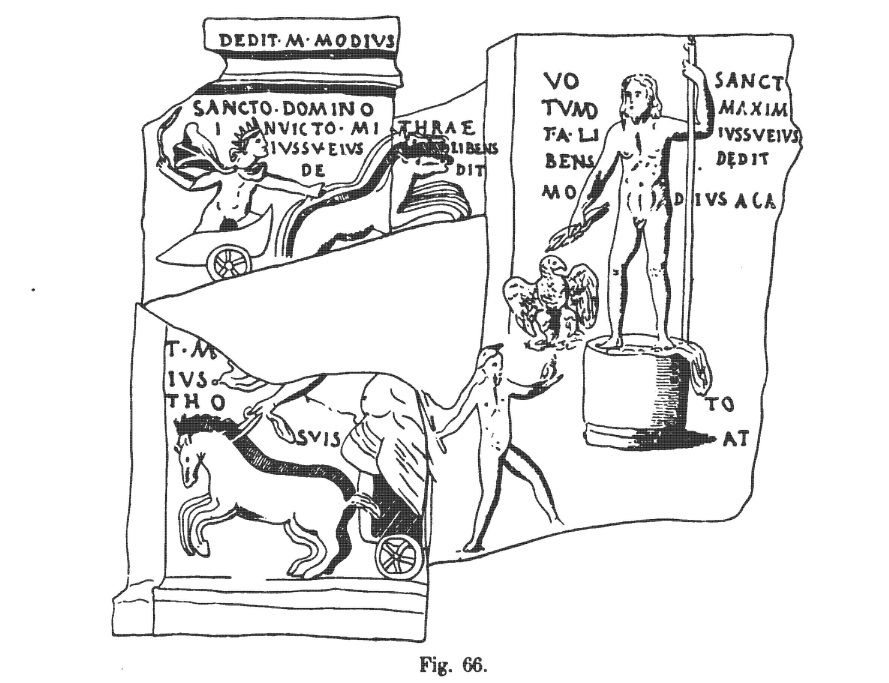
These three fragments of carved marble depict Jupiter, Sol, Luna and a naked man wearing a Phrygian cap, with inscriptions calling Mithras Sanctus Dominum.

Several fragmentary Mithraic remains dedicated by a certain Agatho in the Caelius suggest that a Mithraeum existed in the area.
In 1938 this Mithraeum was found 3.45 mtrs under the Basilica of S. Lorenzo in Damaso, in a cellar near the Sacrament's Chapel.
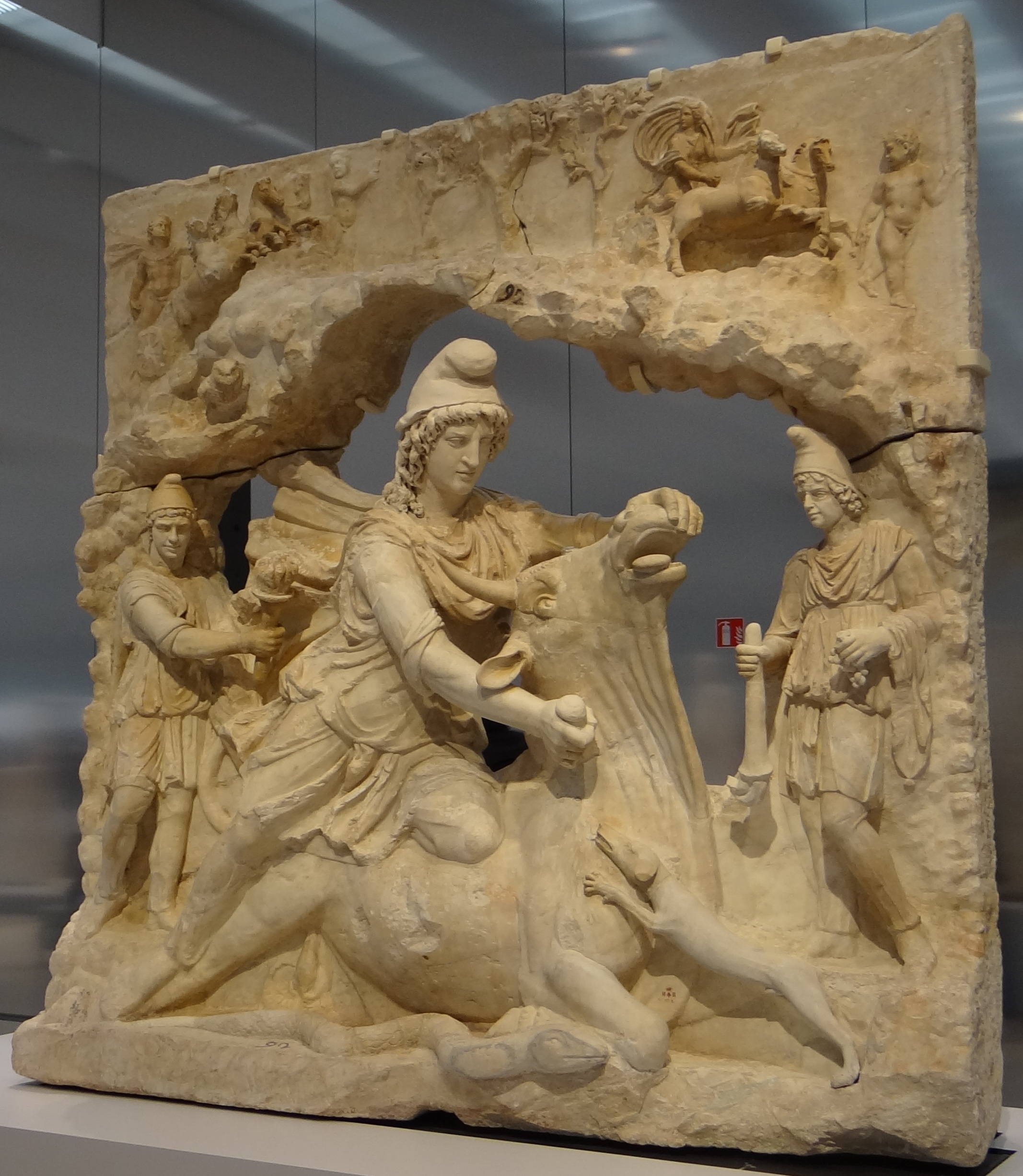
This relief of Mithras slaying the bull was erected in Piazza del Campidoglio, moved to Villa Borghese and is now in the Louvre Museum.
As usual, the solar god rises a dagger with one of his hands while emerges from the rock.
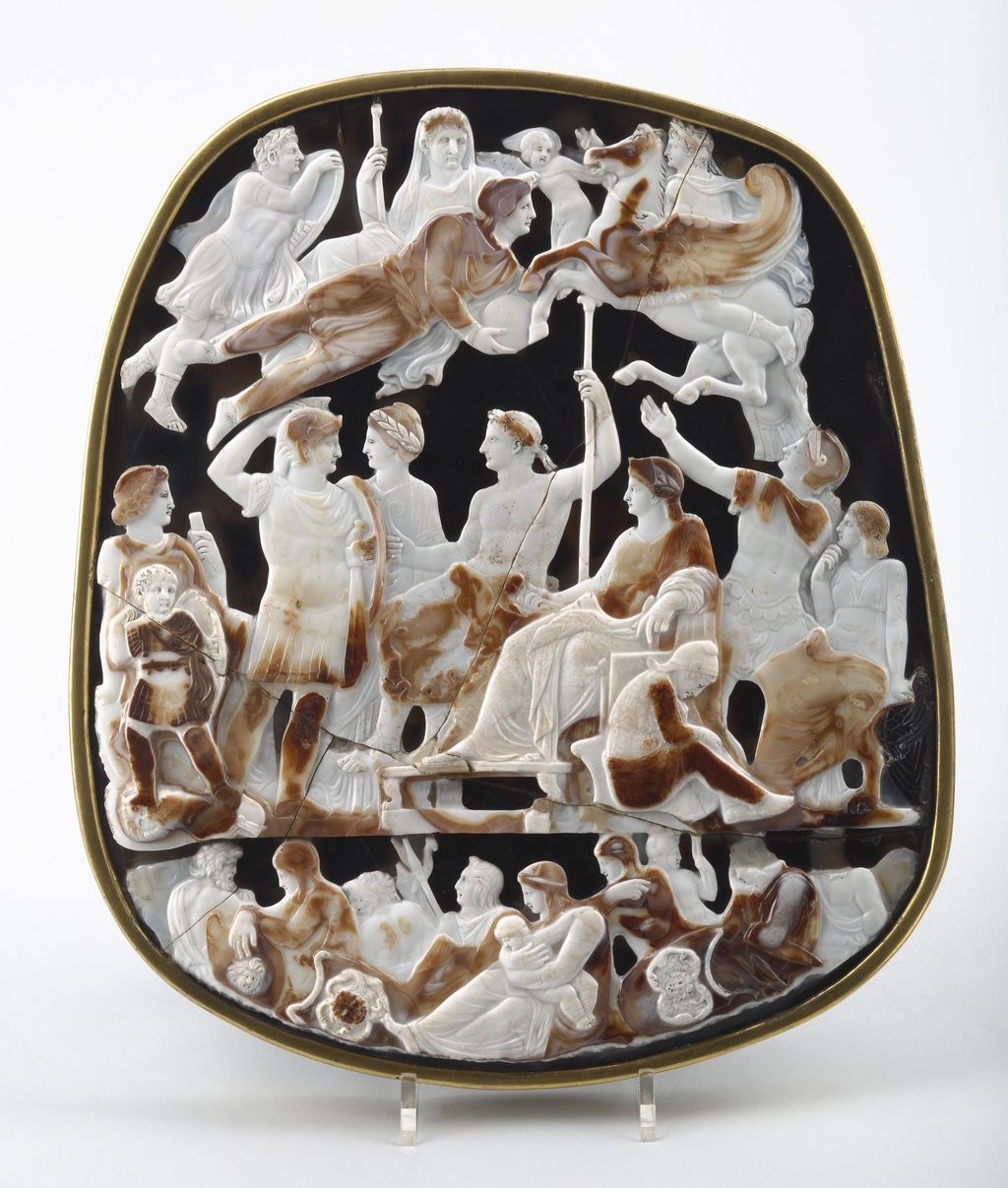
Some authors have speculated that the flying figure dressed in oriental style and holding a globe could be Mithras.
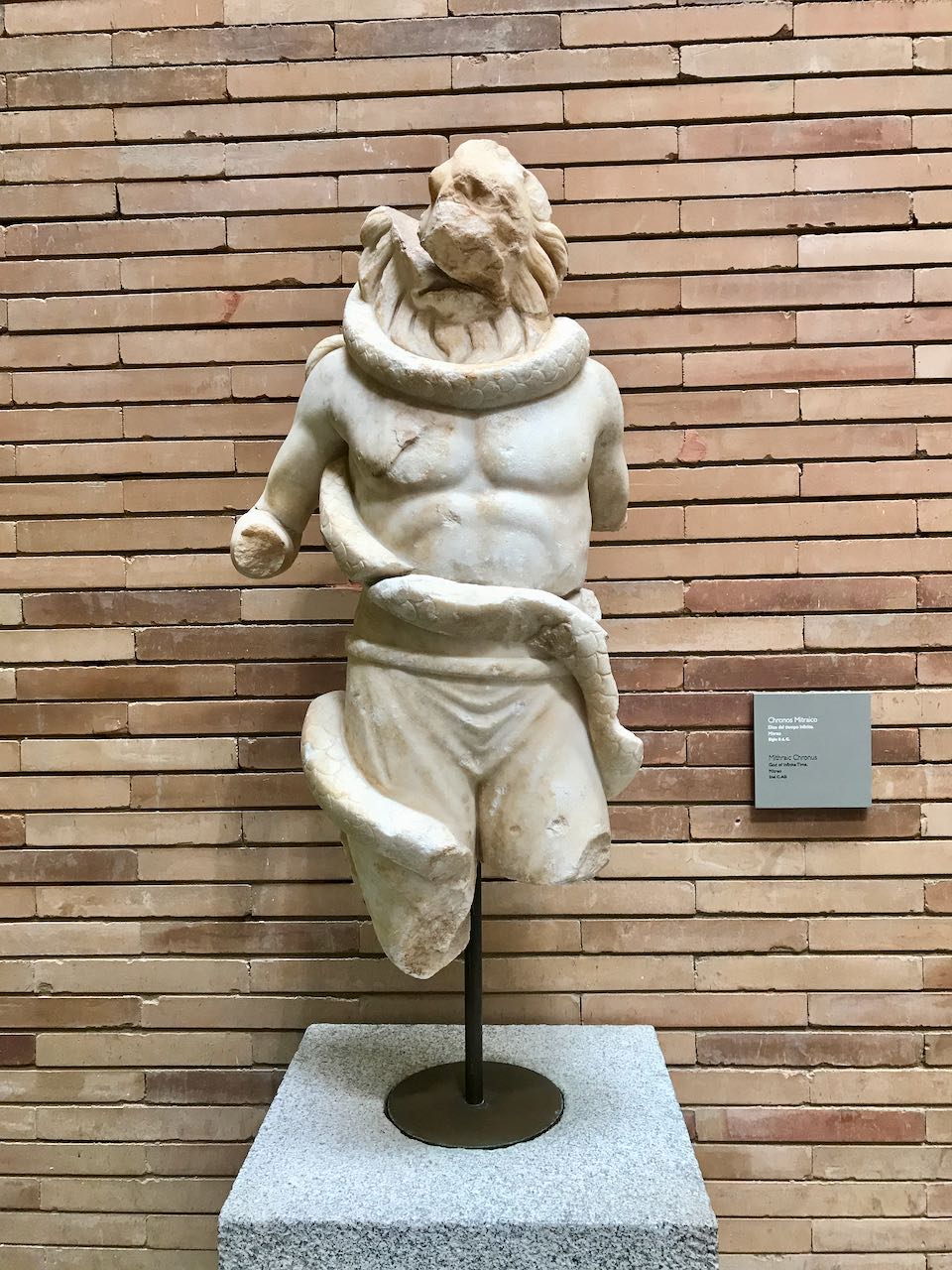
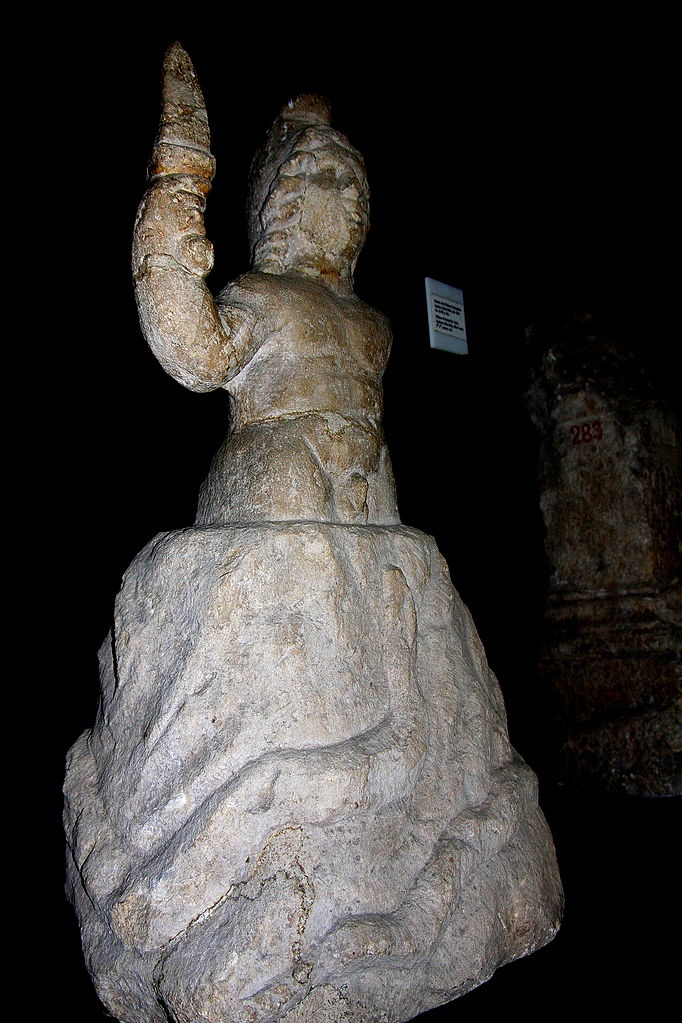
The lion-headed figure, Aion, from Mérida, wears oriental knickers fastened at the waist by a cinch strap.
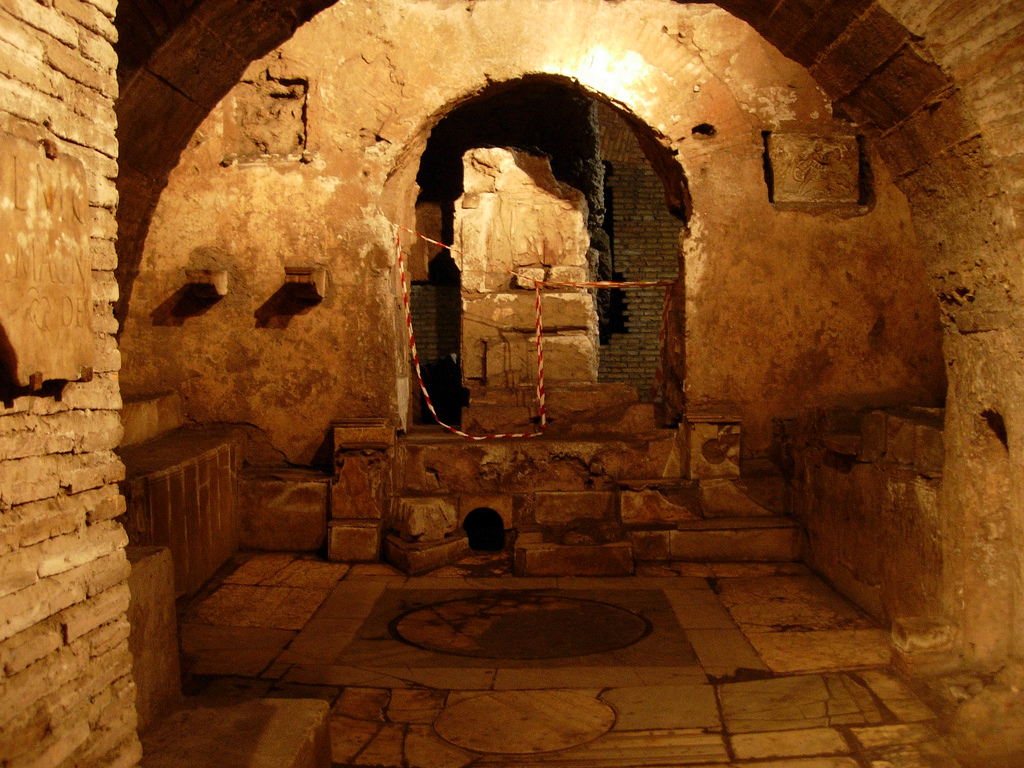
The Mithraeum of the Circus Maximus was discovered in 1931 during work carried out to create a storage area for the scenes and costumes of the Opera House within the Museums of Rome building.
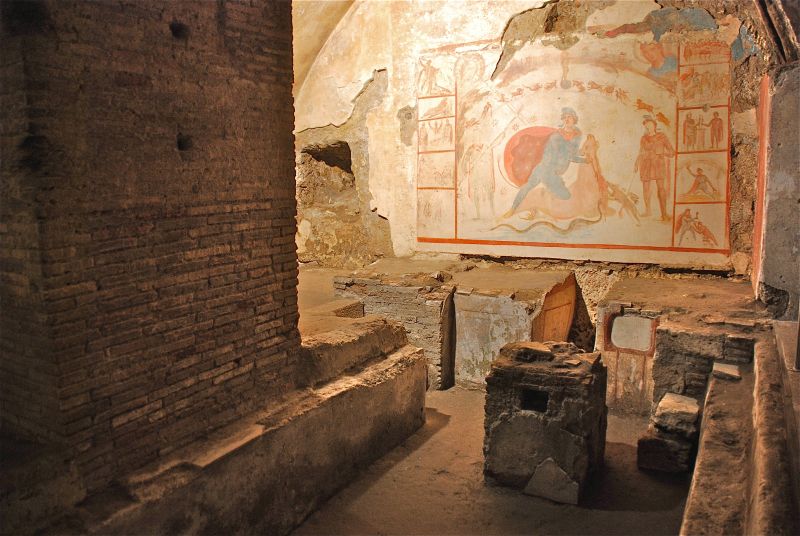
The Barberini Mithraeum was discovered in 1936 in the garden of the Palazzo Barberini, owned by Conte A. Savorgnan di Brazza.
During the excavations of 1804-1805, a series of monuments dedicated to Mithras and a temple were discovered at ancient Mons Seleucus.
The inscription explains the transmission of the fourth Mithraic degree through the Paters of the Mitraeum of San Silvestro.
The Mithraeum located in Piazza Dante in Rome was discovered in 1874 along with a series of monuments dedicated by a Pater named Primus.
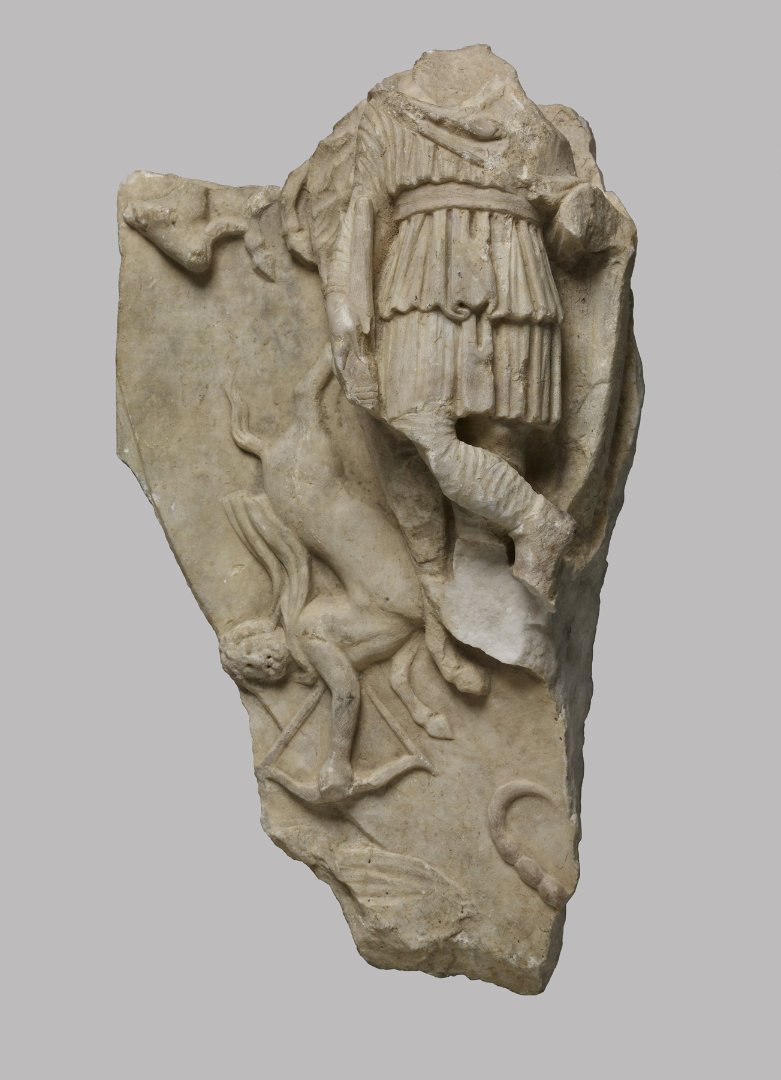
This fragmentary relief shows Cautopates bordered by three of the six zodiacal signs with which He is associated: Capricorn, Sagittarius and Scorpio.
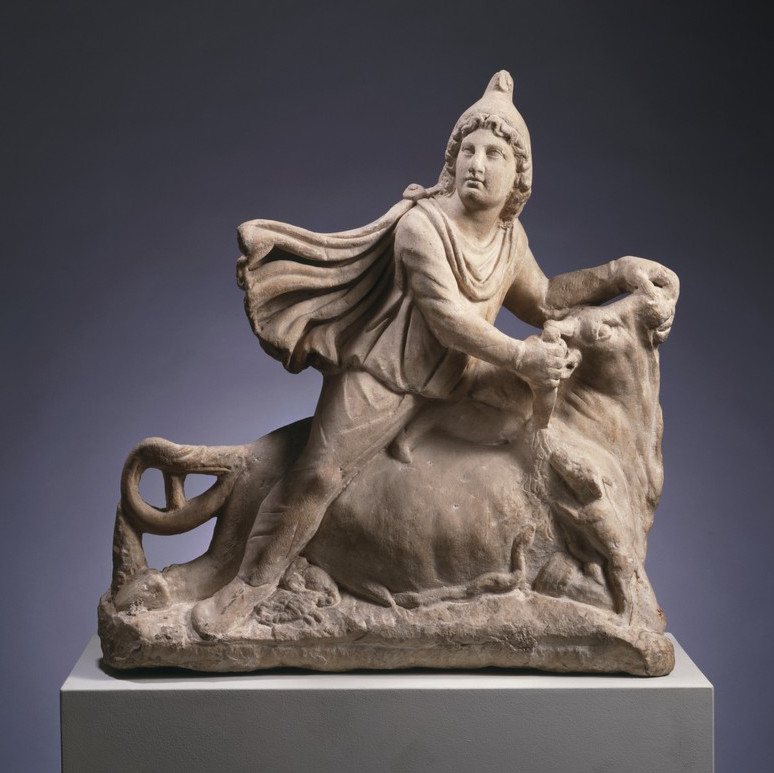
This sculpture of Mithras killing the bull may come from Rome, probably found in 1919.
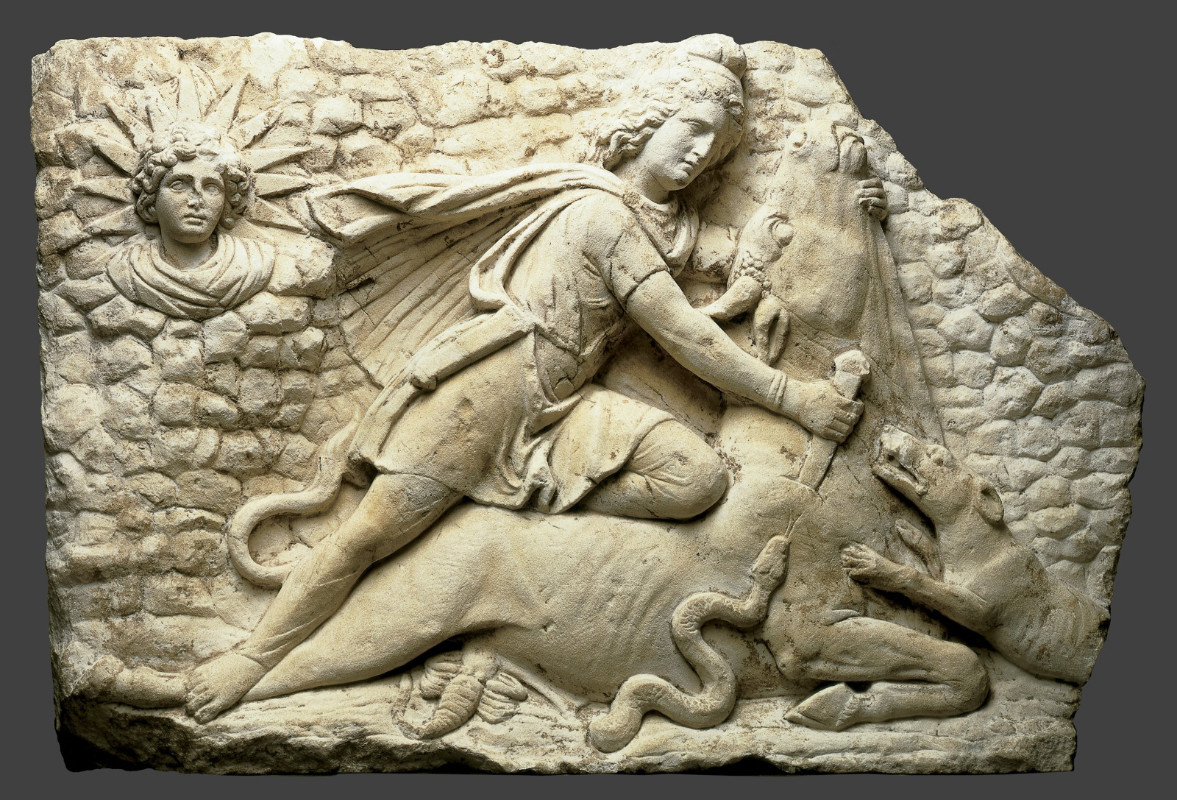
In the tauroctonic relief on display at the Cincinnati Art Museum, Mithras slaughters the bull over a rocky background.
