Your search Sidi Ali Belkacem (سيدي علي بلقاسم) gave 1194 results.
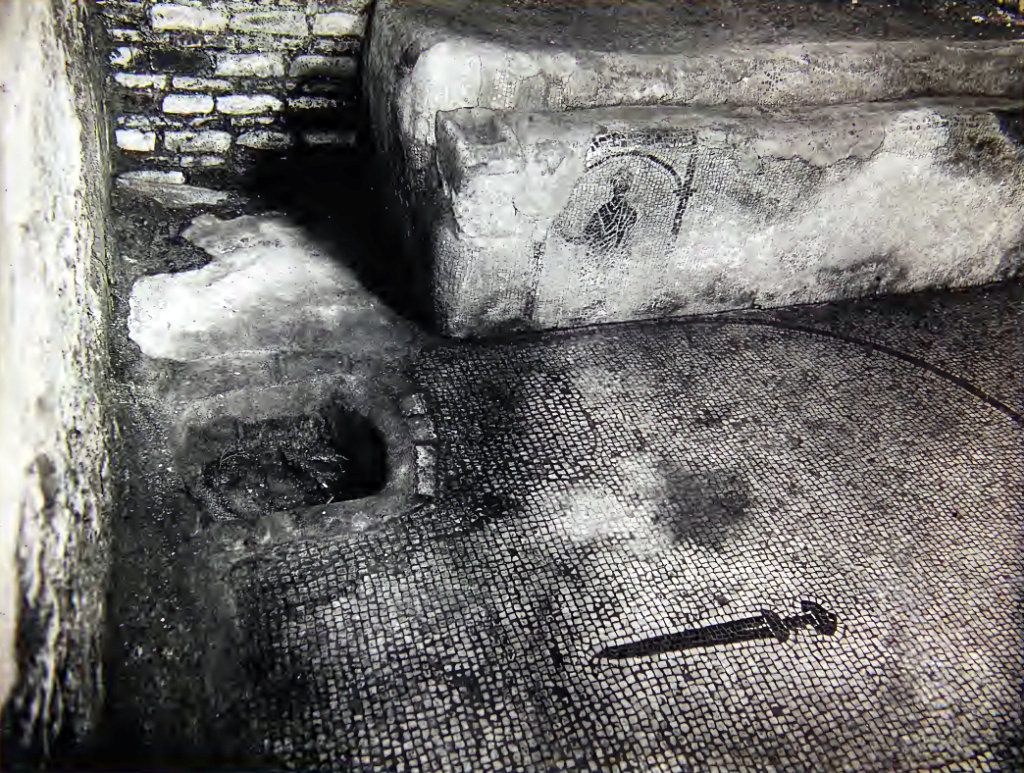
The floor mosaic of the Mithraeum of the Seven Spheres, which gives its name to the temple, depicts a dagger.

Only a fragment of this marble group of Mithras killing the bull remains.
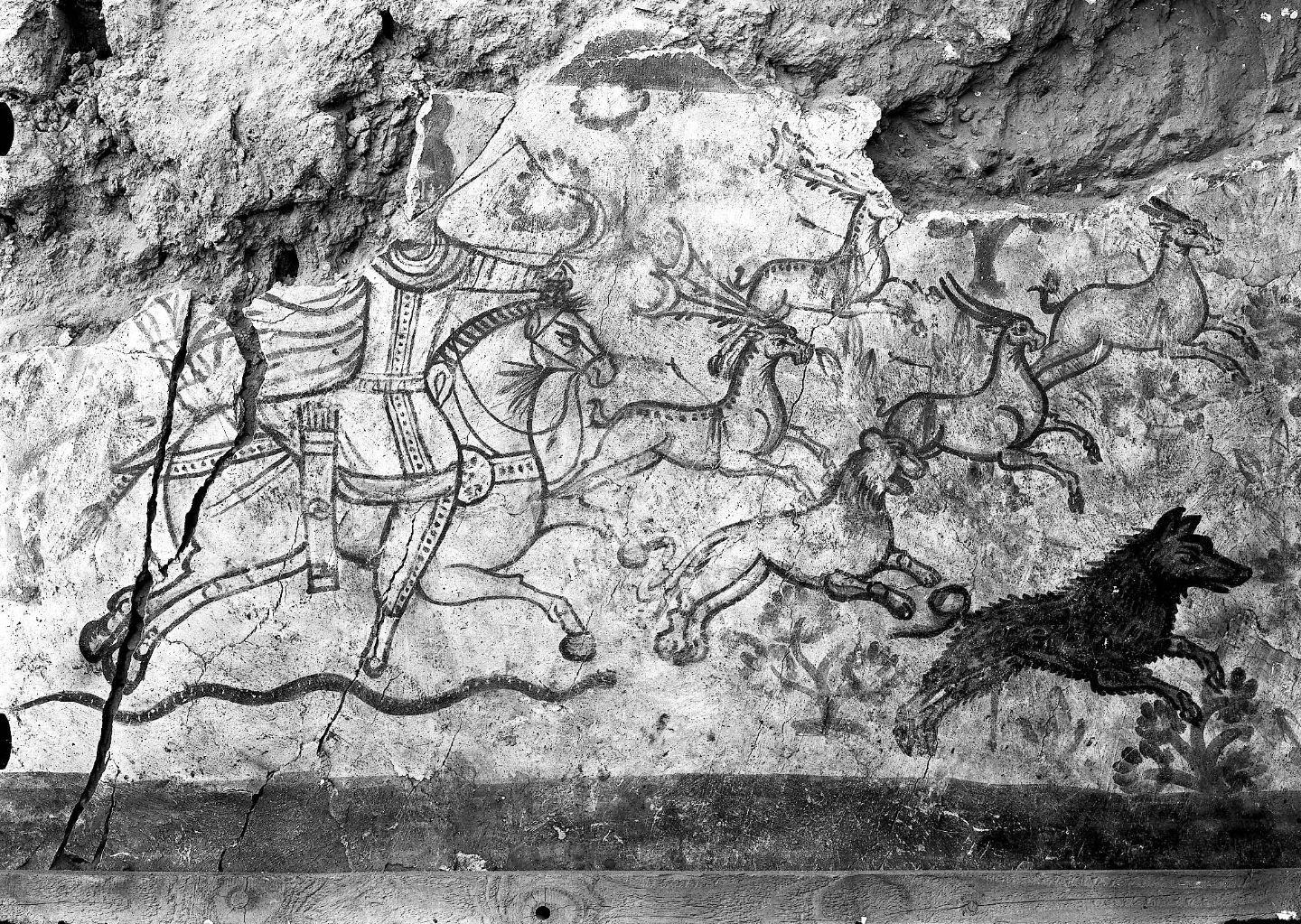
In this fresco from Dura Europos, Mithras is represented as a hunter accompanied by the lion and the serpent.
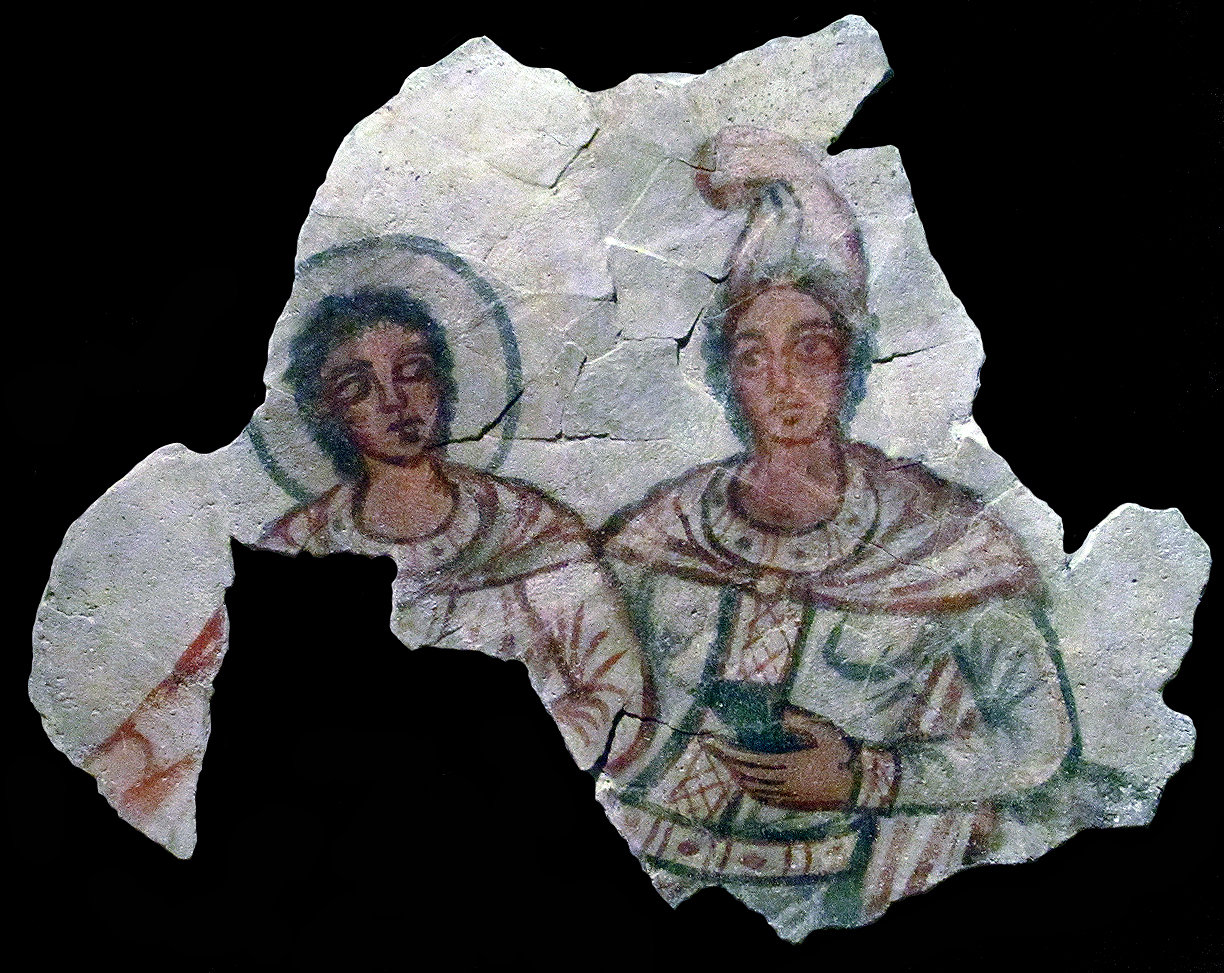
Sol watches Mithras as he gazes Mithras gazes up to heaven while sharing the sacred meal.
Second Mithraic monument dedicated by the Kastos family, found not far from the Arco di S. Lazzaro, in Rome.
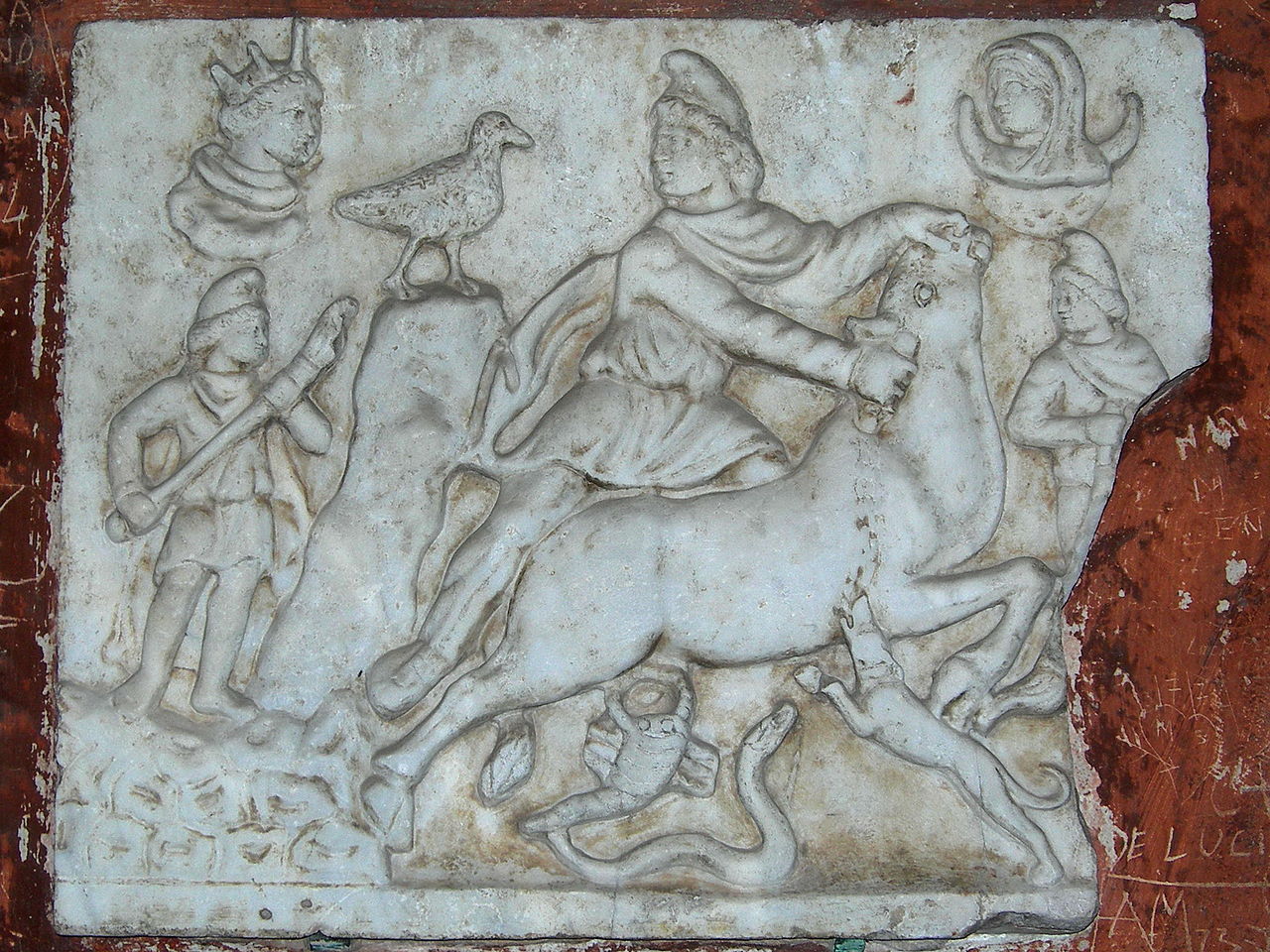
This white marble relief of Mithas killing the sacred bull was found embedded in the building of a noble family in Pisa.
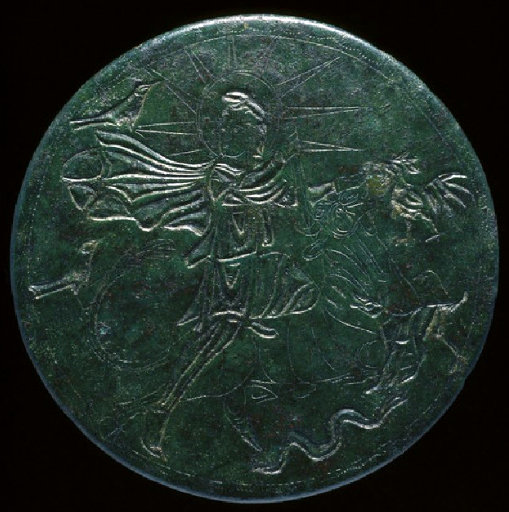
In the Mithraic bronze brooch found in Ostia, Cautes and Cautopates have been replaced by a nightingale and a cock.
Several fragmentary Mithraic remains dedicated by a certain Agatho in the Caelius suggest that a Mithraeum existed in the area.
In 1938 this Mithraeum was found 3.45 mtrs under the Basilica of S. Lorenzo in Damaso, in a cellar near the Sacrament's Chapel.
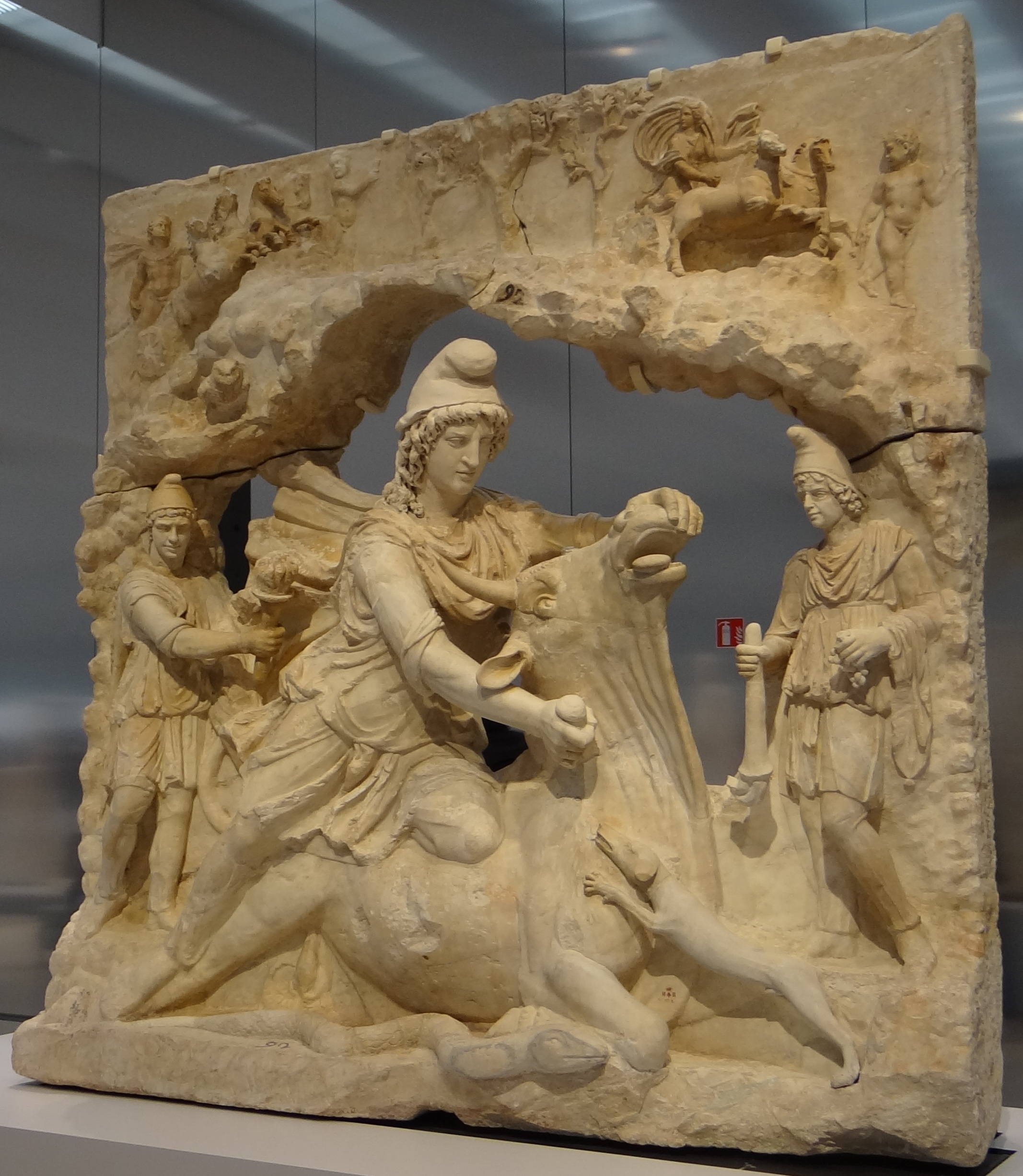
This relief of Mithras slaying the bull was erected in Piazza del Campidoglio, moved to Villa Borghese and is now in the Louvre Museum.
This inscription to Mithras Invencible was dedicated by a certain Apronianus in 172 is currently lost.
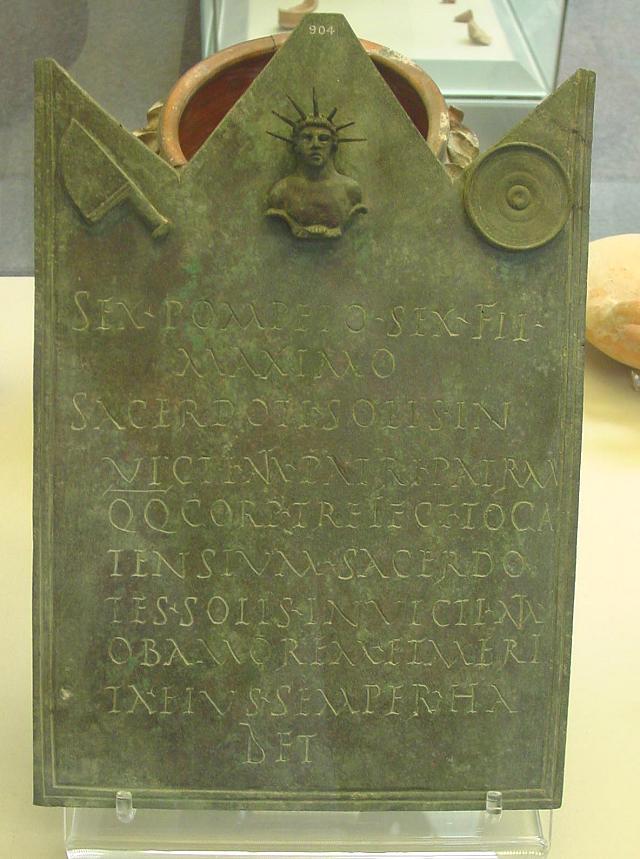
This plaque, now on display in the British Museum, may have come from the Aldobrandini Mithraeum in Ostia.
This altar found in Sentinum bears an inscription from two brothers.

The Mithraeum of Spoleto was found in 1878 by the professor Fabio Gori on behalf of Marquis Filippo Marignoli, owner of the land.
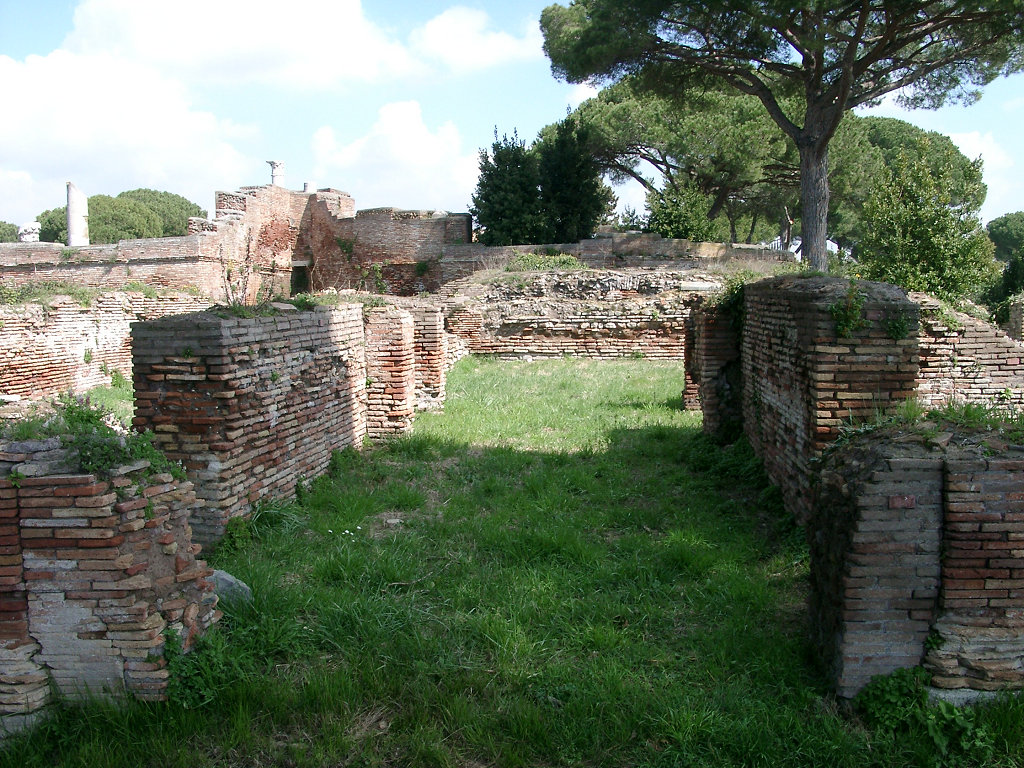
The Mithraeum of Frutosus was in a temple assigned to the guild of the stuppatores.

This tabula marmorea was consecrated by a certain slave Vitorinus in Tibur, nowadays Tivoli, near Rome.
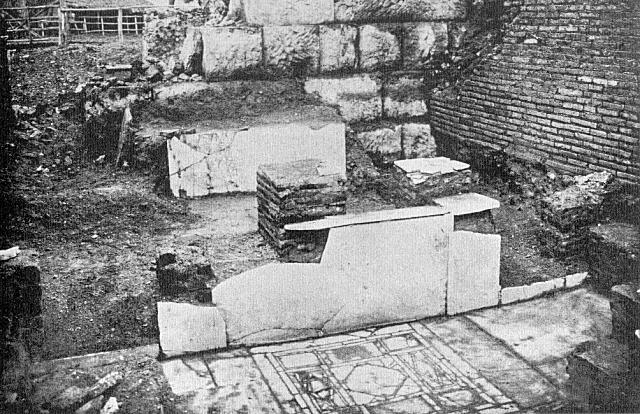
The Mithraeum of Aldobrandini was excavated in 1924 by G. Calza on the premises belonging to the Aldobrandini family.
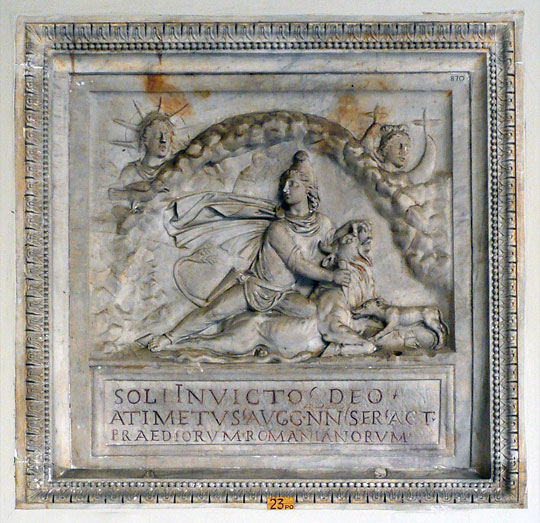
White marble relief depicting Mithras slaying the bull, dedicated by Atimetus.
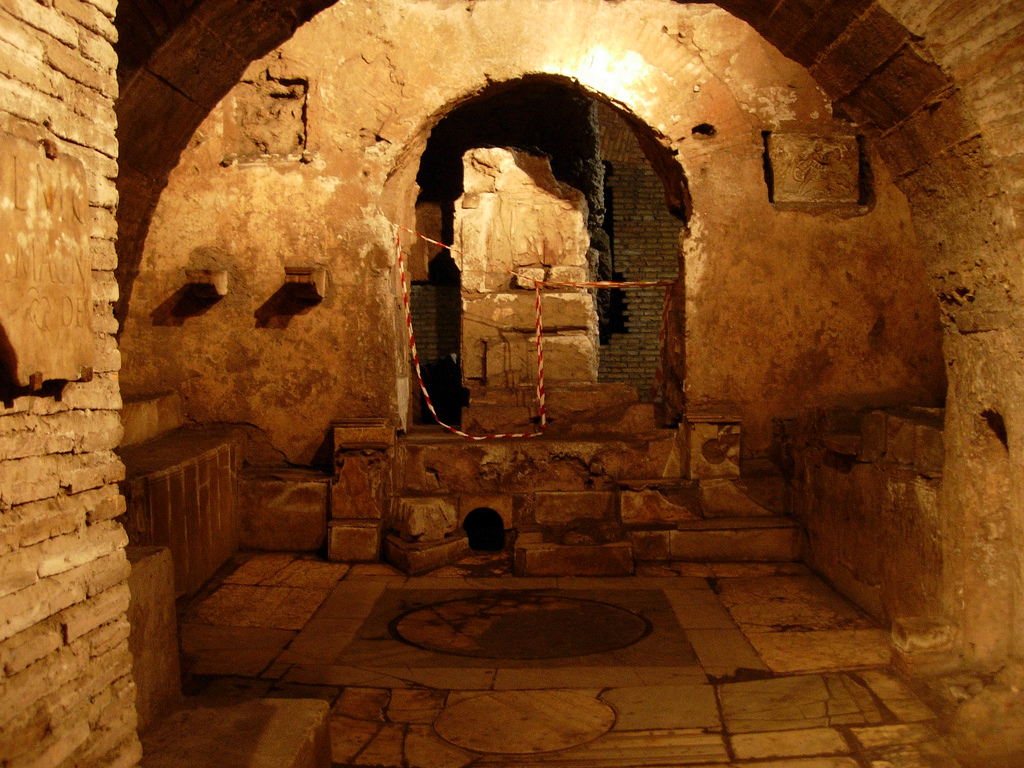
The Mithraeum of the Circus Maximus was discovered in 1931 during work carried out to create a storage area for the scenes and costumes of the Opera House within the Museums of Rome building.
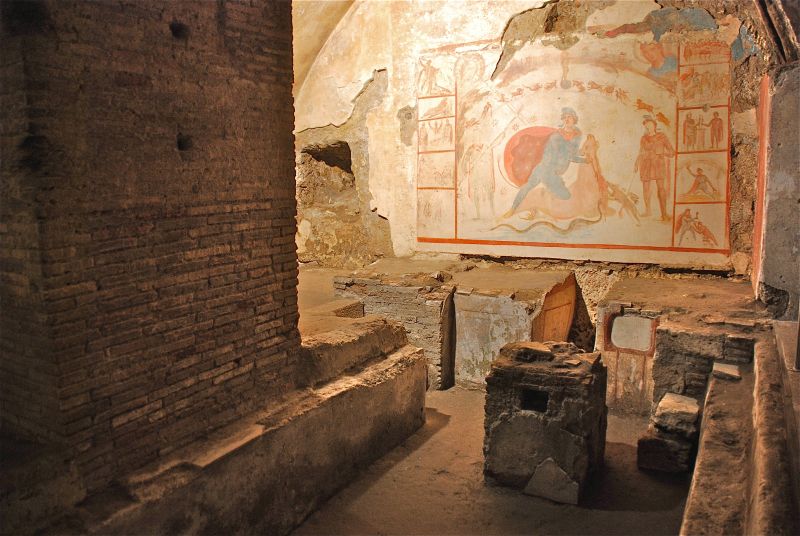
The Barberini Mithraeum was discovered in 1936 in the garden of the Palazzo Barberini, owned by Conte A. Savorgnan di Brazza.
