Your search St Albans gave 3403 results.
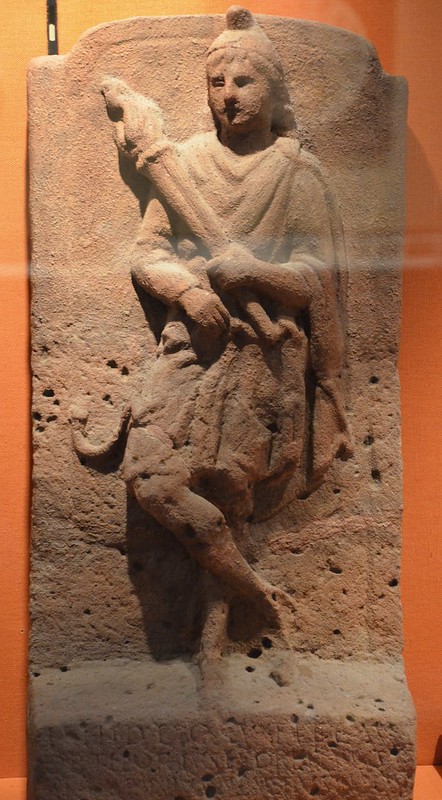
Reliefs of Cautes and Cautopates dedicated by Florius Florentius of Saalburg and Ancarinius Severus.

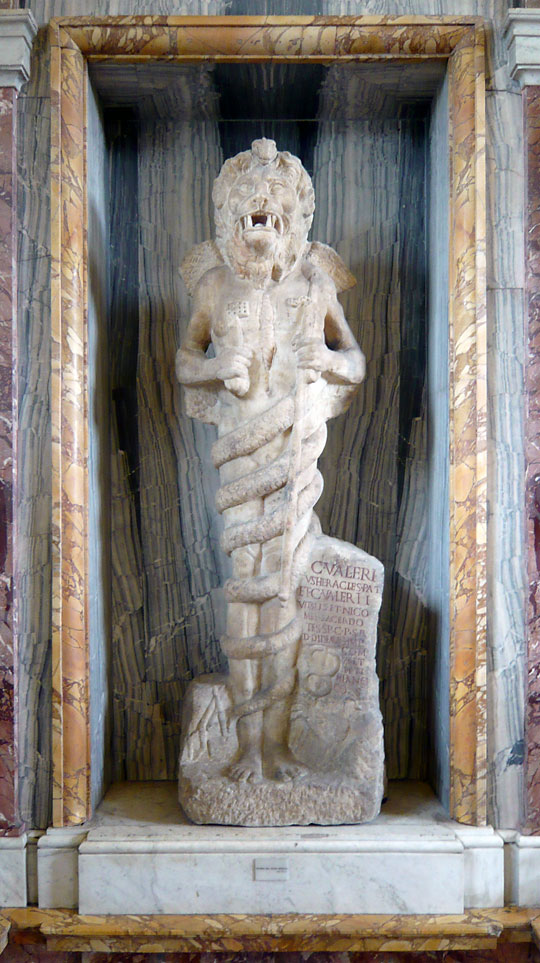
The marble Aion from the lost Mithraeum Fagan, Ostia, now presides the entrance to the Vatican Library.

This inscription found in the Mithraeum Aldobrandini informs us of certain restorations carried out in the temple during a second phase of development.
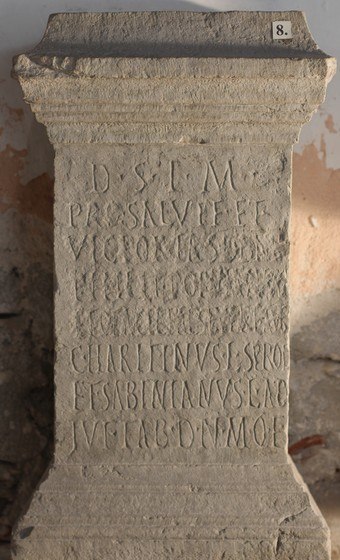
This stone altar found in Poreč was dedicated by two freedmen to the numen and majesty of the emperors Philip the Arab and Otacilia Severa.
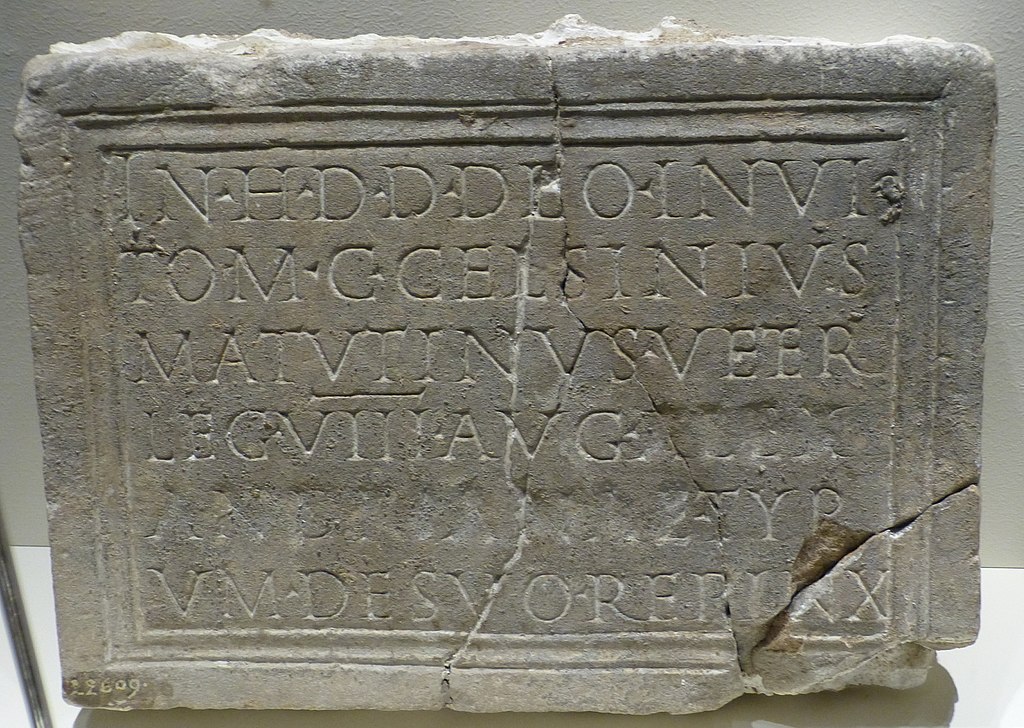
The inscription reports the restoration of the coloured painting of the main relief of the Mithraeum by a veteran of the Legio VIII Augusta.
This marble slab found near the Casa de Diana in Ostia bears two inscription with several names of brothers of a same community
Small marble column dedicated by Iunia Zosime, mater, to Virtus Dendrophori from silver weighing two pounds, from the Mitreo degli Animali at Ostia.
Marble altar found near the entrance of the Mitreo delle Sette Porte at Ostia, dedicated by Sextus Fusinius Felix.
The Mithraeum of Stix-Neusiedl was discovered in the summer of 1816. Although the structure of the sanctuary is unknown, several associated monuments are preserved today in Vienna.
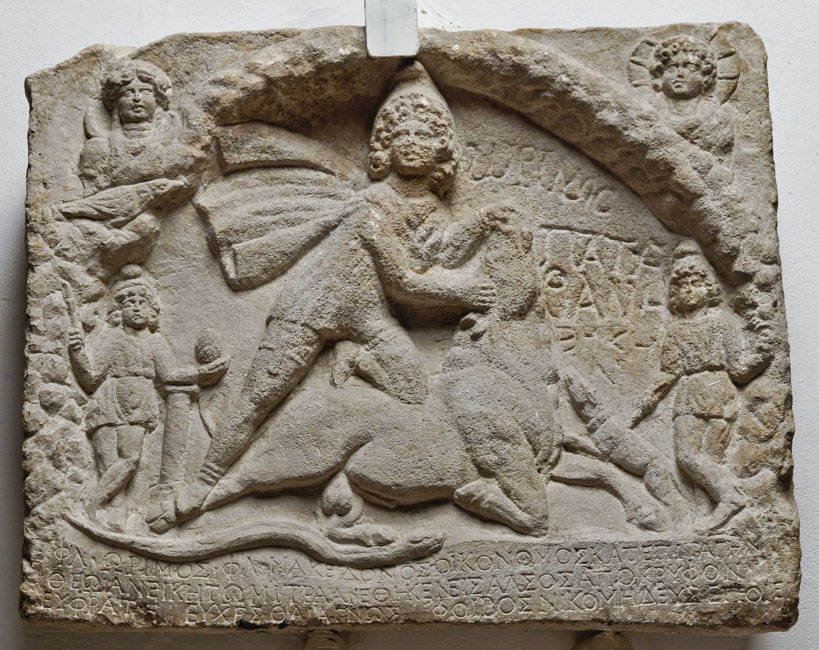
This limestone relief of Mithras killing the bull bears an inscription by a certain Flavius Horimos, consecrated in a ’secret forest’ in Moesia.
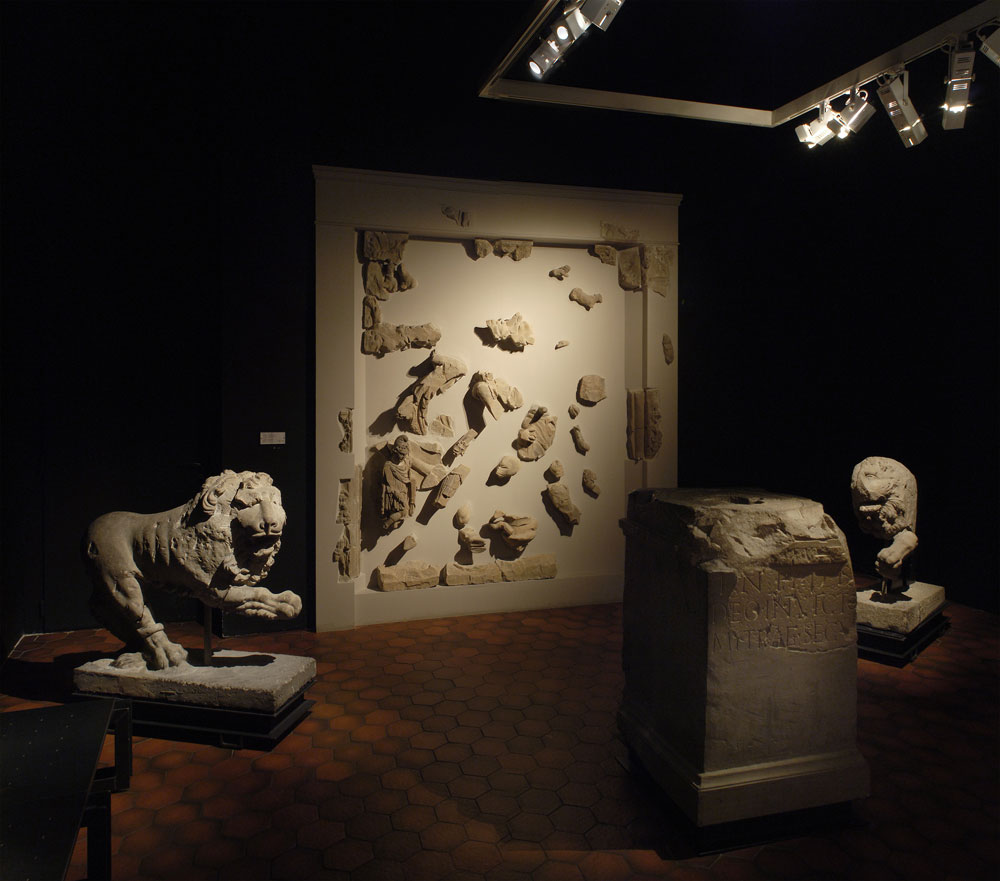
These fragments of a monumental relief of Mithras killing the bull from Koenigshoffen were reassembled and are now on display at the Musée Archéologique de Strasbourg.

The remains of the Mithraeum of Aosta, also known as the Mitreo di Augusta Praetoria, were discovered in 1953 in insula 59, in a commercial district of the ancient city.
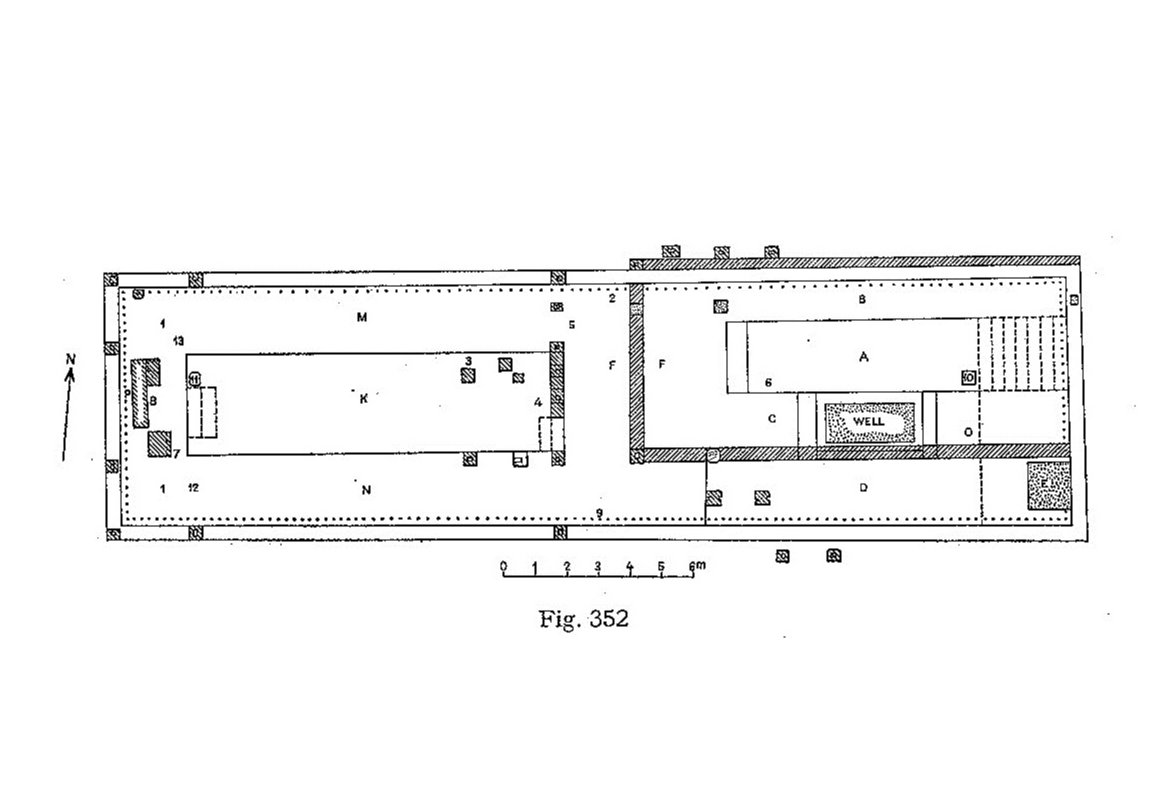
Lors de la construction de l’église Saint-Paul en 1911, un mithraeum a été mis au jour à Königshoffen, vicus gallo-romain situé aux abords du camp légionnaire de Strasbourg-Argentorate.
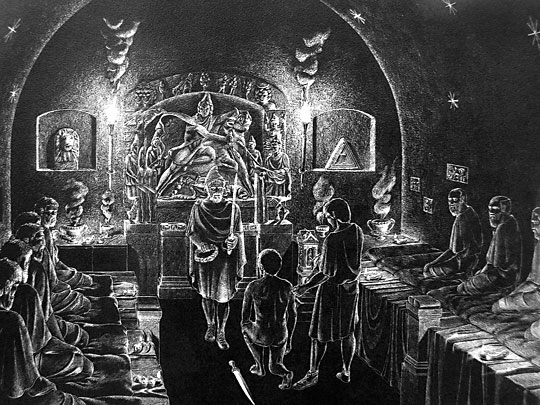
The Mithraeum of Osterburken could not be excavated bodily owing to the water of a well in the immediate neighbourhood. The monument had been covered carefully with sand.
Altar from Vratnik near Senia, Dalmatia, dedicated to Soli invicto Mithrae by Faustus, slave of Tiberius Saturninus, for himself and his family.
Bronze helmet fragment from Ober-Florstadt bearing a dedication reading Virtuti donum dedit by Vibius Leccus, librarius

Under Roman rule from the 1st century CE, Histria was incorporated into the province of Moesia. The city is noted on the Tabula Peutingeriana, which places it 11 miles from Tomis and 9 miles from Ad Stoma.


