Your search Tal hal Hariri / Es-Sâlihiyeh / As Salhiyah gave 3725 results.

Pair of sandstone bases with small columns on the front, carved with a staircase on the reverse, from Mithraeum I at Heddernheim, ancient Nida
Assemblage of lamps, serpent-vases and painted ritual pottery from the sanctuary complex.
Limestone relief from Ragasch near Philippopolis, Thracia, cited in MMM without further details.
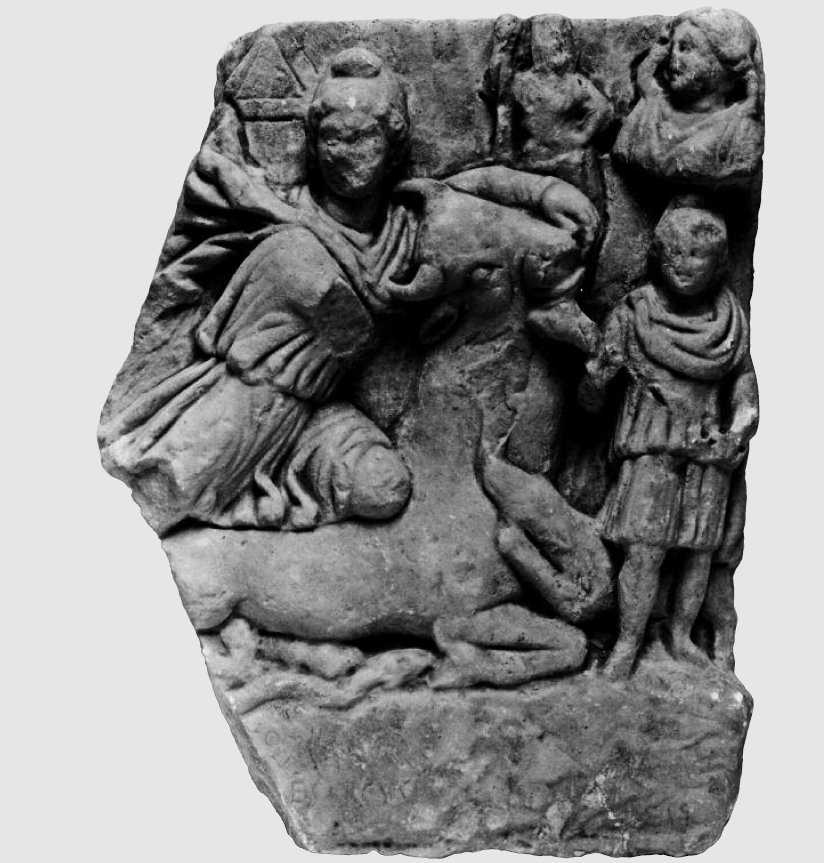
The Tauroctony of Patras was found years before the temple over which the relief of Mithras sacrificing the bull was supposed to preside.

Nuits-Saint-Georges is a commune in the arrondissement of Beaune of the Côte-d'Or department in the Bourgogne-Franche-Comté region in Eastern France.
Caesarea was first settled by the Phoenicians in the 4th century BC. In 63 BC, the Romans annexed the region and Caesarea became the seat of the Roman procurators.

This plaque, located on the western staircase of the Palace of Darius, mentions the god Mithra together with Ahura Mazda as protectors of King Artaxerxes III Ochus.
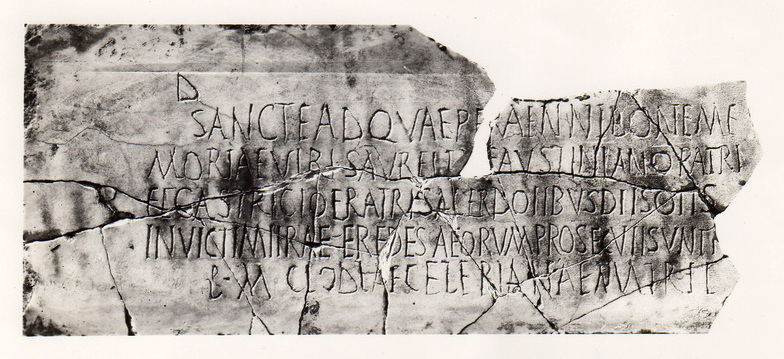
This inscription was commissioned by a family of priests of the invincible god Mithras.
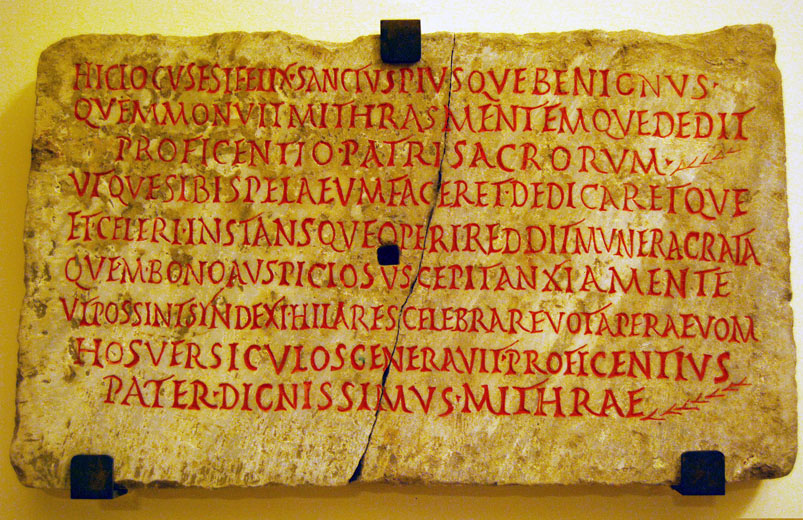
This marble slab bears an inception be the Pater Proficentius to whom Mithras has suggested to build and devote a temple.
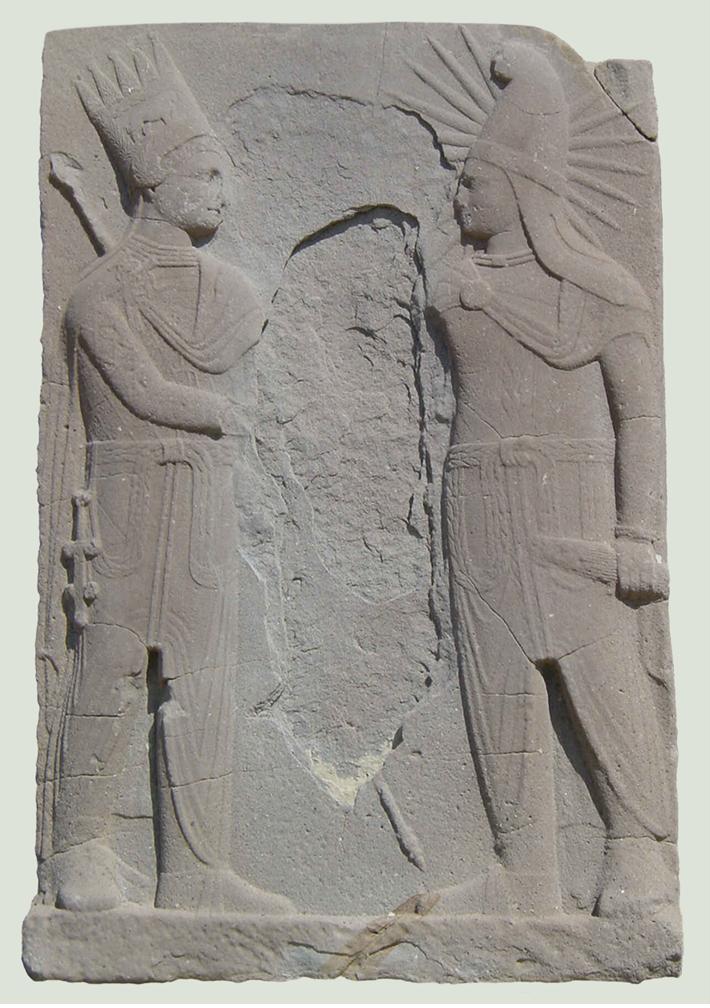
Antiochus I of Commagene shakes Mithras hands in this relief from the Nemrut Dagi temple.
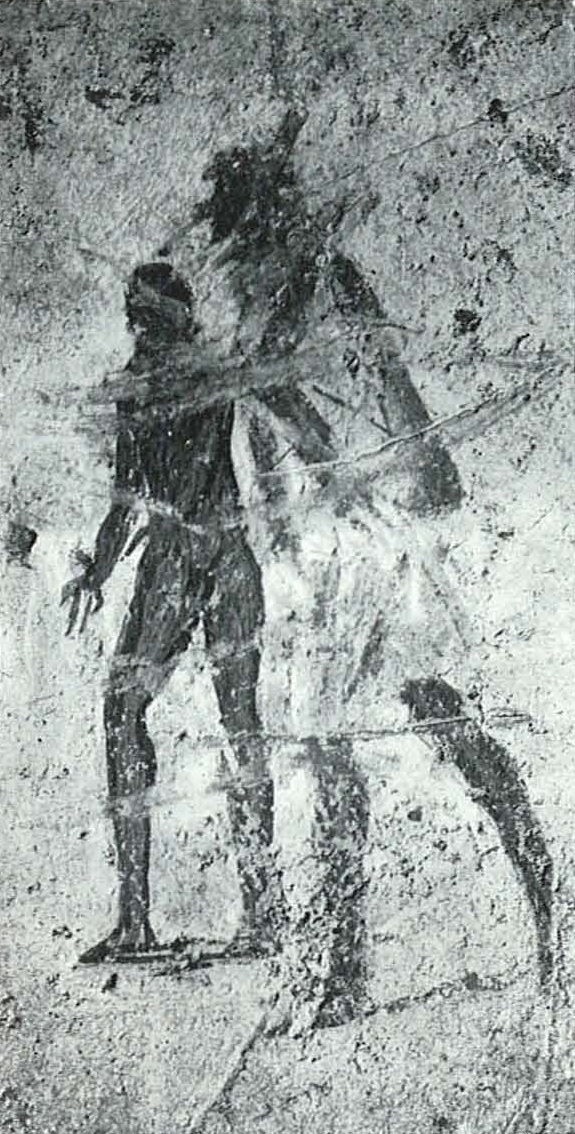
This is the first of several fresco scenes depicting the initiation of a new member in a mithraic community, in Capua Vetere.
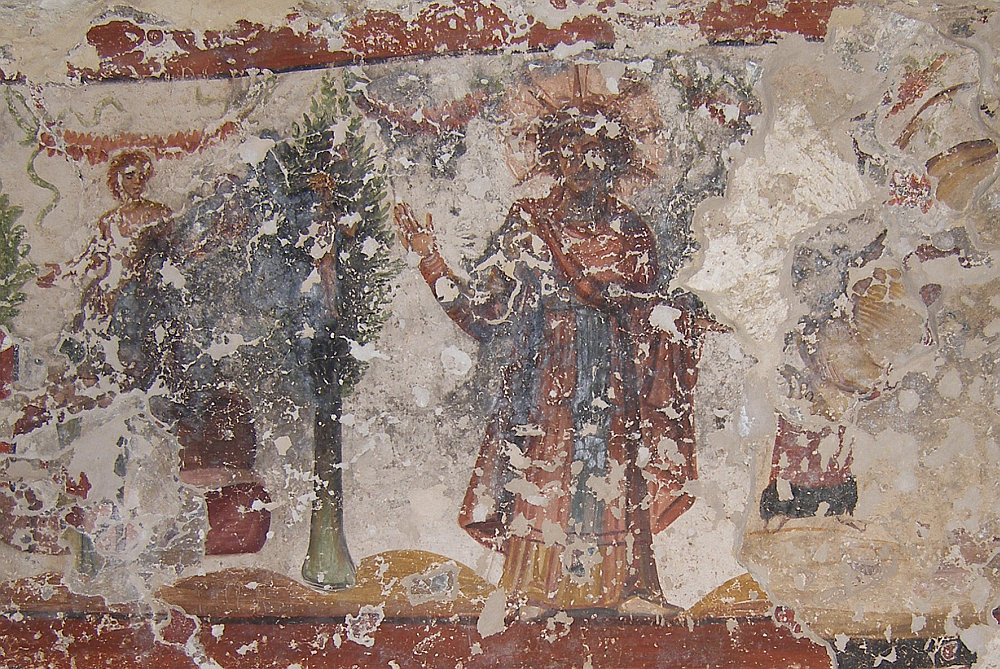
In one of Hawarte’s frescoes, the rock birth of Mithras is preceded by Zeus and followed by the young Persian god suspended from a cypress tree.

Maarten Vermaseren, qui a publié un corpus des inscriptions et des monuments de la religion mithriaque et un certain nombre d'études savantes sur le même sujet est certainement l'un des meilleurs spécialistes de la question.

Selected passages on Mithras drawn from Greek and Latin literary sources.
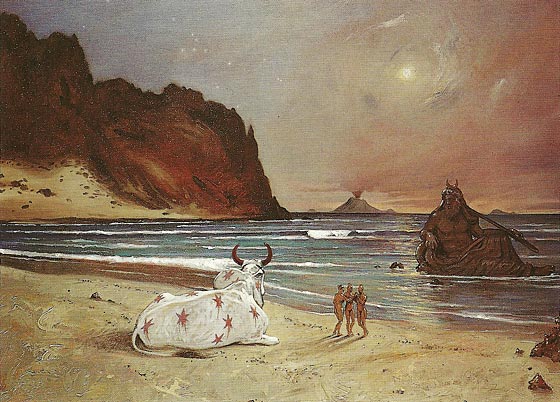
Mithras, also known as Mitra or Mithra depending on the historical period, region, or language, is one of the oldest known Indo-Iranian divinities.


