Your search Val Camonica gave 183 results.
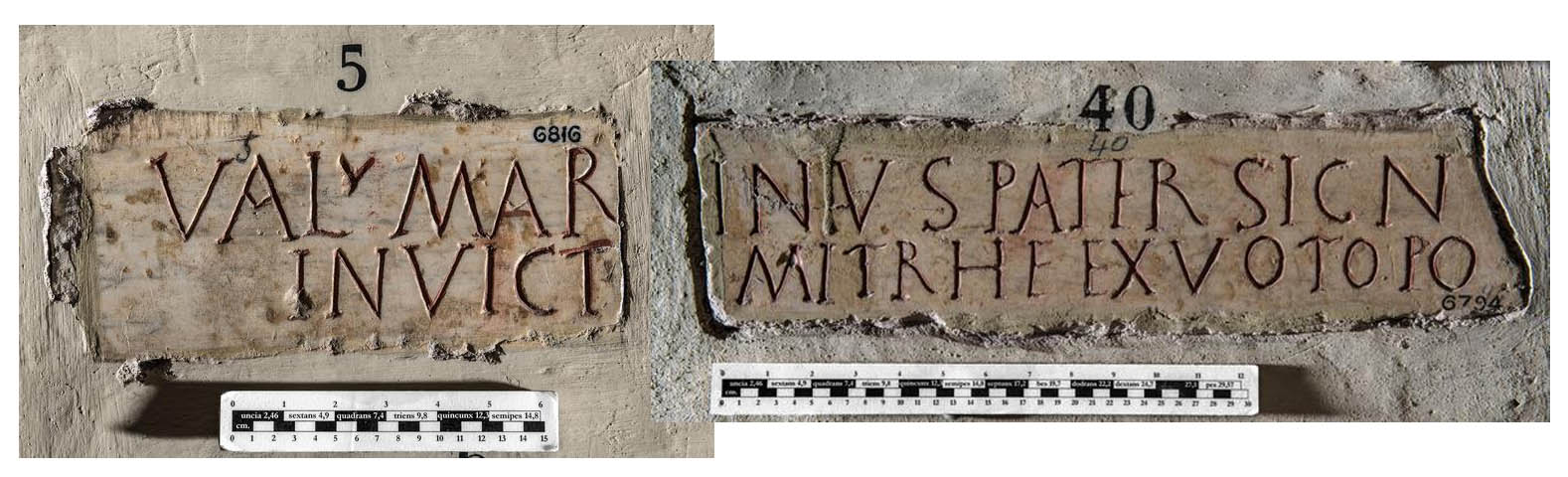
Marble inscription recording the dedication of a cult image to the unconquered Mithras by a certain pater Valerius Marinus from Rome.
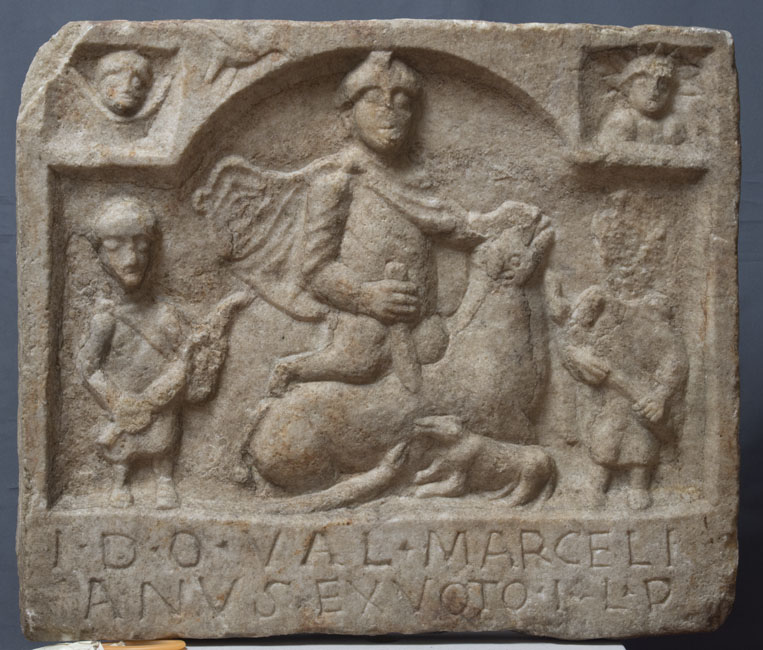
This primitive relief of Mithras as a bullkiller is signed by a certain Valerius Marcelianus.
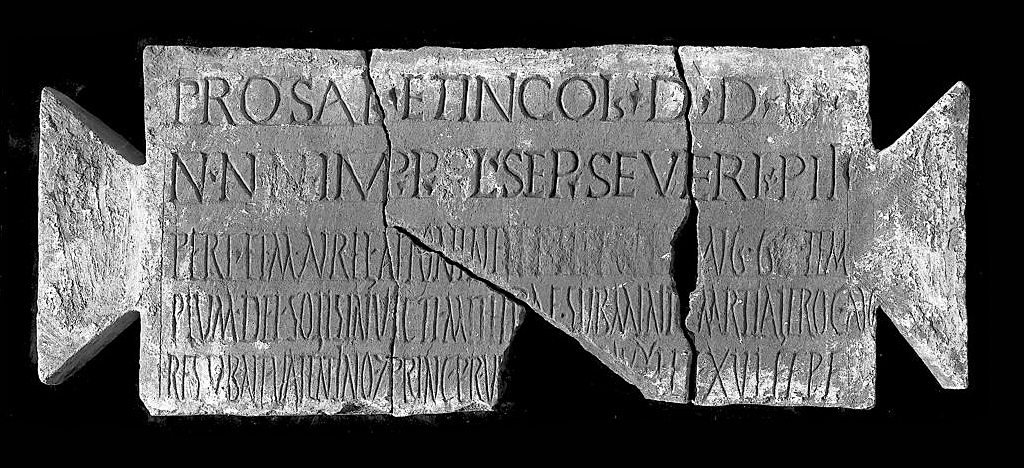
Antonius Valentinus, centurio, made this plaque for the salut des empereurs Septimus Severus and Marcus Aurelius.

Priest of the invincible sun god Mithras at Mediolanum who described himself as a devoted student of astrology.

Roman centurion who supervised the Severan reconstruction and expansion of the Mithraeum of Dura-Europos.

Senator, imperial legate and commander from Poetovio, whose dedications to Mithras link the Danubian and African diffusion of the cult.

Ostian sacerdos remembered through his participation in the dedication of the monumental leontocephalic image erected under Commodus in 190 CE.

Centurio frumentarius probably from Tarraco, who served in the Legio VII Gemina located in Emerita Agusta.

A Mithraic worshipper whose dedication to Cautes preserves a distinctive epigraphic tradition associated with the coastal communities of north-eastern Hispania.

Mithraic priest and dedicator of the leontocephalic deity from the Fagan Mithraeum at Ostia.

Senior Mithraic priest of Ostia whose inscriptions preserve rare and unique epithets of Mithras, including Incorruptus Juvenis and Indeprehensibilis.

Group of Mithraic finds distributed across different localities named San Zeno along the Verona–Brenner route.
Reworked limestone altar dedicated by the governor of Numidia during the period of the Diocletianic persecutions.
Yellow sandstone altar from Mainz, ancient Mogontiacum, dedicated to Deo invicto Mithrae on behalf of the salus of soldiers of Cohors I Ituraeorum

Optio who erected several altars to Mithras in the Mithraeum of Sárkeszi.


Soldier of Legio XIII Gemina and strator consularis who dedicated an altar to the invincible Mithras.
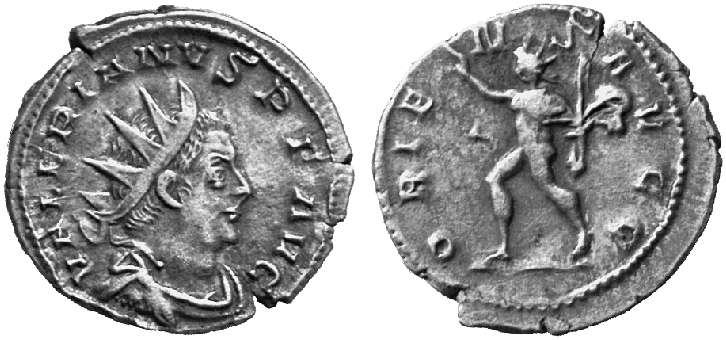
This coin was deposited in the upper level of the throne in the cult niche of the Mitreo della Planta Pedis.
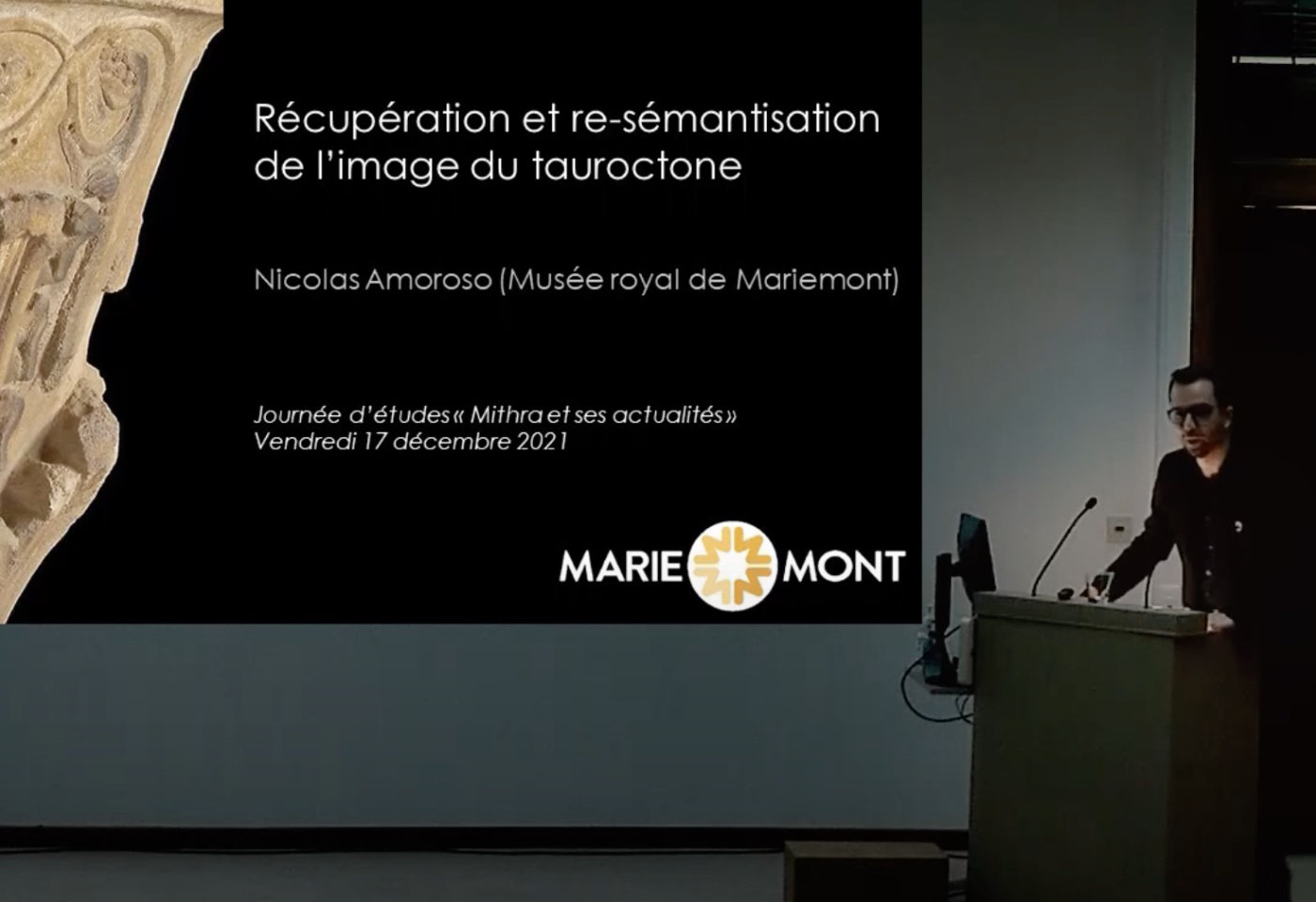
Intervention de Nicolas Amoroso, commissaire de l’exposition Le Mystère Mithra.
