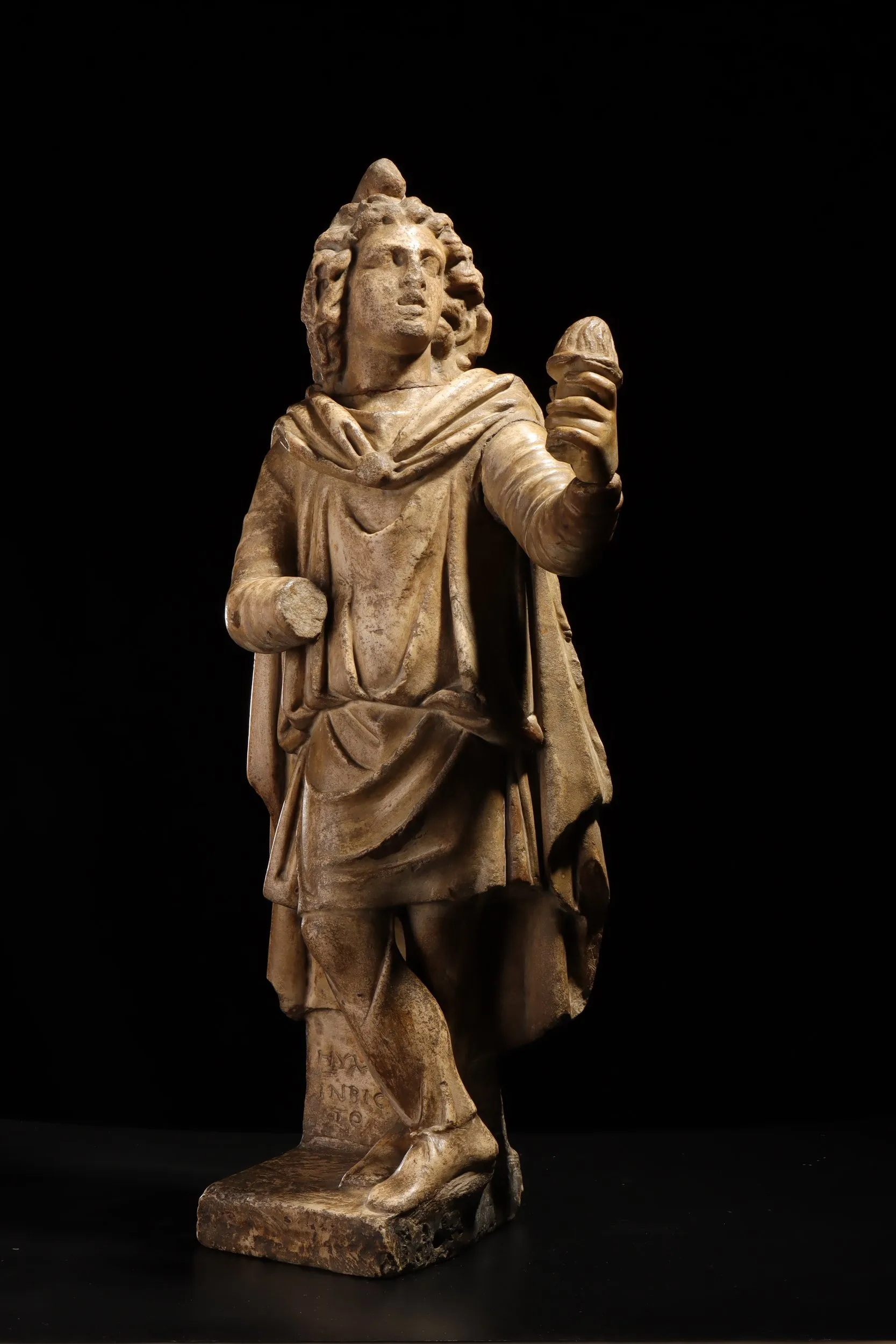
Marble statuette of the torchbearer Cautes bearing the votive inscription HYMNUS INBICTO, probably produced during the second or third century CE and preserved in an old European collection.
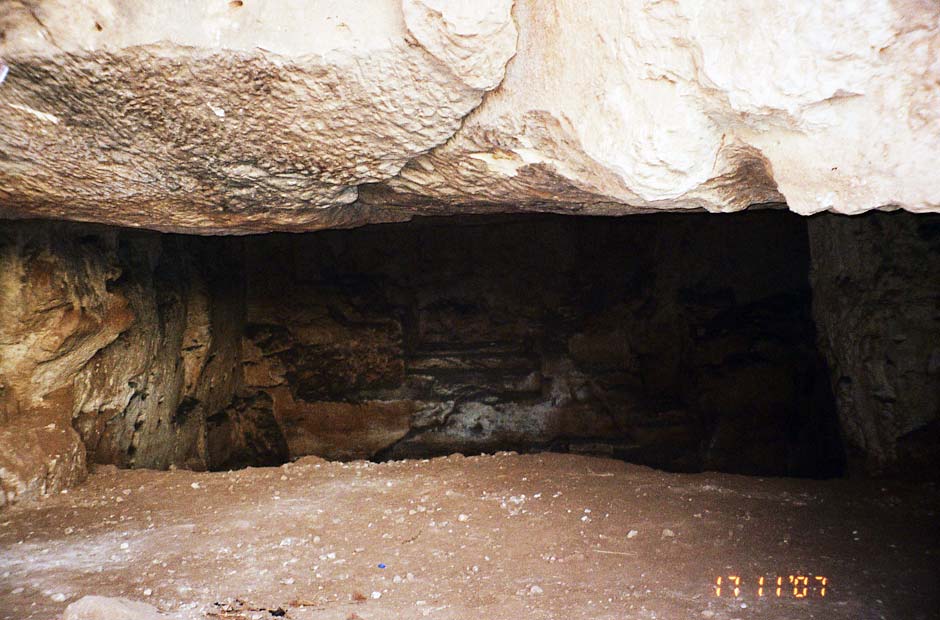
The Mithraea of Doliche, ancient Dülük, Turkey, are unique in that they represent two distinct shrines on the same site.
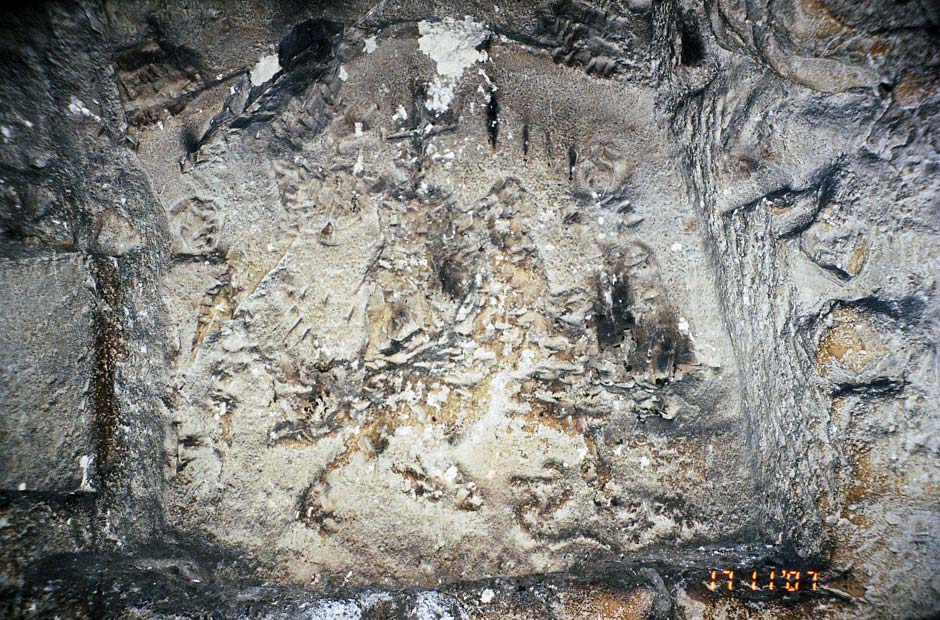
Rock-cut tauroctony forming the cult image of Mithraeum I at Doliche, later deliberately defaced by Christian iconoclasts.
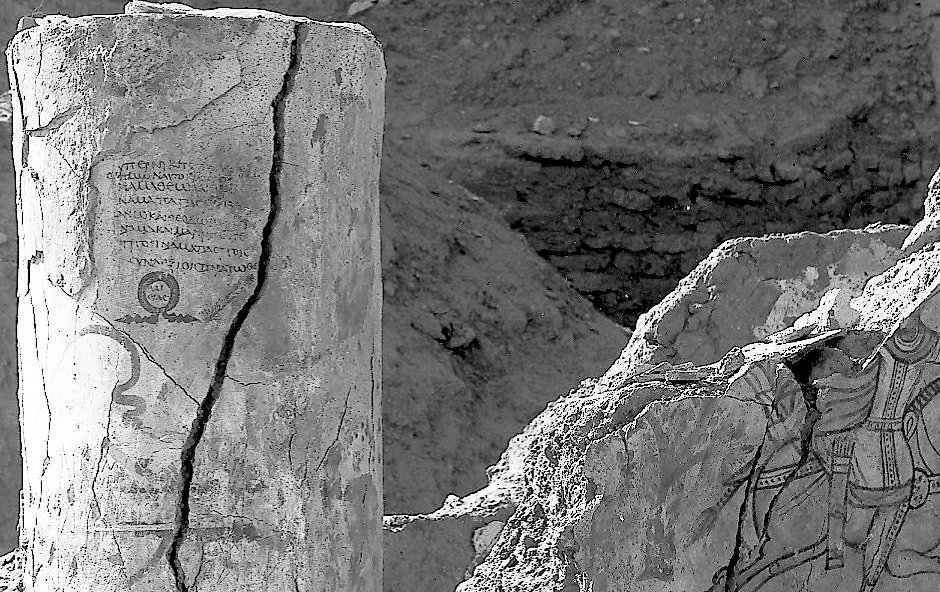
The inscription pays homage to the emperor, probably Caracalla, to Mithras, the fathers, the petitor and the syndexioi.

Engraved inscription naming Maximus as magus, from column 1 of the Mithraeum of Dura-Europos, Syria.
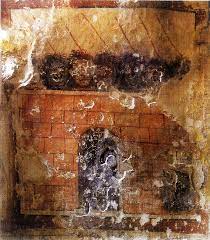
The City of Darkness unique fresco from the Mithraeum of Hawarte shows the tightest links between the western and eastern worship of Mithras in Roman Syria.
Partial list of Mithraic initiatory grade titles attested in inscriptions from the Mithraeum of Dura-Europos.
Small marble relief from the Aventine showing a primitive representation of Mithras slaying the bull, without torchbearers or Sol and Luna.
Minute engraved inscription with the words eisodos and exodos (entrance and exit), from column 3 of the Mithraeum of Dura-Europos, Syria.
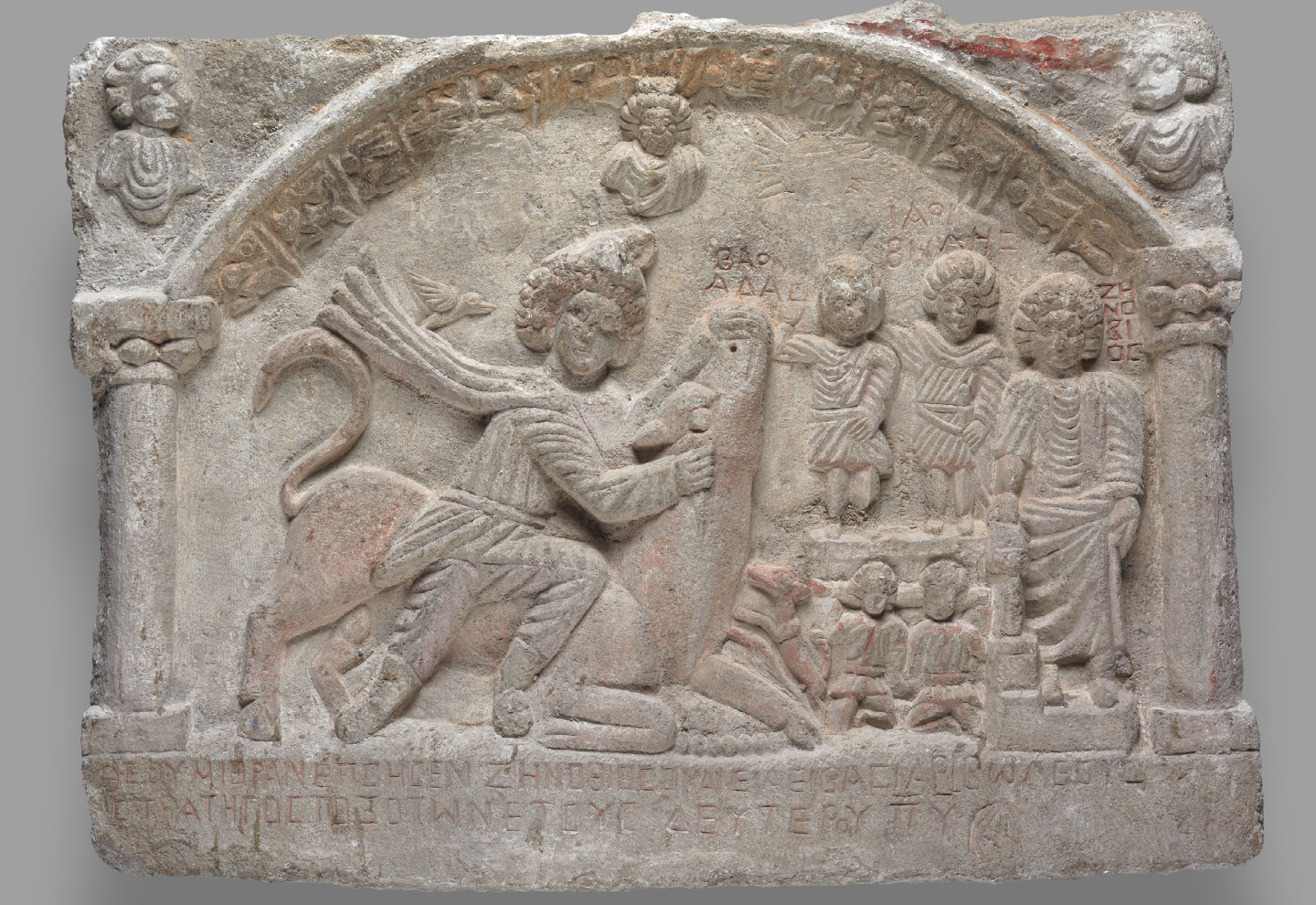
The main relief of Mithras killing the bull from the Mithraeum of Dura Europos includes three persons named Zenobius, Jariboles and Barnaadath.

Discovered beneath the church of Vieu-en-Valromey in 1869, this Mithraeum formed part of the monumental religious centre of ancient Venetonimagus.
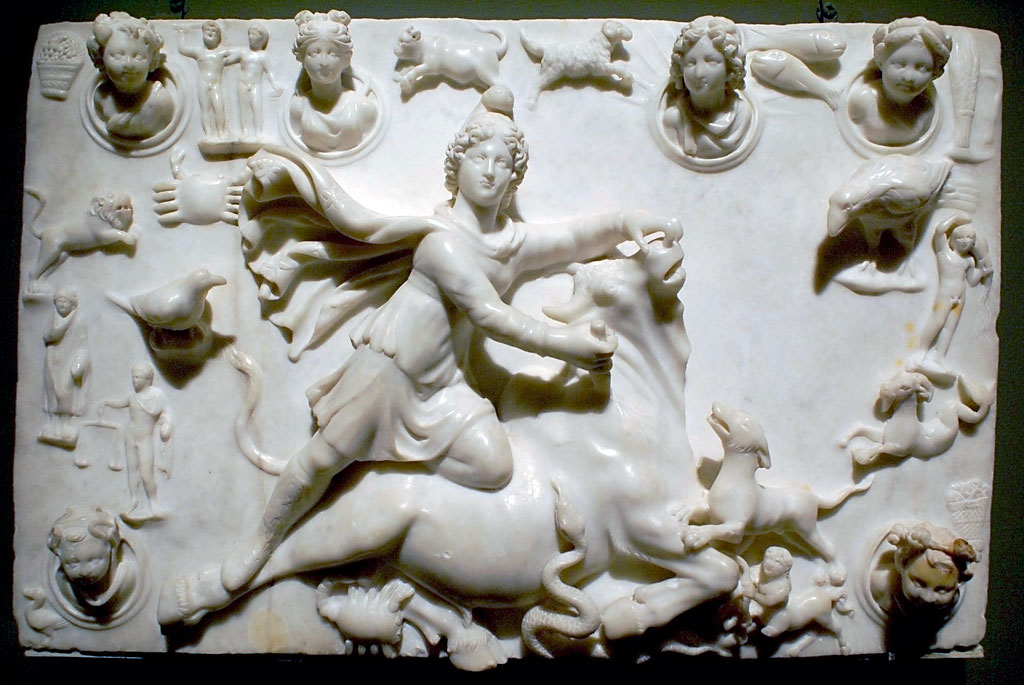
The tauroctony relief of Sidon depicts the signs of the zodiac and the four seasons, among other familiar features.
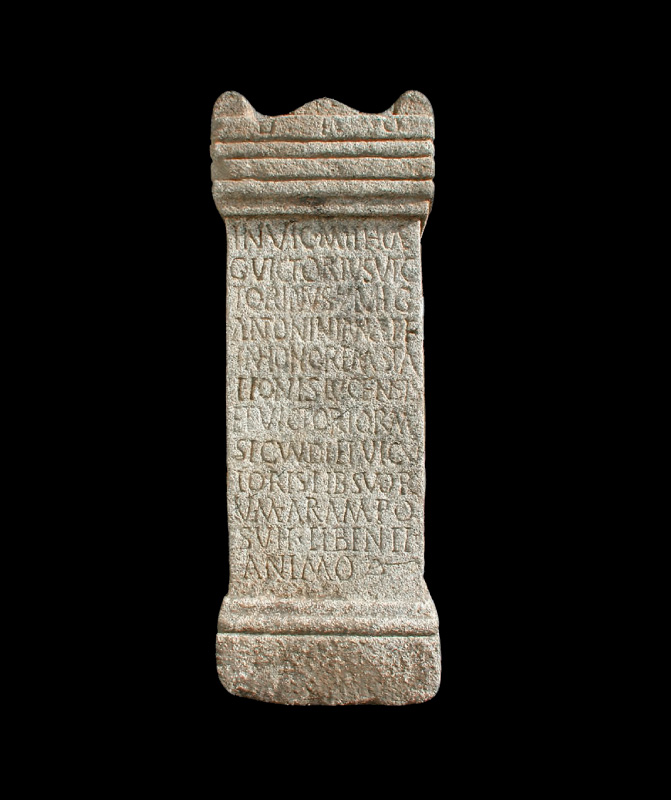
Victorius Victorious, centurion of the Legio VII, erected the altar in honour of the Lugo garrison and of the Victorius Secundus and Victor, his freedmen.
.jpg)
The controversial Italian journalist Edmon Durighello discovered this marble statue of a young naked Aion in 1887.
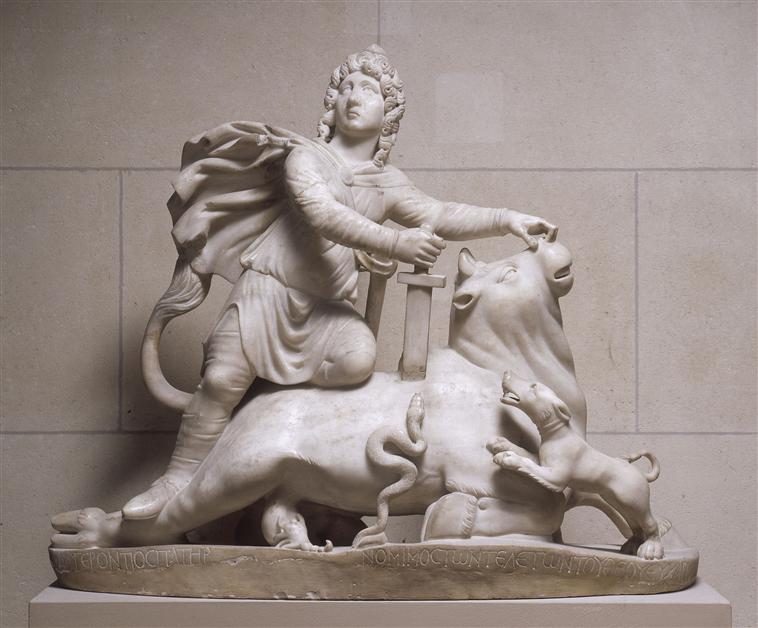
The Mithras killing the bull sculpture from Sidon, currently Lebanon.
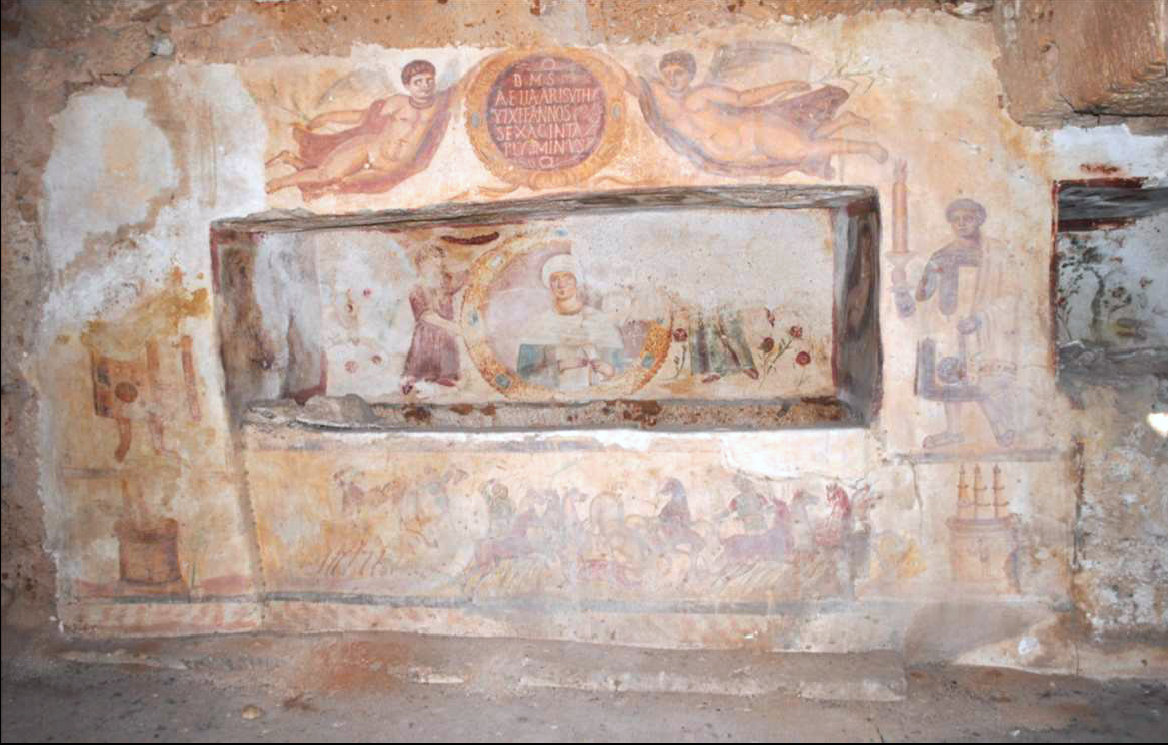
The Mithraic nature of the frescoes of Oea, according to the scholars Cumont and Vermaseren, is now questioned.
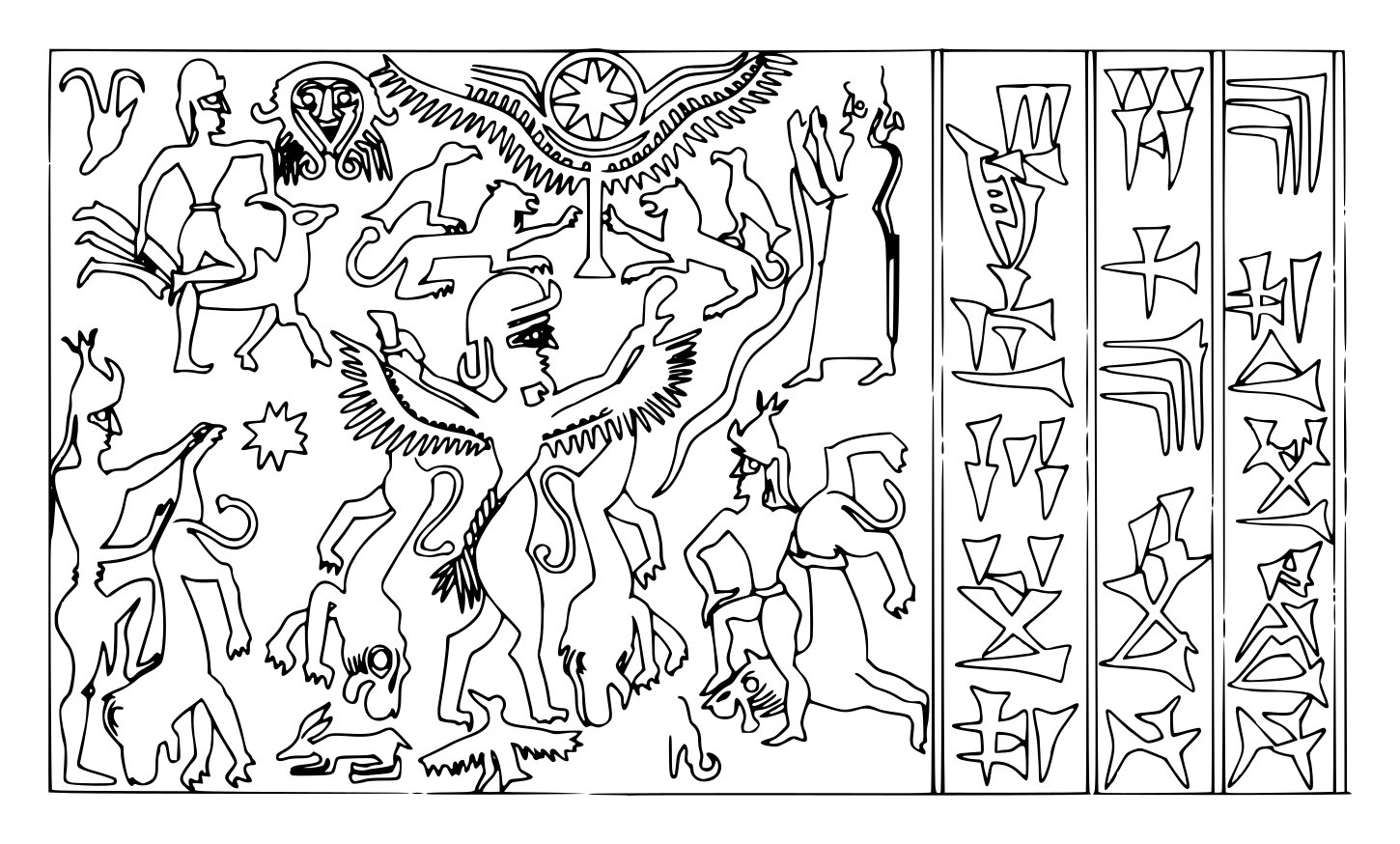
Royal Mitannian seal featuring a winged solar emblem and heroic combat scenes from the cultural milieu in which the earliest attestation of Mitra is found.
Limestone altar dedicated to Sol Invictus Mithras by the governor and military commander Marcus Valerius Maximianus.
Altar of Varia Severa from Mediolanum, modern Milan, one of the few women associated with a possible Mithraic dedication.
This lost monument from Malaga, Spain, to Dominus Invictus has been linked to the cult of Mithras, although there is not enough evidence.
