Your selection in monuments gave 141 results.

Fragmentary tauroctony preserving Mithras, the torchbearers, Sol and Luna from the sanctuary at Aïtodor.
Corner fragment preserving the feet and lowered torch of the Mithraic torchbearer Cautopates.
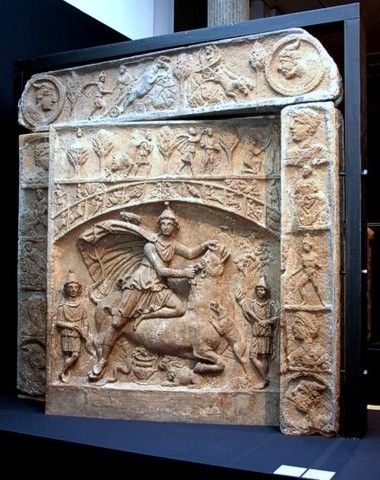
This relief is so well-known that it has been reproduced in nearly every handbook of archaeology and of history of religions.
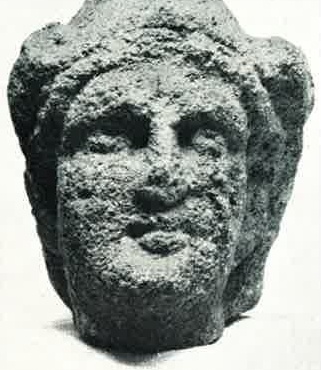
Sandstone fragment from Mithraeum I at Heddernheim, ancient Nida, probably the damaged head of a torchbearer, often misidentified as Mercury.
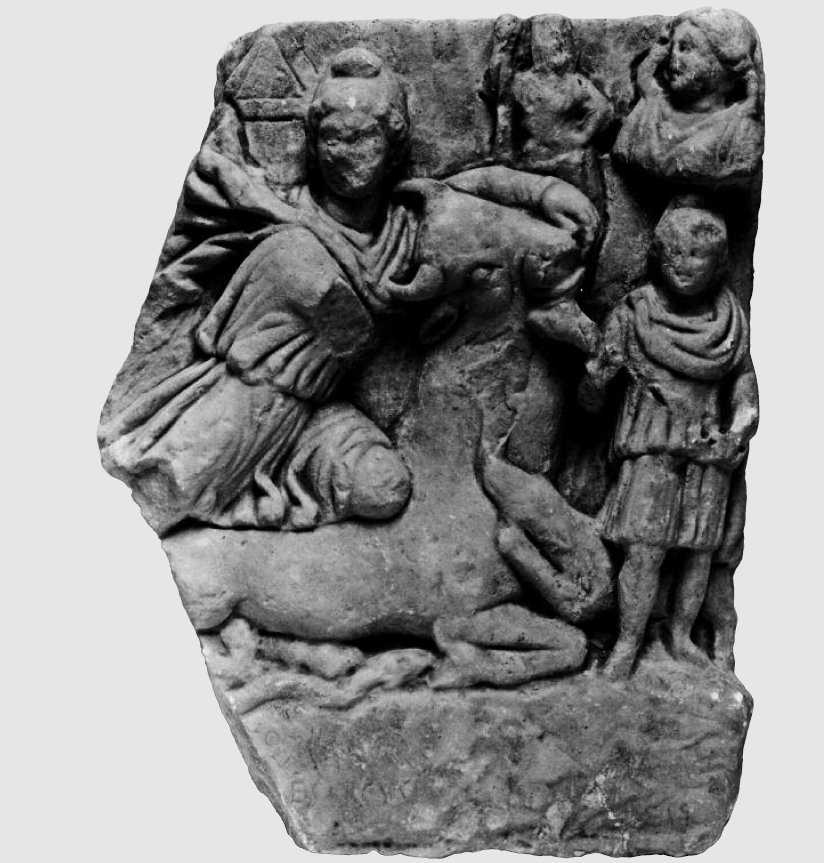
The Tauroctony of Patras was found years before the temple over which the relief of Mithras sacrificing the bull was supposed to preside.
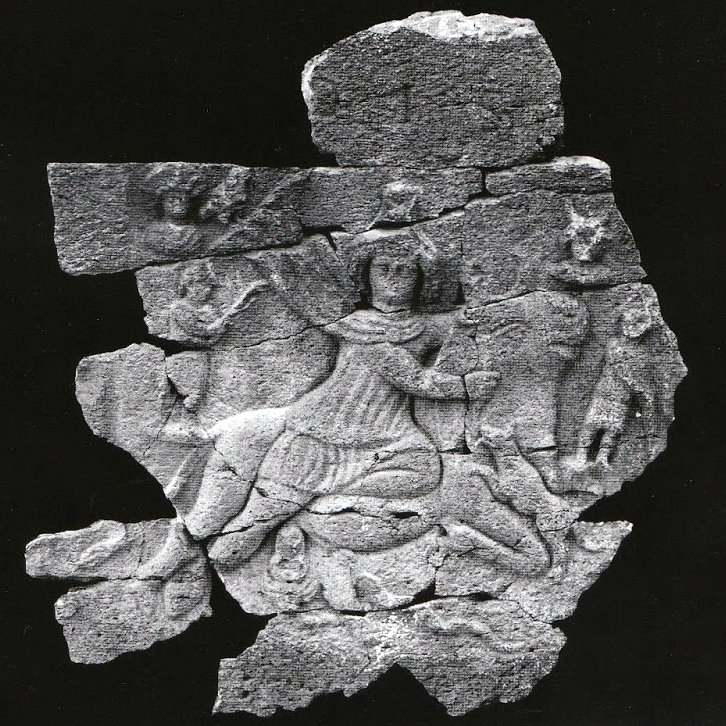
The second tauroctony of Jabal al-Druze seems to have be made by the same sculptor.
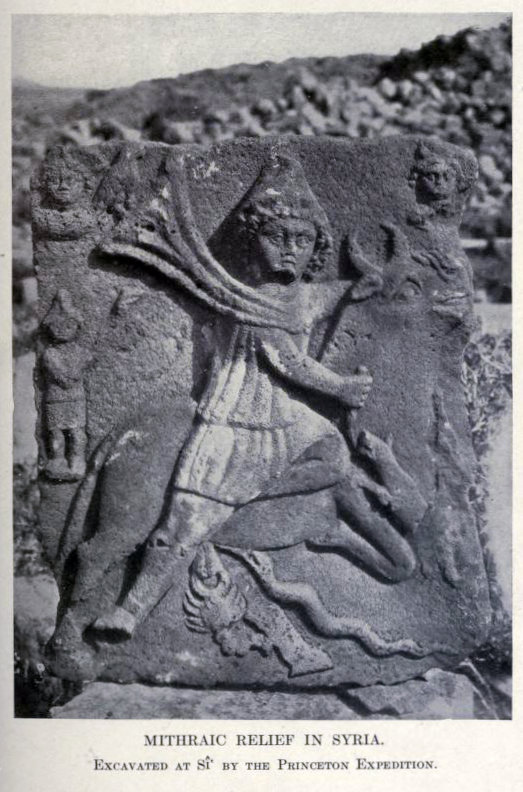
In the tauroctony of Jabal al-Druze in Syria, the snake appears to be licking the head of the bull's penis.

In this relief of Mithras as bull slayer, recorded in 1562 in the collection of A. Magarozzi, Cautes and Cautopates have been replaced by trees still bearing the torches.
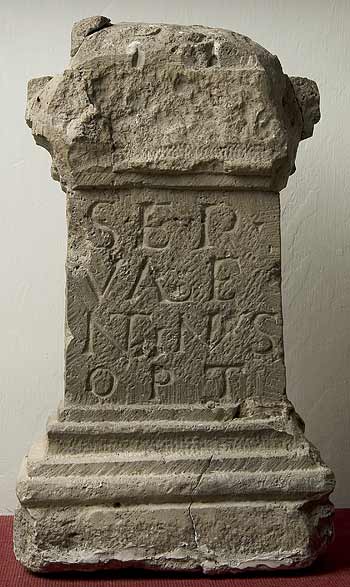
Limestone altar dedicated to Cautes by the Roman optio Septimius Valentinus, discovered in the Mithraeum of Sárkeszi in Pannonia Inferior.

This relief of Mithras slaying the bull incorporates the scene of the god carrying the bull and its birth from a rock.
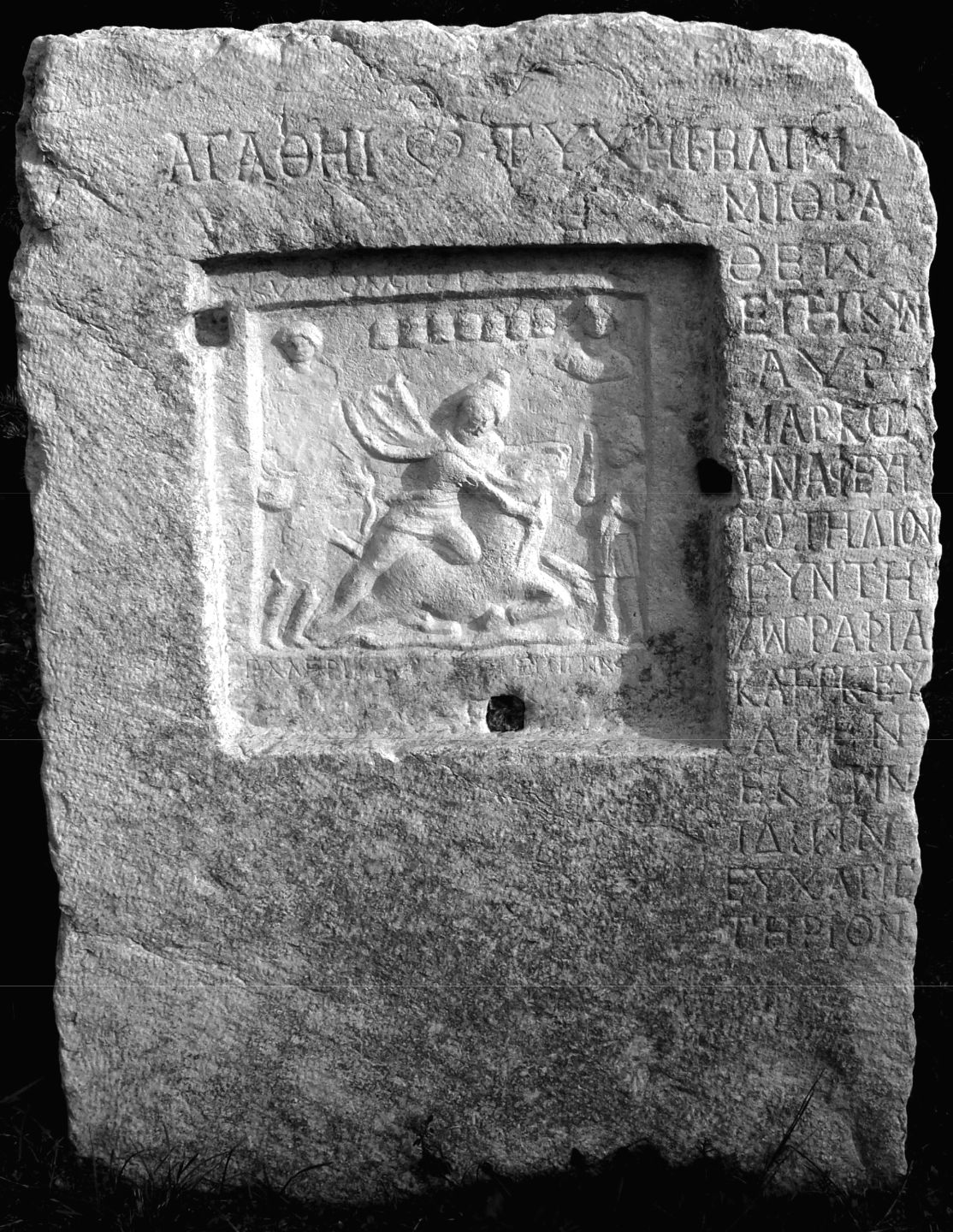
The Tauroctony of Nicopolis ad Istrum is unique as it is the only Mithraic stele befitting a Greek donor.
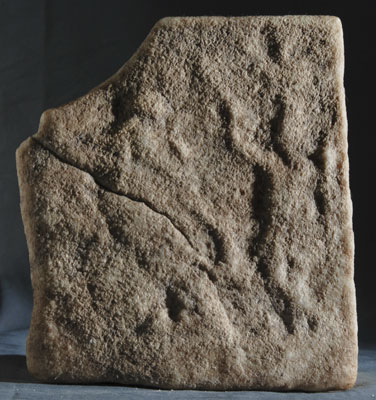
This small weathered marble fragment preserves part of a tauroctony with Cautes, Luna, the serpent, and a leaping dog.
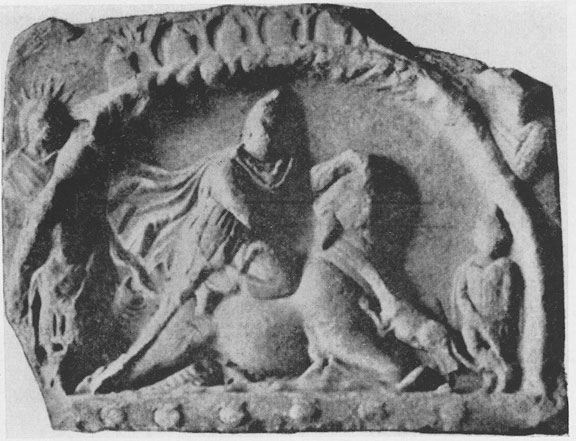
This finely carved marble tauroctony from Interamna features an unusual series of altars and ritual vases surrounding the scene.
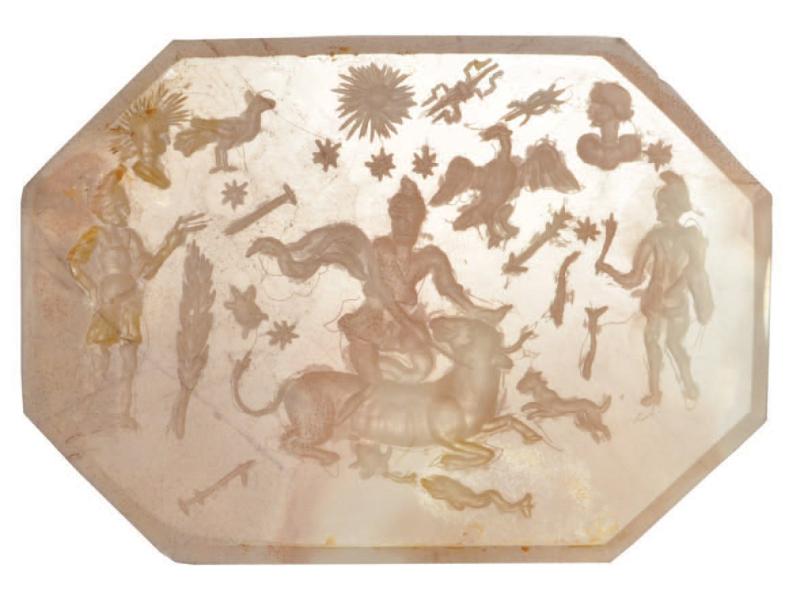
Large intaglio engraved with Mithras as bull slayer surrounded by a peculiar version of Cautes and Cautopates and other celestial deities.
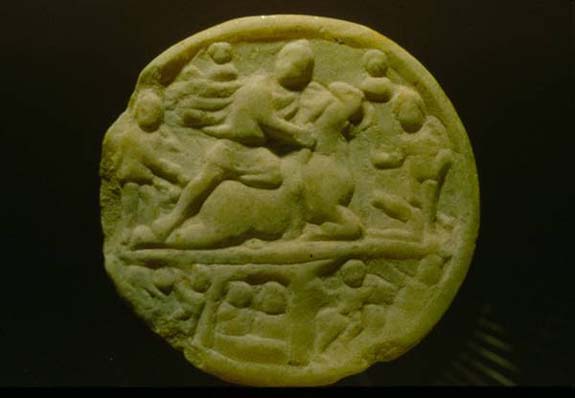
The small medallion depicts three scenes from the life of Mithras, including the Tauroctony. It may come from the Danube area.
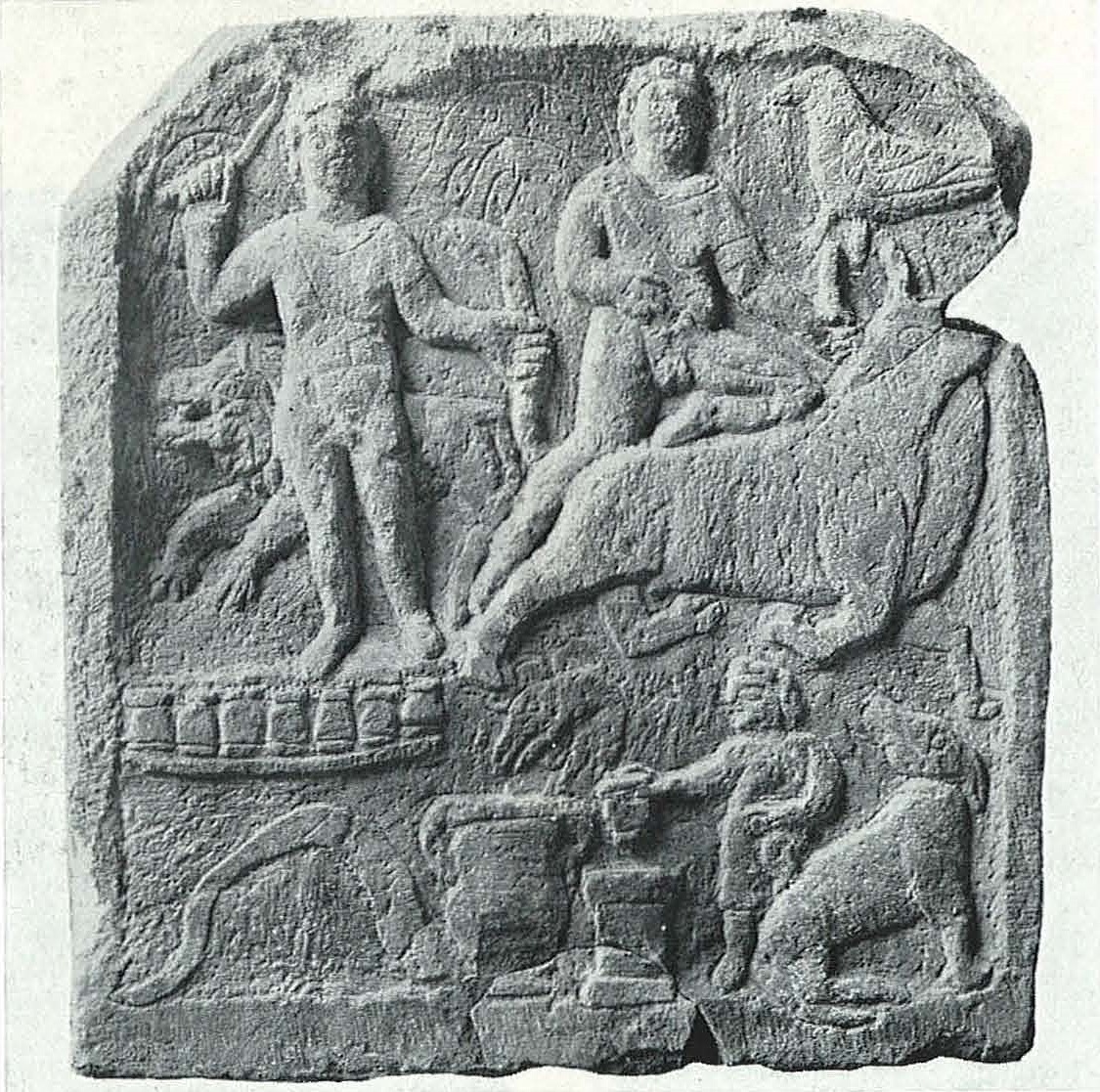
The Tauroctony from Landenburg, Germany, shows a naked Mithras only accompanied by his fellow Cautes.
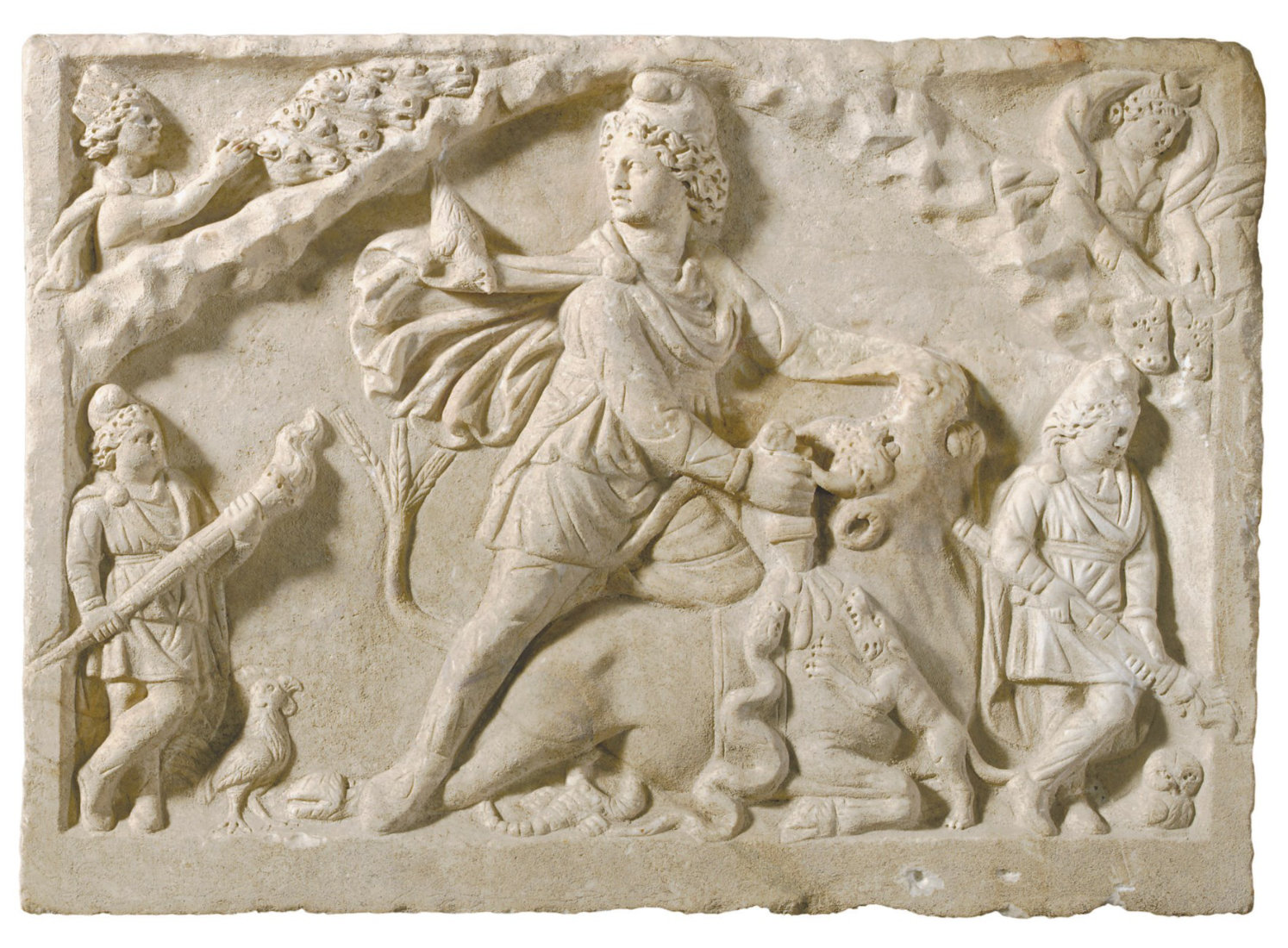
This relief of Mithras killing the bull includes an unusual owl at the feet of Cautopates and a cock next to Cautes.
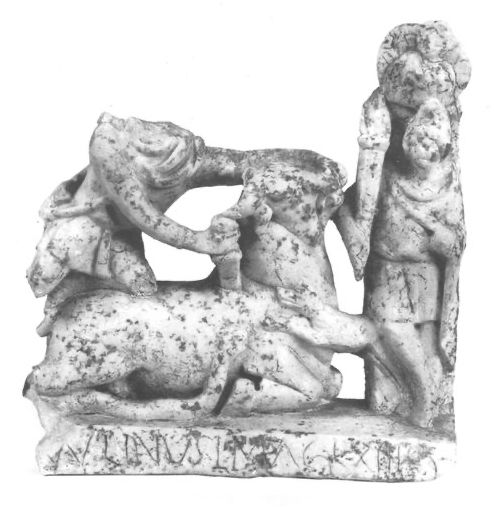
This relief of Mithras killing the bull was dedicated by the bearer of the imperial standard of Legio XIII Gemina, Marcus Ulpius Linus.

This relief of Mithras slaying the bull, framed by acanthus leaves, was sold at auction in 2011 by Bonhams.
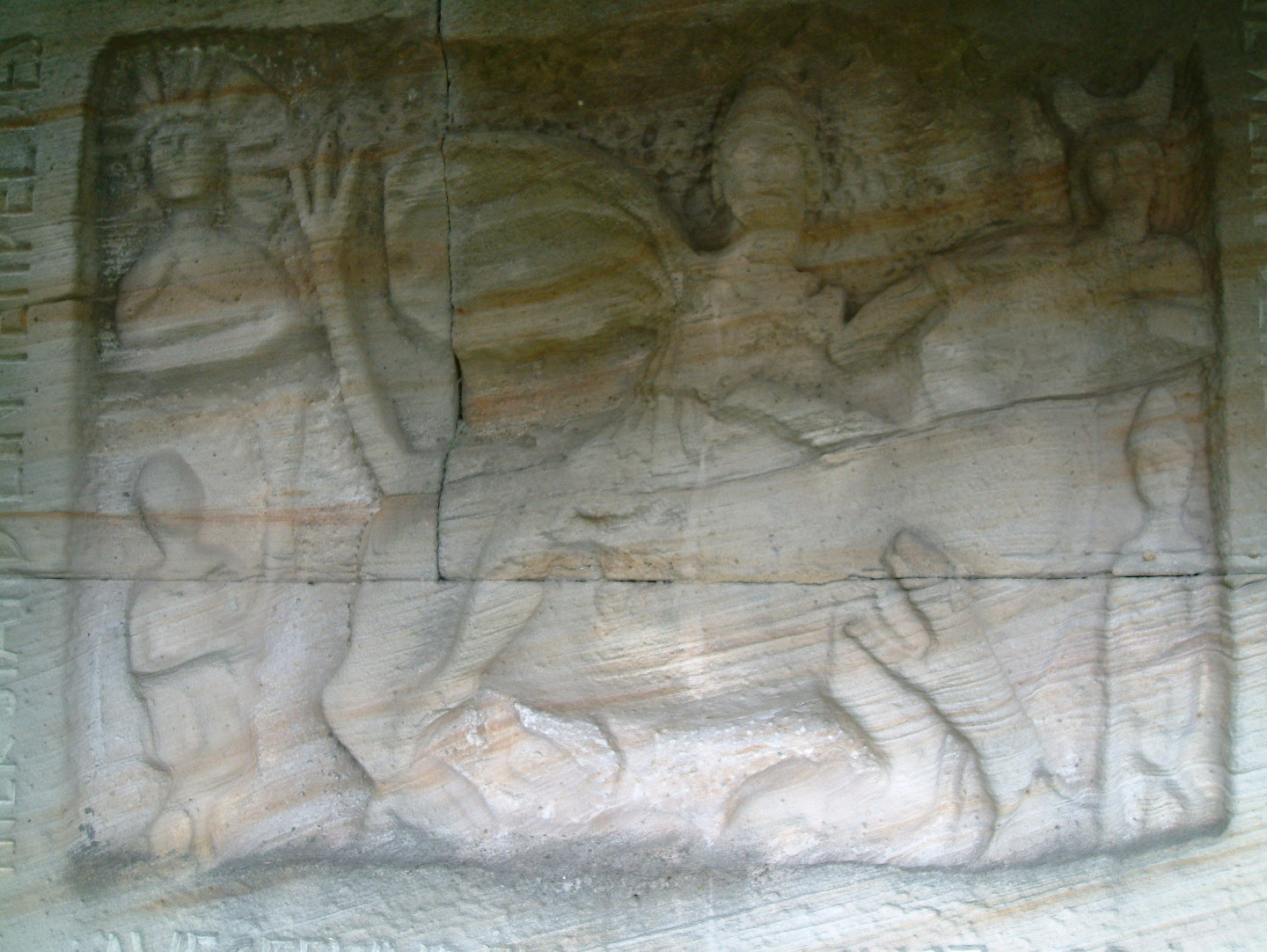
This relief of Mithras killing the bull found in Gimmeldingen, Germany, lacks the usual raven.
