Your selection in monuments gave 261 results.
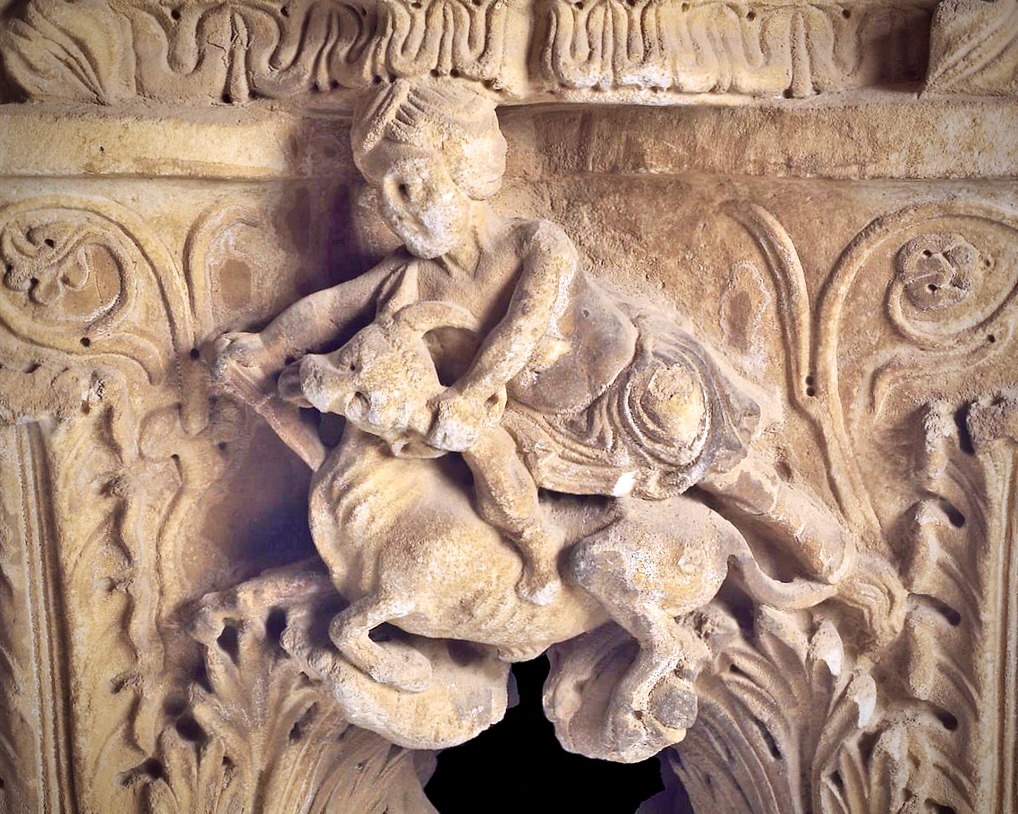
On one of the capitals of the cathedral of Santa Maria Nuova in Monreale, Sicily, an unusual turbaned bull-slaying Mithras has been recorded.
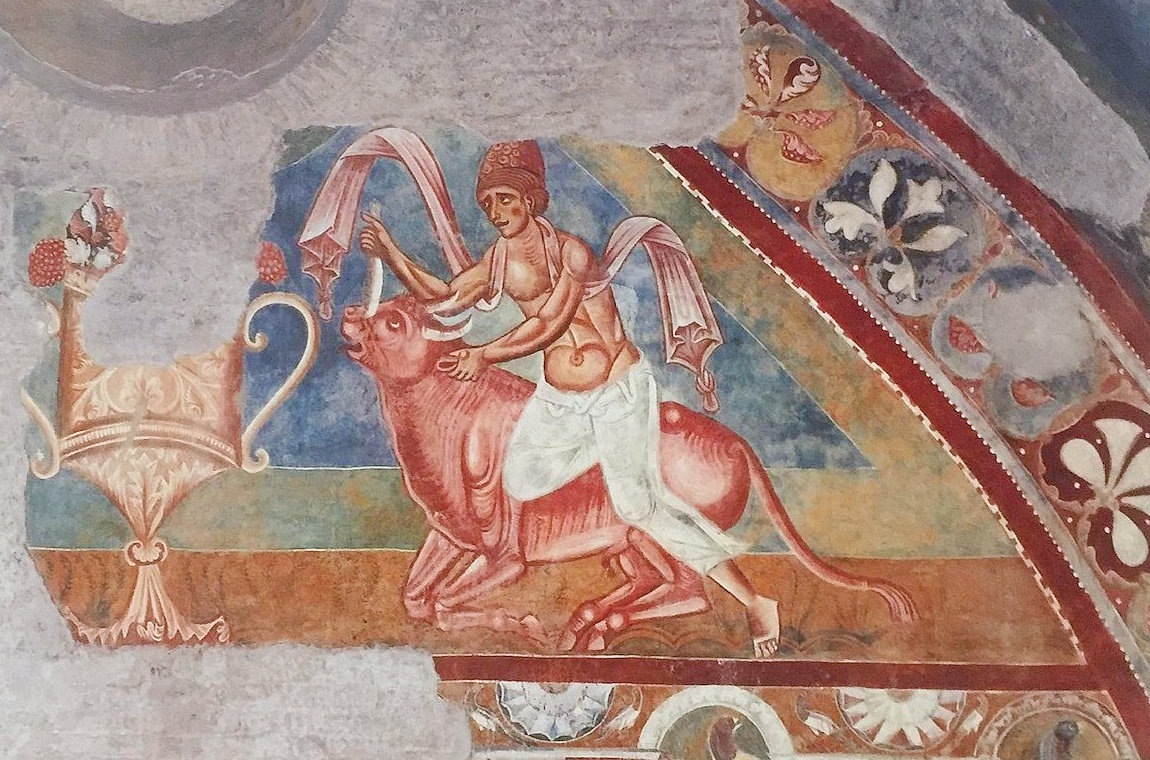
What appears to be a representation of Mithras killing the bull appears in the 12th century frescoes of the Basilica dei Santi Quattro Coronati in Rome.
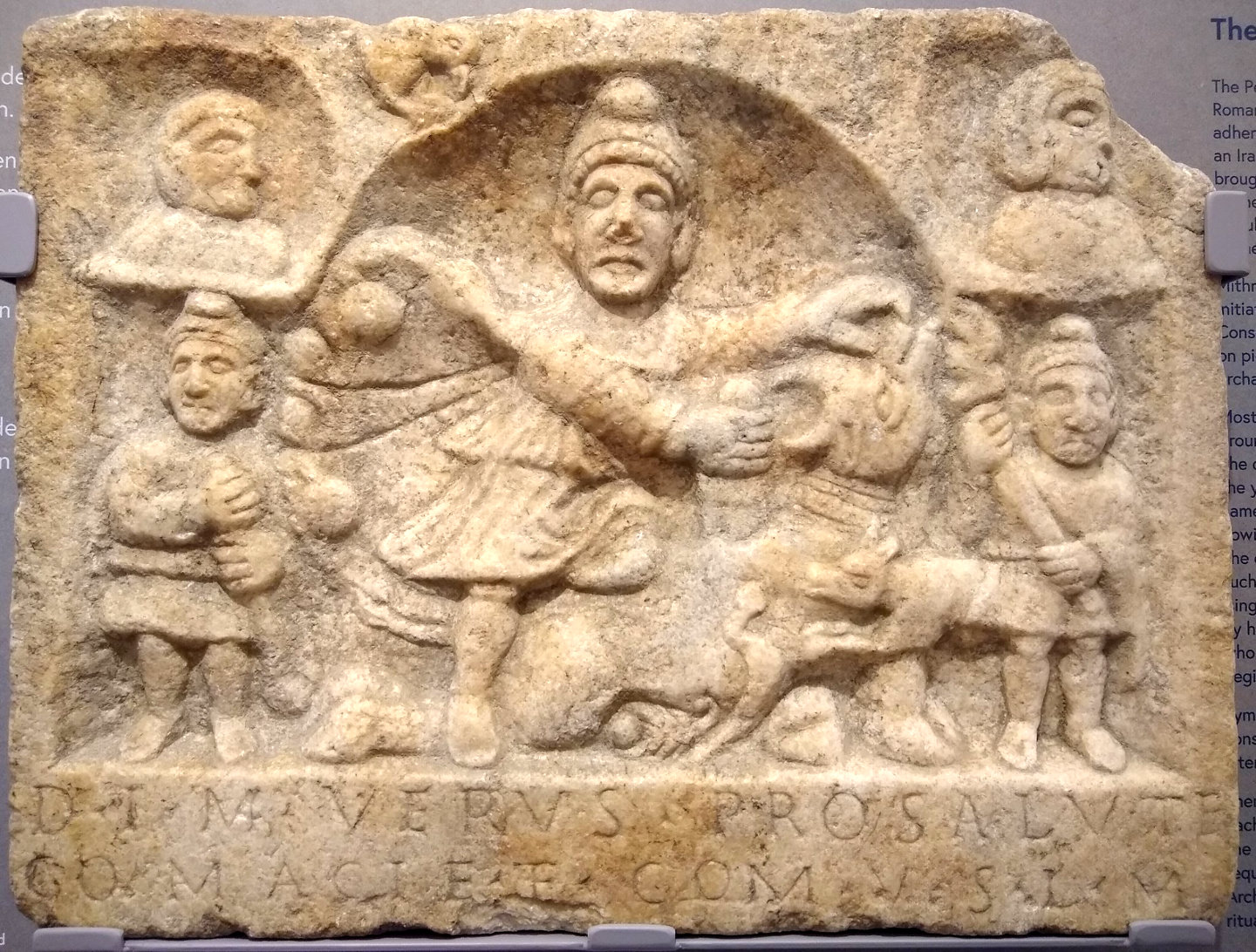
The votive image was donated by a certain Verus for a mithraeum which was probably located in the hinterland of the Limes.
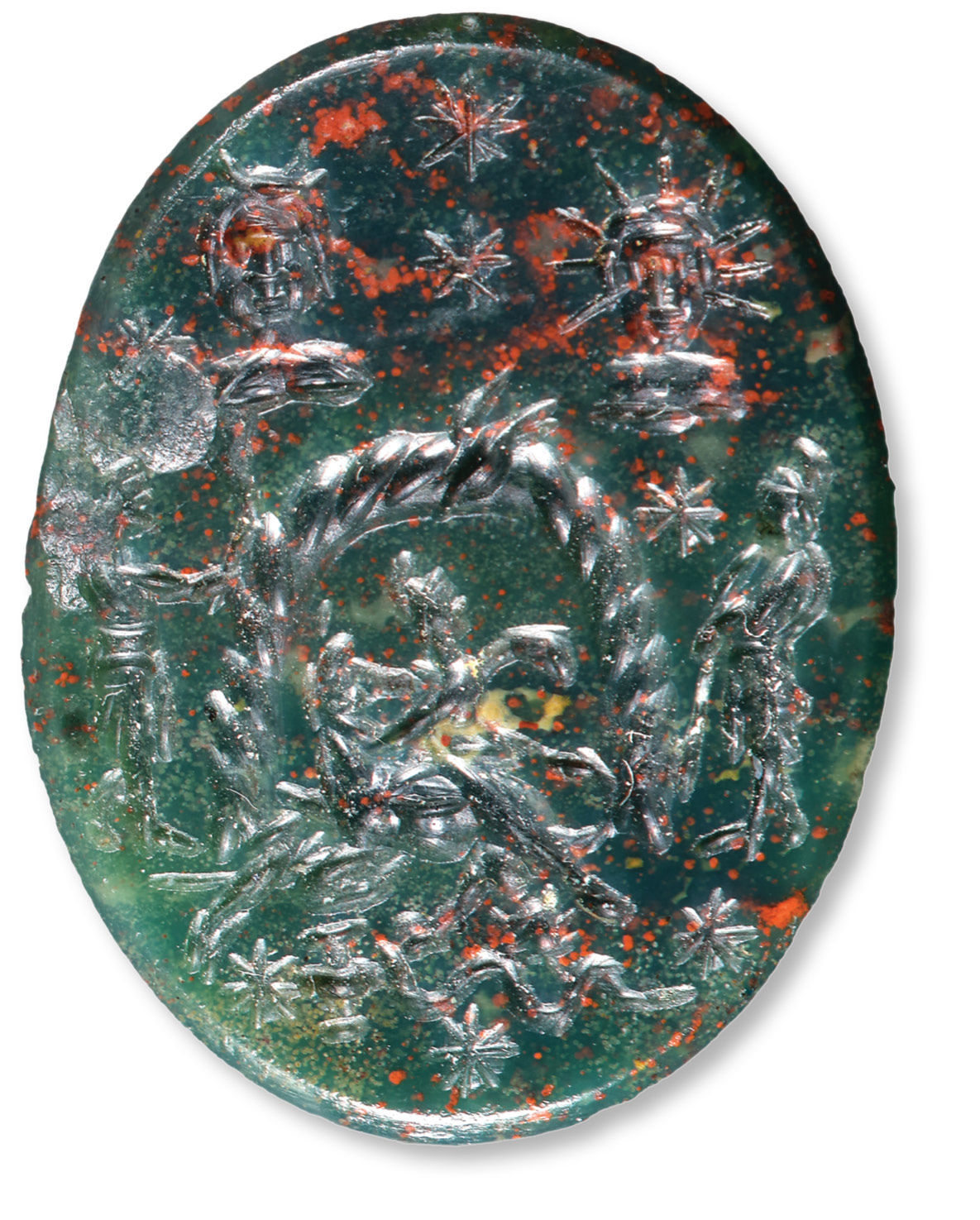
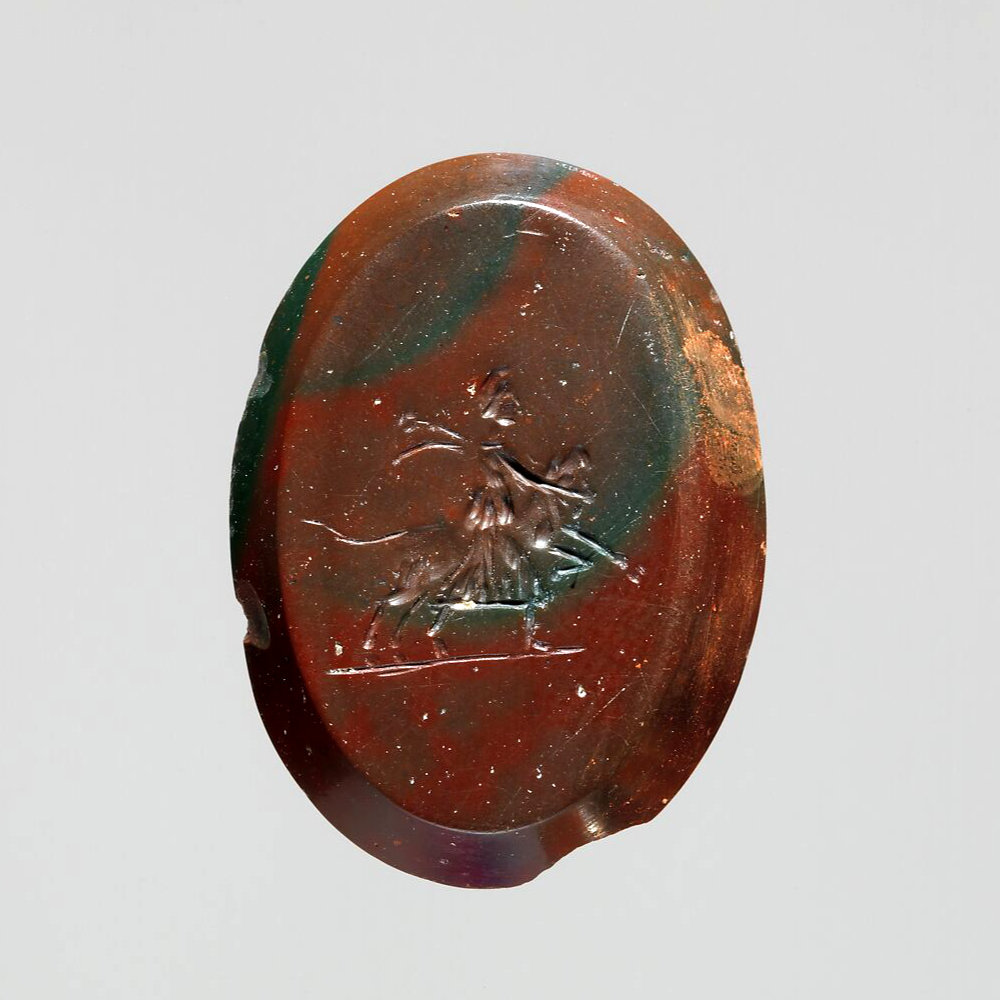
This heliotrope gem, depicting Mithras slaying the bull, dates from the 2nd-3rd century, but was reused as an amulet in the 13th century.
This small magical jasper gem shows Sol in a quadrigra on the recto and Mithras as a bull slayer on the verso.
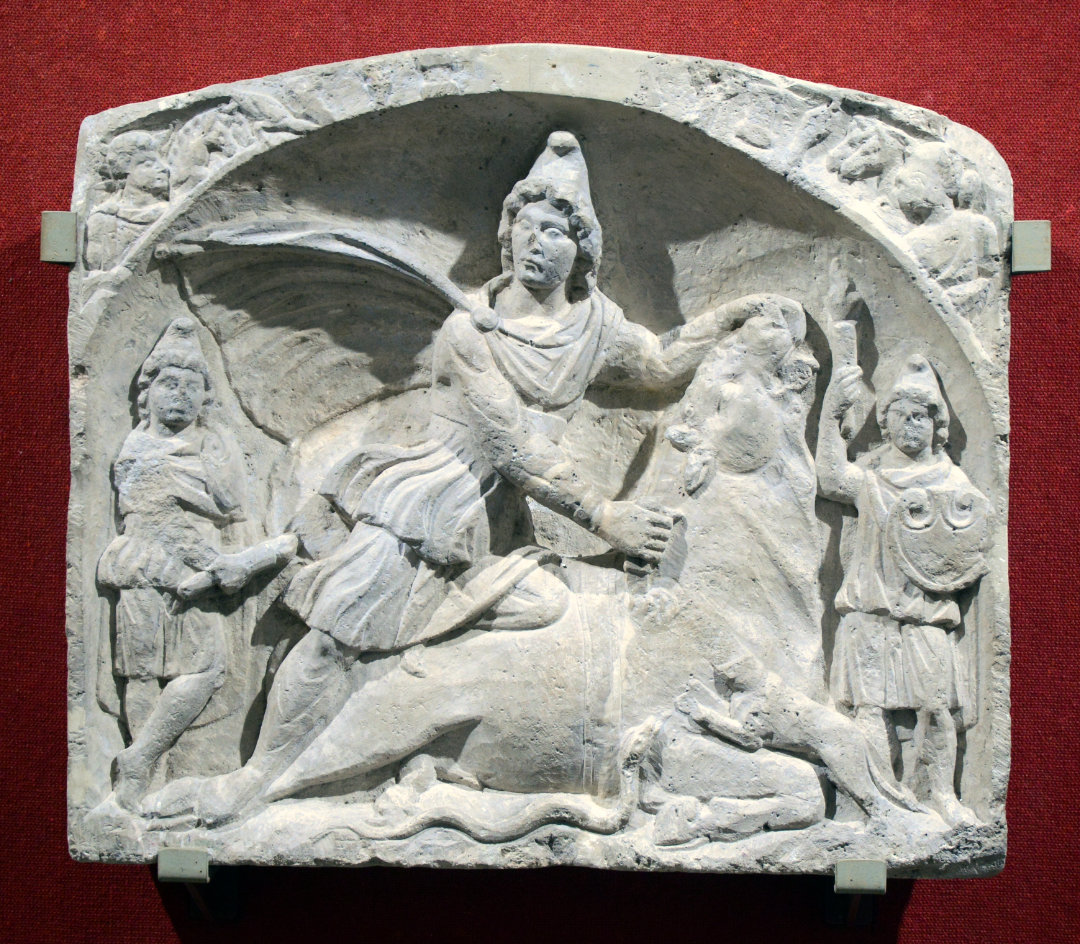
In this relief found in the Sárkeszi Mithraeum, Cautes and Cautopates hold an Amazon shield.
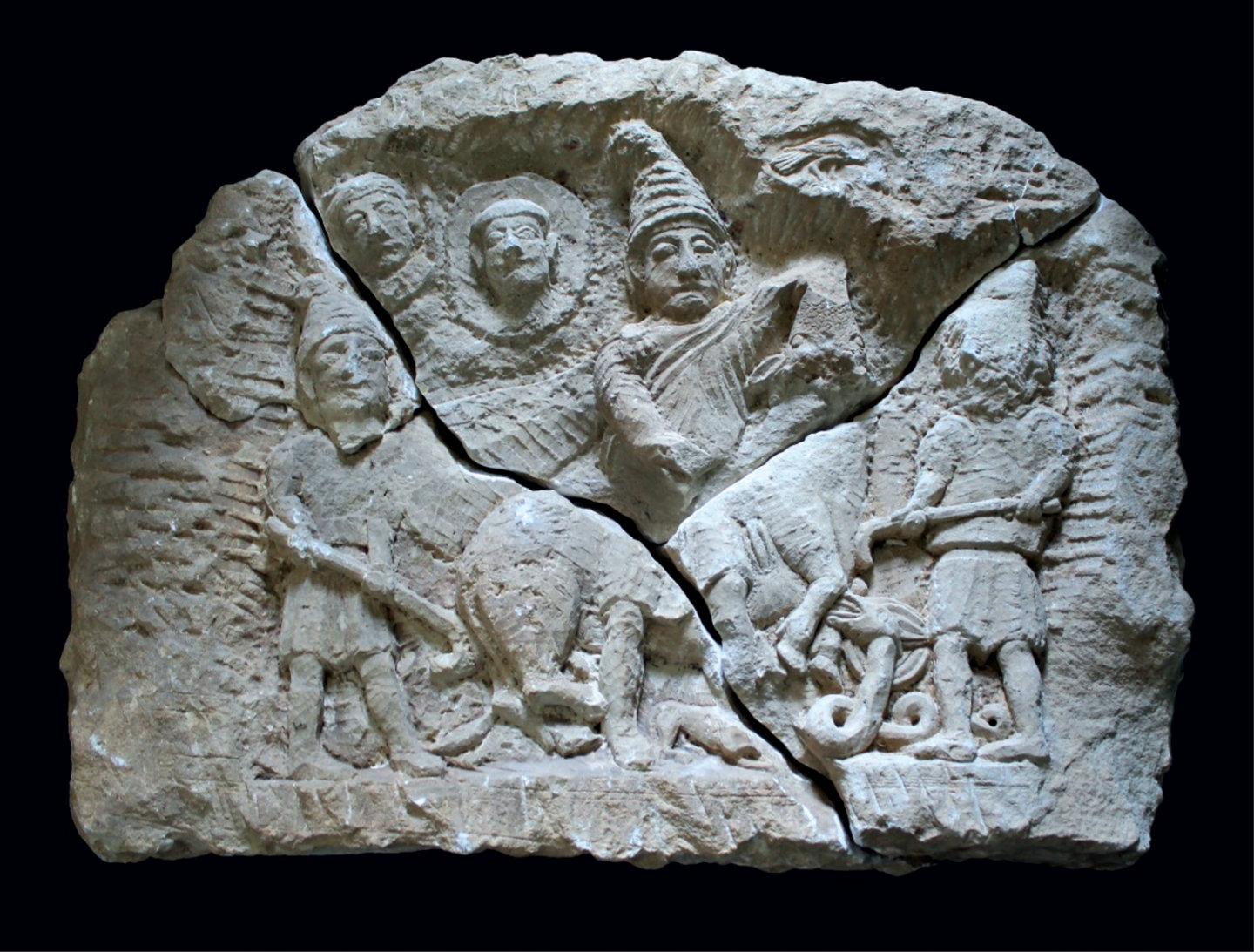
The relief of Mithras killing the bull, found near Zvornik in Bosnia and Herzegovina, features some variations on the usual scene.
.jpg)
The controversial Italian journalist Edmon Durighello discovered this marble statue of a young naked Aion in 1887.
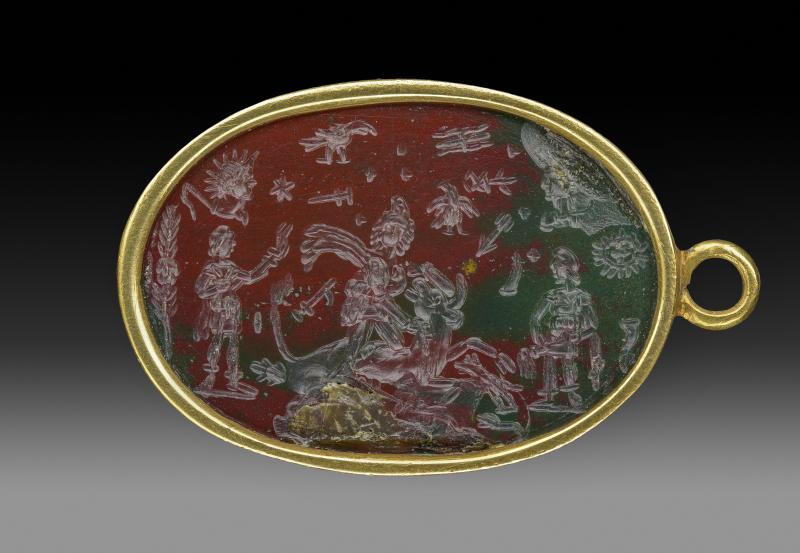
This intaglio portrays Mithra slaying the bull on one side, and a lion with a bee, around seven stars, and inscription, on the other.
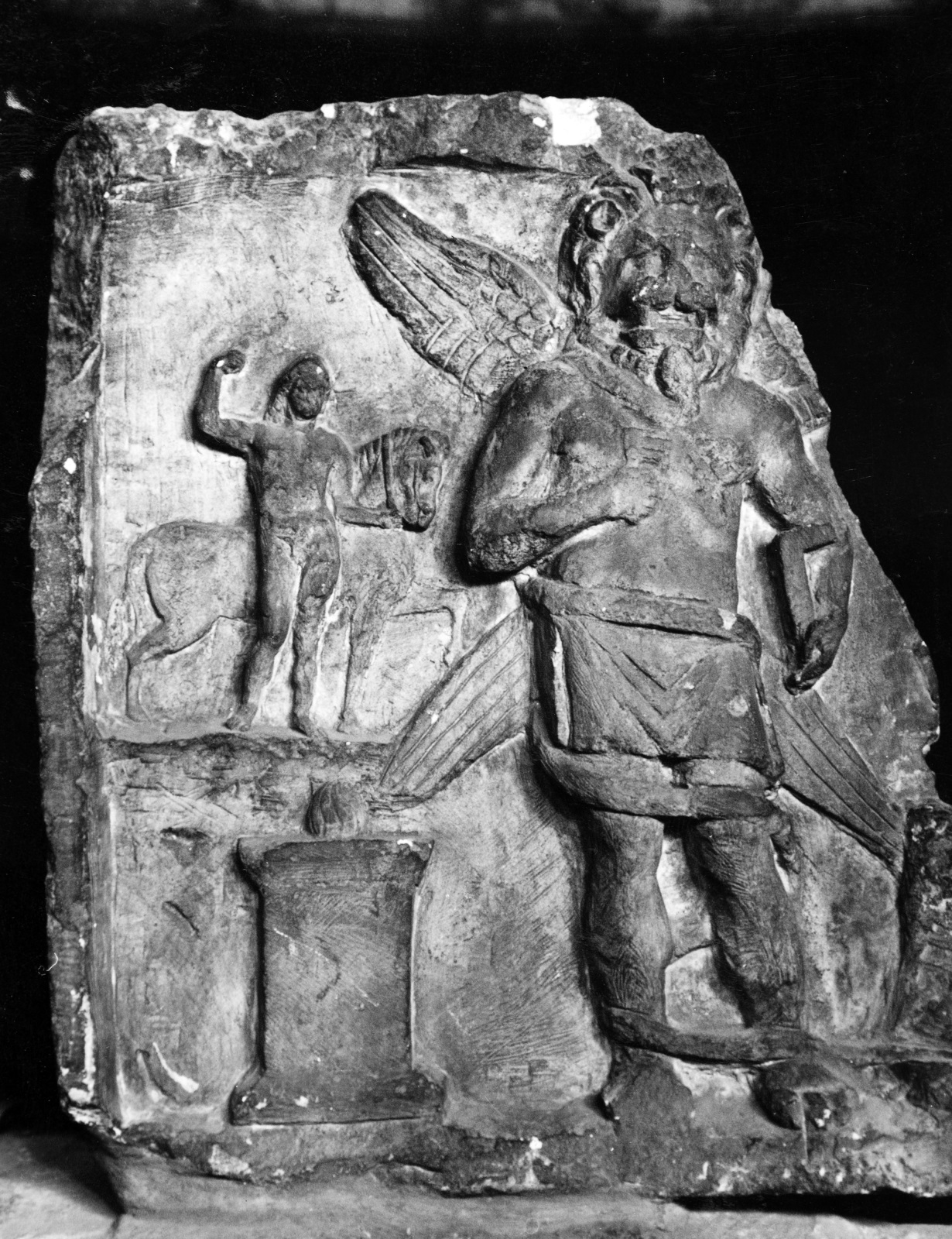
The relief of Aion from Vienne includes a naked youth in Phrygian cap holding the reins of a horse.

This elliptical terracotta fragment from Ostia depicts Mithras as a bullkiller.
Minto has claimed that the time god Aion was painted on the corner of the north wall of the Mitreo de Santa Capua Vetere.
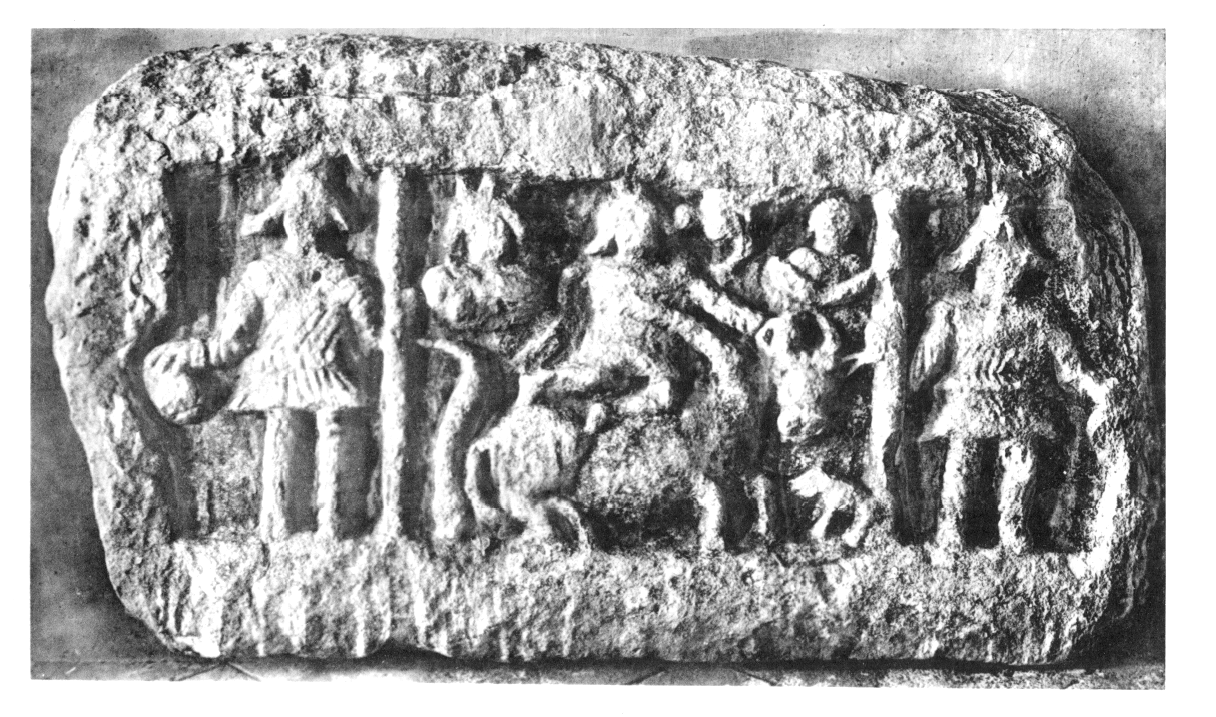
This relief of Mithras as bull slayer is surrounded by Cautes and Cautopates with their usual torch plus an oval object.
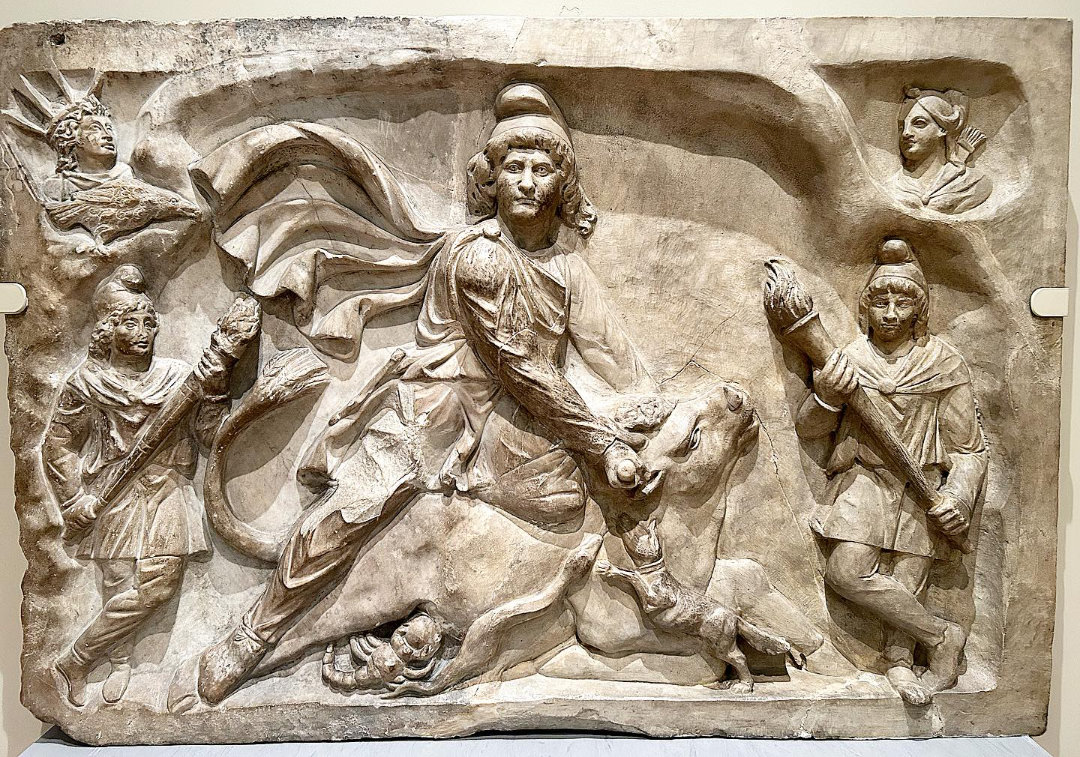
This relief of Mithras killing the bull is on display at the Royal Ontario Museum.
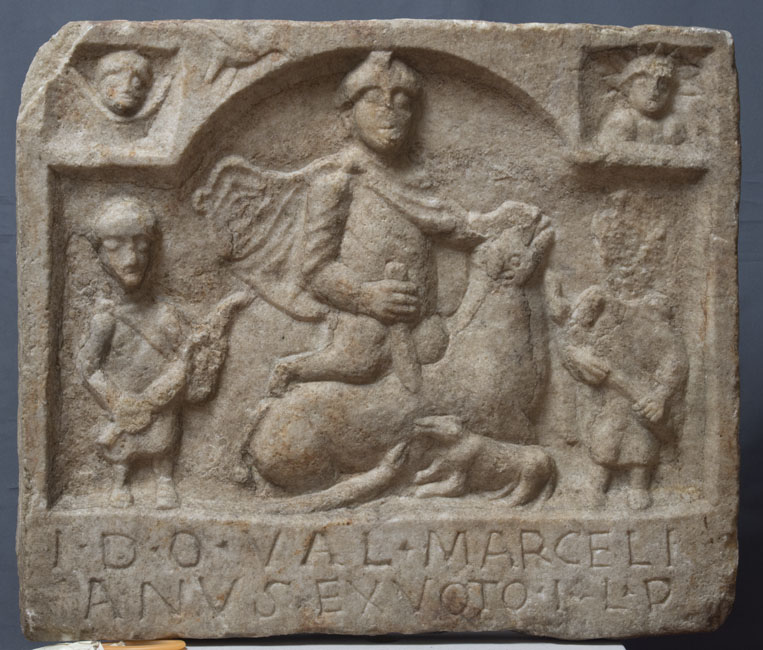
This primitive relief of Mithras as a bullkiller is signed by a certain Valerius Marcelianus.
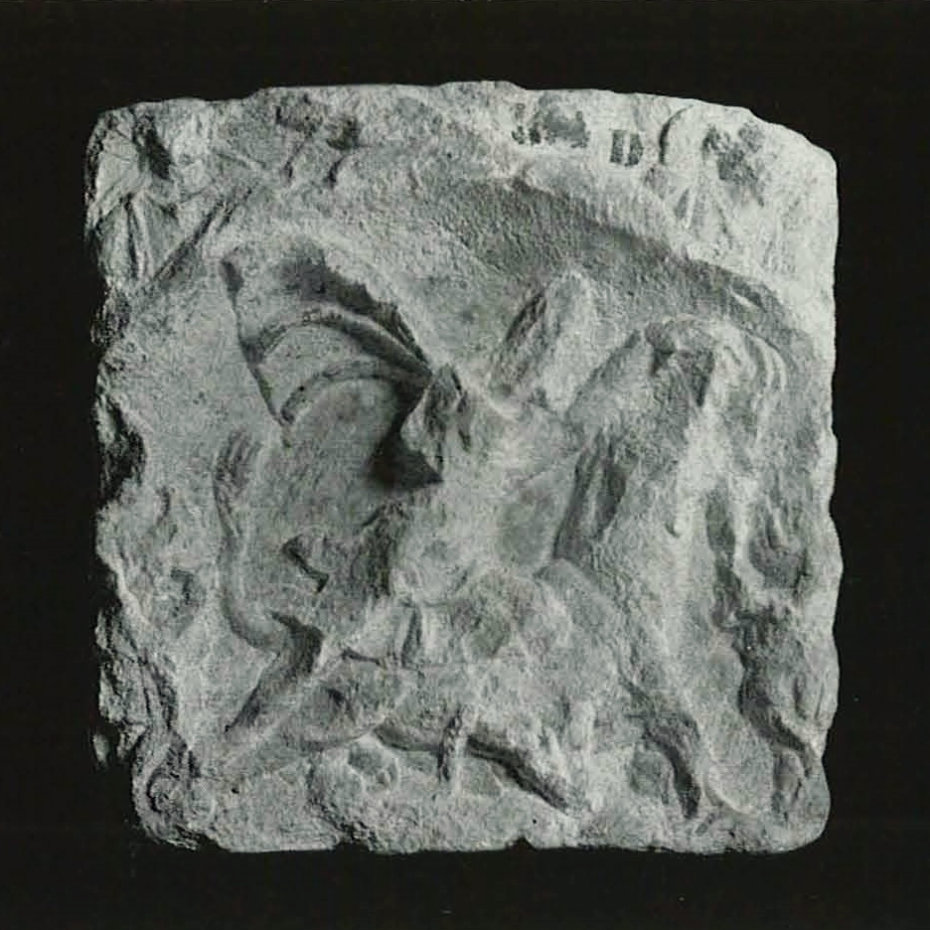
This damage relief of Mithras killing the bull was found walled into a house near Split, Croatia.
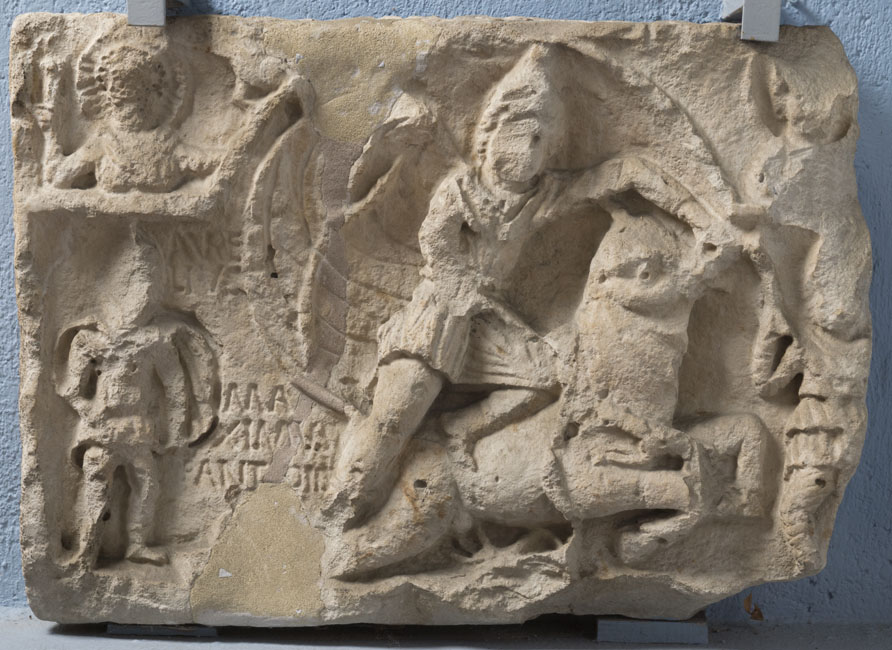
This relief of Mithras as a bullkiller was found in Golubić, Bosnia and Herzegovina, near a cementery.
Vermaseren noted in his Corpus that he had been informed of a fragmented relief of Mithras killing the bull in "the museum at Ghighen".
This statuette was bought by A. Wiedemann in Luxor in 1882 from a man from Kus.
This Aion is known for wearing a Kalathos on his lion’s head, linking him to the syncretic Sarapis.
