Filtering by Region: Syria in monuments gave 68 results.
.jpg)
The controversial Italian journalist Edmon Durighello discovered this marble statue of a young naked Aion in 1887.
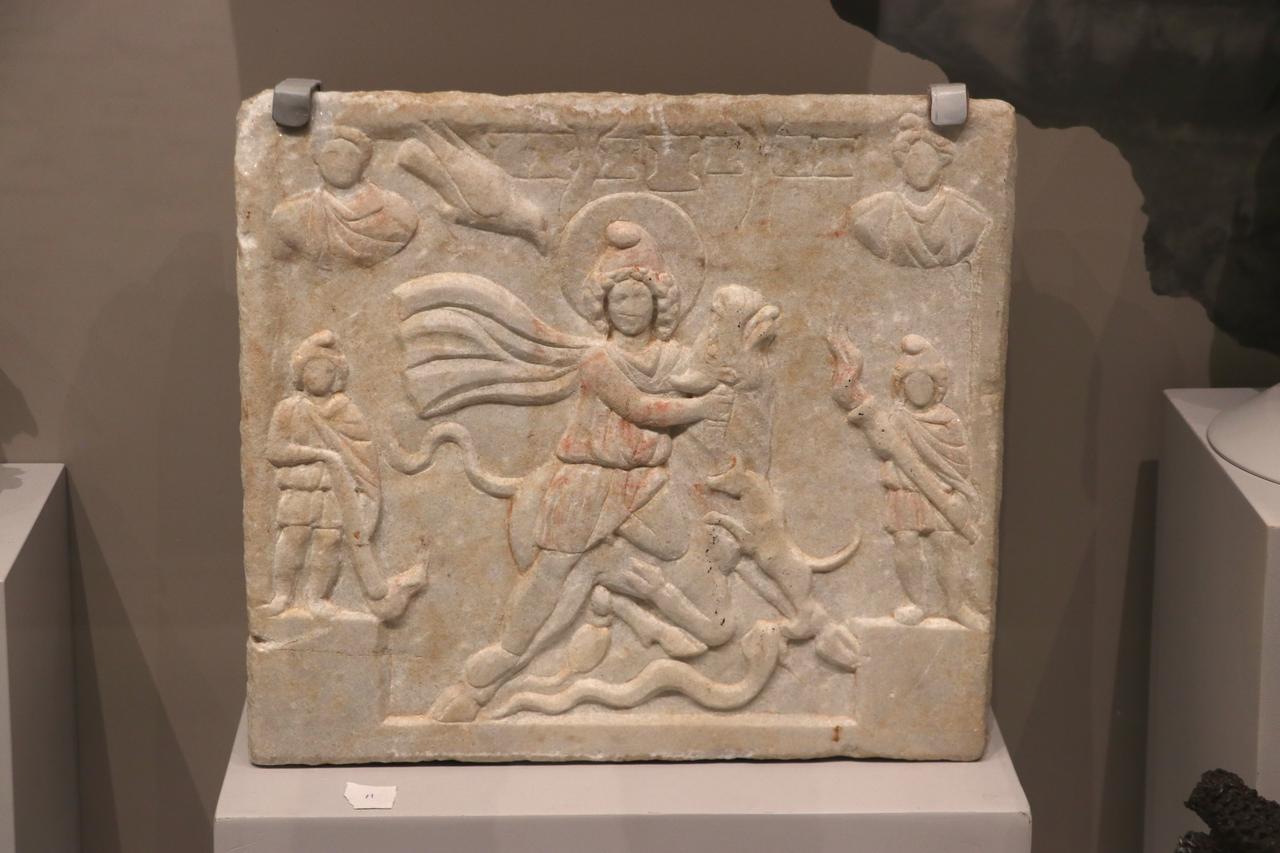
A marble tauroctony discovered in the military quarter of ancient Zeugma, providing the first known evidence for the cult of Mithras at the city.
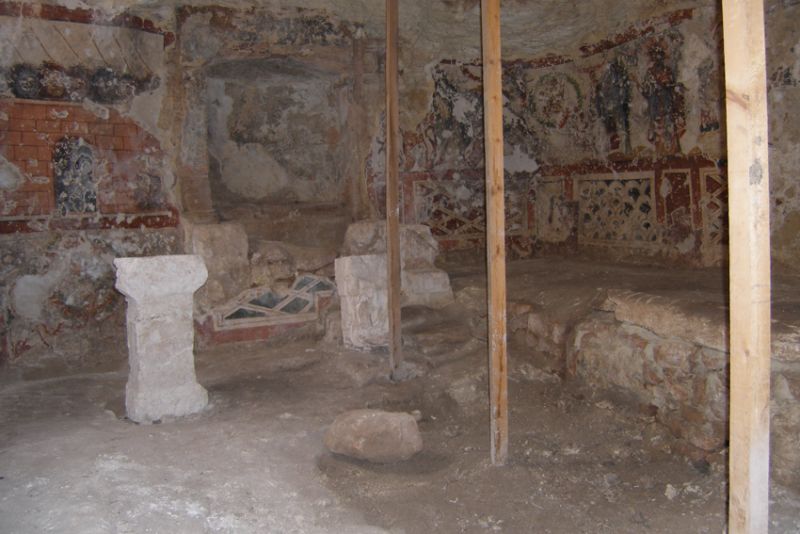
Late Roman Mithraeum beneath a fourth-century church, preserving one of the most extensive cycles of Mithraic wall paintings ever discovered.
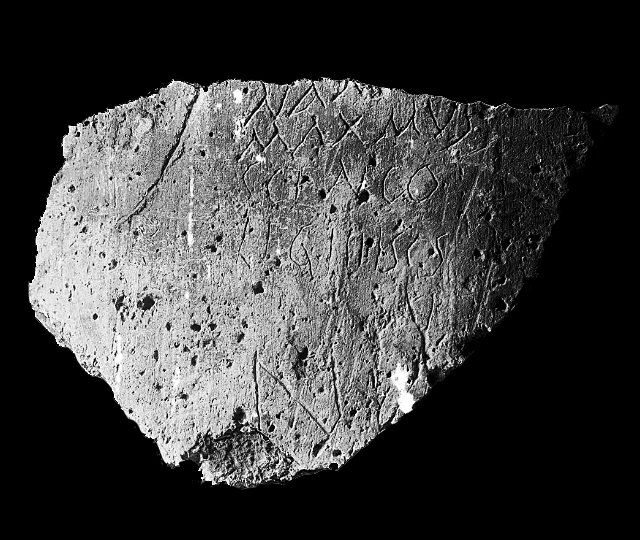
A certain Maximus from the Legio IV Scythica engraved his name in one of the columns of the Mithraeum of Dura Europos.
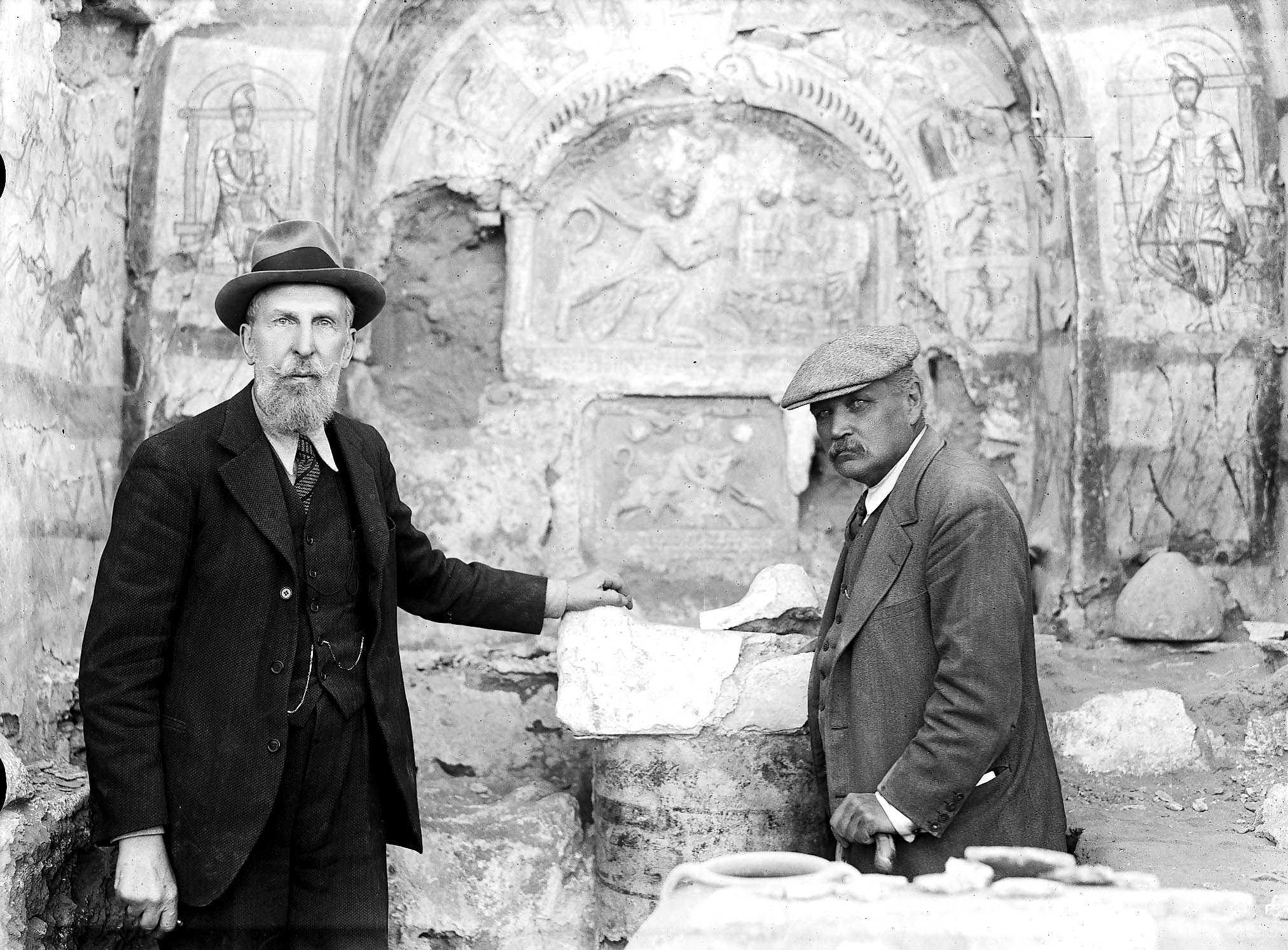
The most emblematic of the Syrian Mithraea was discovered in 1933 by a team led by the Russian historian Mikhaïl Rostovtzeff.
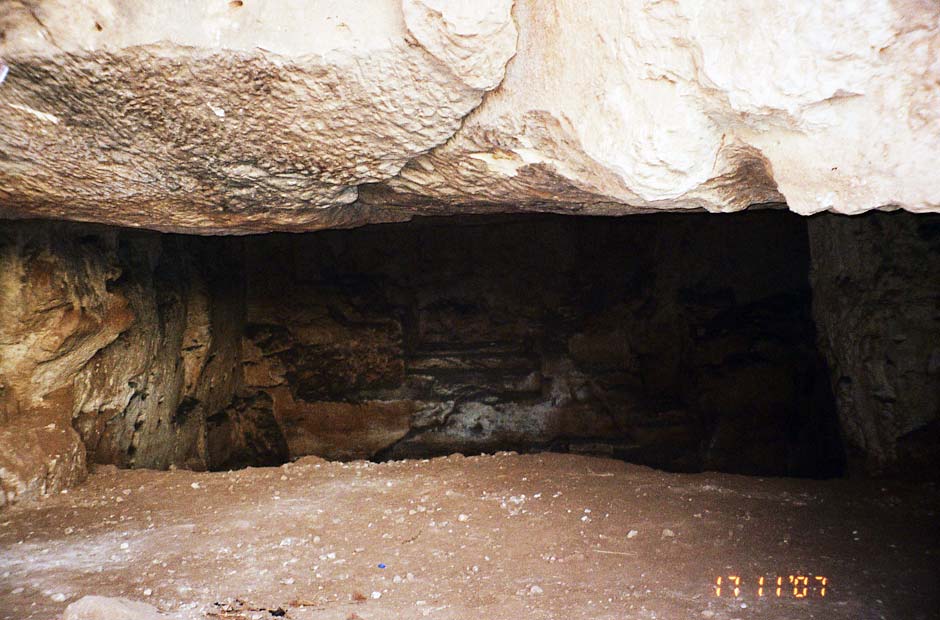
The Mithraea of Doliche, ancient Dülük, Turkey, are unique in that they represent two distinct shrines on the same site.
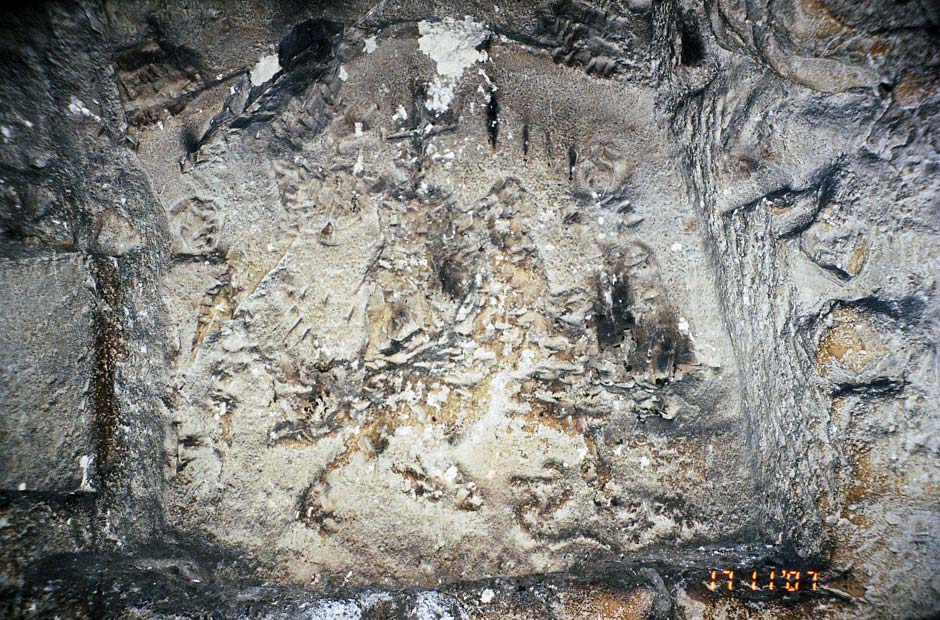
Rock-cut tauroctony forming the cult image of Mithraeum I at Doliche, later deliberately defaced by Christian iconoclasts.
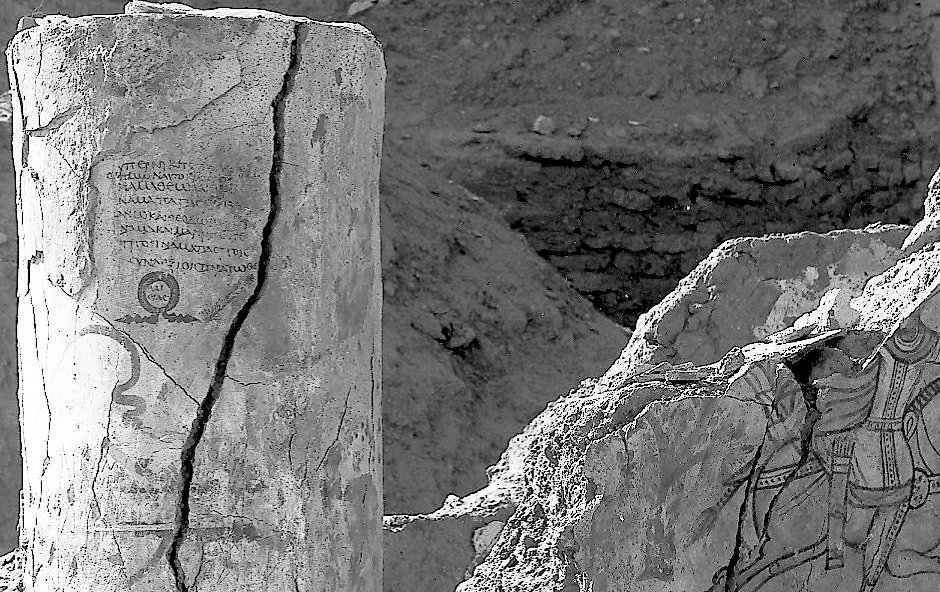
The inscription pays homage to the emperor, probably Caracalla, to Mithras, the fathers, the petitor and the syndexioi.

Engraved inscription naming Maximus as magus, from column 1 of the Mithraeum of Dura-Europos, Syria.
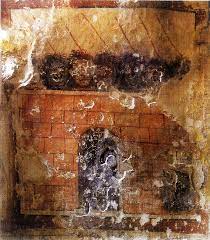
The City of Darkness unique fresco from the Mithraeum of Hawarte shows the tightest links between the western and eastern worship of Mithras in Roman Syria.
Partial list of Mithraic initiatory grade titles attested in inscriptions from the Mithraeum of Dura-Europos.
Minute engraved inscription with the words eisodos and exodos (entrance and exit), from column 3 of the Mithraeum of Dura-Europos, Syria.
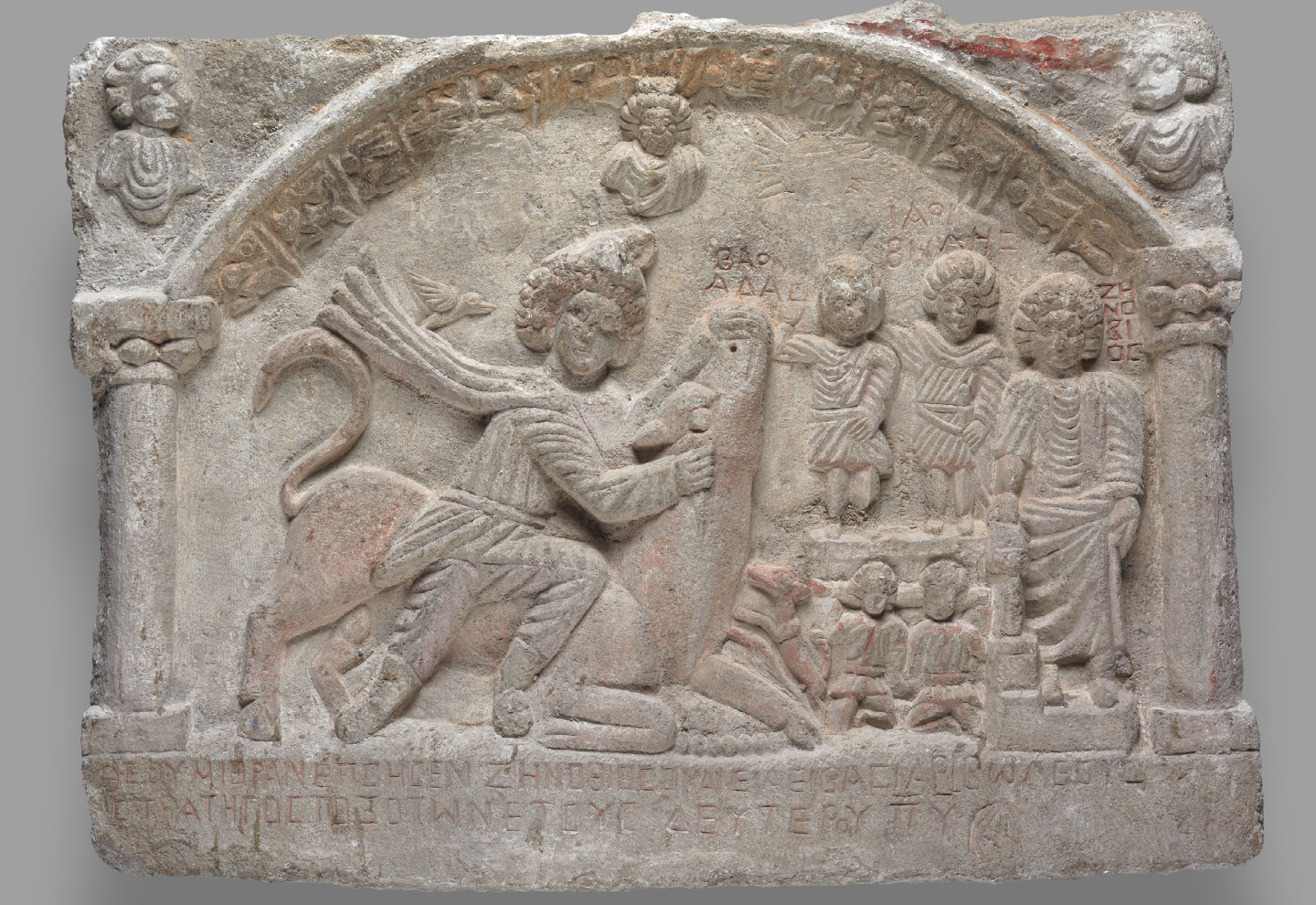
The main relief of Mithras killing the bull from the Mithraeum of Dura Europos includes three persons named Zenobius, Jariboles and Barnaadath.
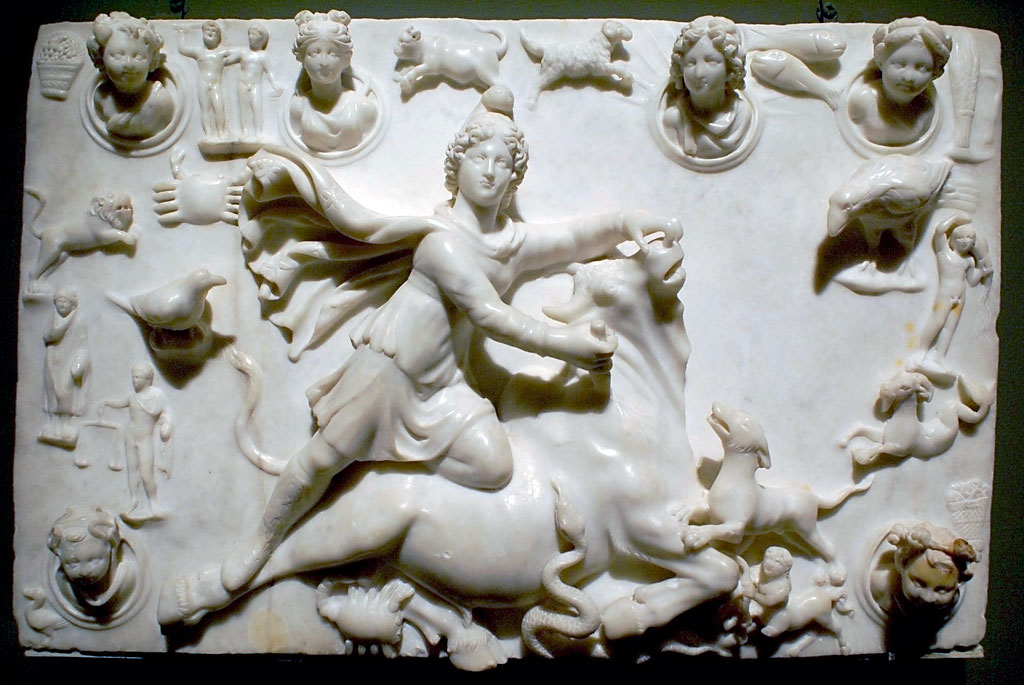
The tauroctony relief of Sidon depicts the signs of the zodiac and the four seasons, among other familiar features.
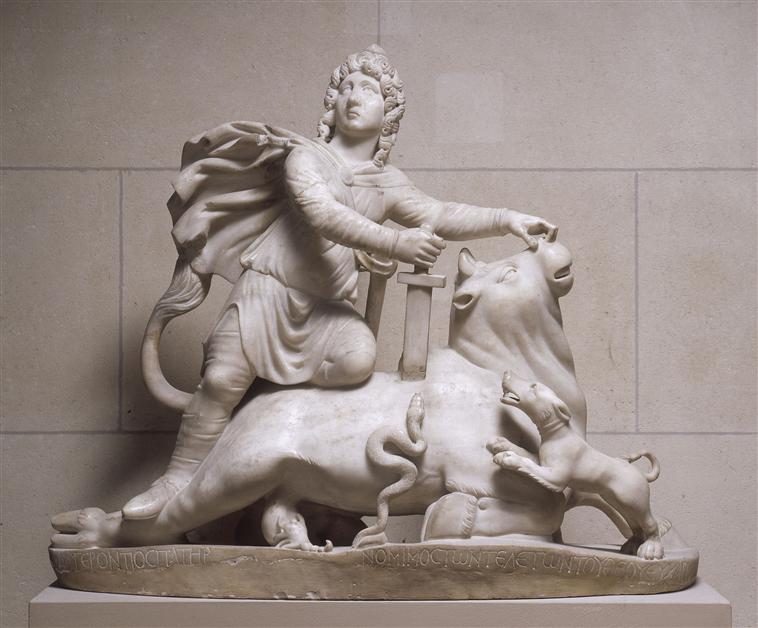
The Mithras killing the bull sculpture from Sidon, currently Lebanon.
Fragment of a white marble relief depicting the head of Mithras with Phrygian cap and nimbus, found on the Syrian coast between Lattakieh and Tartous, first half of 2nd century A.D.
Fragmentary inscription on wall plaster from the Mithraeum of Dura-Europos, Syria, with partially legible text.
Engraved Nâma inscription addressed to Antoninus, a pious syndexios, from the Mithraeum of Dura-Europos, Syria.
Painted inscription naming the patres and other initiates of the Mithraeum, above the podium in the south-west corner of the Mithraeum of Dura-Europos, Syria.
Graffito bearing the Mithraic salutation Nâma, engraved on column 1 of the Mithraeum of Dura-Europos, Syria.
