Your selection in monuments gave 428 results.
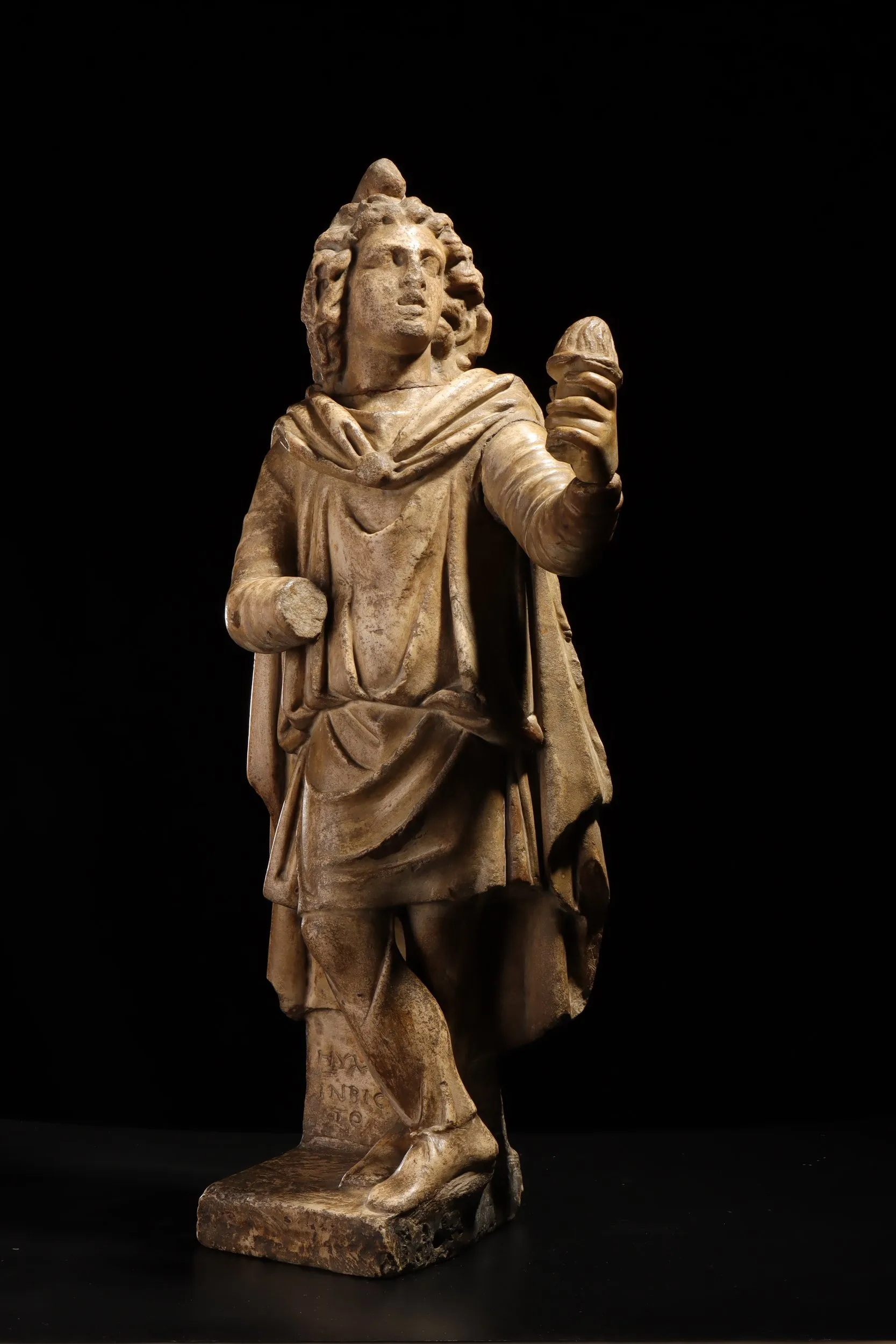
Marble statuette of the torchbearer Cautes bearing the votive inscription HYMNUS INBICTO, probably produced during the second or third century CE and preserved in an old European collection.
The inscription pays homage to the emperor, probably Caracalla, to Mithras, the fathers, the petitor and the syndexioi.

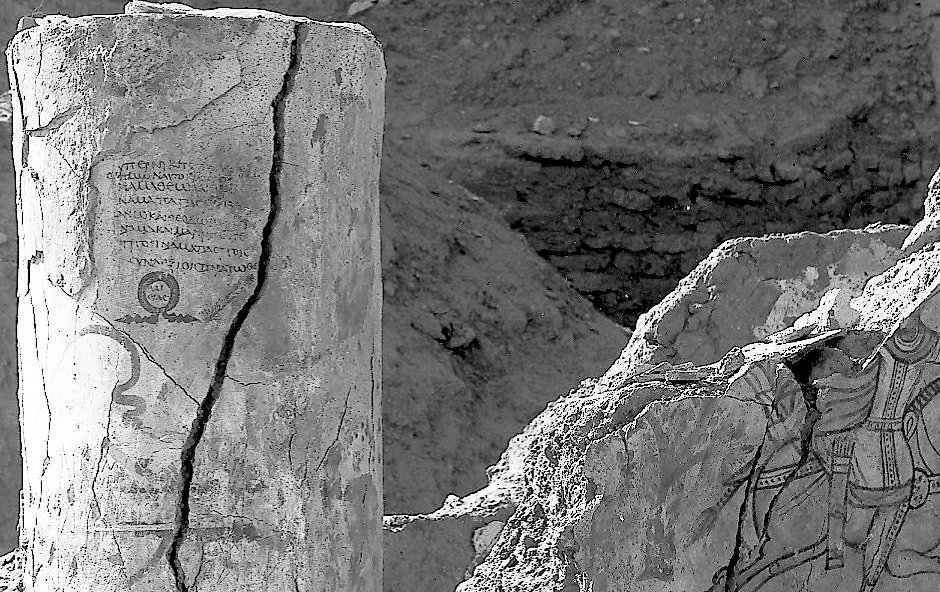
Engraved inscription naming Maximus as magus, from column 1 of the Mithraeum of Dura-Europos, Syria.
Partial list of Mithraic initiatory grade titles attested in inscriptions from the Mithraeum of Dura-Europos.
Minute engraved inscription with the words eisodos and exodos (entrance and exit), from column 3 of the Mithraeum of Dura-Europos, Syria.
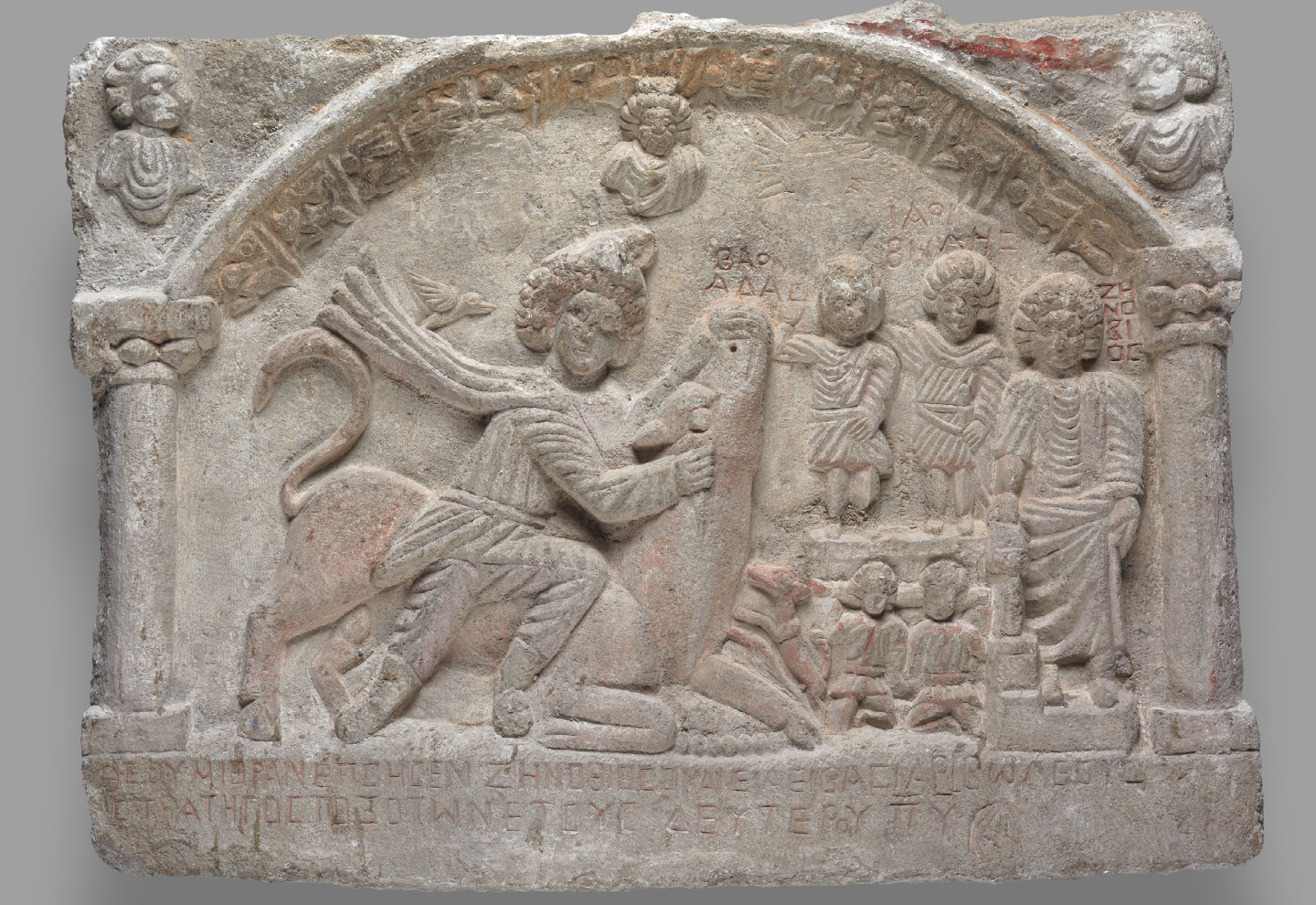
The main relief of Mithras killing the bull from the Mithraeum of Dura Europos includes three persons named Zenobius, Jariboles and Barnaadath.
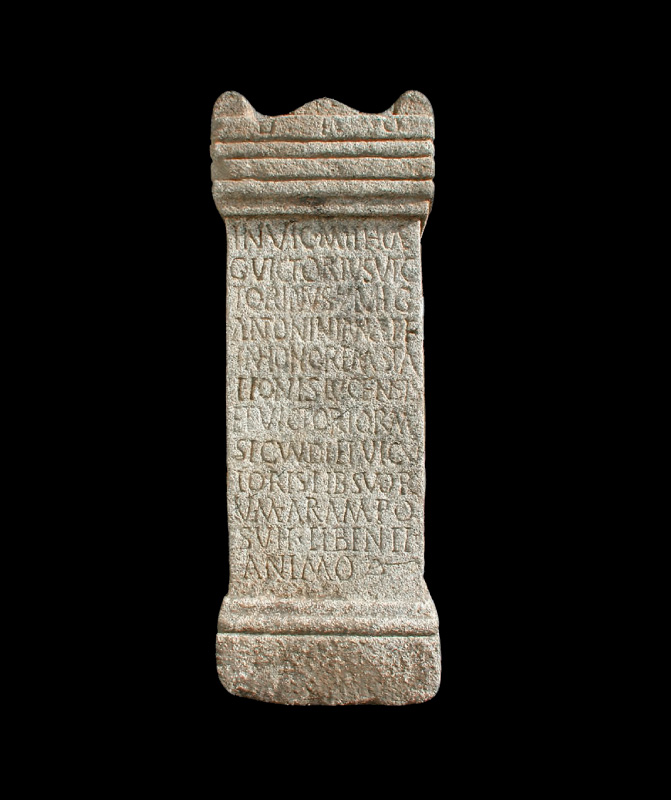
Victorius Victorious, centurion of the Legio VII, erected the altar in honour of the Lugo garrison and of the Victorius Secundus and Victor, his freedmen.
.jpg)
The controversial Italian journalist Edmon Durighello discovered this marble statue of a young naked Aion in 1887.
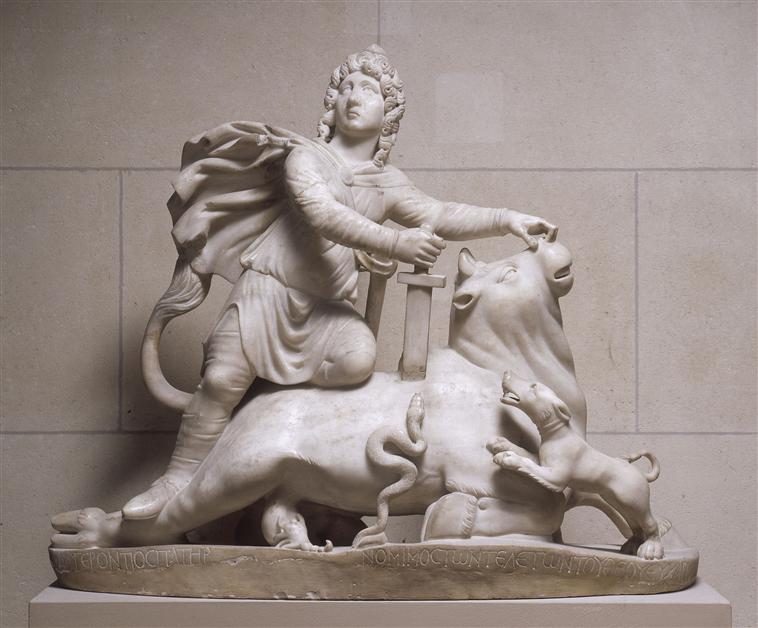
The Mithras killing the bull sculpture from Sidon, currently Lebanon.
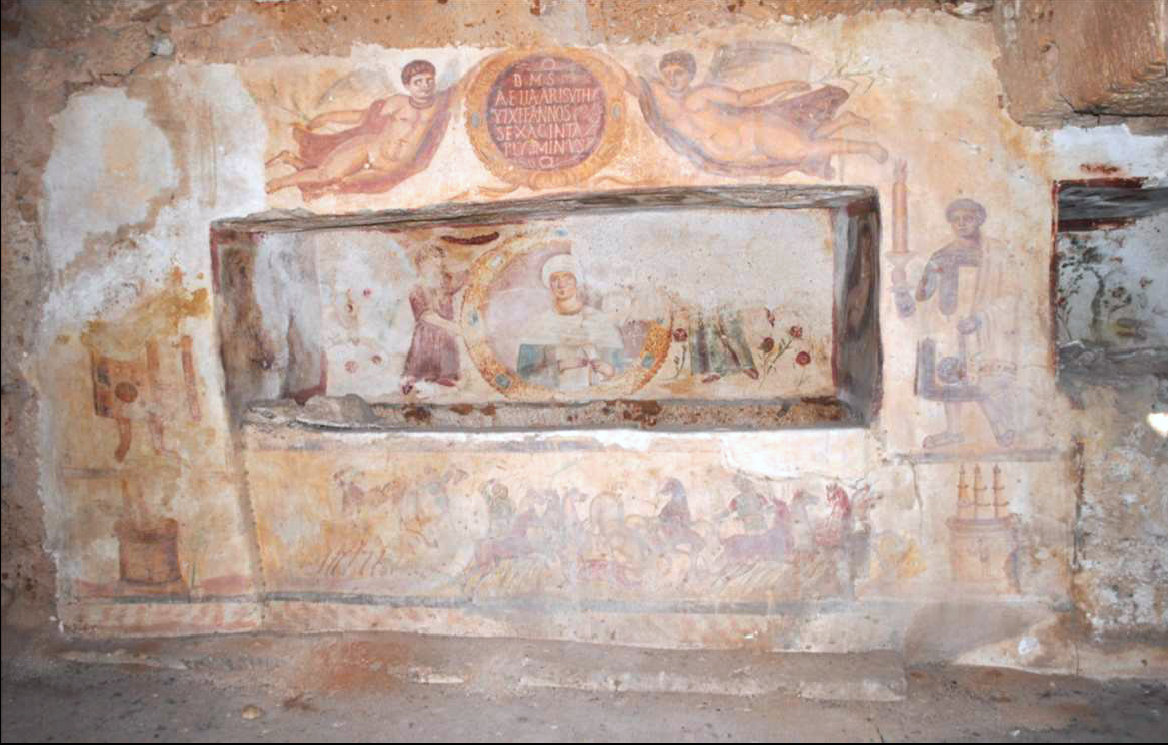
The Mithraic nature of the frescoes of Oea, according to the scholars Cumont and Vermaseren, is now questioned.
Limestone altar dedicated to Sol Invictus Mithras by the governor and military commander Marcus Valerius Maximianus.
Altar of Varia Severa from Mediolanum, modern Milan, one of the few women associated with a possible Mithraic dedication.
This lost monument from Malaga, Spain, to Dominus Invictus has been linked to the cult of Mithras, although there is not enough evidence.
An inscription from Asturica (modern Astorga) recording a dedication to Jupiter Optimus Maximus, Sol Invictus and Liber Pater by Q. Mamilius Capitolinus, juridical legate and later prefect of the Treasury of Saturn, for the welfare of himself and his family…
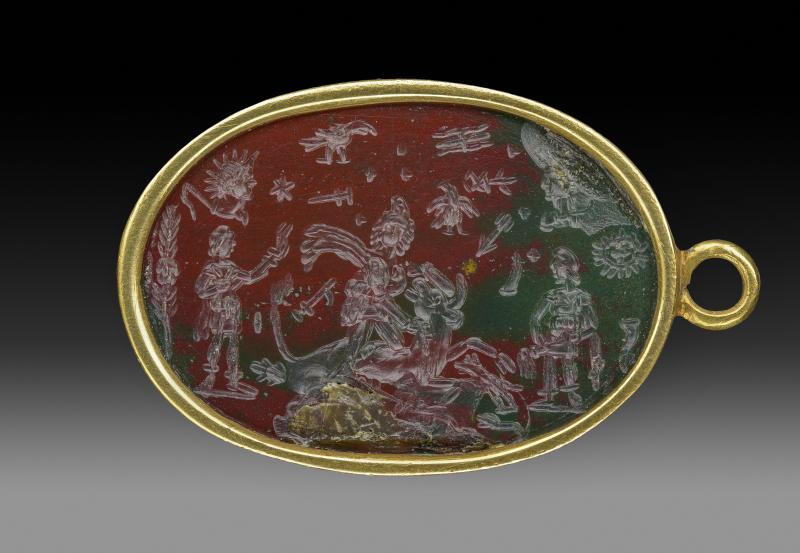
This intaglio portrays Mithra slaying the bull on one side, and a lion with a bee, around seven stars, and inscription, on the other.
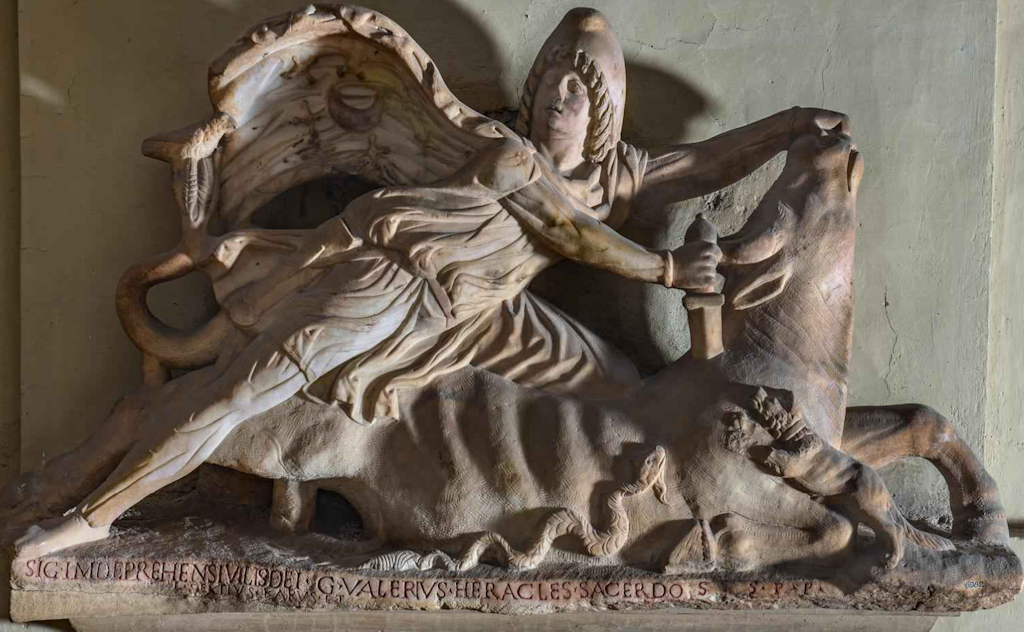
This sculpture of Mithras killing the bull was dedicated to the “incomprehensible god” by a certain priest called Gaius Valerius Heracles.
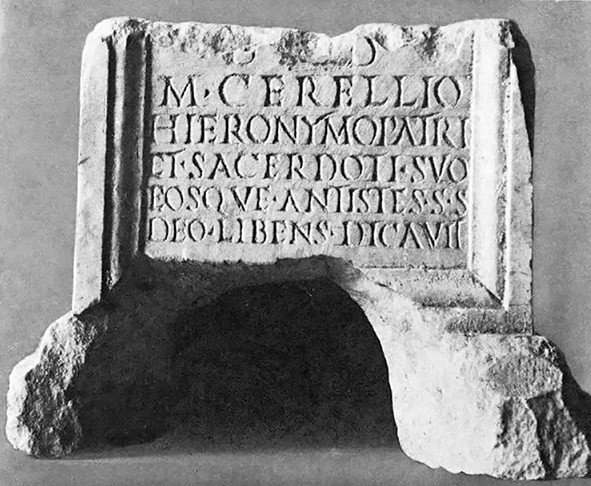
Small marble base recording a donation to M. Cerellio Hieronymo, pater and sacerdos, on behalf of an antistes who dedicated objects to the god, from the Mitreo degli Animali at Ostia.
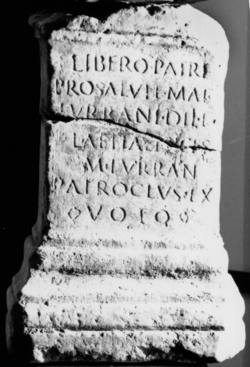
This altar was erected by Hermadio, who also signed other monuments in Dacia and even in Rome.
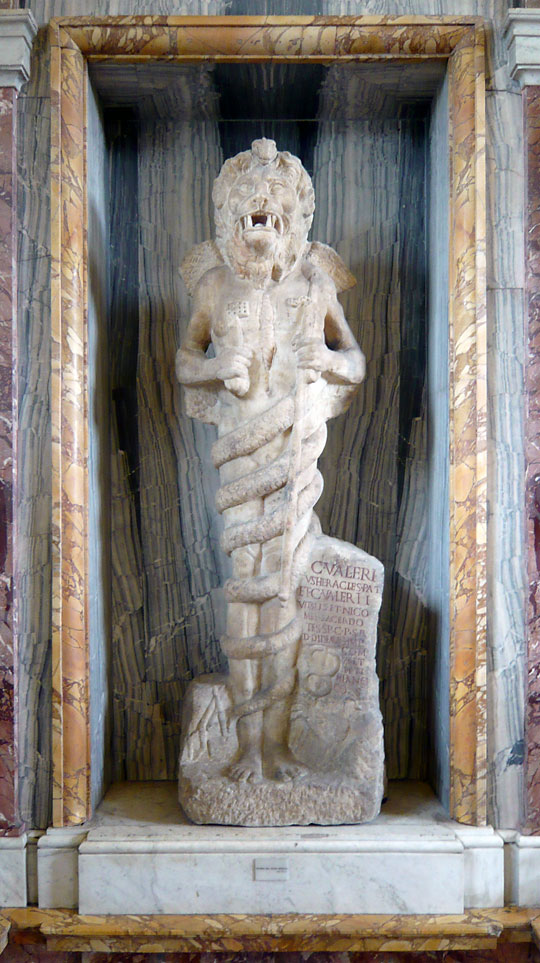
Marble leontocephalic Aion/Arimanus from the now-lost Fagan Mithraeum at Ostia, dedicated in AD 190 by three members of the local Mithraic priesthood.
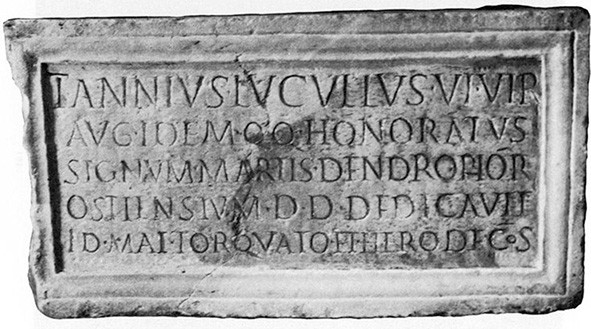
Small marble base with a dedication by T. Annius Lucullus, sevir and quinquennalis, to Martis Dendrophoris Ostiensium, from the Mitreo degli Animali at Ostia, dated to 143 A.D.
