Your selection gave 109 results.

Landowner from Augustobriga, transferred to Tarraco by Antoninus Pius and owner of the villa of Els Munts and its Mithraeum.
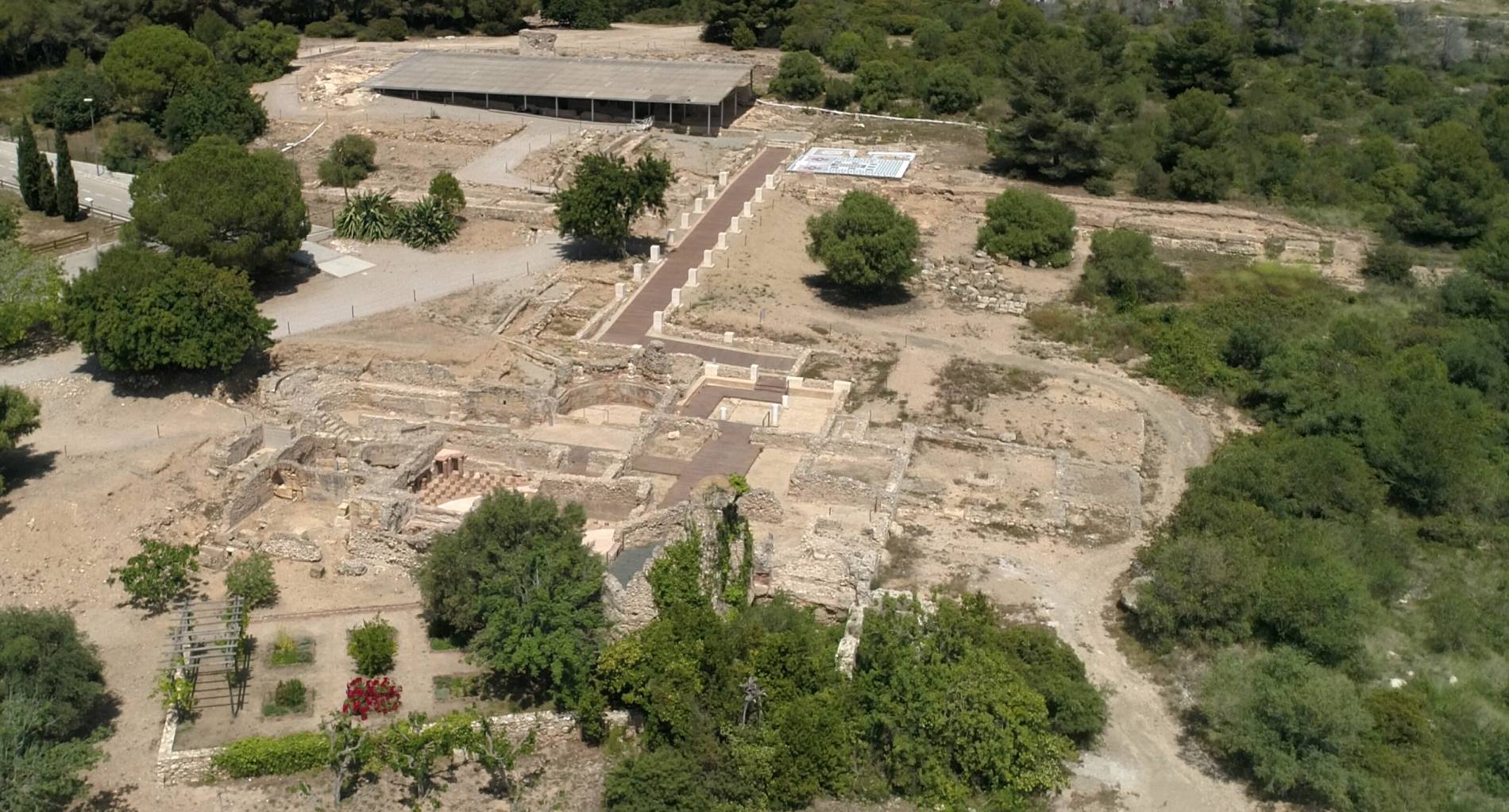
A possible Mithraic sanctuary attached to the luxurious Roman villa of Els Munts, near ancient Tarraco, whose interpretation remains disputed.

Roman town founded on the site of the Celtiberian settlement of Arekorataz, beneath modern Muro de Ágreda in northern Hispania.
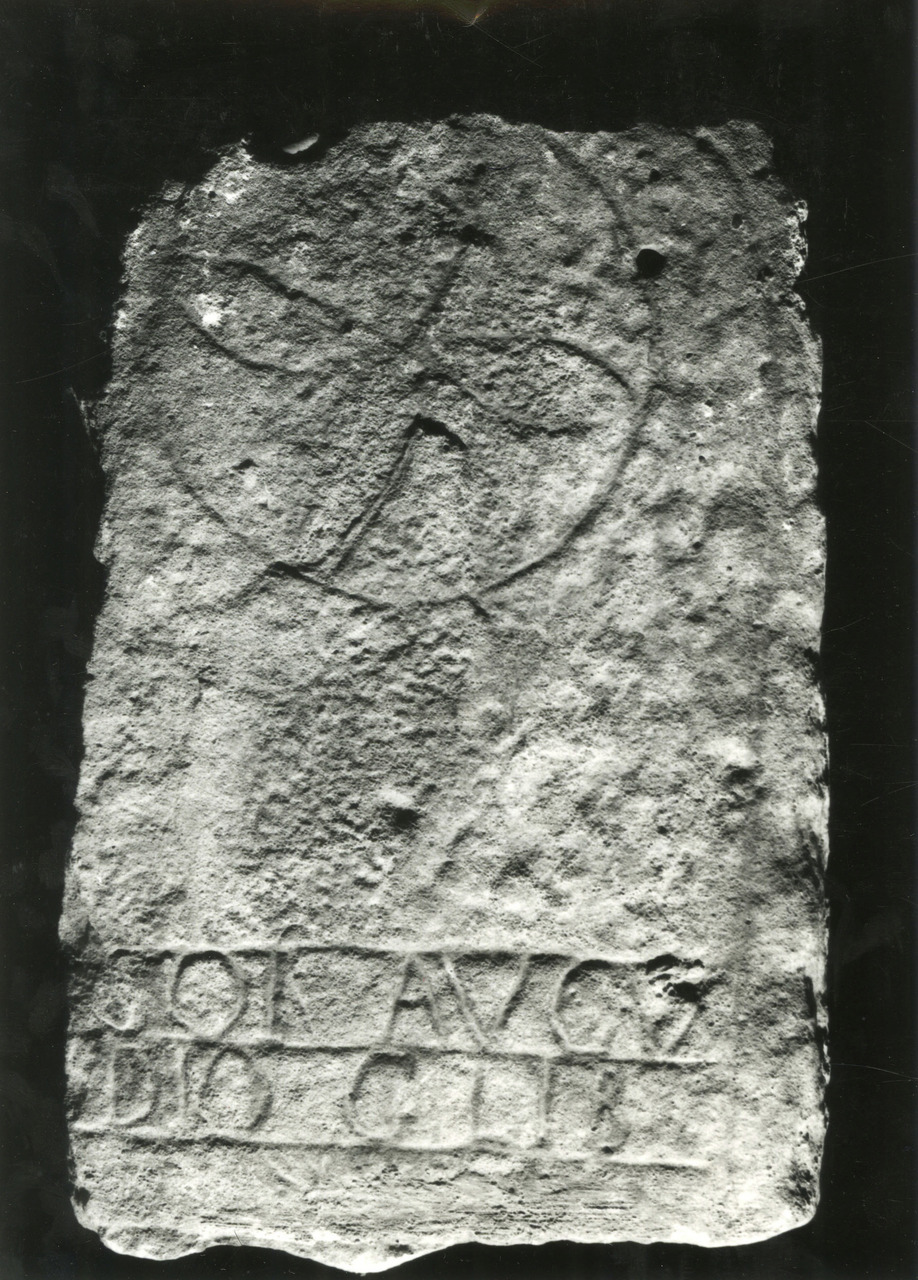
A sandstone slab found along the border of the Tagus river near Thirmarum (modern Trillo, near Cifuentes in Guadalajara), recording an inscriptoiin by a certain Cornelius, freedman of Gaius.
Thirmarum is recorded as a findspot for Mithraic material in Tarraconensis.
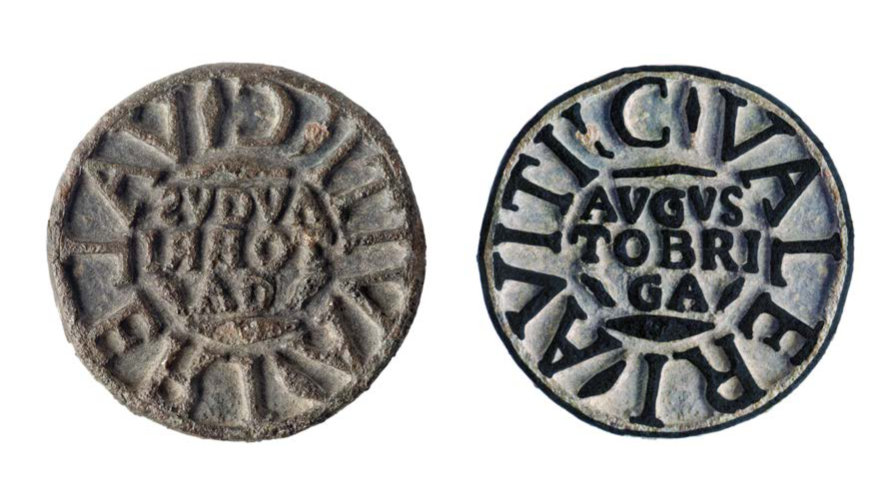
Bronze personal seal of a duovir of Tarraco and owner of the villa of Els Munts.
Aristocratic villa near Tarraco, capital of Hispania Tarraconensis, associated with Caius Valerius Avitus and a Mithraic sanctuary.

An altar found in 1889 at Caldas de Reyes (ancient Iria Flavia) in Galicia, bearing a fragmentary dedication to Cautes, possibly by a person named Antonius.
A small marble fragment from Augusta Emerita (modern Mérida) bearing the fragmentary inscription (S)arapi(s), attesting to the veneration of Sarapis in proximity to the Mithraic sanctuary.
A marble statuette found at Augusta Emerita (modern Mérida) in 1902, representing a seated deity whose head, arms and feet are lost, tentatively identified as Jupiter-Serapis.
The Roman remains of Benifaió, or Benifayó in Spanish, are located on the outskirts of the city. Of particular interest is a rustic villa inhabited between the 1st and 4th centuries according to the numismatic and ceramic remains found.
The locality of San Juan is associated with archaeological discoveries from the Iberian provinces.
Iria Flavia became an important settlement in northwestern Hispania and later evolved into the modern town of Padrón.
A square stone from La Oliva near Capera (modern Cáparra) in Extremadura, bearing an inscription dedicated to Sol Invictus Augustus.
An altar from Baetulo (modern Badalona) in Hispania Citerior, carved in a rock on a hill facing east opposite the town, recording a dedication to Sol Deus by A. Pompeius Abascantus.
An inscription from Asturica (modern Astorga), found beneath three military standards, recording a dedication to Jupiter Optimus Maximus, Sol Invictus and Liber Pater by Q. Mamilius Capitolinus, juridical legate and later prefect of the Treasury of Saturn…
Sculptural fragments from the Mithraeum at Augusta Emerita (modern Mérida), comprising a naked foot beside tree-trunk remnants and fragments of a marble seat or table decorated with an acanthus-leaf from which emerge the head and neck of a lion.
A marble statue from Augusta Emerita (modern Mérida), depicting a standing woman in a long chiton, now in the museum at Mérida, with head lost.
A marble statue found at Augusta Emerita (modern Mérida) in 1913, depicting a standing woman in a long chiton, now in the museum at Mérida, with head lost.
