Your search Mit Rahina gave 2669 results.

Macedonia formed a major crossroads between the Greek world, the Balkans and the communication routes of the eastern Roman empire.
Thracia connected the Balkan world to the northern Aegean through military movement, trade routes and provincial urban centres.
Moesia superior preserves frontier evidence shaped by the military infrastructure and circulation networks of the middle Danube.
Dalmatia connected the Adriatic world to the Balkan interior through maritime routes, military mobility and provincial urban networks.
The high mountain routes of Alpes Graiae formed part of the Alpine corridors connecting Italy, Gaul and the northwestern provinces.
Alpes Poenninae controlled important Alpine routes through which military movement and religious practices circulated between Gaul and Italy.
Narbonensis connected Roman Gaul to the Mediterranean world through some of the oldest urban and maritime networks of the western empire.

One of the most eminent representatives of late antique pagan religiosity, combining high civic authority with deep initiation into multiple mystery traditions, including the cult of Mithras.

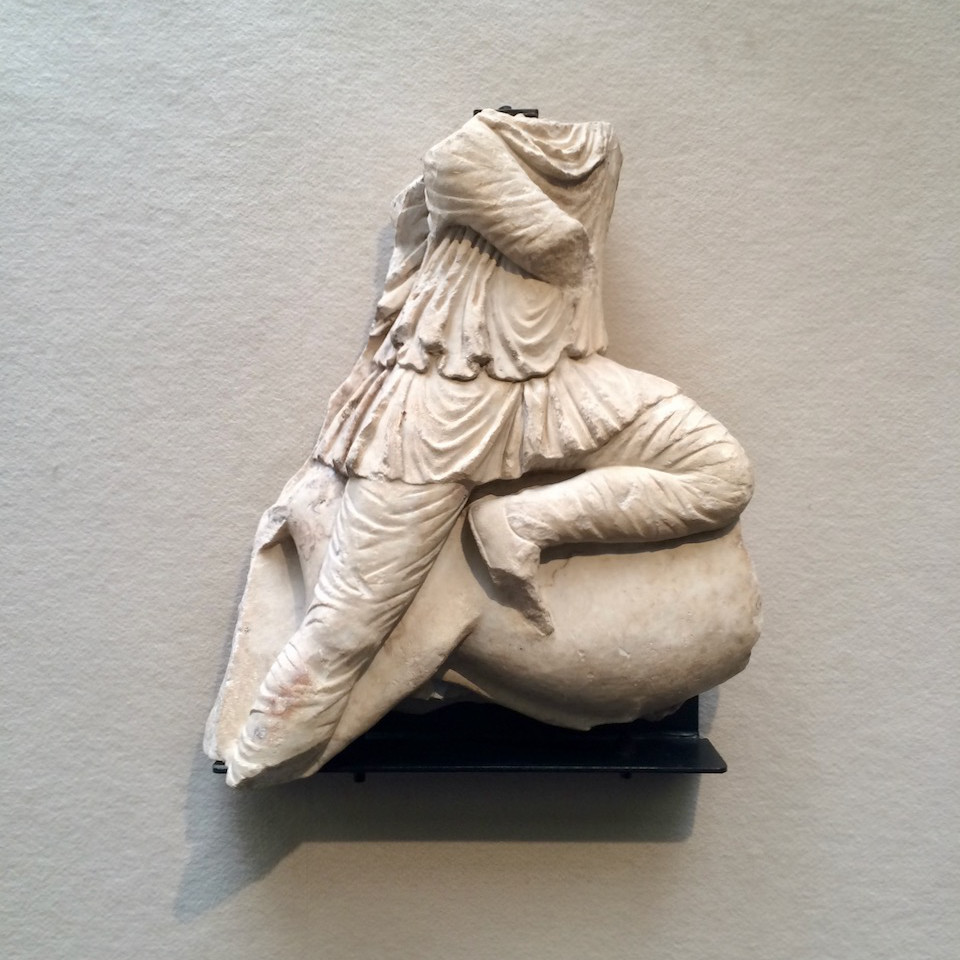
The Mithra Tauroctonos from Syracuse, Sicily, is currently on display in the city's archaeological museum.
Mauretania preserves western North African evidence linked to urban and maritime networks of the Roman empire.
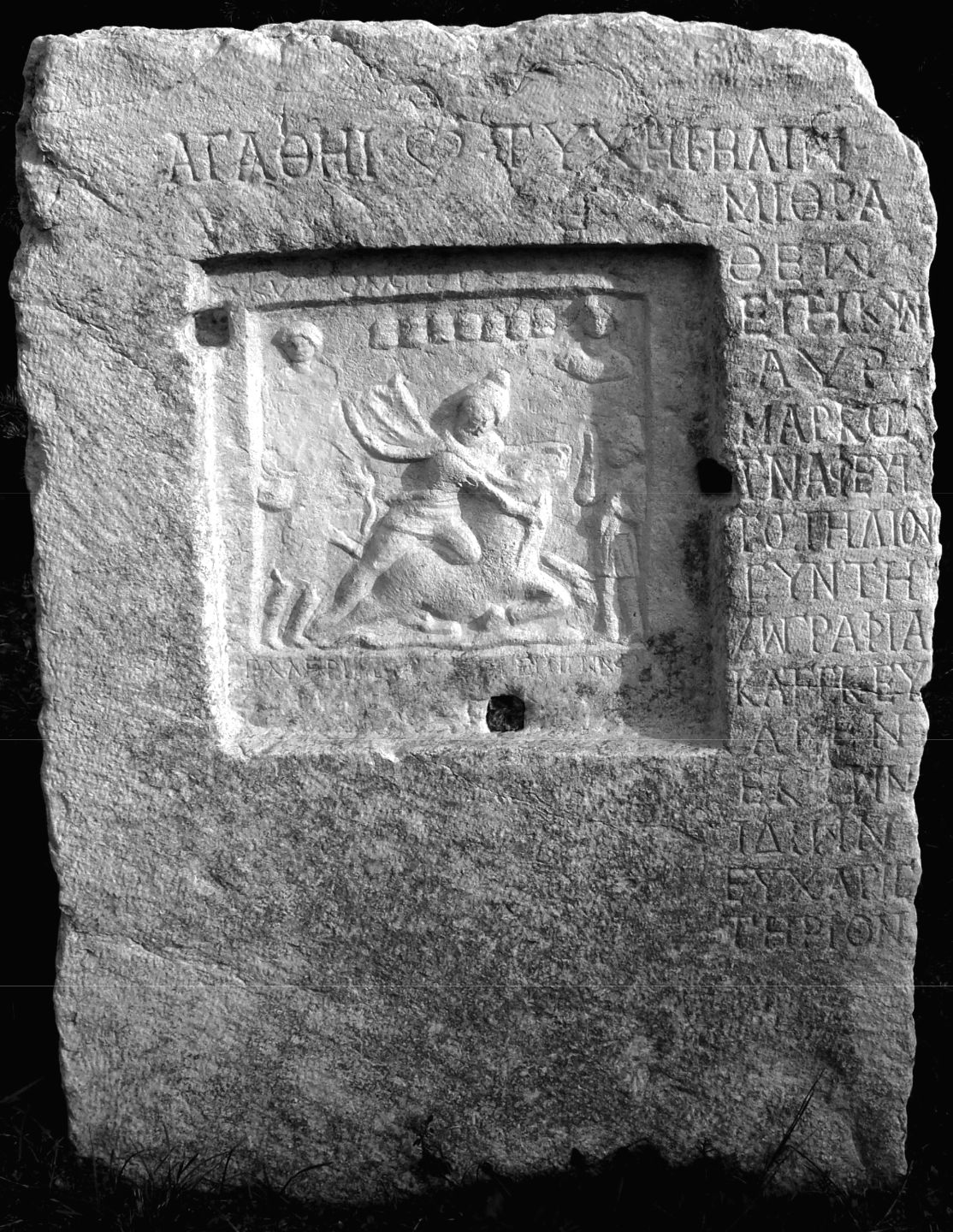
The Tauroctony of Nicopolis ad Istrum is unique as it is the only Mithraic stele befitting a Greek donor.
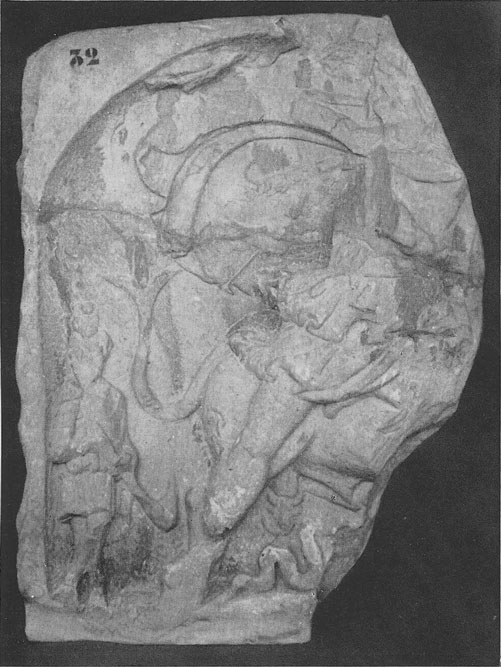
This fragmentary tauroctony relief from Timziouin near Saïda depicts Mithras slaying the bull within a cave-like frame, accompanied by the raven, serpent, scorpion, and Cautopates.

This lost Mithraic relief, formerly kept near the church of the Santissima Annunziata in Naples, was probably a large tauroctony associated with the area of Puteoli or Pausilypon.
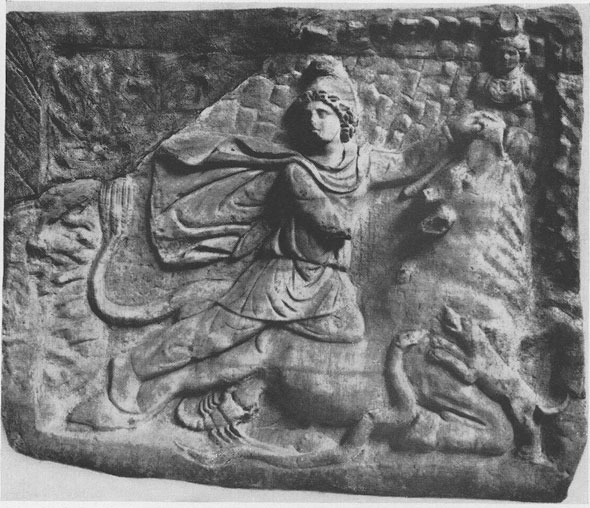
This marble tauroctony relief, probably originating from Naples, depicts Mithras slaying the bull within a cave-like setting, accompanied by the usual animals and celestial busts.
Cappadocia preserves evidence shaped by military movement, eastern frontier dynamics and Anatolian religious landscapes.
Inscription from Hamadan where the ’great king’ Artaxerxes mentions Ahuramazda, Anahita, and Mithra as guardians.

Late Roman dux associated with the restoration of the so-called Mithraeum IV of Poetovio.
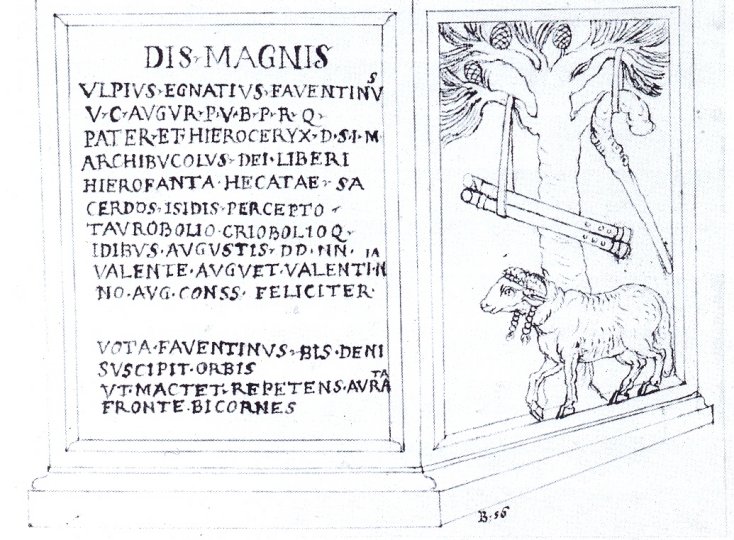
Both of them were discovered in 1609 in the foundations of the façade of the church of San Pietro, Rome.
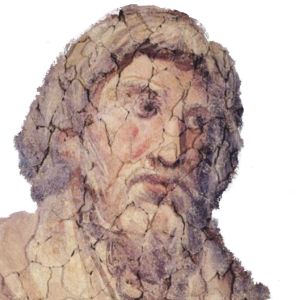
North African author, Platonic philosopher and rhetorician associated with the Mithraic milieu of Ostia.
