Your search San Giovanni al Timavo gave 3159 results.

The capital of Hispania Tarraconensis, Tarraco is the oldest Roman settlement on the Iberian Peninsula.
The Gaulish name of today Martigny was either Octodurus or Octodurum in the 1st century BC. It was conquered by the Romans in 57 BC and occupied by Servius Galba with the Legion XII.
Vienna was the capital of the Allobroges, a Gallic people, until it was conquered by the Romans in 47 BC. It became a Roman provincial capital, conveniently located on the Rhône, then a major communication route.
Numidia occupied a frontier and military landscape where Mithraic cults circulated through urban settlements and imperial infrastructure.
Africa Proconsularis formed one of the principal urban and administrative centres of Roman North Africa where Mithraic cults circulated through prosperous civic networks.
Lusitania preserves one of the most important bodies of Mithraic evidence in Roman Hispania, centred above all on Augusta Emerita and its urban religious landscape.
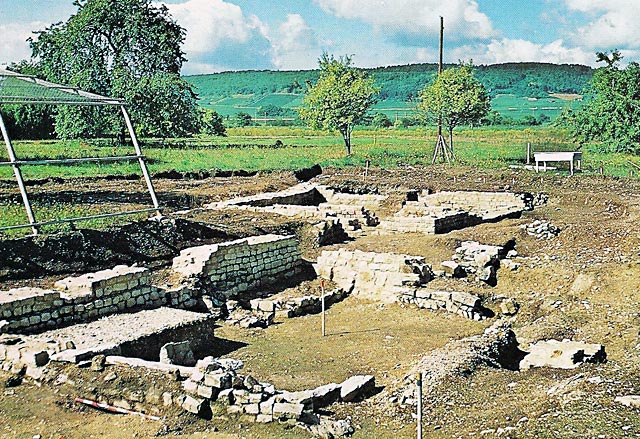
The Mithraeum des Bolards was integrated into a therapeutic cultural complex related to healing waters.
Bactria occupied a distant eastern horizon associated with Iranian cultural traditions and the wider background of Mithraic interpretations.
Along the upper Rhine frontier, Germania superior became one of the principal centres of Mithraic activity in northwestern Europe.
Histria connected the northern Adriatic to the Balkan and Danubian worlds through maritime and regional communication networks.
Transpadana occupied the northern plains of Italy where major communication routes connected the peninsula to the Alpine and Danubian worlds.
Aemilia connected northern and central Italy through prosperous urban centres and major communication routes of the Roman Peninsula.
Persia occupied a central place in ancient and modern interpretations concerning the origins and eastern background of Mithraic traditions.
Britannia superior preserves a substantial body of Mithraic evidence associated with military sites and urban centres of Roman Britain.
Armenia occupied a frontier crossroads between the Roman world, Anatolia and the Iranian cultural sphere.
Liguria linked northern Italy to southern Gaul and the western Mediterranean through coastal and Alpine communication routes.
Venetia connected northern Italy to the Adriatic and Danubian worlds through trade, mobility and imperial communication routes.
Etruria formed part of the cultural and religious heartland of central Italy closely connected to Rome and the Tyrrhenian world.
Umbria formed part of the central Italian heartland through which religious practices circulated between Rome and the northern provinces.
Picenum connected the Adriatic coast of central Italy to inland communication routes and the wider networks of the Roman Peninsula.
