Your search St Albans gave 2762 results.

Cirta, also known by various other names in antiquity, was the ancient Berber and Roman settlement which later became Constantina, Algeria.
Bremenium is an ancient Roman fort located at Rochester, Northumberland, England.
Zerzevan Castle, also known as Samachi Castle, is a ruined Eastern Roman castle, a former important military base, in Diyarbakır Province, southeastern Turkey.
Vindobala, now a hamlet of Rudchester, was the fourth Roman fort on Hadrian's Wall.
The Saalburg is a Roman fort located on the main ridge of the Taunus, northwest of Bad Homburg, Hesse, Germany.
Pons Aelius, or Newcastle Roman Fort, was an auxiliary castra and small Roman settlement on Hadrian's Wall in the Roman province of Britannia Inferior, situated on the north bank of the River Tyne close to the centre of present-day Newcastle upon Tyn
Novae was initially one of the few great Roman legionary fortresses along the empire’s border, forming part of the defences along the Danube in northern Bulgaria. It lies about 4 km east of the modern town of Svishtov.
Nicopolis ad Istrum or Nicopolis ad Iatrum was a Roman and Early Byzantine town. Its ruins are located at the village of Nikyup, 20 km north of Veliko Tarnovo in northern Bulgaria. The site was placed on the Tentative List for consideration as a Wo
Today Lugo was the capital of the Capori tribe. It was conquered by Paullus Fabius Maximus and named Lucus Augustus in 13 BC after the positioning of a Roman military camp.
Emerita Augusta was founded in 25 BC by order of the Emperor Augustus to protect a pass and a bridge over the Guadiana River. The city became the capital of the province of Lusitania and one of the most important cities in the Roman Empire.
Künzing is a municipality in the district of Deggendorf, Bavaria, Germany.
Augusta Treverorum, today's Trier in Rhineland-Palatinate, is considered to be the oldest city in Germany.
Argentoratum or Argentorate was the ancient name of Strasbourg. Its name was first mentioned in 12 BC, when it was a Roman military outpost established by Nero Claudius Drusus. The Legio VIII Augusta was stationed there from 90 AD.
Aquincum was an ancient city, situated on the northeastern borders of the province of Pannonia within the Roman Empire.

Late Roman dux associated with the restoration of the so-called Mithraeum IV of Poetovio.
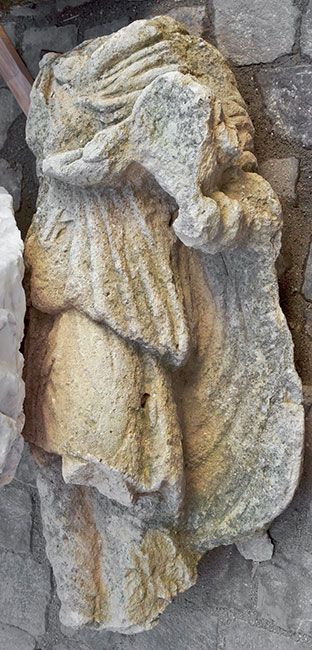
This weathered limestone statue from the Mithraeum of Apulum depicts a standing figure in Oriental attire holding the head of a bull or ram.

This eulogy of Saint Eugene of Trapezos tells how, in the time of Diocletian, he and two other Christian fellows destroyed a statue of Mithras.
This stele found at the foot of the Aventine bears an inscription of Kastos father and son, and mentions several syndexioi who shared the same temple.
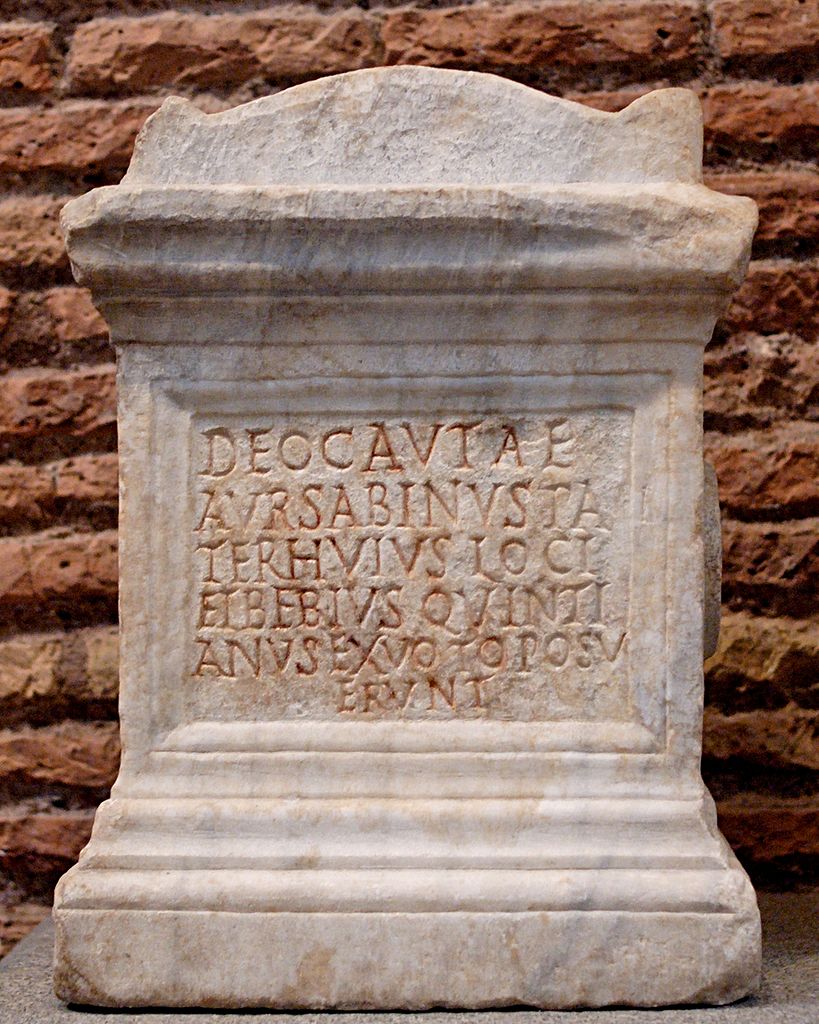
These two parallel altars to the diophores were dedicated by the Pater and a Leo from the Mithraeum of S. Stefano Rotondo.
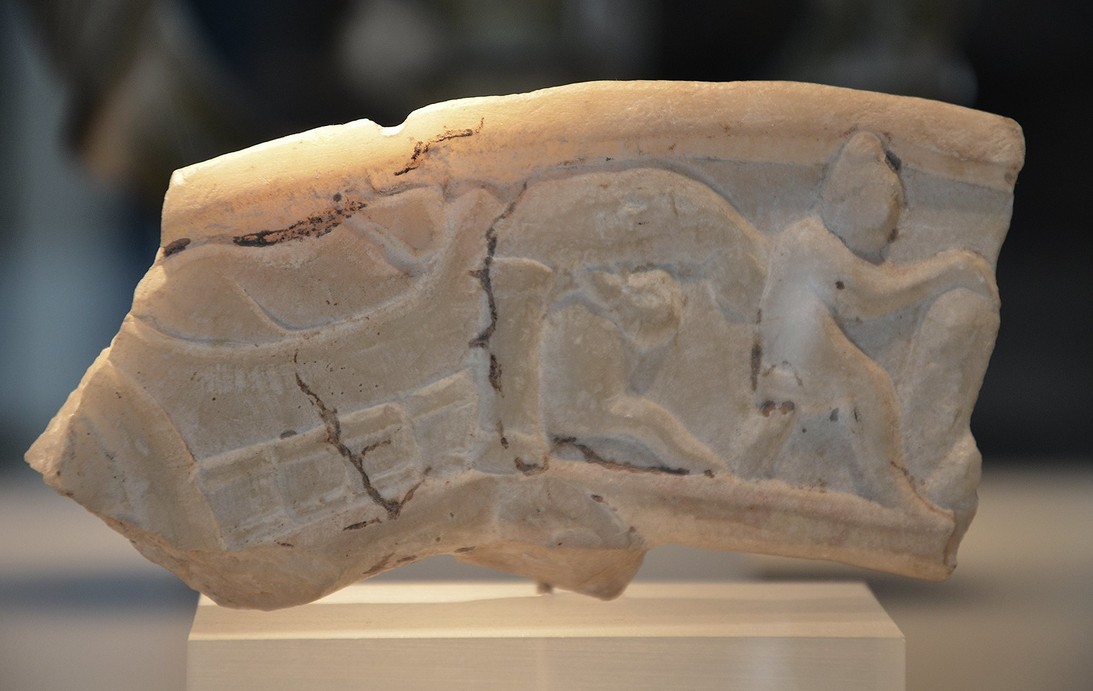
Fragment of an alabaster relief from Cologne with part of a tauroctony scene. Only the tip of Mithras’ Phrygian cap and small narrative details above are preserved.
