Your search Terme di Caracalla gave 2080 results.

Campania preserved a vibrant urban and maritime environment closely connected to the commercial life of Roman Italy.
Latium formed the political and religious centre of the Roman world where some of the most important Mithraic communities developed.
At the western edge of the Roman world, Mauretania Tingitana linked North Africa to Hispania through military and maritime exchange.
Galatia occupied the central Anatolian crossroads through which military movement and eastern provincial networks intersected.
Asia formed one of the most urbanised and interconnected provinces of the eastern Roman world where Mithraic cults circulated widely.
Chersonesus occupied a northern Black Sea position where Greek, Roman and frontier cultures intersected at the edges of the Mithraic world.
Moesia inferior occupied a major position along the lower Danube where Mithraic cults circulated through military and port environments.
Dalmatia connected the Adriatic world to the Balkan interior through maritime routes, military mobility and provincial urban networks.
Rhaetia occupied a strategic frontier position between the Alps, the upper Danube and northern Italy where Mithraic cults circulated through military networks.
The high mountain routes of Alpes Graiae formed part of the Alpine corridors connecting Italy, Gaul and the northwestern provinces.
Alpes Poenninae controlled important Alpine routes through which military movement and religious practices circulated between Gaul and Italy.
Belgica occupied a strategic position between Roman Gaul, the Rhine frontier and the northern provinces where Mithraic cults circulated widely.
In Aquitania, Mithraic evidence reflects the western expansion of the cult beyond the principal Rhine and Rhône corridors.

One of the most eminent representatives of late antique pagan religiosity, combining high civic authority with deep initiation into multiple mystery traditions, including the cult of Mithras.
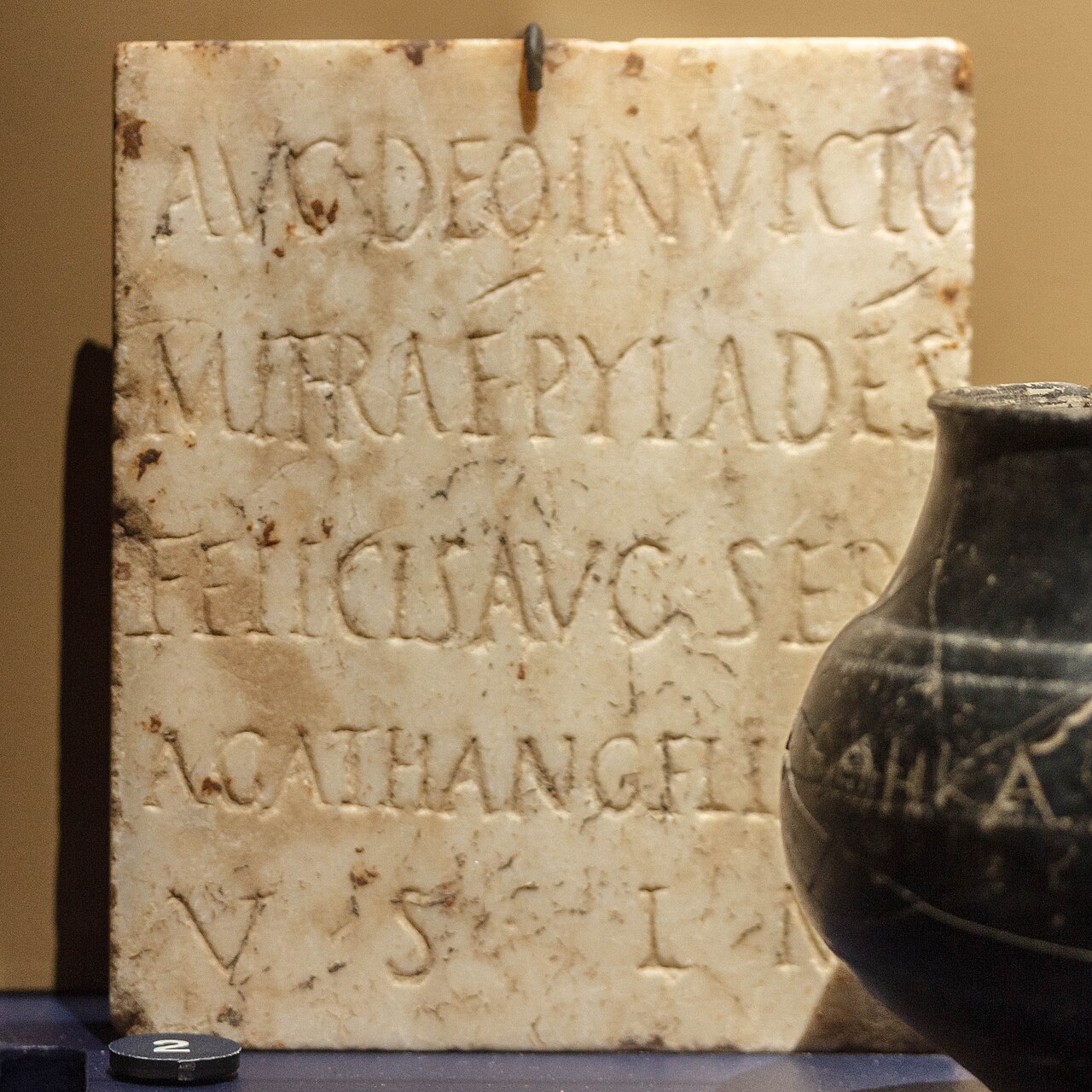
This marble plaque from Iuliomagus, Roman Angers, bears a rare dedication to Mithras by Pylades, a slave of an imperial slave connected to the Roman administration in Gaul.
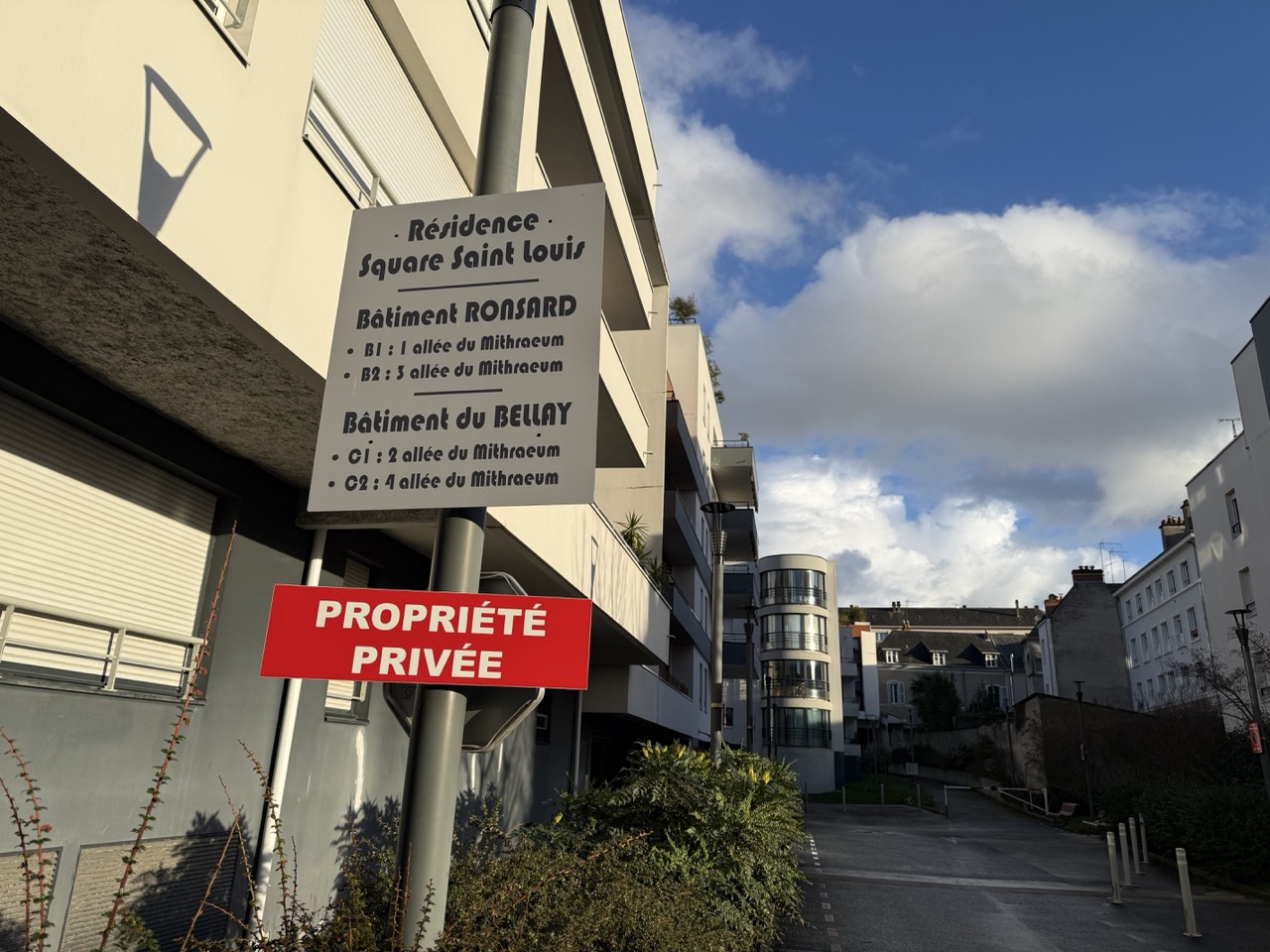
The Mithraeum of Angers, excavated during a preventive operation and subsequently dismantled in 2010, yielded numerous objects, including coins, oil lamps, and a ceramic vessel bearing a votive inscription to the invincible god Mithras.


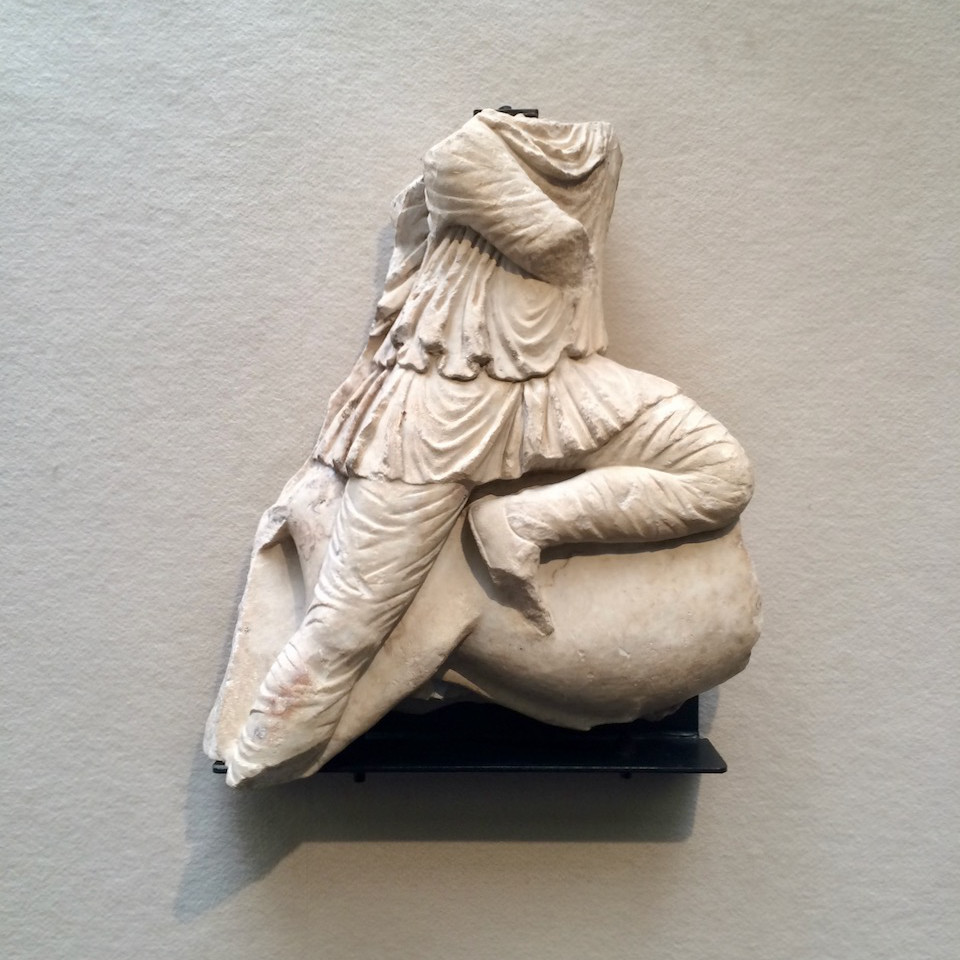
The Mithra Tauroctonos from Syracuse, Sicily, is currently on display in the city's archaeological museum.
Mauretania preserves western North African evidence linked to urban and maritime networks of the Roman empire.
