Your search Tulln an der Donau gave 577 results.

The high mountain routes of Alpes Graiae formed part of the Alpine corridors connecting Italy, Gaul and the northwestern provinces.
Alpes Poenninae controlled important Alpine routes through which military movement and religious practices circulated between Gaul and Italy.
In Aquitania, Mithraic evidence reflects the western expansion of the cult beyond the principal Rhine and Rhône corridors.
Thracia reflects the circulation of Mithraic cults through the military, urban and maritime networks linking the Balkans, the Danube and the northern Aegean world.
Mauretania preserves western North African evidence linked to urban and maritime networks of the Roman empire.
Mesopotamia preserves frontier evidence from the eastern limits of Roman Mithraic expansion.
The Bosporan Kingdom preserves evidence from one of the northernmost horizons of Mithraic diffusion in the ancient world.
Roman Dacia preserves one of the densest and most frontier-oriented bodies of Mithraic evidence in the empire.

This fragmentary inscription from Zuccabar, reused in the wall of the Sidi Abd-el-Kader mosque at Affreville, preserves a dedication to Sol Invictus.
This small Greek dedication from the island of Aenaria invokes Helios Mithras under the epithet “unconquered”.
Persia occupies a central place in the intellectual and historical background of Mithraic studies.
Lycia and Pamphylia preserve Mithraic evidence linked to southern Anatolian maritime and urban networks.
Moesia preserves a strongly militarised body of Mithraic evidence along the Danubian frontier of the empire.
Cappadocia preserves evidence shaped by military movement, eastern frontier dynamics and Anatolian religious landscapes.
Roman Aegyptus preserves a distinctive body of Mithraic evidence shaped by Alexandria and the religious diversity of the eastern Mediterranean.
Roman Asia preserves a rich and diverse body of Mithraic evidence connected to the major cities of western Anatolia.

Supervisor of the imperial couriers who offered an elaborate votive altar and ritual insignia to Mithras in Rome under Commodus.
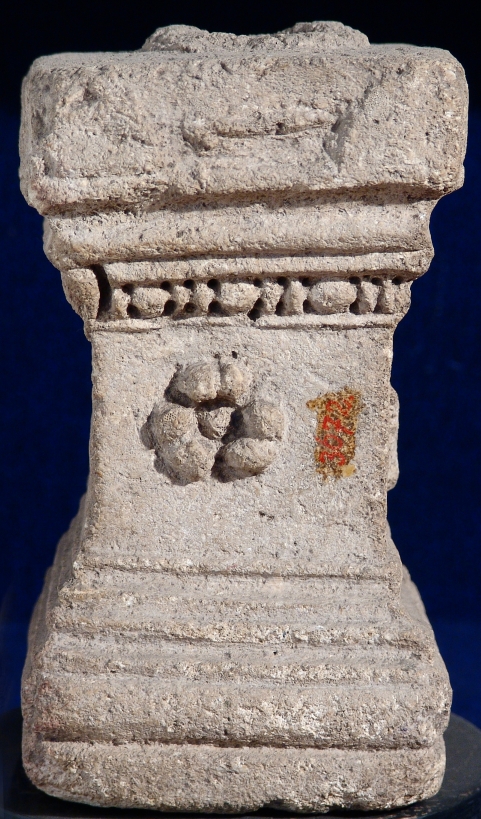
This limestone altar from Roman Dacia preserves a dedication to Mithras by a commander of the Ala II Pannoniorum.
This inscription shows that Publilius Ceionius, most distinguished man, dedicated a temple to Mithras at Mila, in the modern Constantina, Algeria.
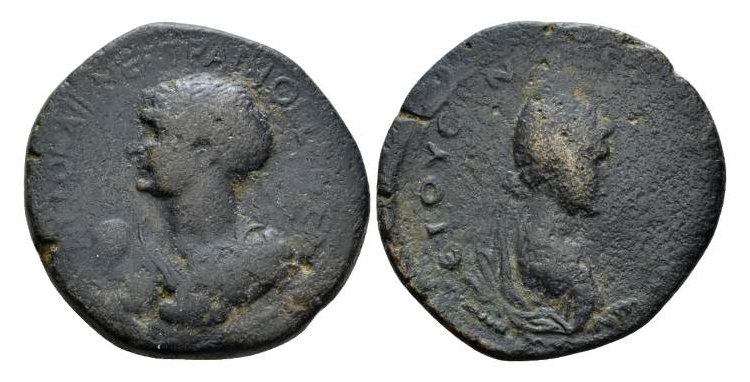
These bronze medallions associates the image of several Roman emperors with that of Mithras, usually as a rider, in the province Pontus.
