Your selection in monuments gave 128 results.
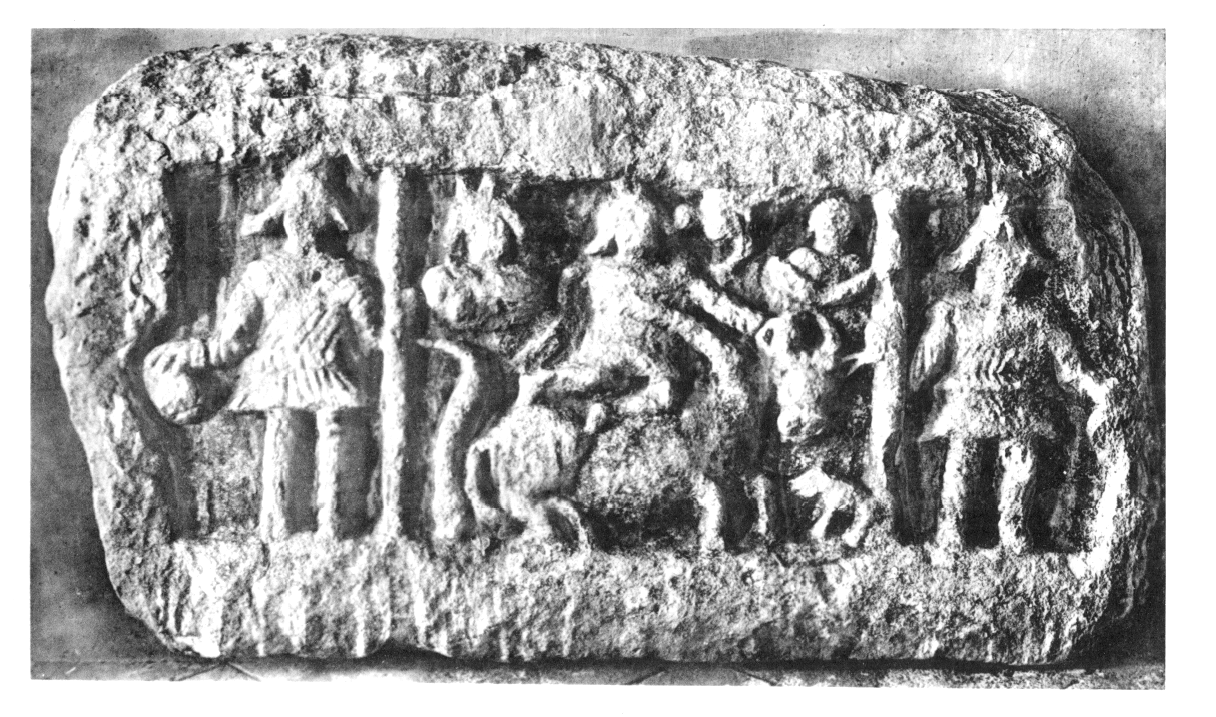
This relief of Mithras as bull slayer is surrounded by Cautes and Cautopates with their usual torch plus an oval object.
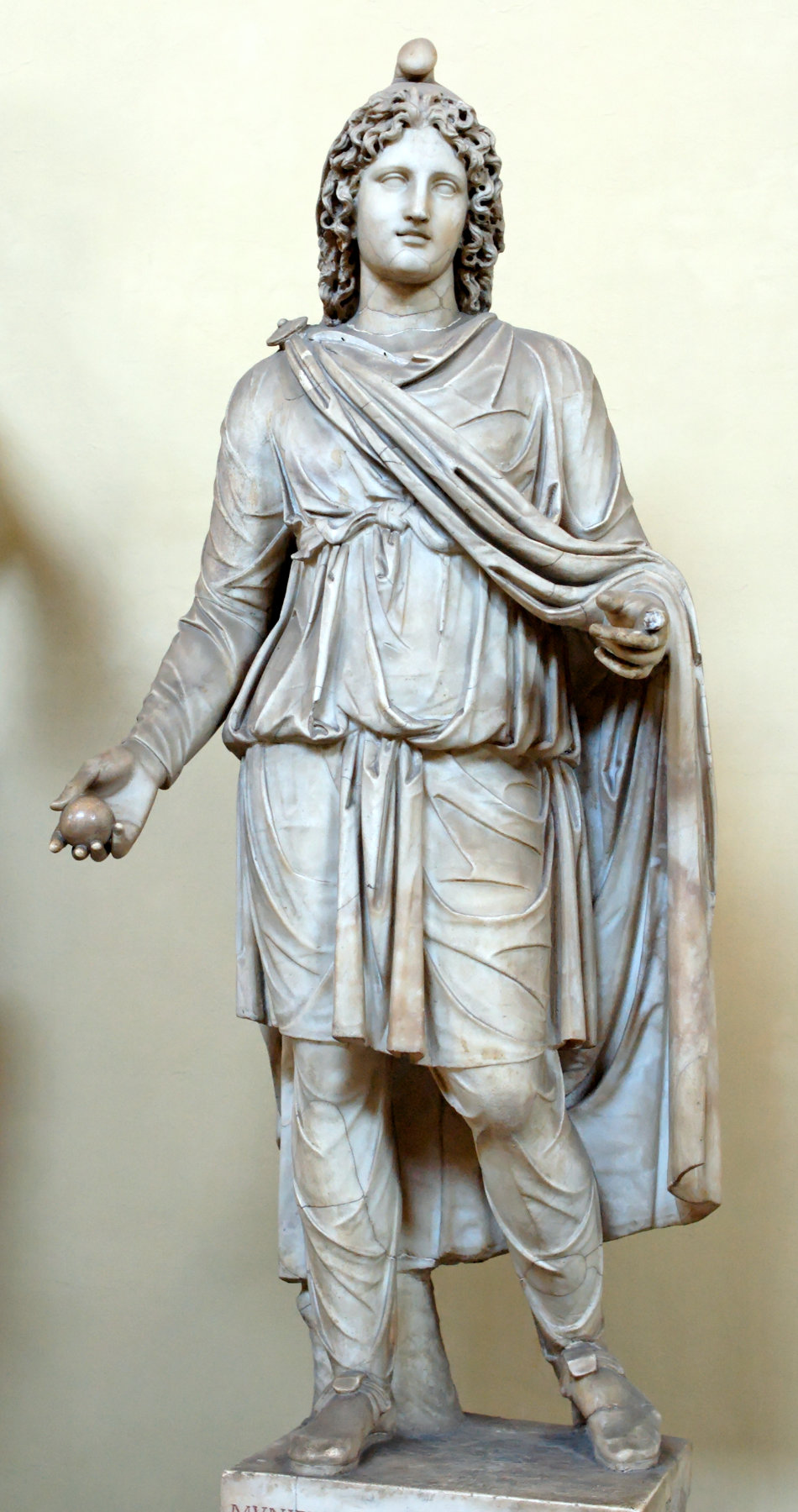
This sculpture, probably of Cautopates, now in the Musei Vaticani, was transformed into Paris.
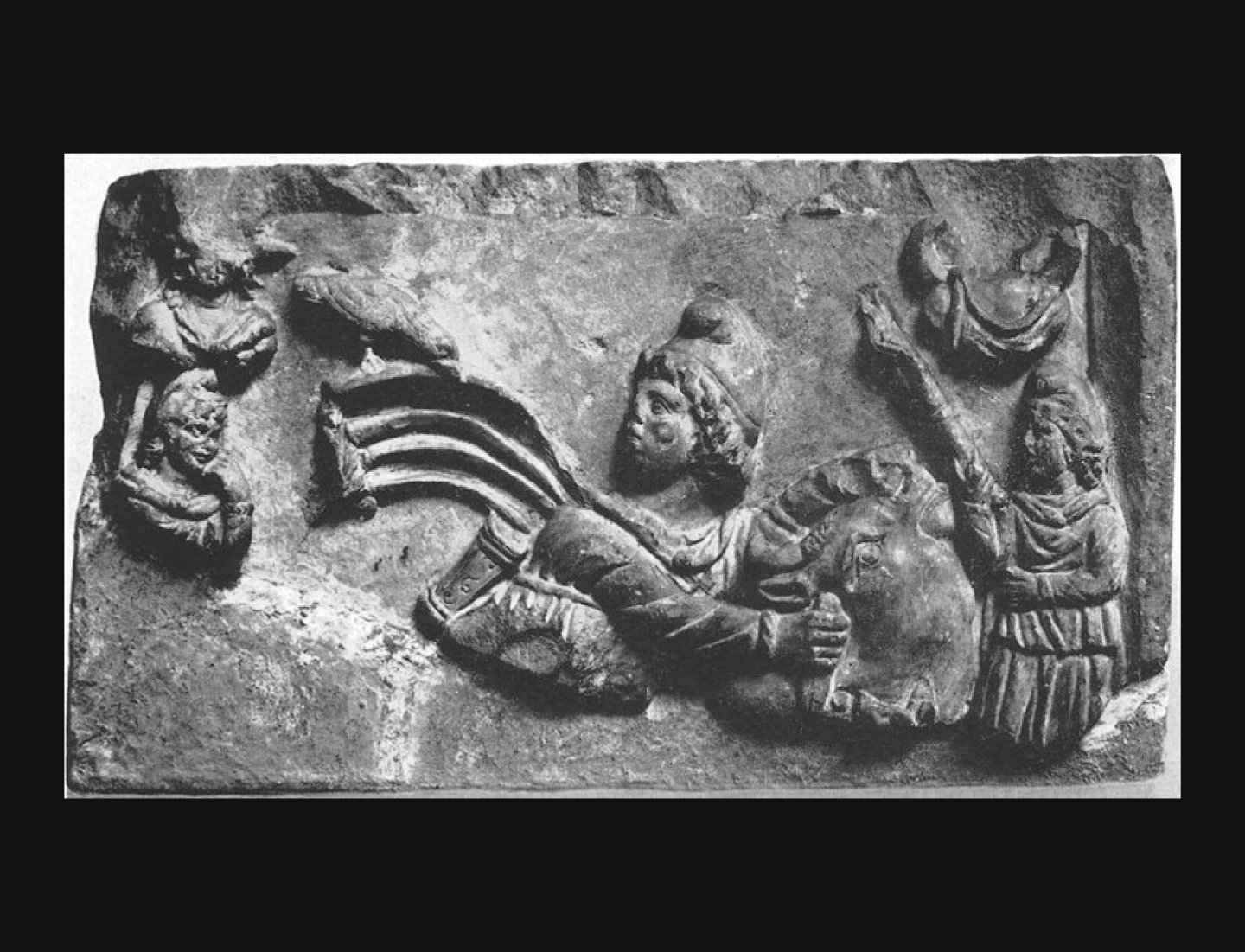
Franz Cumont bought this relief of Mithras as a bullkiller from a dealer who claimed to have found it in a vineyard near the church of Saint Pancrace, in Rome.
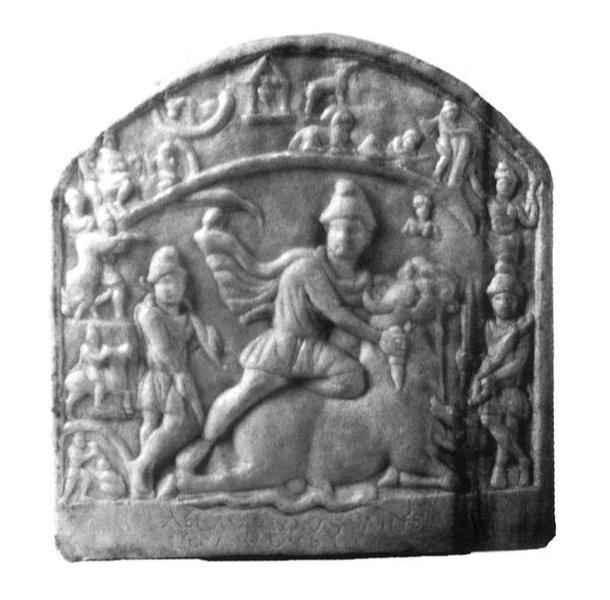
This small relief of Mithras killing the bull was found in 1859 in Turda, in the Cluj region of Romania.
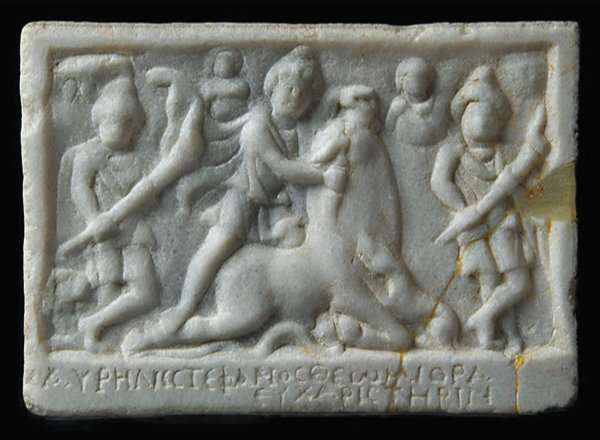
This relief of Mithras killing the bull is unique in the Apulum Mithraic repertoire because of its inscription in Greek.
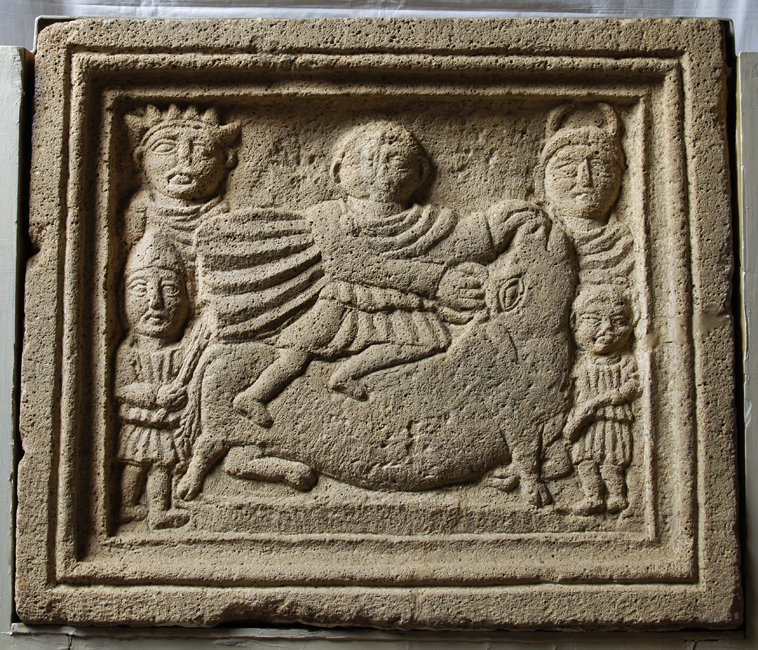
Several elements, such as the snake, scorpion or dog, are missing from this tauroctony relief of Cluj.
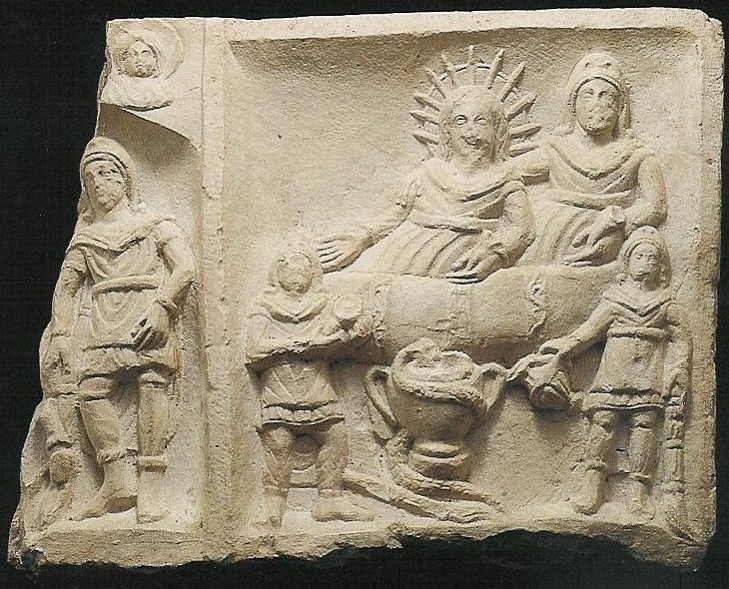
The remains of the mithraic triptic of Tróia, Lusitania, were part of a bigger composition.

This marble of Cautes was found together with his partner Cautopates in Ostia in 1939.
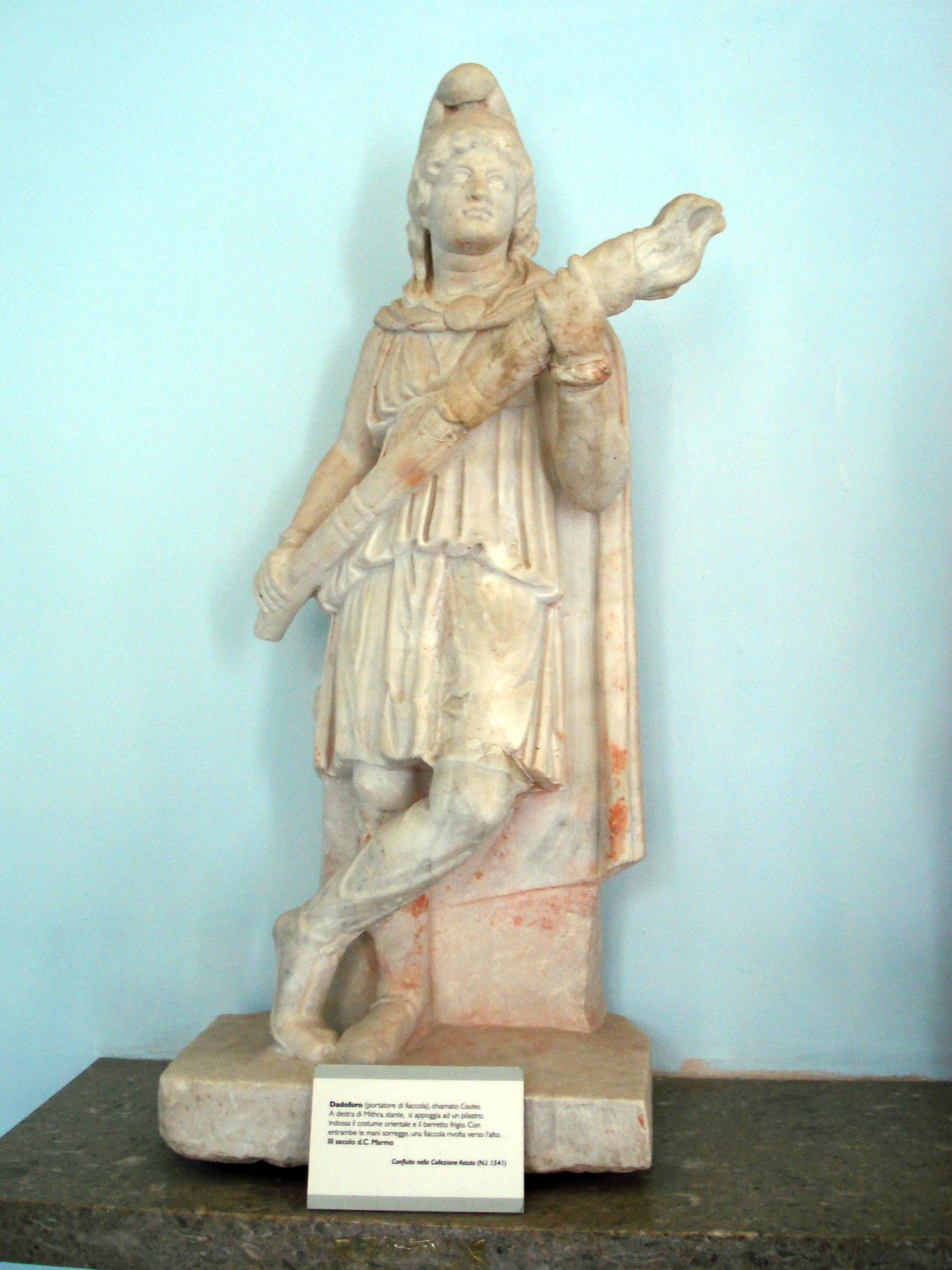
These two mithraic sculptures of Cautes and Cautopates belong to the same collection of Astuto de Noto, made up of mostly Sicilian monuments.
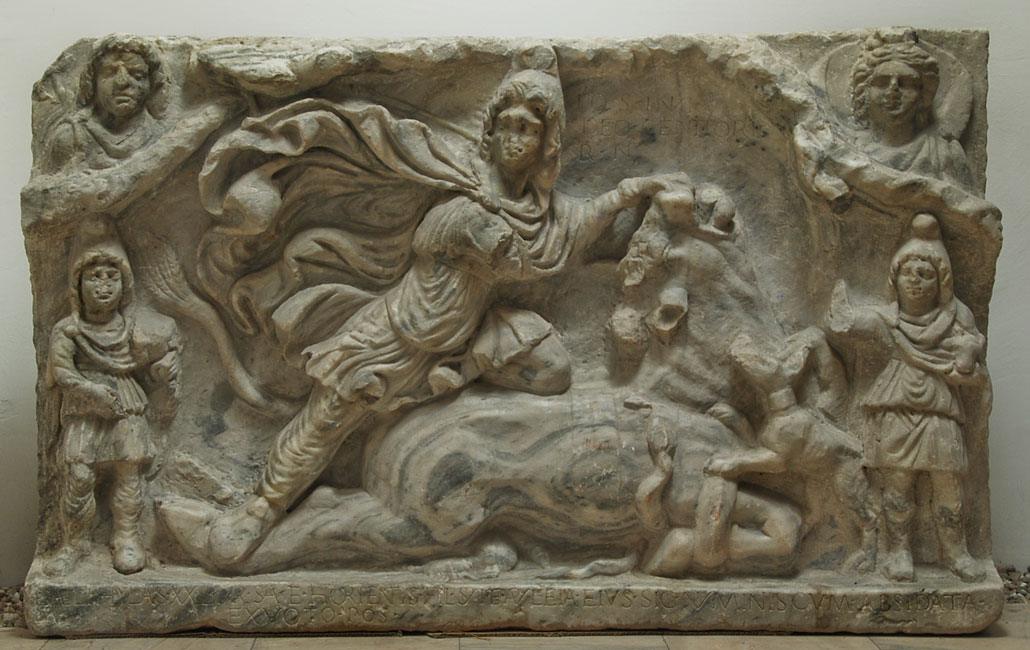
This monument bears an inscription by a certain Lucius Aelius Hylas, in which he associates Sol Invictus with Jupiter.
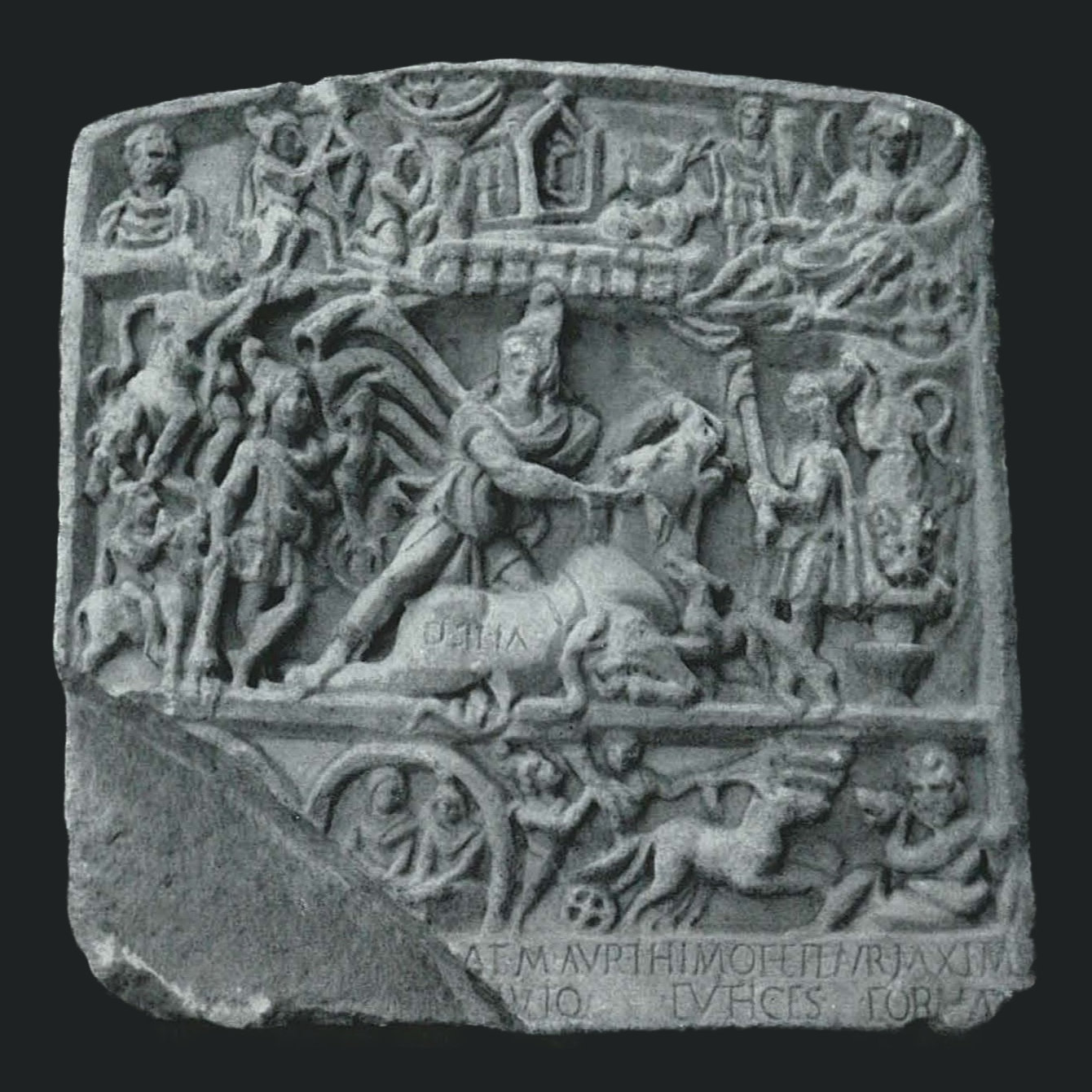
This marble relief of Mithras killing the bull was made by a freedman who dedicated it to his old masters.
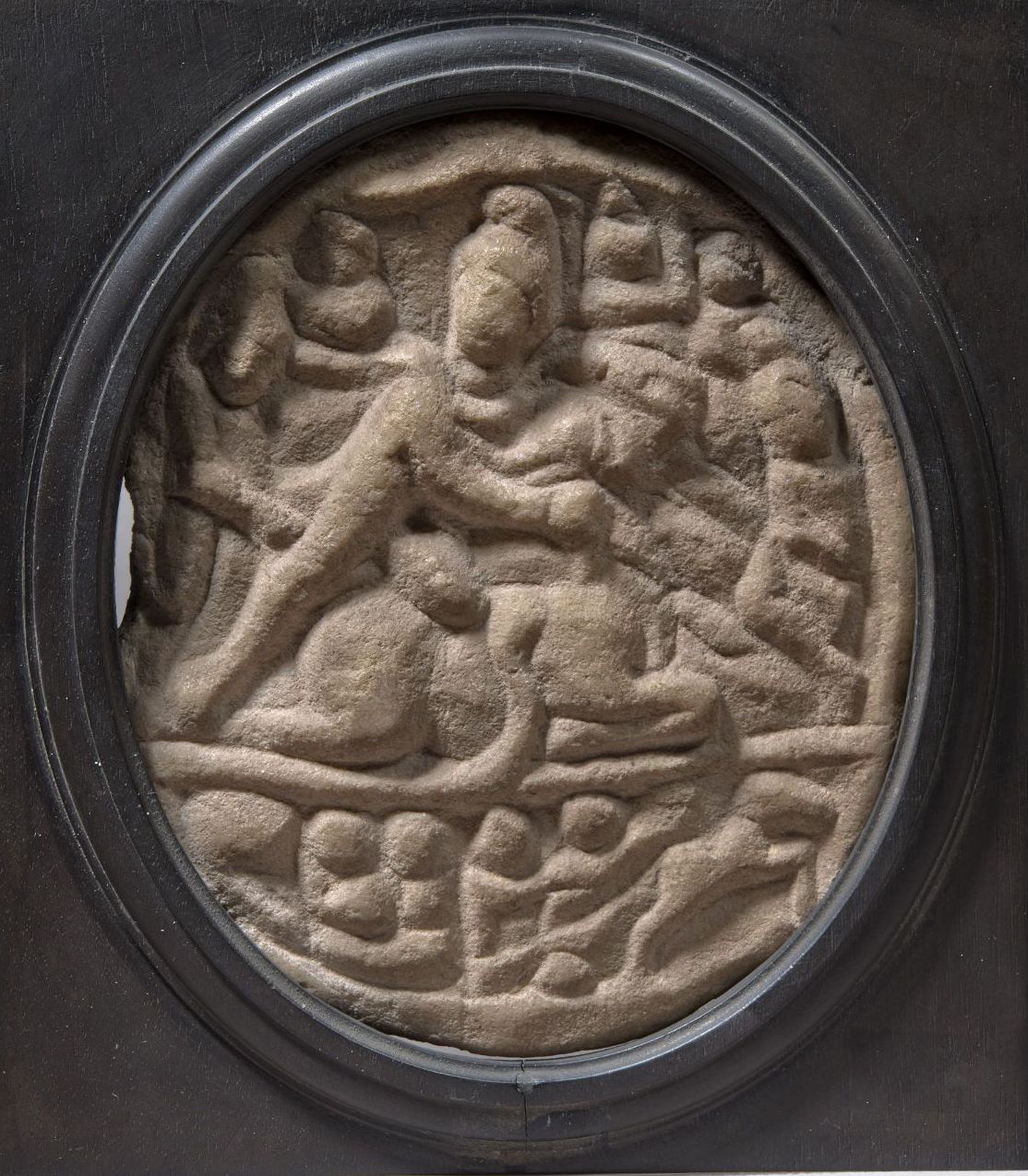
This medallion belongs to a specific category of rounded pieces found in other provinces of the Roman world.
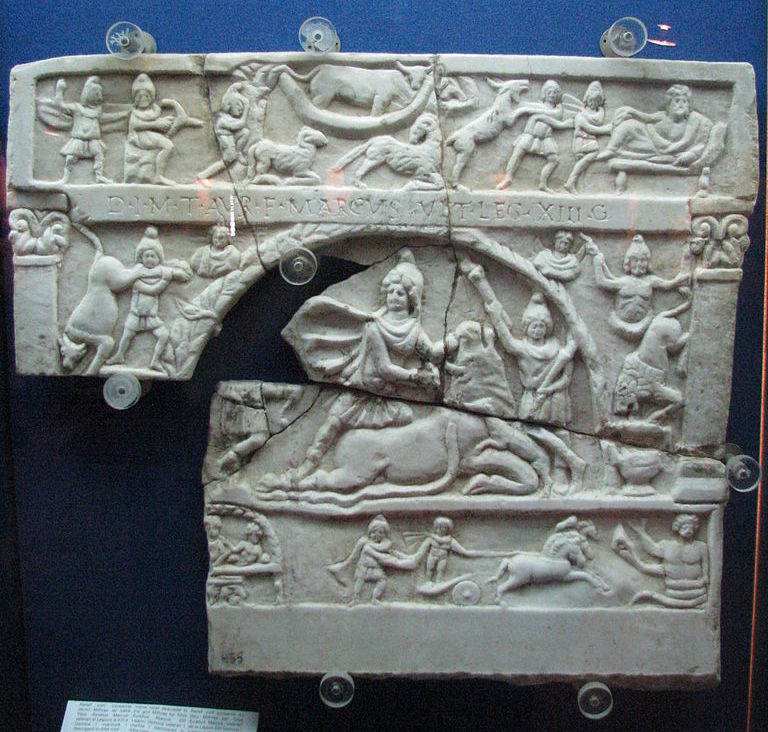
This marble relief from Alba Iulia contains numerous scenes from the myth of Mithras.
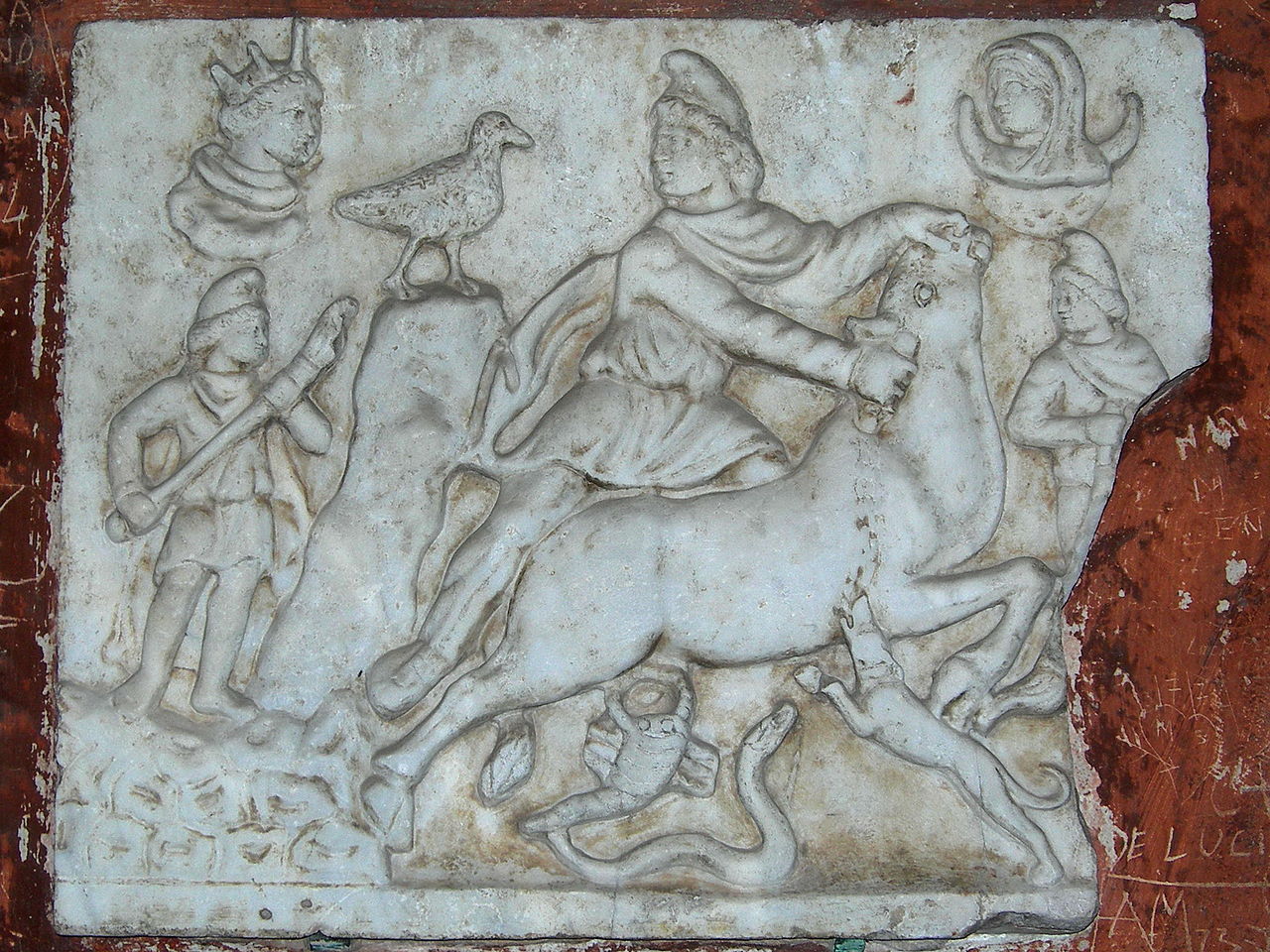
This white marble relief of Mithas killing the sacred bull was found embedded in the building of a noble family in Pisa.
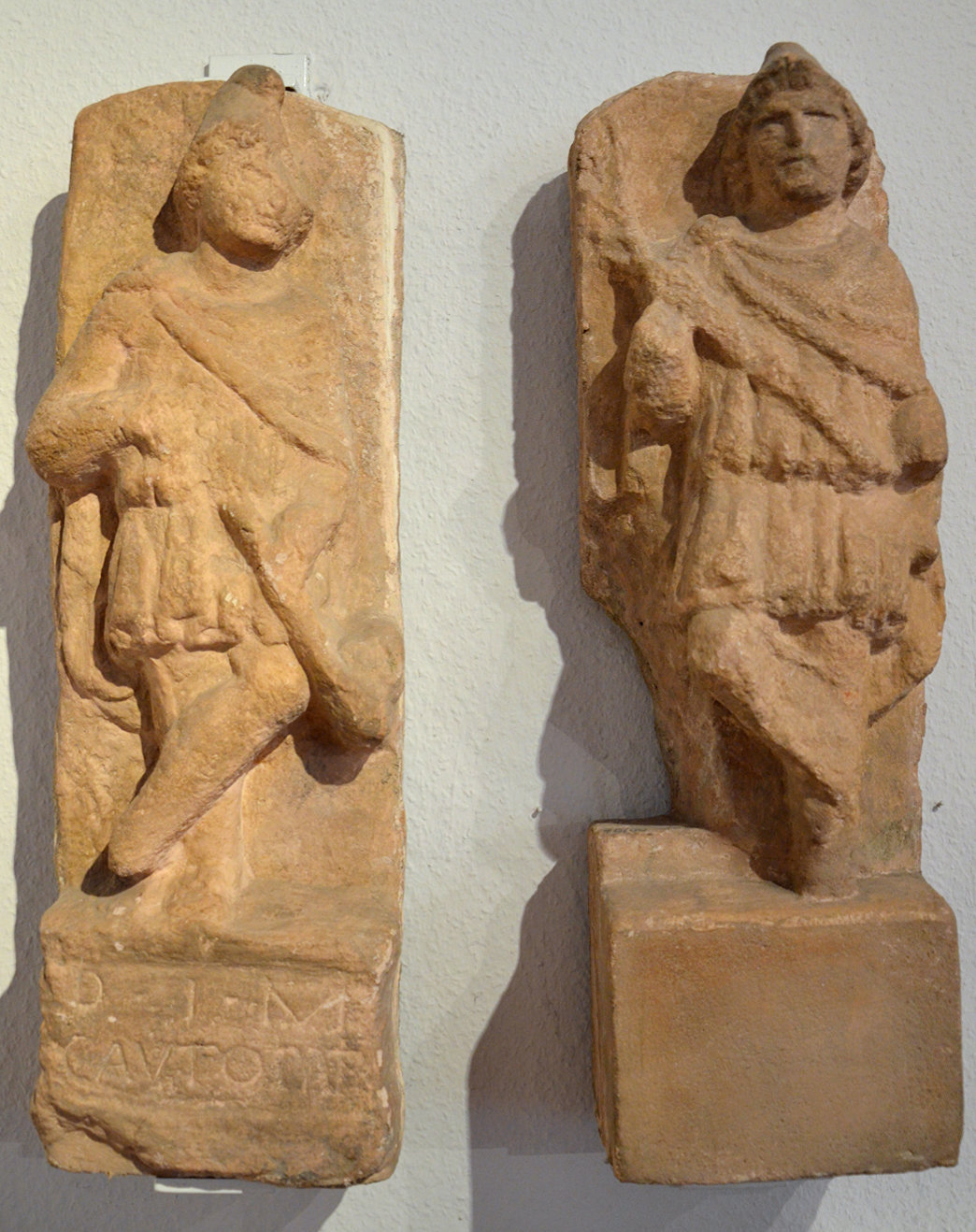
These two reliefs of Cautes and Cautopates where found in the south corner of one of the Mithraea of Friedberg, Hesse.
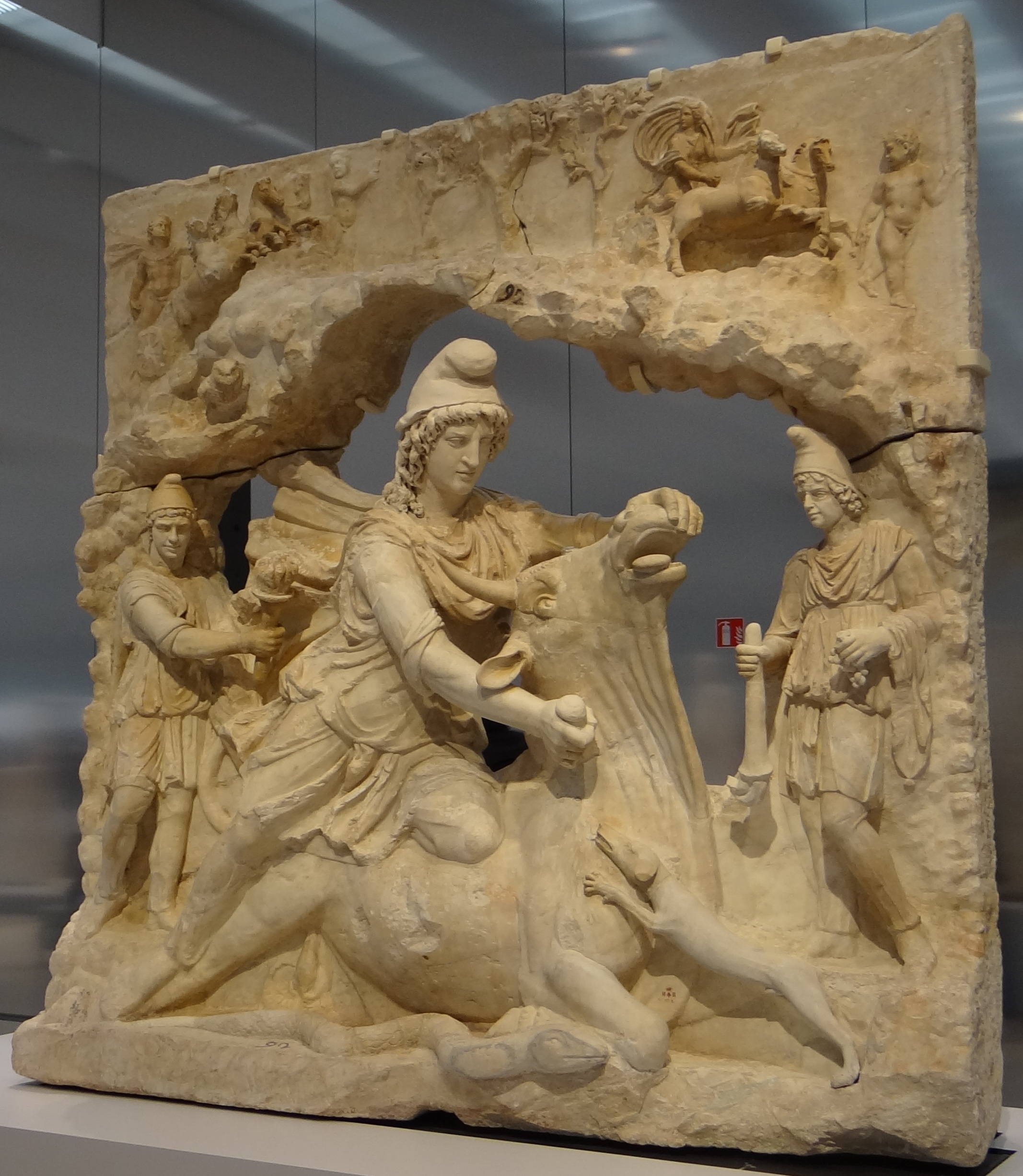
This relief of Mithras slaying the bull was erected in Piazza del Campidoglio, moved to Villa Borghese and is now in the Louvre Museum.
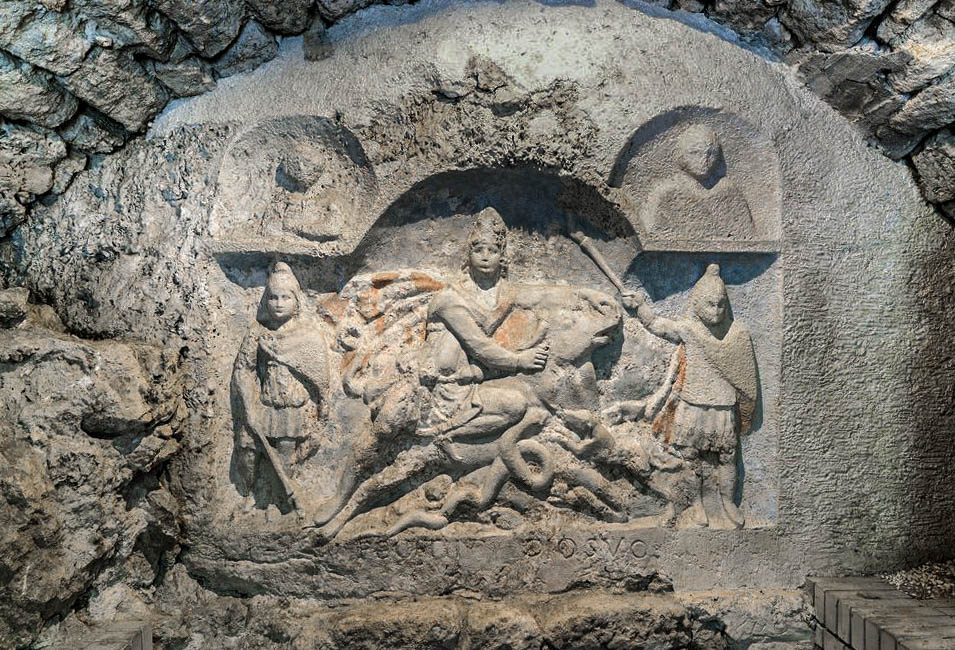
The main cultic relief of Mithras slaying the bull of Fertorakos was carved into the rock face.
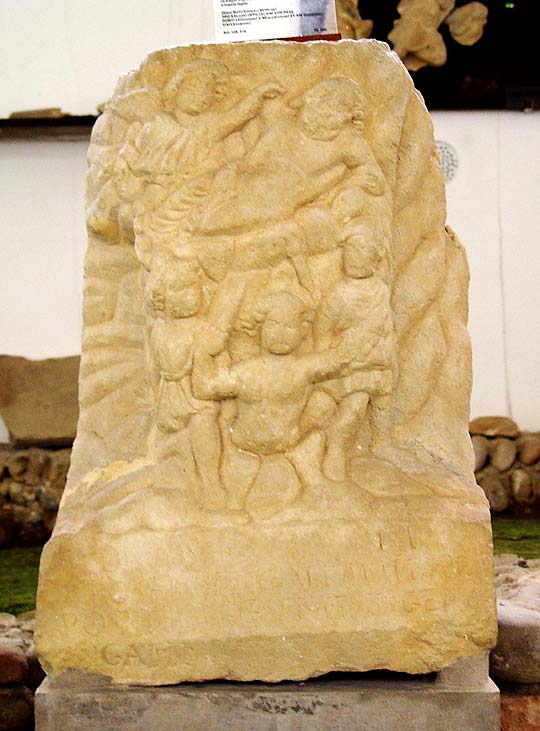
Cautes and Cautopates attend the birth of Mithras from the rock in the Petrogenia of the third Mithraeum of Ptuj.
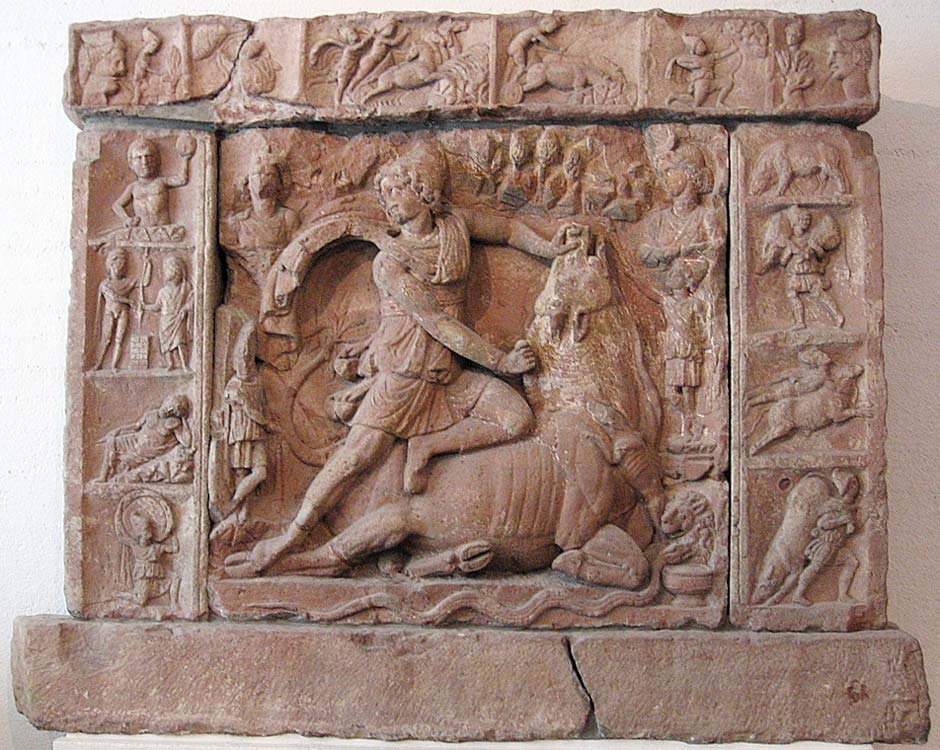
The Tauroctony relief of Neuenheim, Heidelberg, includes several scenes from the deeds of Mithras and other gods.
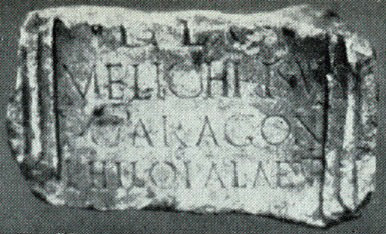
An unusual feature of this very ancient relief is that Cautopates carries a cockerel upside down, while Cautes carries it right-side up.
