Filtering by Province: Dalmatia in monuments gave 71 results.

Altar from Vratnik near Senia, Dalmatia, dedicated to Soli invicto Mithrae by Faustus, slave of Tiberius Saturninus, for himself and his family.
White carnelian with red stripes, reportedly acquired at Epidaurum, depicting what may be Mithras as bull-slayer before a burning altar surmounted by a crescent and a nine-rayed star.
Lost altar from Carevac in Glamoč Polje, Dalmatia, dedicated to Deo invicto Soli Mithrae.
Altar from Carevac in Glamoč Polje south-east of Jajce, Dalmatia, dedicated to Invicto by Sisimbrius, erected by decree of the decuriones.

Two limestone relief fragments from Bihać, Dalmatia, found near Kástel Stasi and the Croate Church of Saint Martha, preserving portions of a Mithraic bull-slaying scene.
Sandstone altar from Pritok near Bihać, Dalmatia, dedicated to Invicto Mithrae Soli by Cocceius for his own welfare.
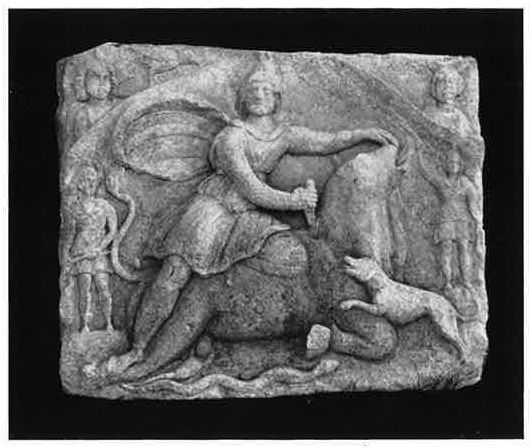
Sandstone tauroctony relief from Pritok near Bihać, Dalmatia, lost during World War II, depicting Mithras in Oriental dress killing the bull in a grotto with the bull's tail ending in corn-ears.
Finds from the Mithraeum at Konjic, Dalmatia, comprising a large roof nail, fragments of a concentric-circle basin, pottery, glass, animal bones, 32 coins from Gallienus to Constantine, and a pine apple.
Limestone altar from the Mithraeum at Konjic, Dalmatia, dedicated to Soli invicto Mithrae by Veturius Lucius.
Small red sandstone fragment from the Mithraeum at Konjic, Dalmatia, preserving an oblong object — possibly an arm — within a border.
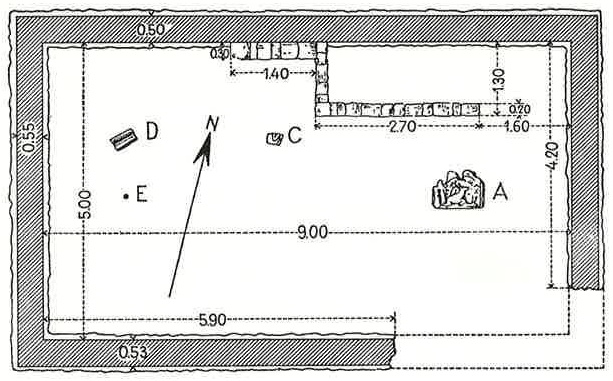
Mithraic sanctuary found in 1897 on the slope of the Repovic mountains on the right bank of the river Trstenic near Konjic in Herzegovina, Dalmatia; a limestone sanctuary with cult relief, altar, and architectural elements.
Inscription from Han Potoci, Dalmatia, dedicated to Deo Soli invicto Meteri by Aurelius Maximinus, Flavius Marcellinus, and Flavius Marcellus; Meteri is interpreted as a variant spelling of Mithrae.
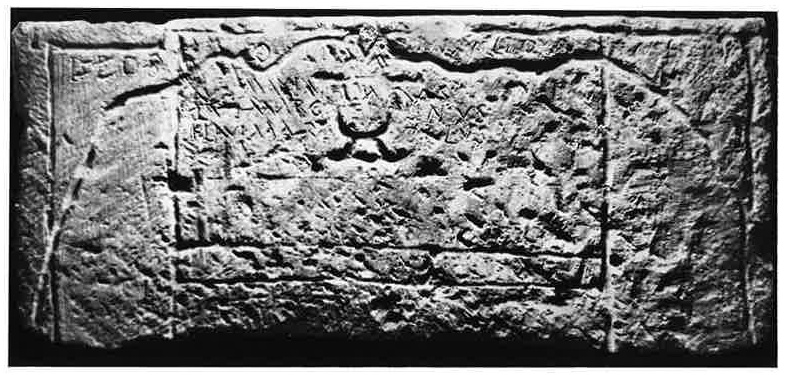
Limestone slab from a Roman settlement at Bijelo Polje north-east of Mostar, ancient area of Han Potoci in Dalmatia, found in 1902 and probably dating to the fourth century AD, depicting a Mithraic scene.
Monument in the Zagreb Archaeological Museum catalogued as an Aion but correctly identified as Icarus; not a Mithraic monument.
Inscription from Nefertara, Dalmatia, dedicated to Invicto Augusto by Aurelius, probably dated to the consulship of Aspro and Orfito.
Mithraic sanctuary in a steep rock face called Preslica at Nefertara near Plevlje, Dalmatia, described as carved into the cliff above a ravine with a carved tauroctony scene.
Limestone altar from the ruins of ancient Plevlje, Dalmatia, walled into the well of the local barracks, dedicated to Soli invicto sacrum by Sextus Baberius Ianoarius.
Tauroctony relief mentioned from a mountaintop at Krivošije near Risn, Boka Kotorska, Dalmatia, found before World War I; the relief was lost.
Limestone tauroctony relief fragment from Cavtat, ancient Epidaurum in Dalmatia, preserving the dog leaping up against the bull and part of a Cautes figure not cross-legged.
Tauroctony relief carved directly into the rock of the Mithraeum on the Colle S. Giorgio near Cavtat, ancient Epidaurum in Dalmatia; the composition includes Sol, Luna, Cautes, and Cautopates flanking the central scene.
