Your search Bu Njem gave 1882 results.
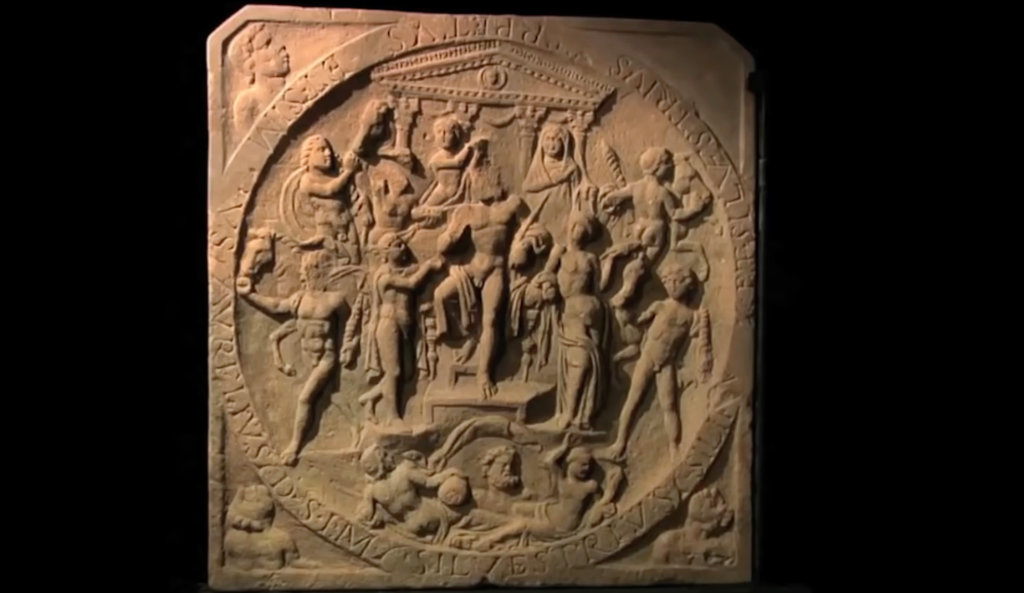
Film in German describing the Mithras relief from Dieburg as part of the design and staging of the Mithraeum in Museum Schloss Fechenbach, Dieburg.

Procolitia stood along Hadrian’s Wall near modern Carrawburgh and formed part of the frontier infrastructure of northern Britannia.
Jiu valley site associated with the defensive system linking Dacia to the southern Danubian regions.
The site of Alteburg-Heftrich formed part of the frontier landscape connected with the Upper Germanic limes.
The locality of Acbunar is associated with archaeological remains from the lower Danubian frontier zone.
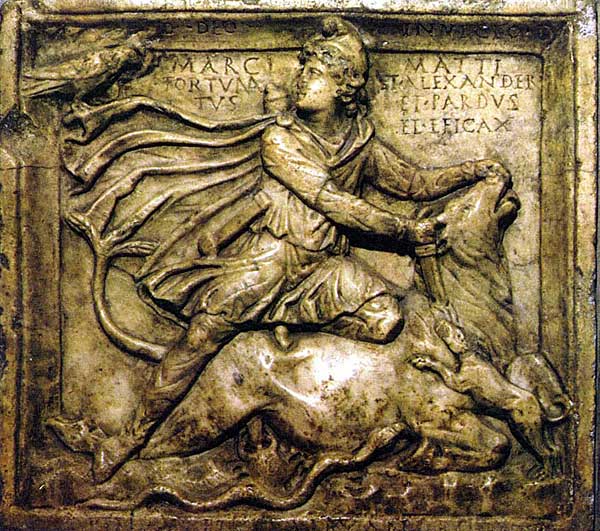
The relief marble of Mithras sacrifying the bull, exposed on the Hermitage Museum comes from Rome.
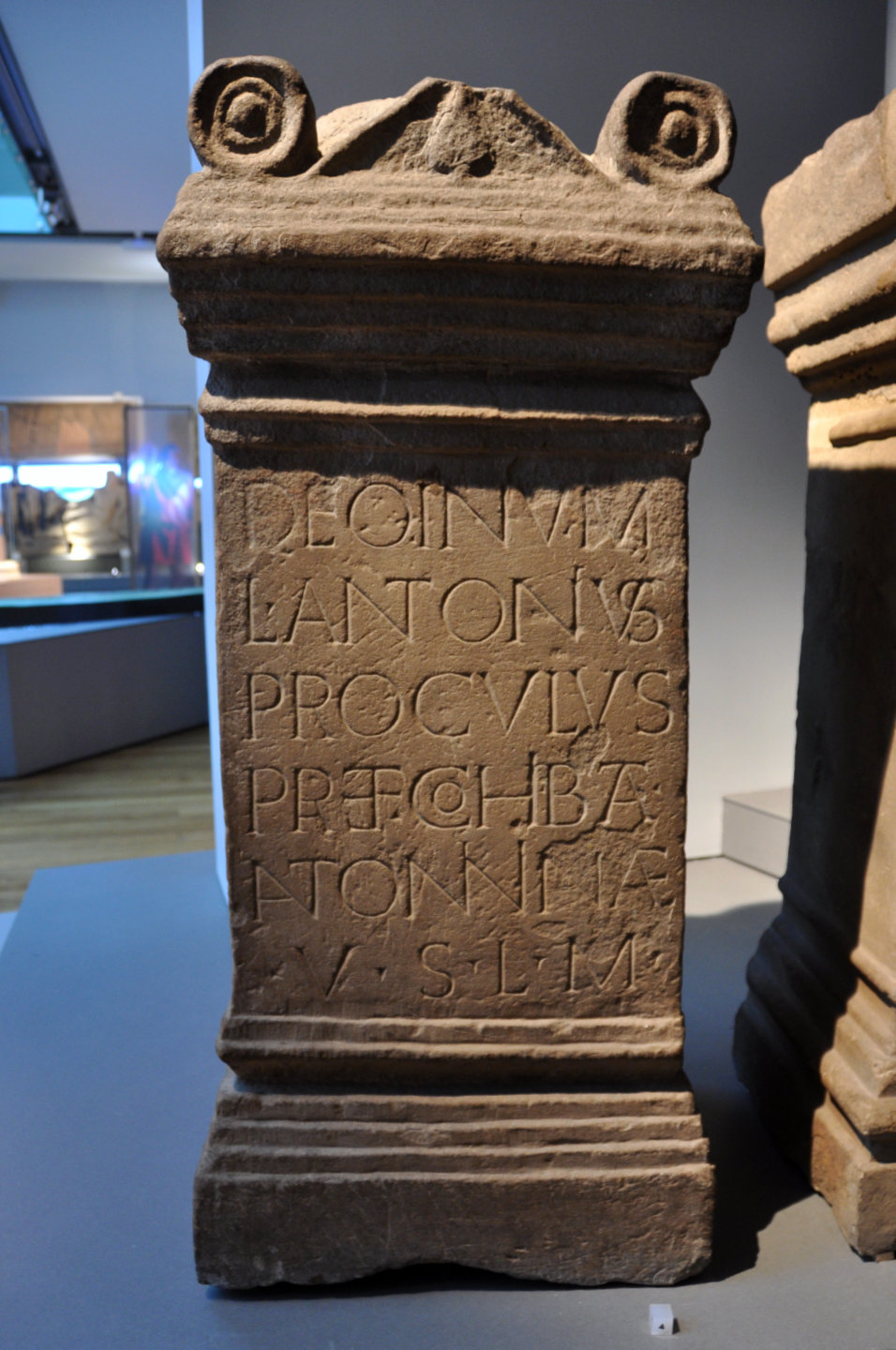
One of the three altars to Mithras found at the Mithraeum of Carrawburgh fort.
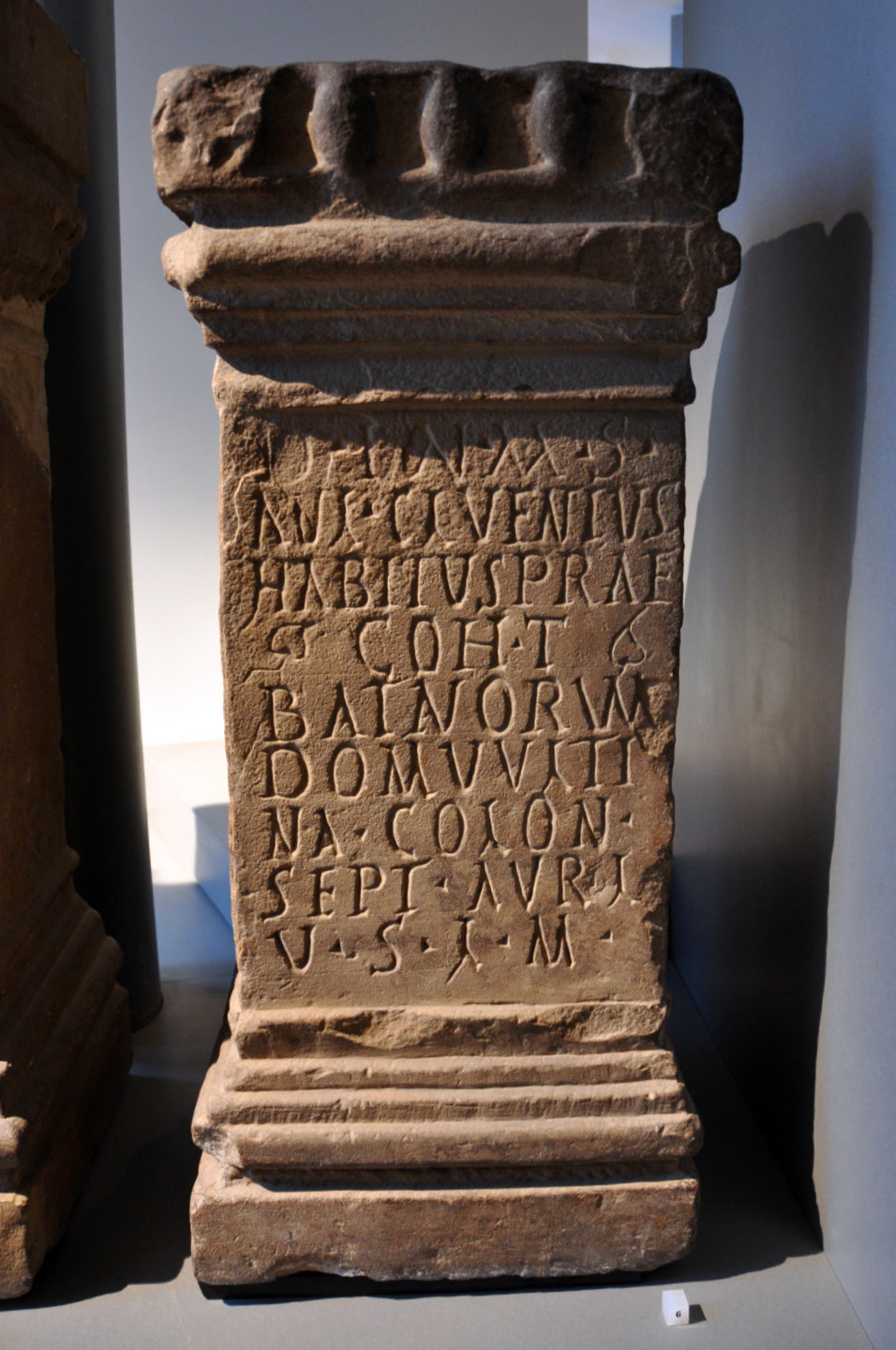
One of the three altars to Mithras found at the Mithraeum of Carrawburgh fort.

Altar in poor-quality lettering from Burnum, Dalmatia, dedicated to Soli invicto by Caius Secundulus; the Mithraic interpretation is not entirely certain.
Fragmentary inscription from Günzburg, ancient Guntia in Raetia, recording a dedication to Deo invicto Mithrae by two dedicants, Tetto and a companion whose name begins Sex-.
Assemblage of plates, jugs, dishes, cups, censers, two bronze coins, and animal bones from the Mithraeum at Dieburg
Various altar and base fragments, two sandstone balls, and two millstone fragments from the Mithraeum at Dieburg
Small yellow-red sandstone altar from the Mithraeum at Dieburg dedicated to Deo sancto Mercurio
Small fragmentary inscription from the Mithraeum at Dieburg preserving only the abbreviated dedication D(eo) i(nvicto) M(ithrae)
Red sandstone altar from the Mithraeum at Dieburg that had been reused, its original inscription obliterated and replaced with a dedication to Deo invicto Mithrae
Small red sandstone fragment from the Mithraeum at Dieburg preserving a head in a Phrygian cap
Two yellow sandstone fragments from the Mithraeum at Dieburg, comprising a base with a foot and another piece with part of a garment and a club
Red sandstone fragment of a standing woman in a mantle from the Mithraeum at Dieburg, head and lower body lost, probably Minerva
Small yellow sandstone fragment from the Mithraeum at Dieburg showing the foremost part of an animal, probably a dog or ram, with head turned right
Red sandstone base of a Mercury statue from the Mithraeum at Dieburg, preserving only the tortoise attribute at the god's feet
