Your search Monteu da Po gave 2934 results.

Budaörs is a town in Pest County, in the metropolitan area of Budapest, Hungary. Before the Romans, the Celtic tribe of Eraviscus occupied the area for about 100 years.
Rhaetia occupied a strategic frontier position between the Alps, the upper Danube and northern Italy where Mithraic cults circulated through military networks.
Roman Dacia preserves one of the densest and most frontier-oriented bodies of Mithraic evidence in the empire.
Dalmatia preserves Mithraic evidence shaped by Adriatic routes, military movement and provincial urban centres.
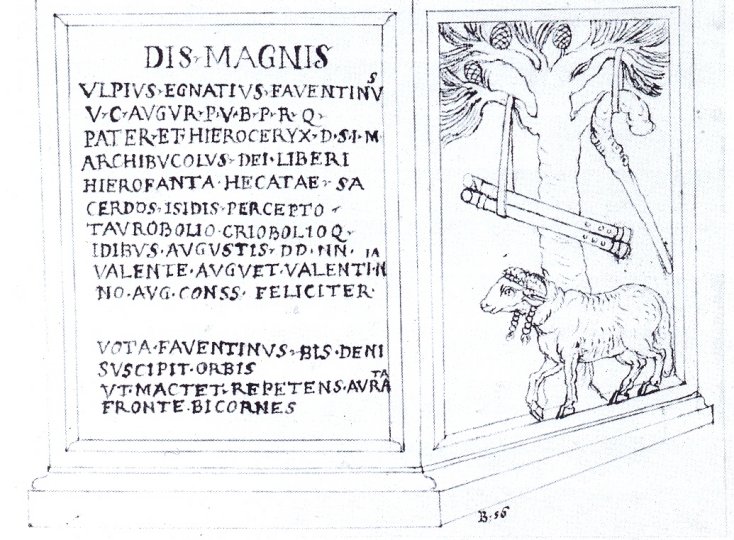
Both of them were discovered in 1609 in the foundations of the façade of the church of San Pietro, Rome.
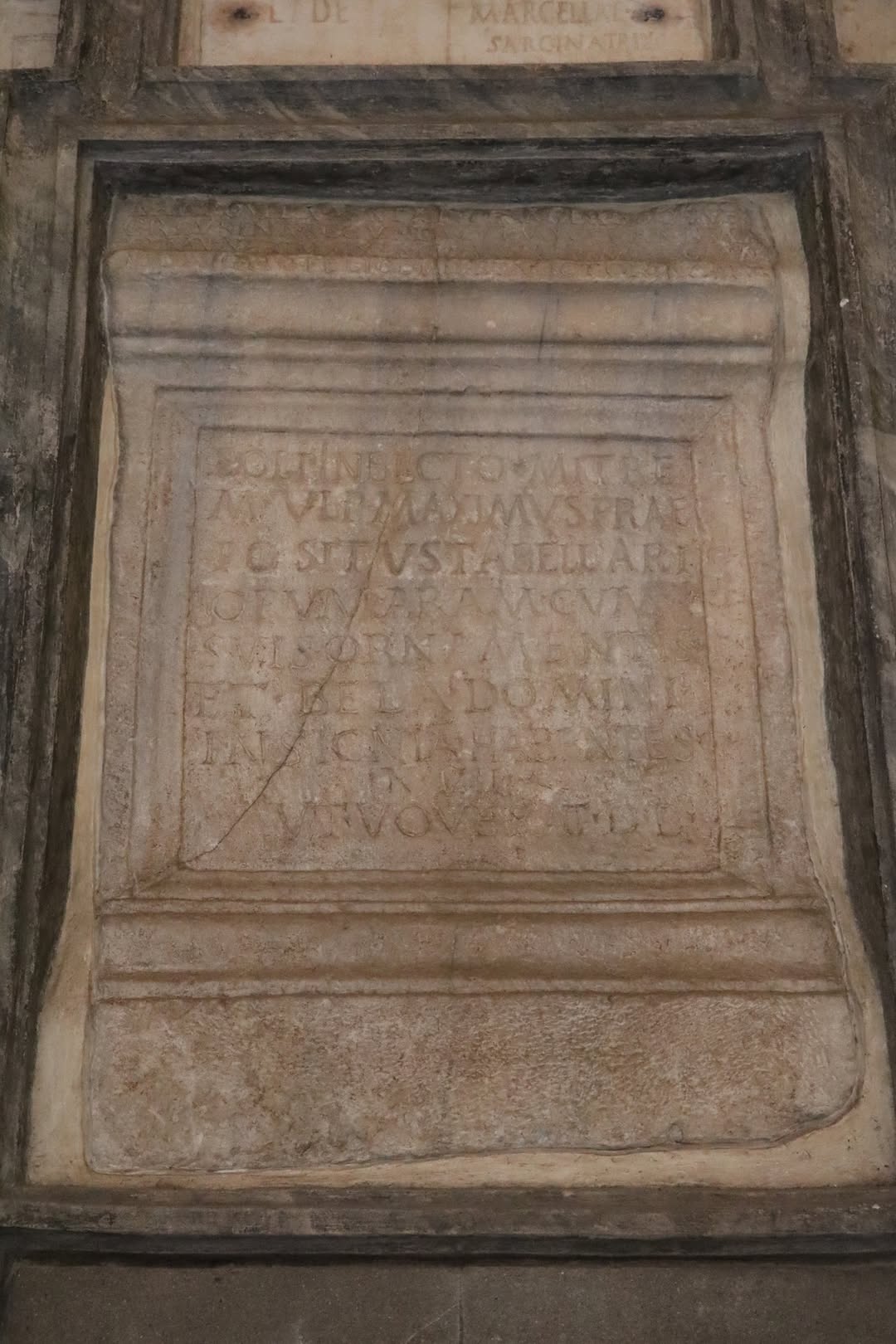
Marble altar dedicated to Sol Invictus Mithras, found in Rome (in aedibus Maffaeiorum), set up in 183 A.D. by M. Ulpius Maximus, praepositus tabellariorum, together with its ornaments and Mithraic insignia, in fulfilment of a vow.

Marble altar dedicated at the Vatican Phrygianum in Rome by the Mithraic pater Alfenius Ceionius Iulianus Kamenius in 374 CE.
This fragment of pottery depicting Mithras may have come from Gallia.
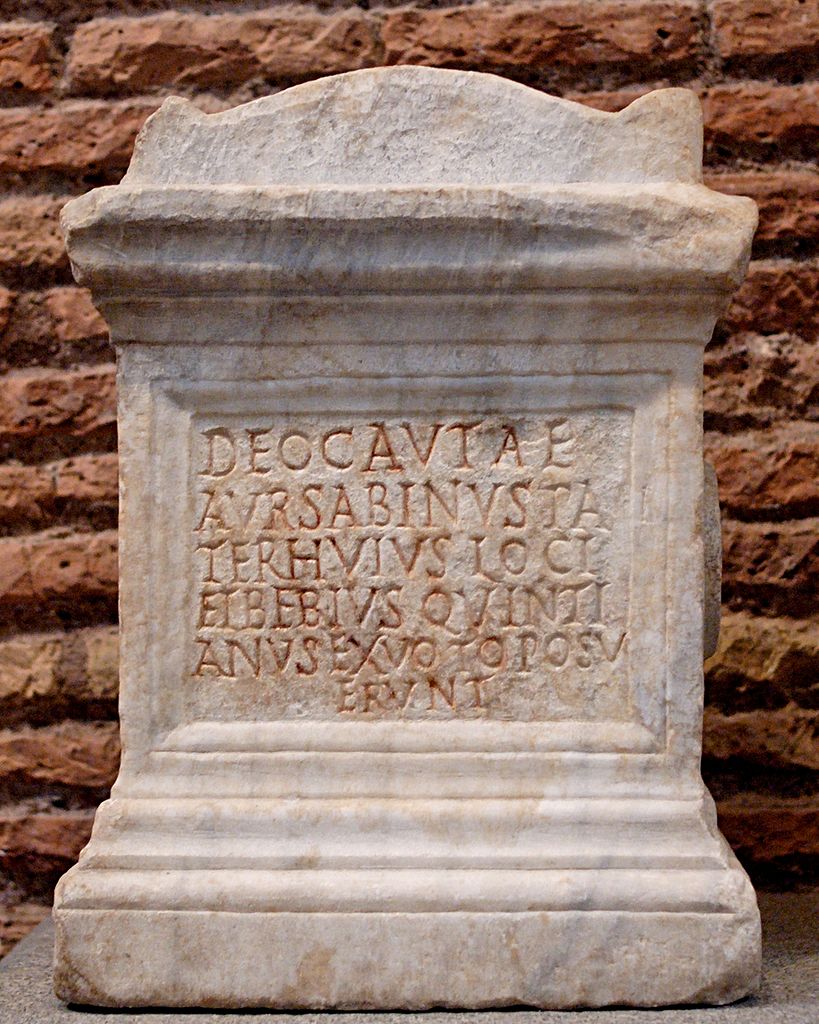
These two parallel altars to the diophores were dedicated by the Pater and a Leo from the Mithraeum of S. Stefano Rotondo.
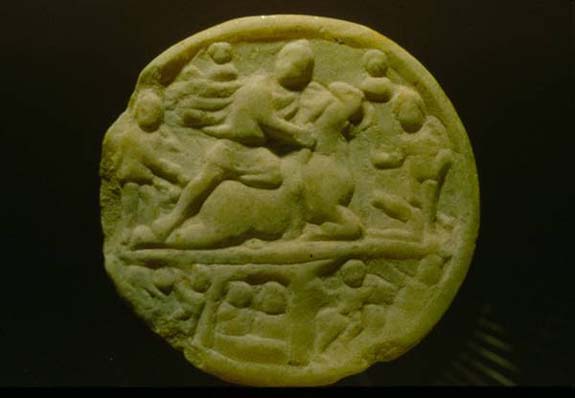
The small medallion depicts three scenes from the life of Mithras, including the Tauroctony. It may come from the Danube area.
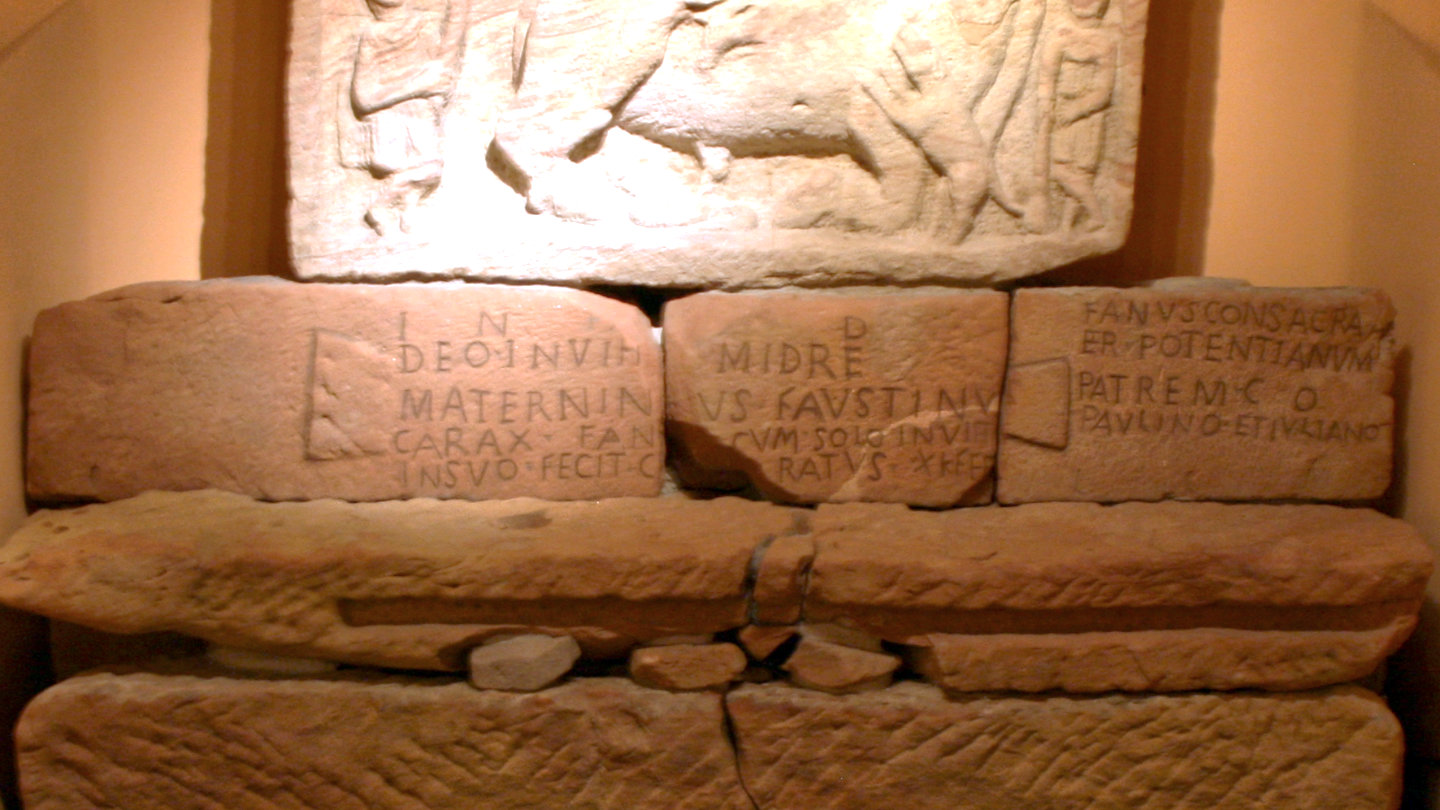
The inscription was located at the base of the main Tauroctony of the Gimmeldingen Mithraeum.
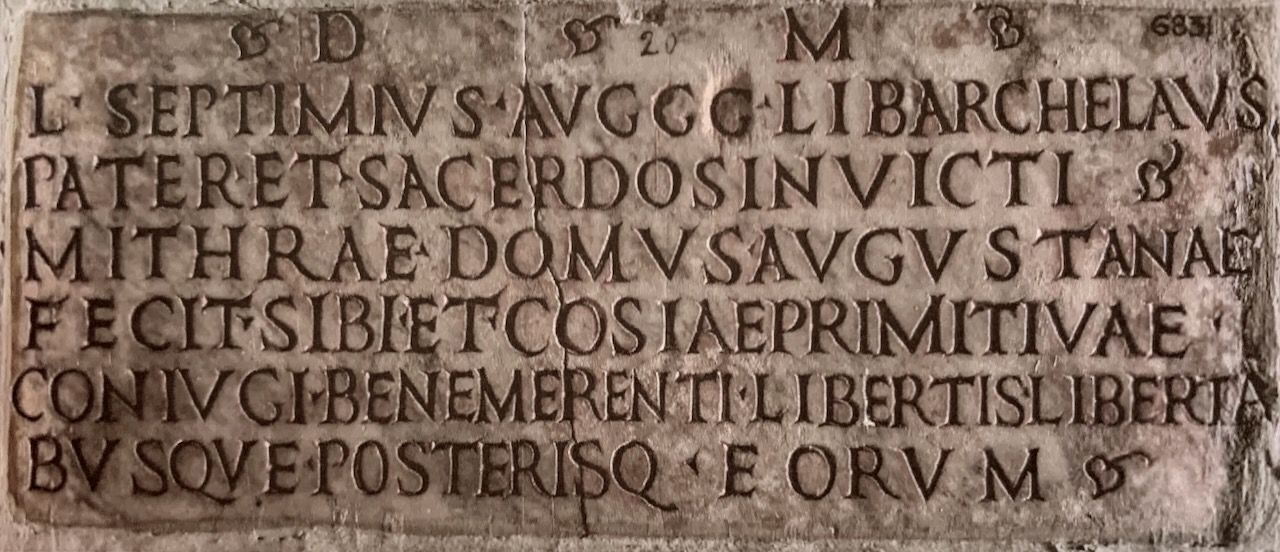
Marble funerary plaque erected by Lucius Septimius Archelaus, a Pater and priest of Mithras, for himself, his wife, and their freedmen and descendants.
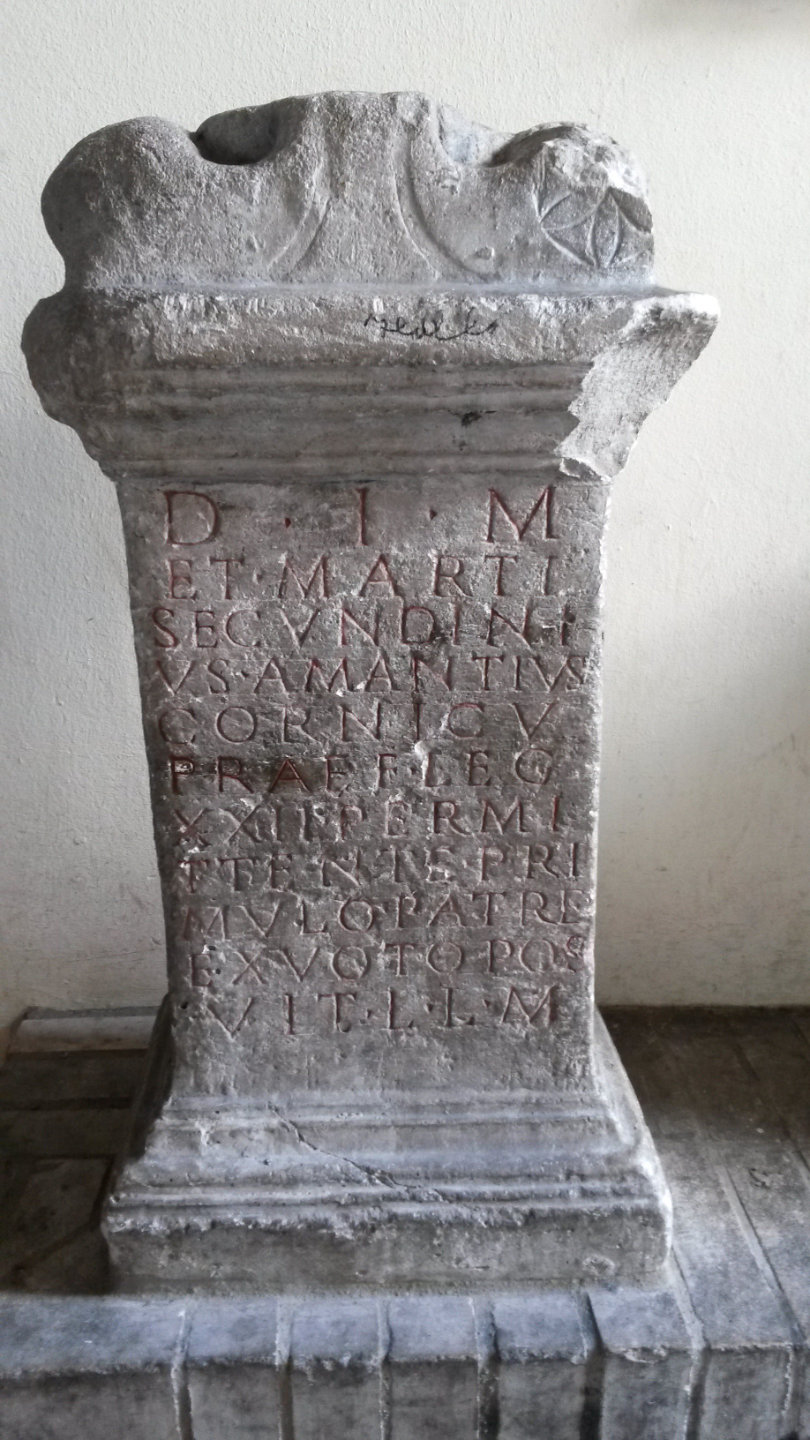
This altar has been unusually dedicated to both gods Mithras and Mars at Mogontiacum, present-day Mainz.
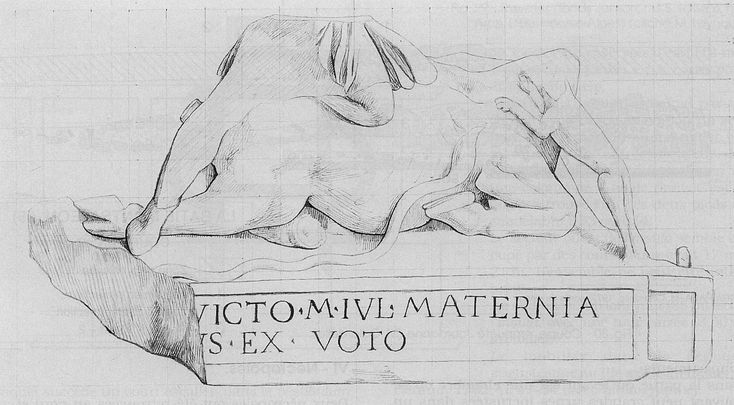
This damaged relief of Mithras killing the bull found in 1804 and formerly exposed at Gap, is now lost.
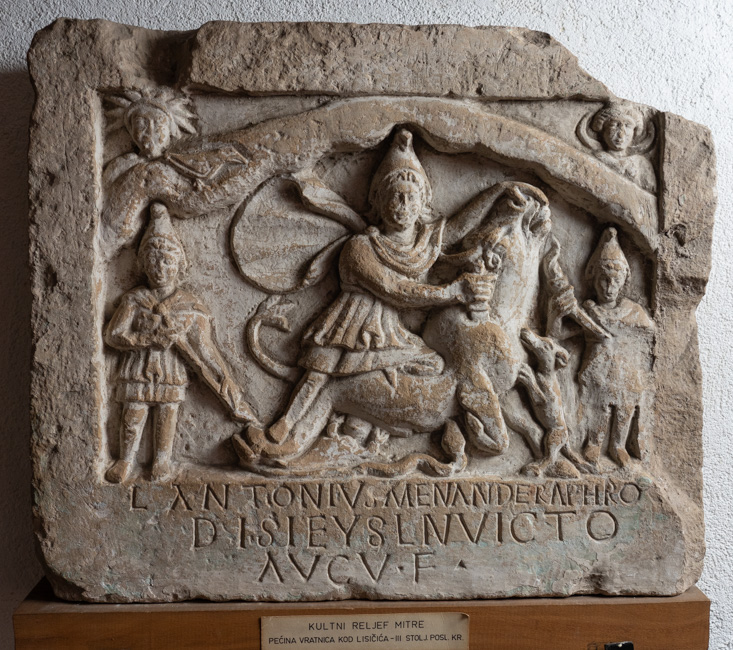
This relief of Mithras as a bullkiller found at Vratnitsa, near Lisicici in northern Macedonia, was signed by a certain Menander Aphrodisieus.
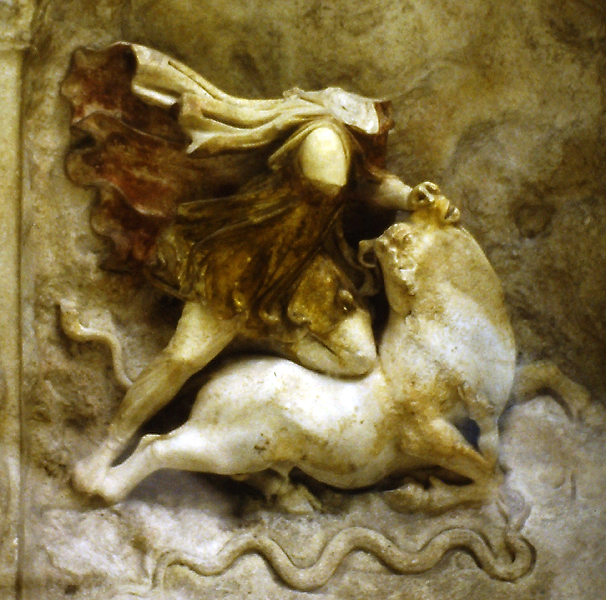
In the Tauroctony of Hermopolis, Cautes and Cautopates are placed over two columns at each side of the sacrifice.
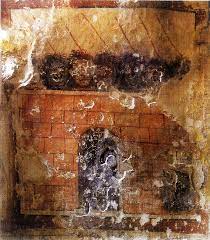
The City of Darkness unique fresco from the Mithraeum of Hawarte shows the tightest links between the western and eastern worship of Mithras in Roman Syria.
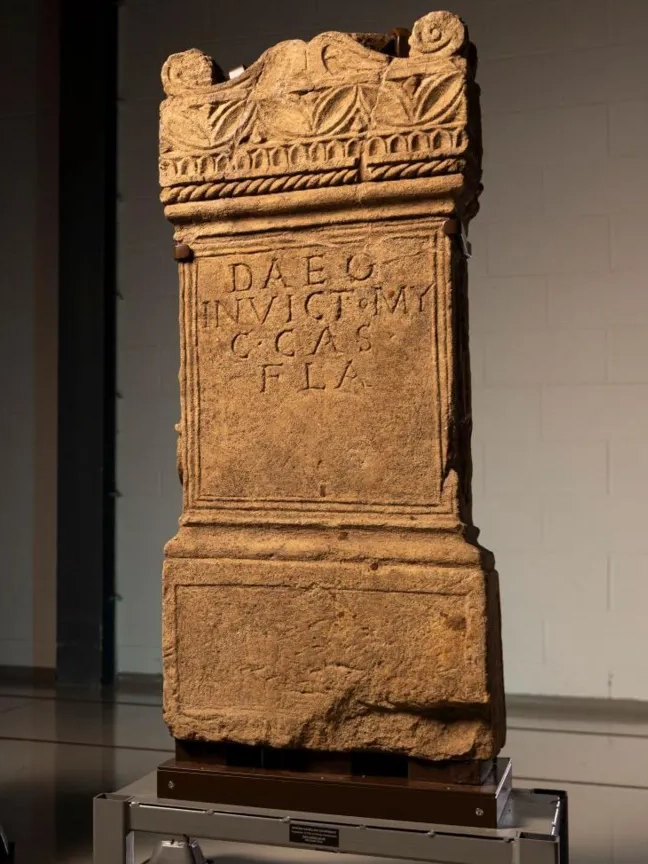
This second altar discovered to date near Inveresk includes several elements unusual in Mithraic worship.
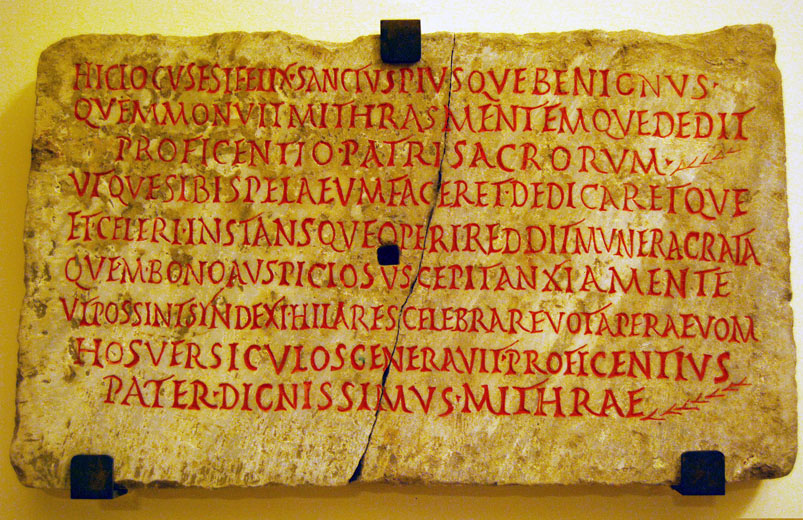
This marble slab bears an inception be the Pater Proficentius to whom Mithras has suggested to build and devote a temple.
At Rome’s twilight, amid political upheaval and Christian ascendancy, Vettius Agorius Praetextatus embodied pagan intellect, virtue, and authority across senatorial, military, and mystical spheres.
