Your search Podersdorf am See gave 2325 results.

The dedicator of this monument is also known for having made a tauroctonic relief in Nesce.
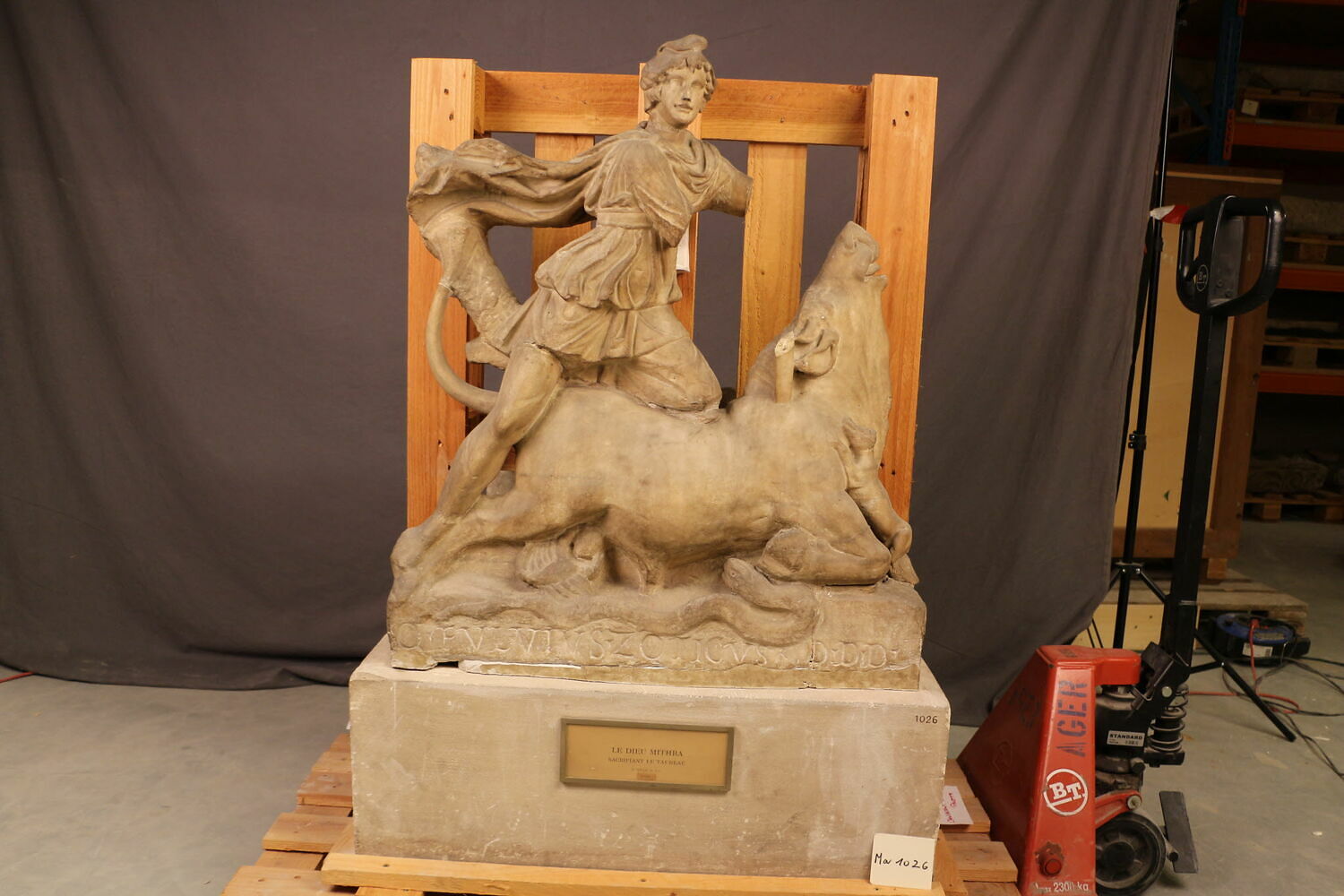
The Tauroctony found in Velletri, Rome, bears an inscription from its owner and donor.
.jpg)
The controversial Italian journalist Edmon Durighello discovered this marble statue of a young naked Aion in 1887.
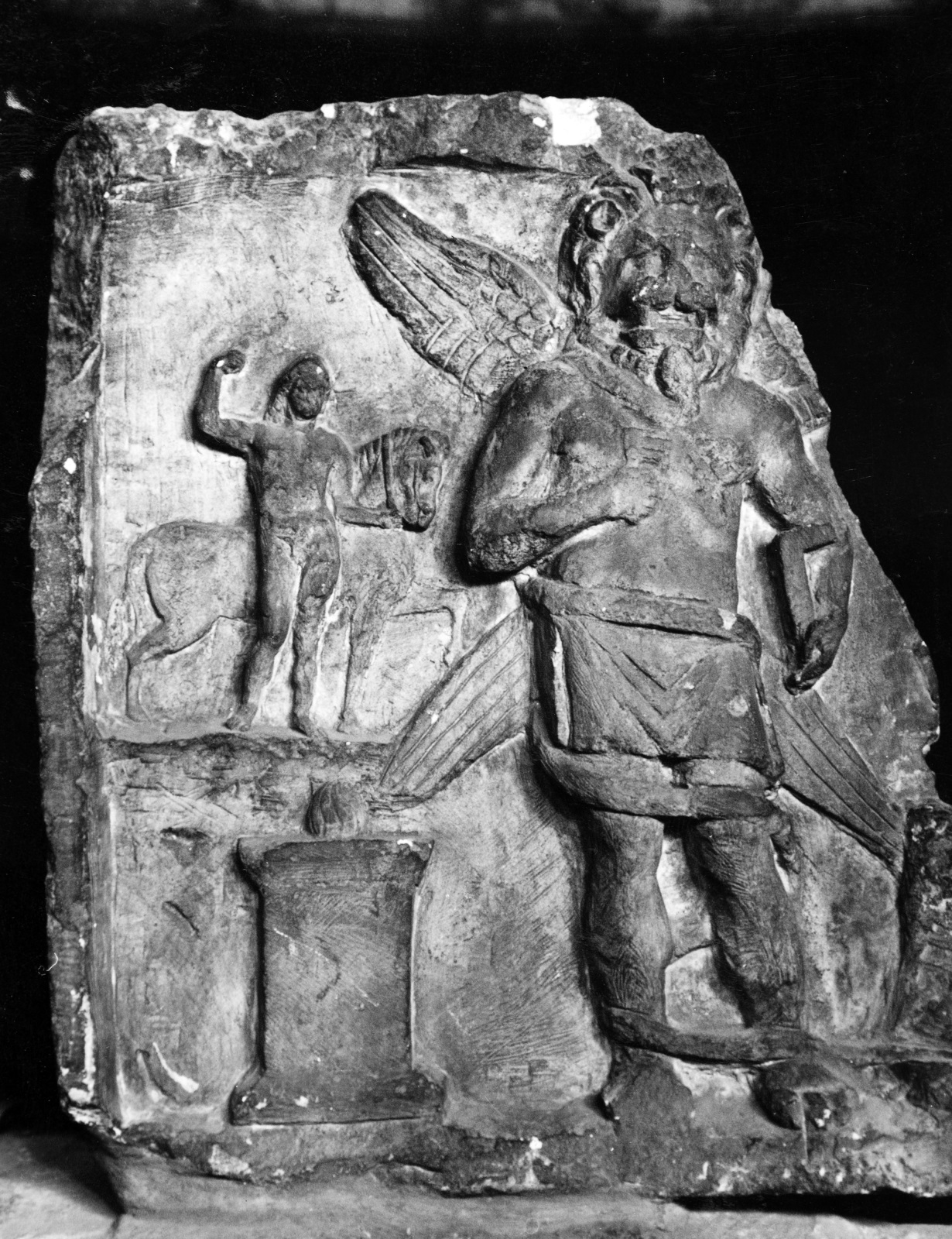
The relief of Aion from Vienne includes a naked youth in Phrygian cap holding the reins of a horse.
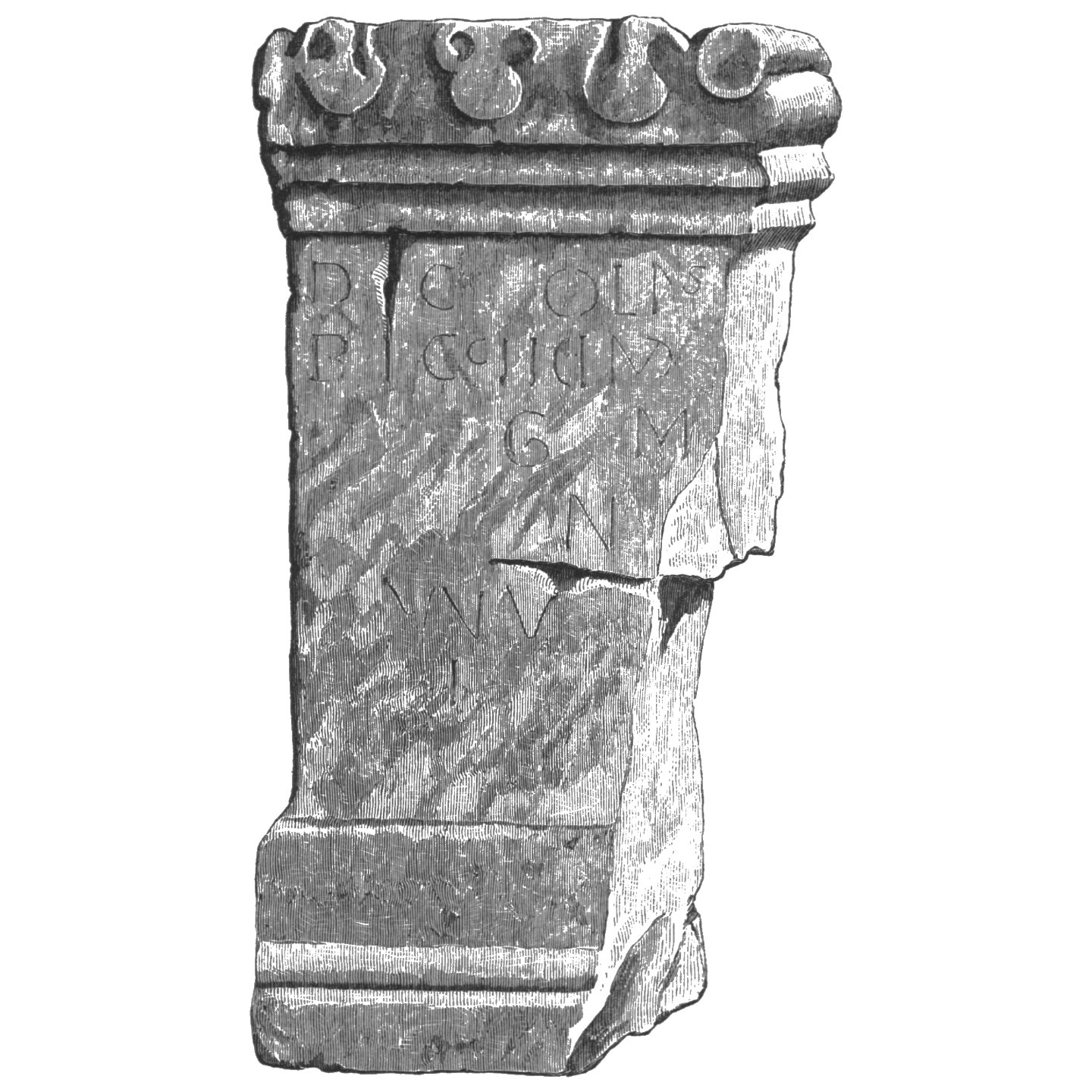
Horsley thought that, like some other inscriptions in the Naworth Collection, this altar also had come from Birdoswald.
This monument is too fragmentary to recod it definitely as a Mithras-monument.
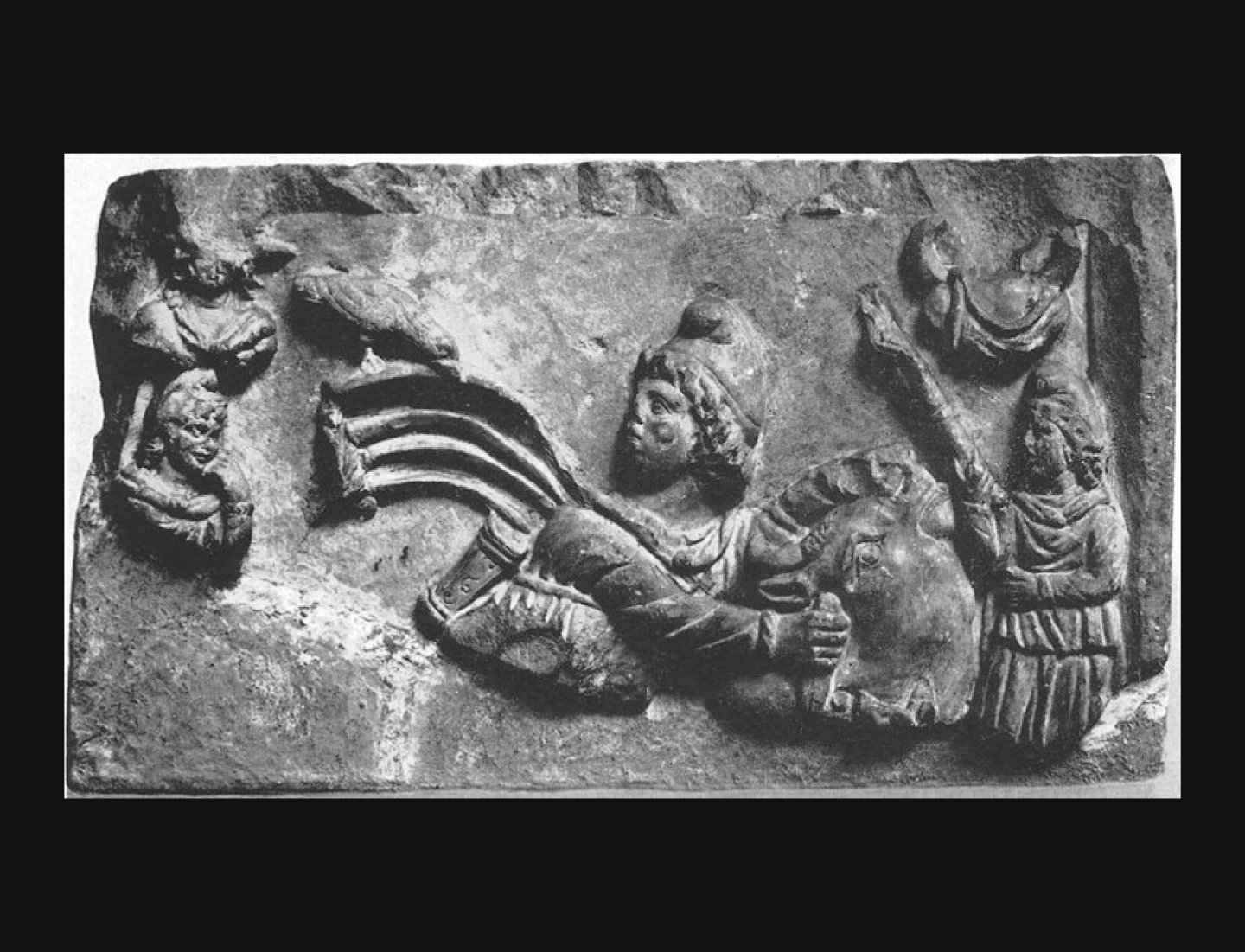
Franz Cumont bought this relief of Mithras as a bullkiller from a dealer who claimed to have found it in a vineyard near the church of Saint Pancrace, in Rome.
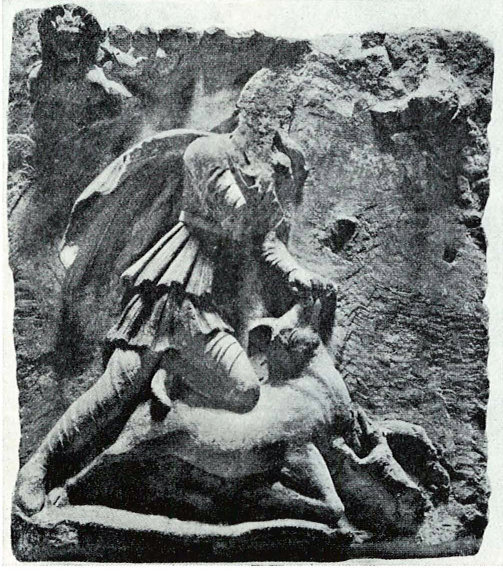
Discovered in Memphis, Egypt, a second relief depicting Mithras killing the bull.
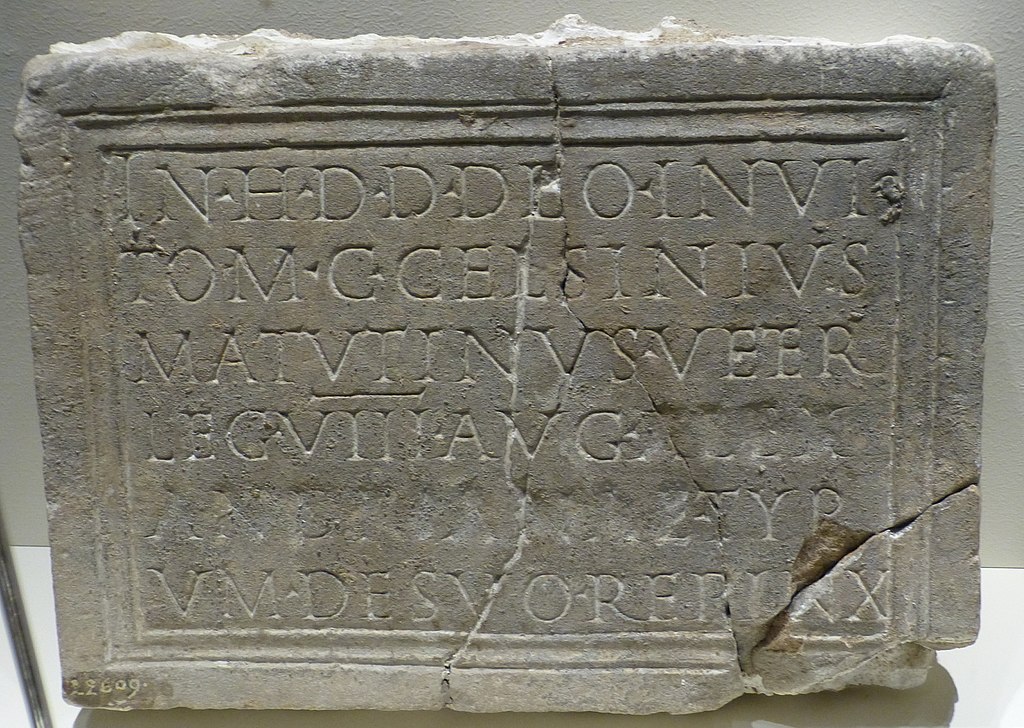
The inscription reports the restoration of the coloured painting of the main relief of the Mithraeum by a veteran of the Legio VIII Augusta.
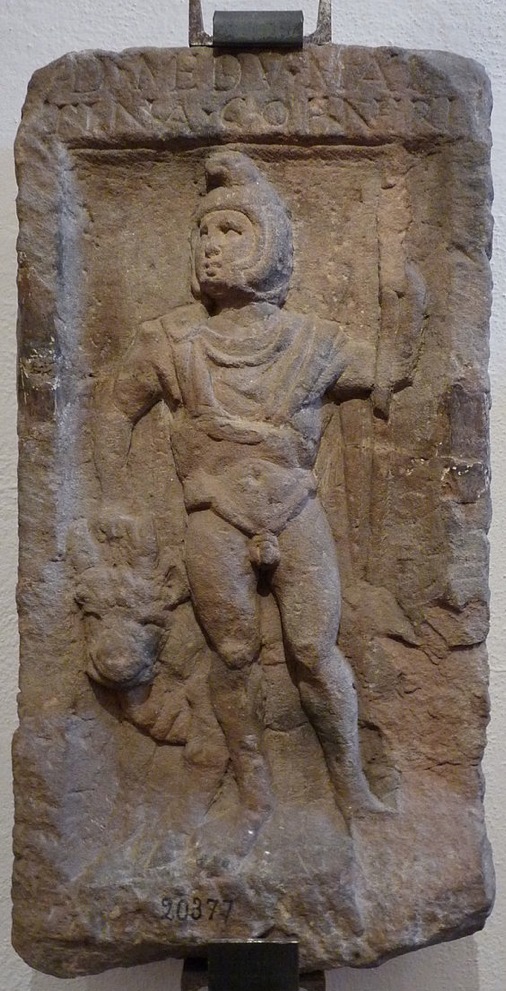
The relief of naked Roman soldier, wearing a mantle and a Phrygian cap, has been related to the Mithras' cult.
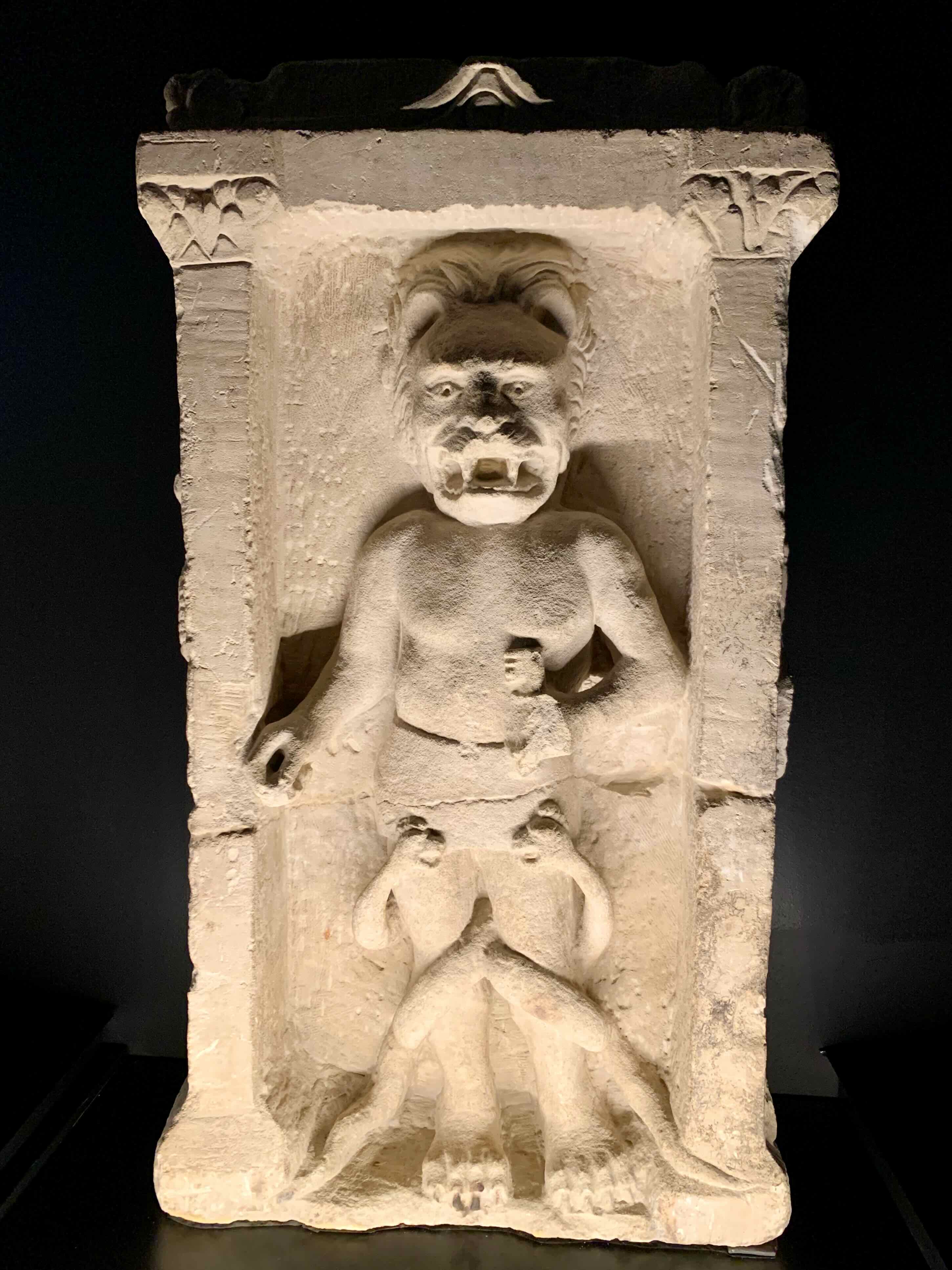
The altar depicting a lion-headed figure from Bordeaux includes a sculpted ewer and a patera on the sides.
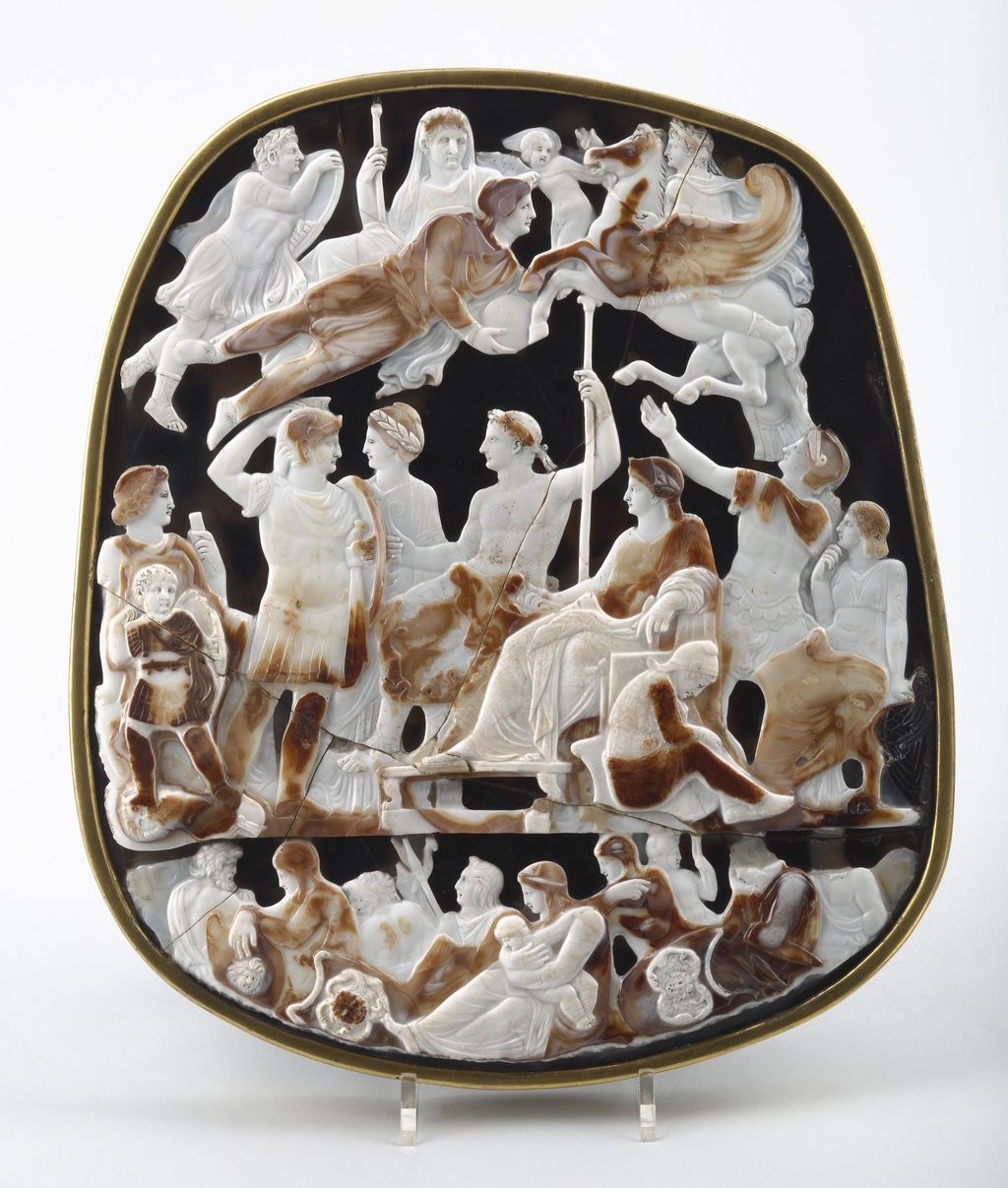
Some authors have speculated that the flying figure dressed in oriental style and holding a globe could be Mithras.
This altar found in Sentinum bears an inscription from two brothers.
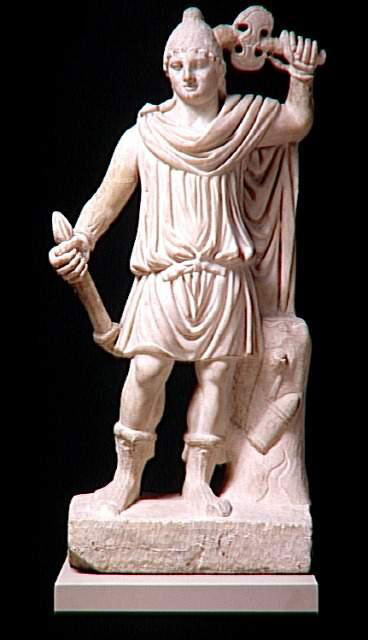
In this case, a quiver has been attached to the tree-stump behind the torchbearer.
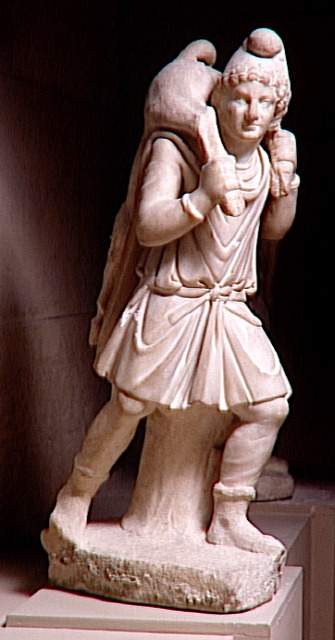
Sculpture depicting Mithras carrying a young bull on his shoulders.
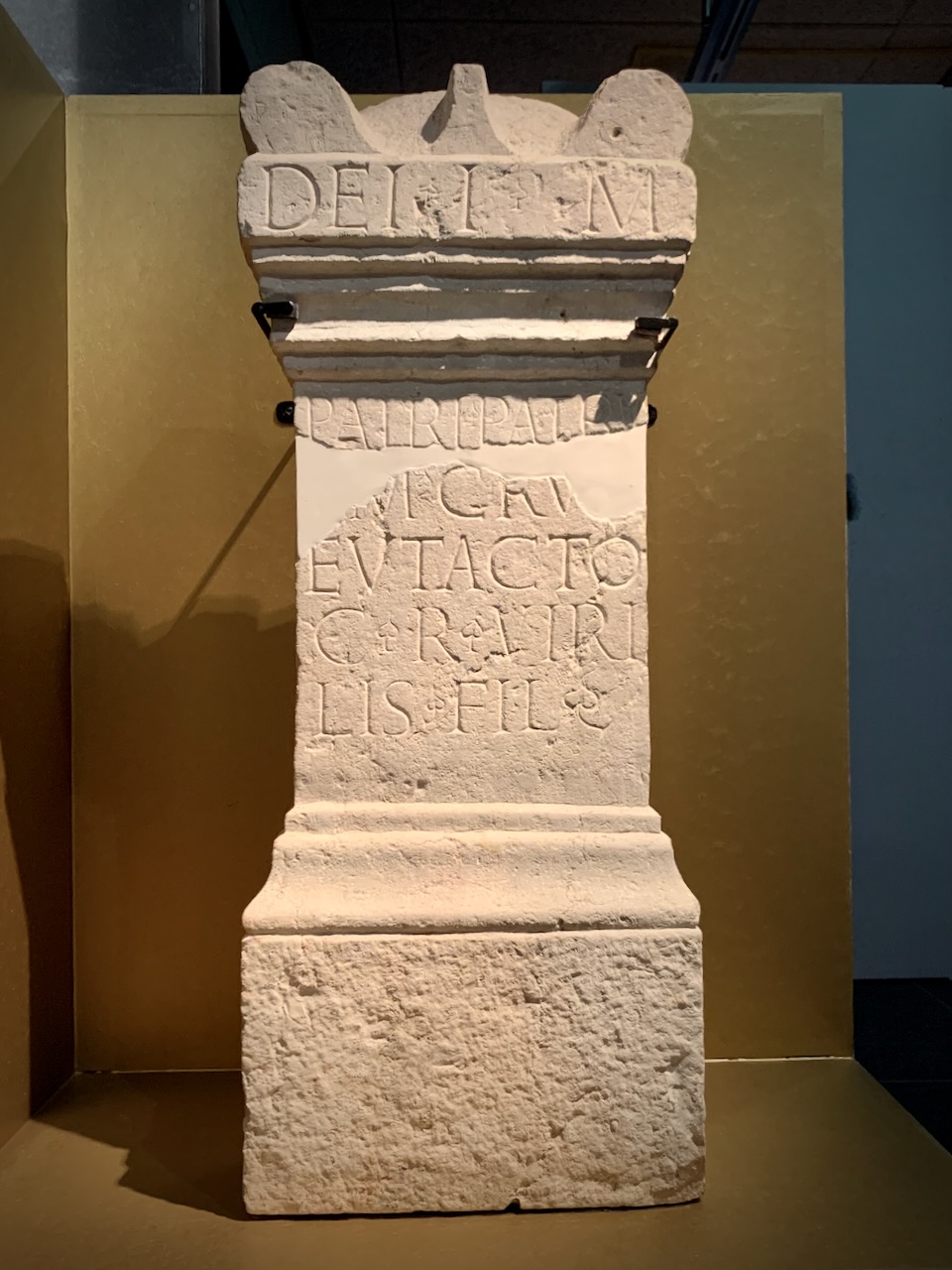
This altar was dedicated by a son to his father, one of the few Patres Patrum recorded in the western provinces.
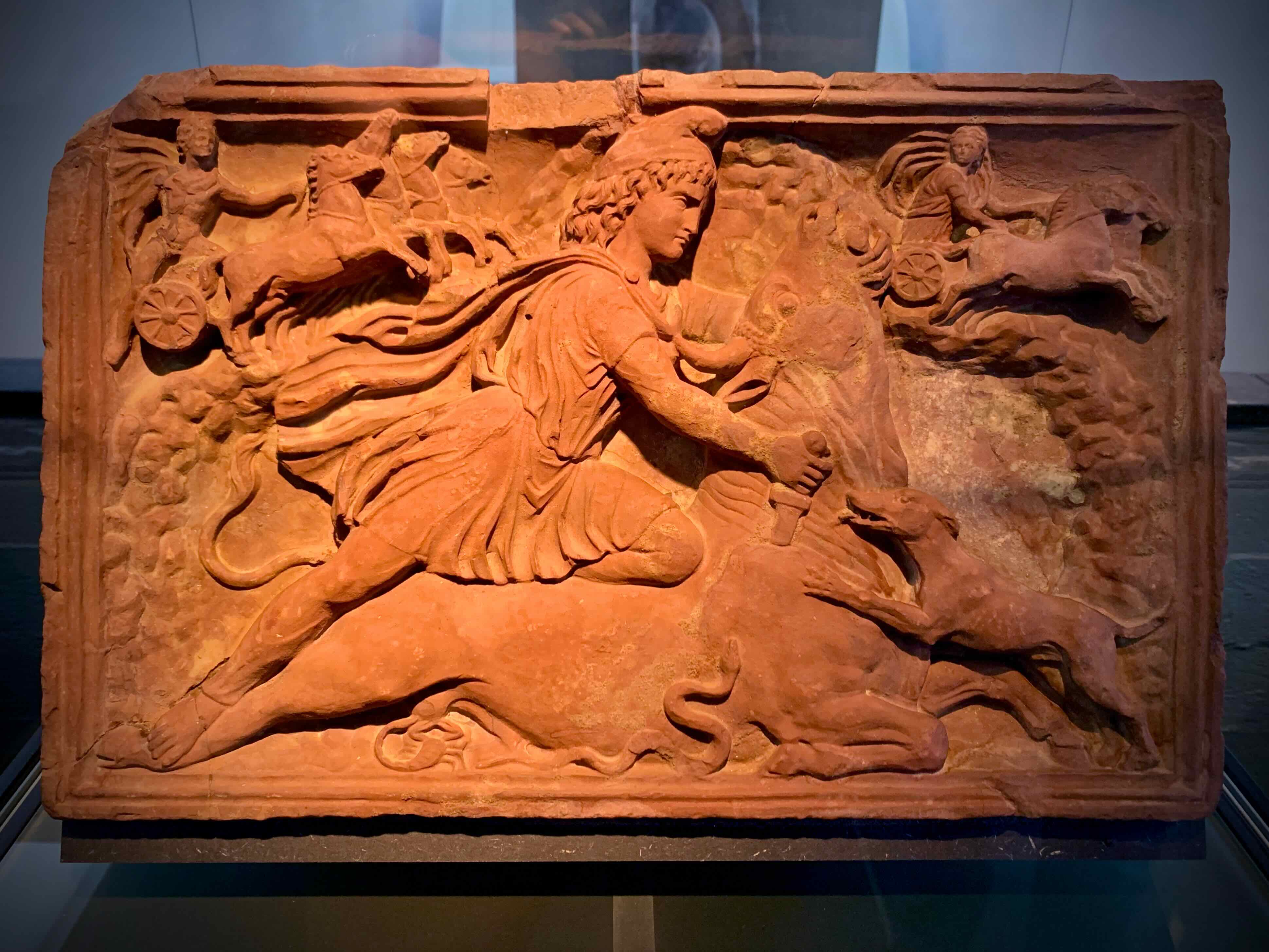
Maarten Vermaseren acquired this rosso antico marble of Mithras slaying the bull in 1961.
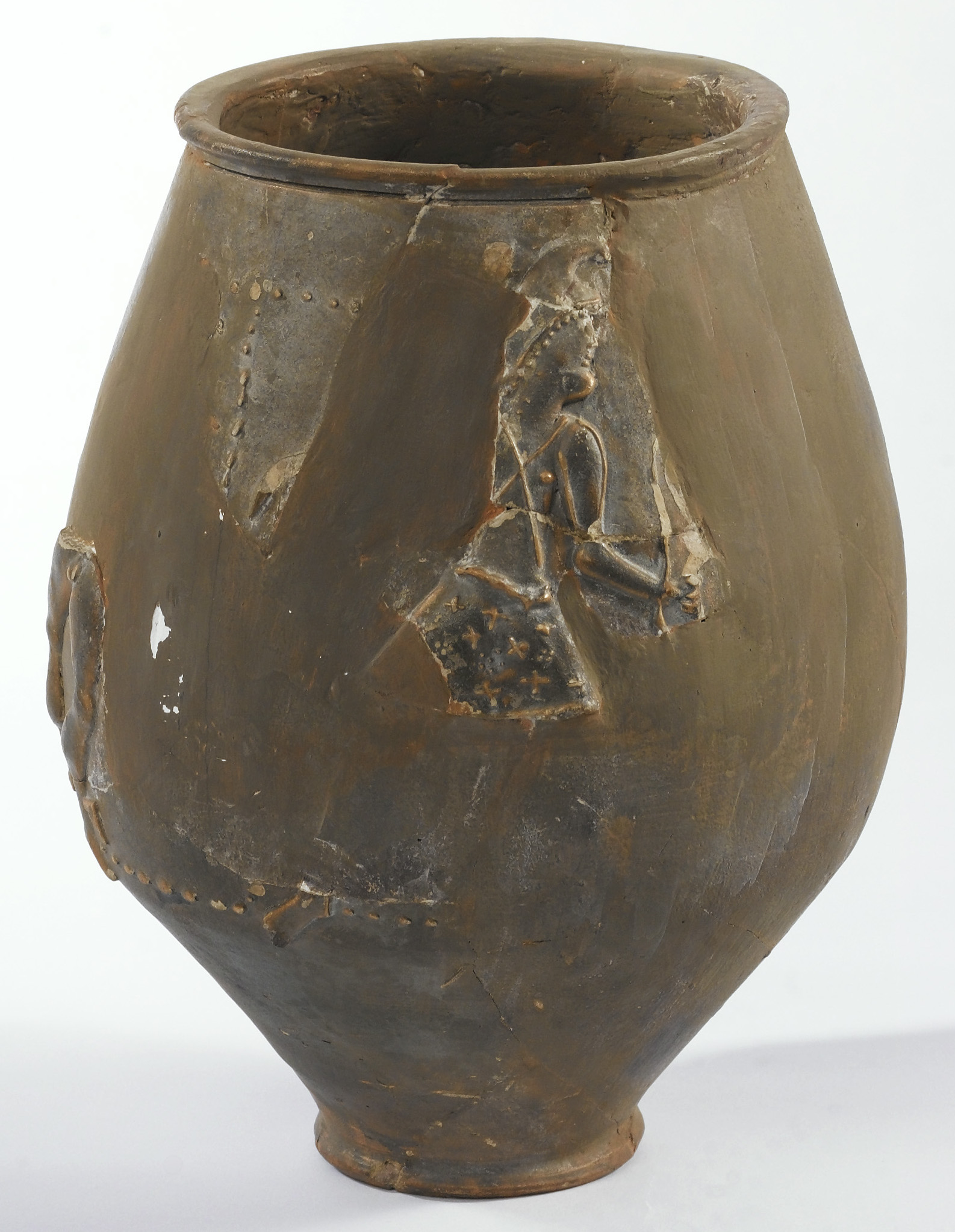
The St Albans mithraic vase depicts fragments of three figures identified by Vermaseren as Hercules, Mercury and Mithras as an archer.