Your selection in monuments gave 98 results.
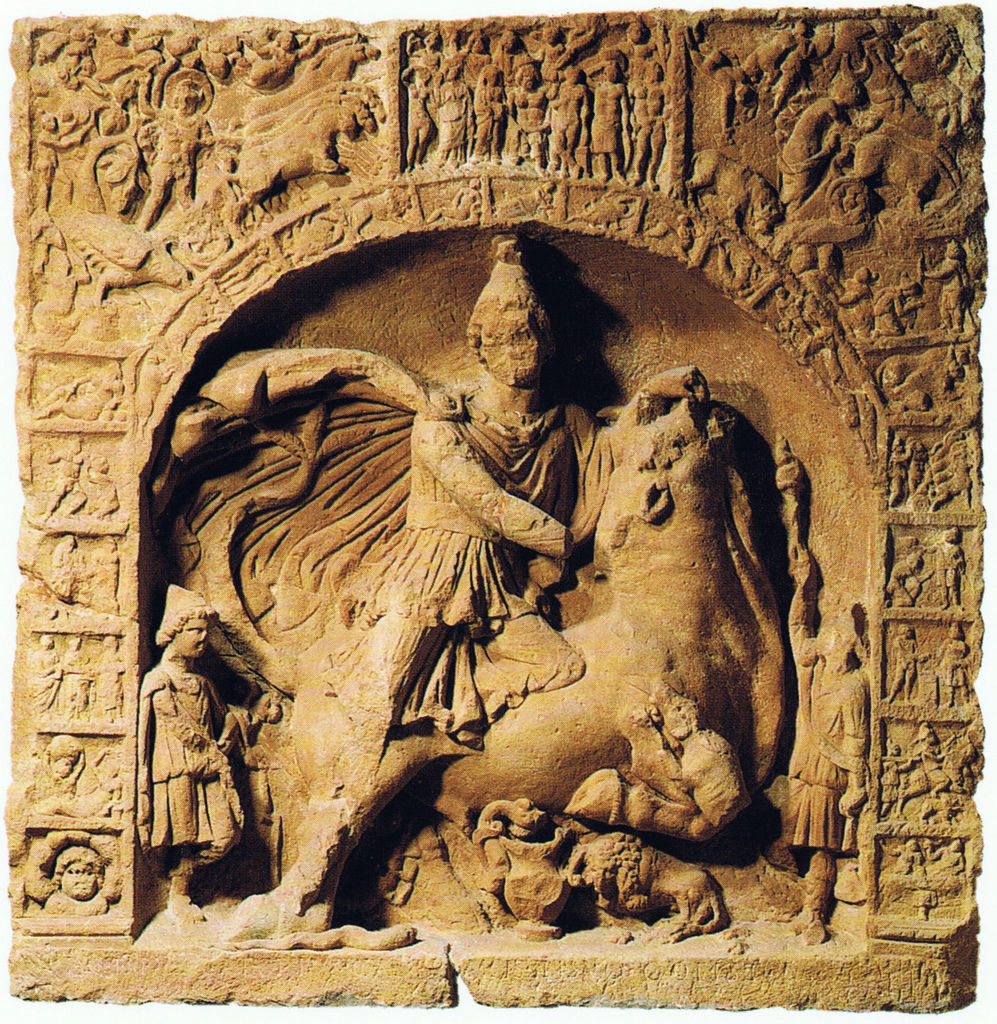
Franz Cumont considers the bas relief of Osterburken ’the most remarkable of all the monuments of the cult of Mithras found up to now’.

This marble sculpture from Sicily, known as the Randazzo Vecchio or Rannazzu Vecchiu, contains some essential elements of the Mithraic Aion, the lion-headed god.
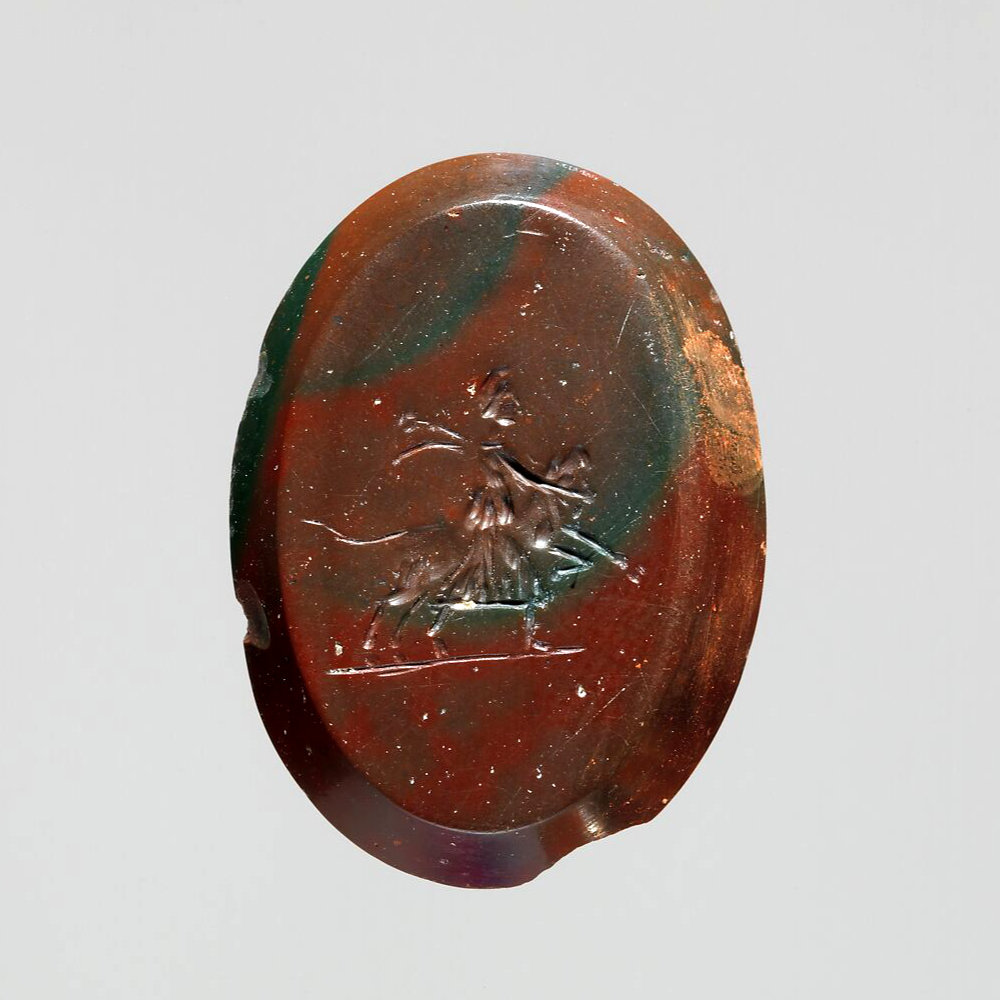
This small magical jasper gem shows Sol in a quadrigra on the recto and Mithras as a bull slayer on the verso.
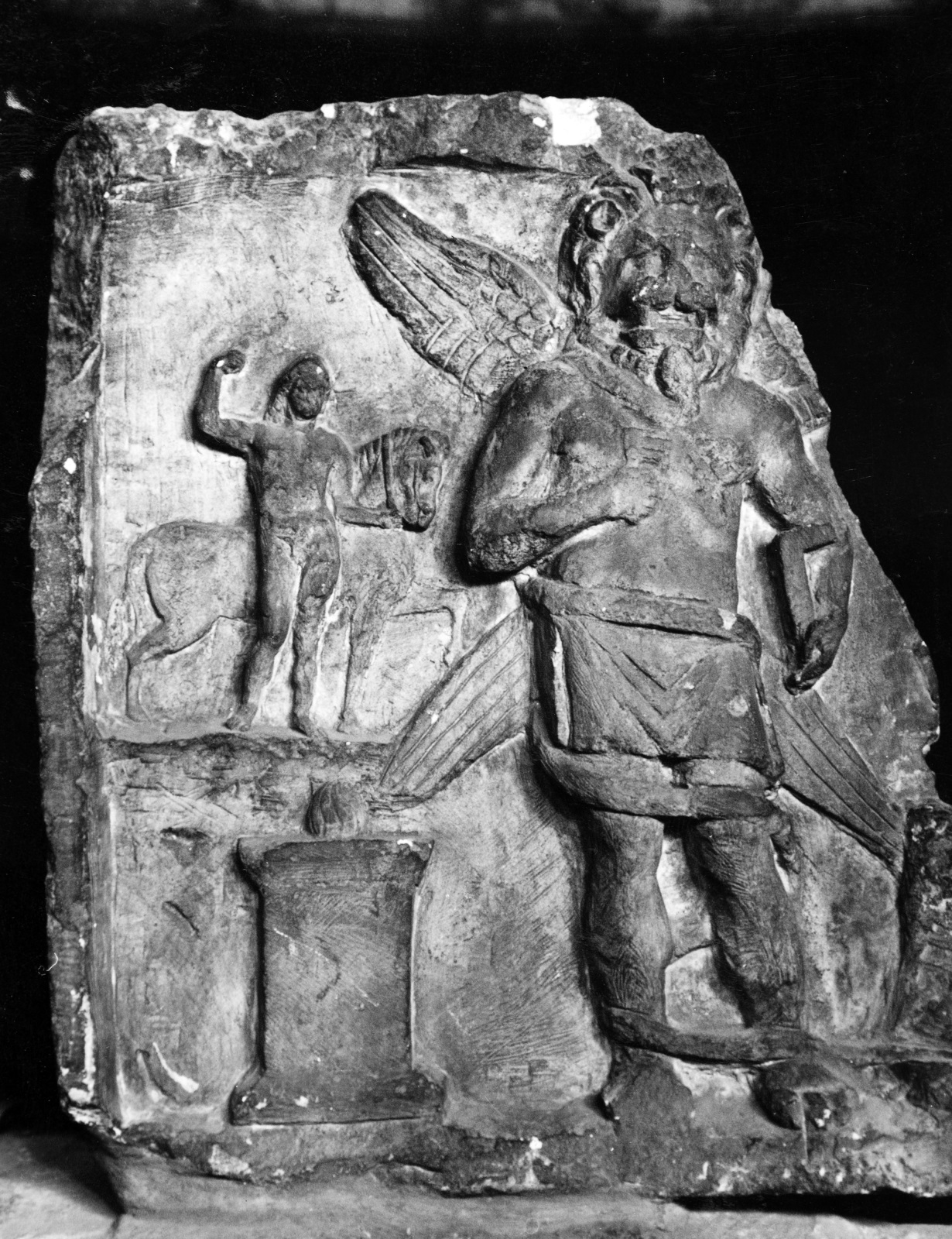
The relief of Aion from Vienne includes a naked youth in Phrygian cap holding the reins of a horse.
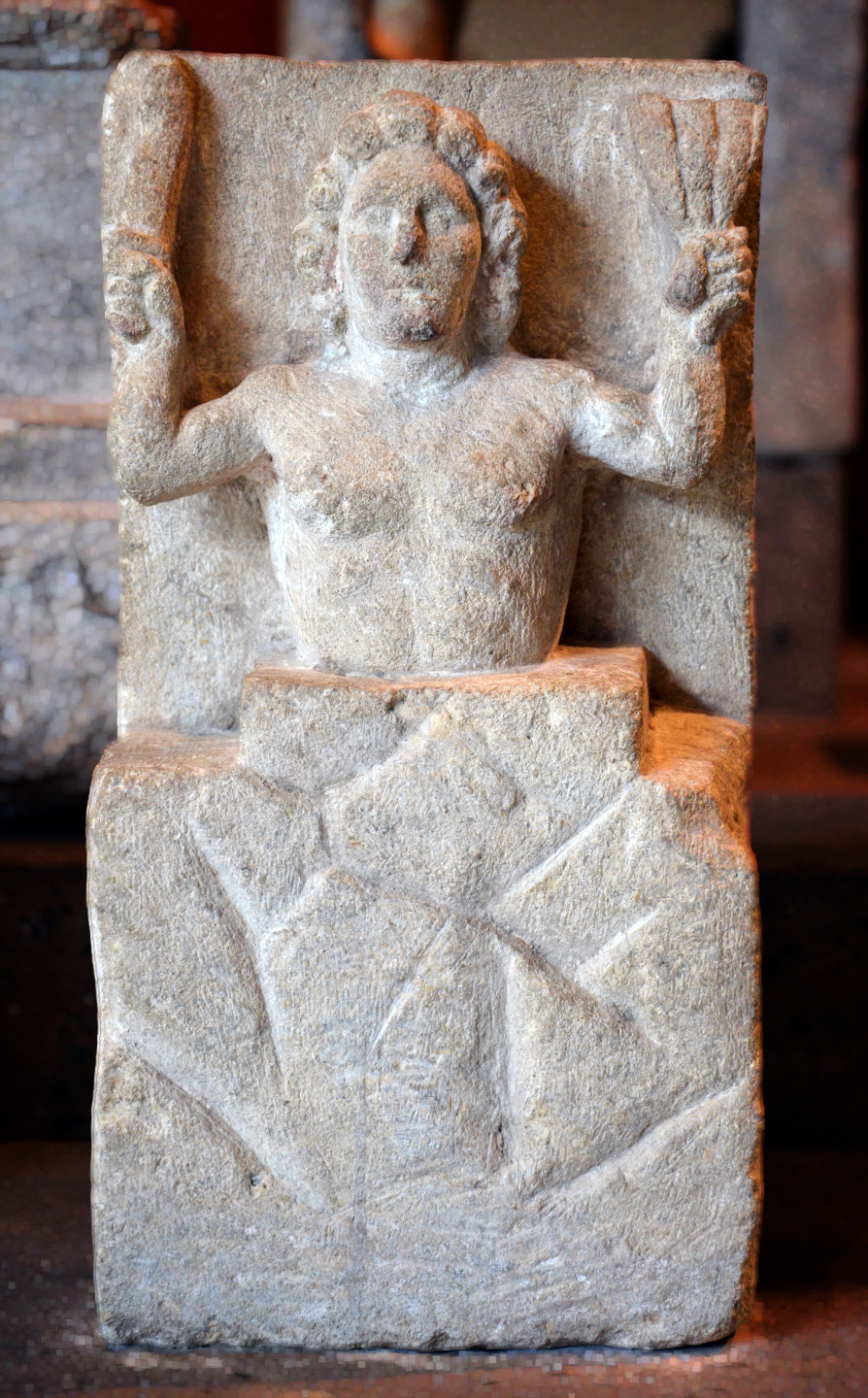
In this relief of the rock birth of Mithras, the child sun god holds a bundle of wheat in his left hand instead of the usual torch.
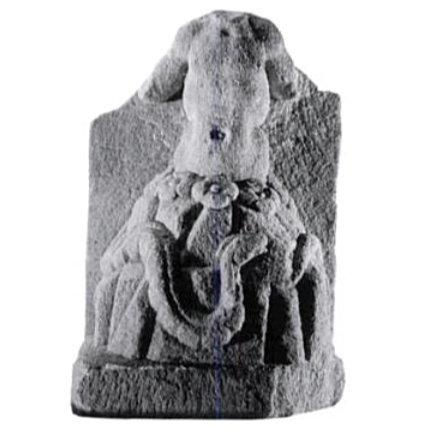
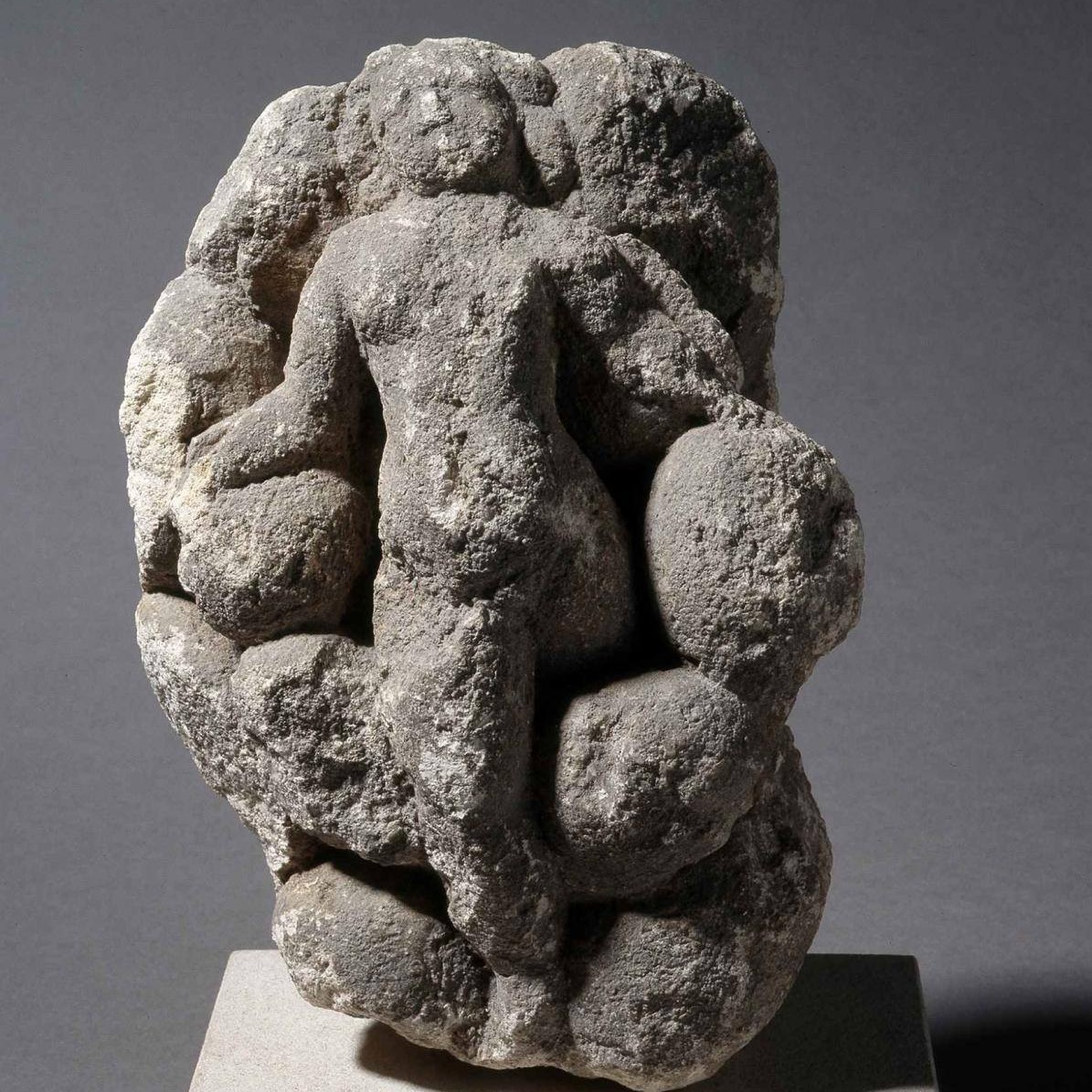
This sculpture of Mithras born from a rock was found in 1922 together with two altars in what was probably a mithraeum.
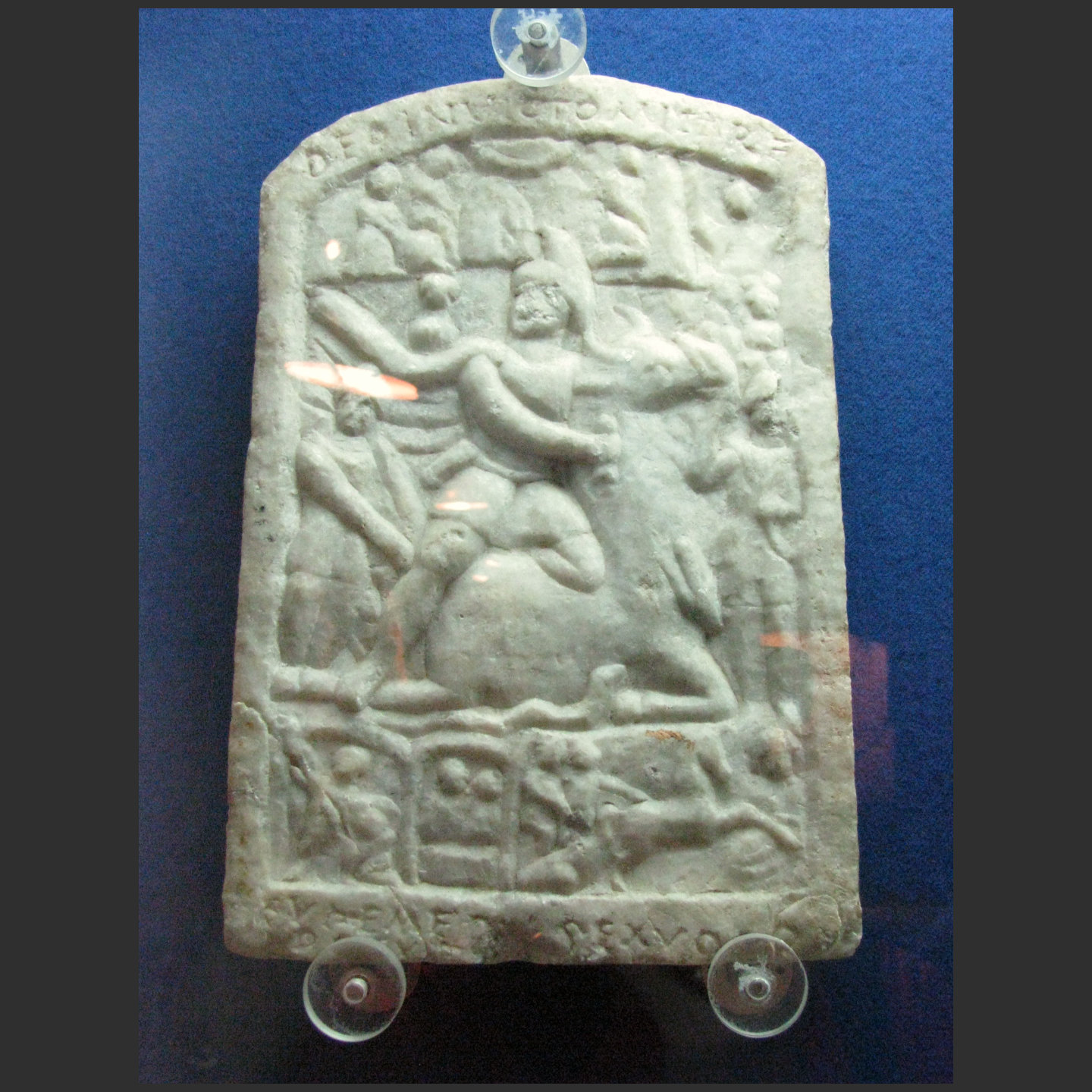
Several authors read the name Suaemedus instead of Euhemerus as the author of this mithraic relief from Alba Iulia, Romania.
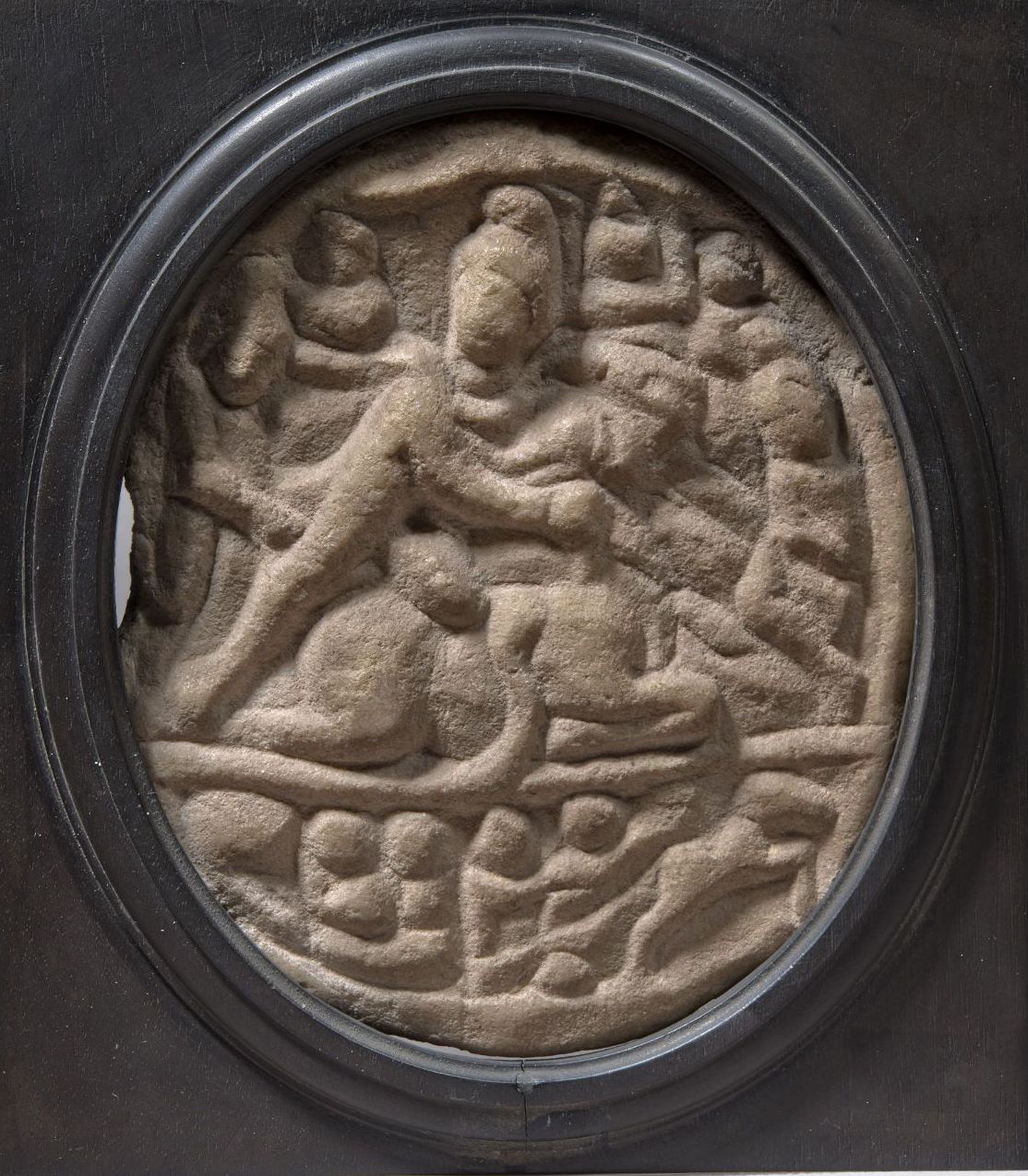
This medallion belongs to a specific category of rounded pieces found in other provinces of the Roman world.
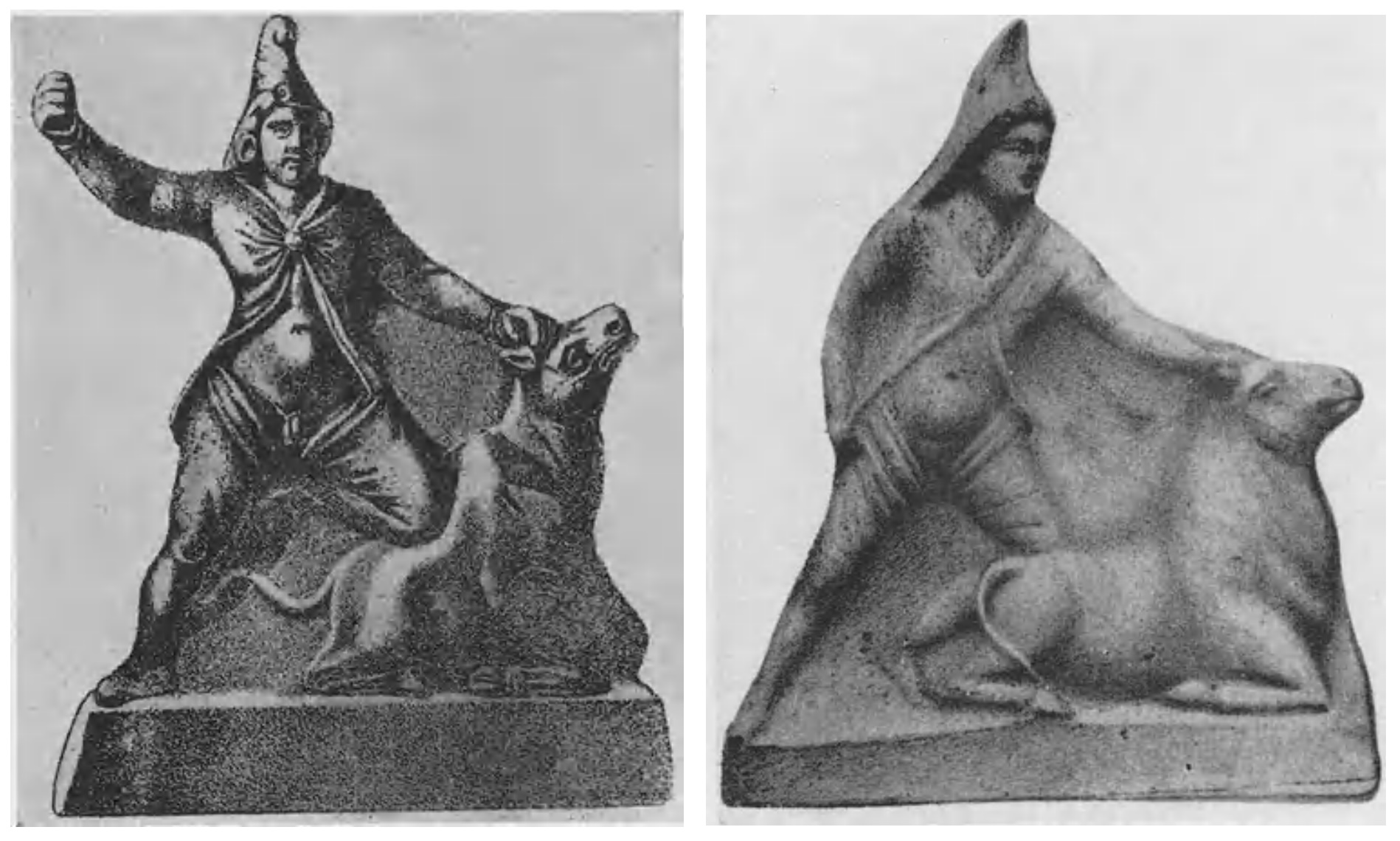
Terracotta tablets depicting a Taurombolium by Attis which might be at the origins of the mithraic Tauroctony iconography.
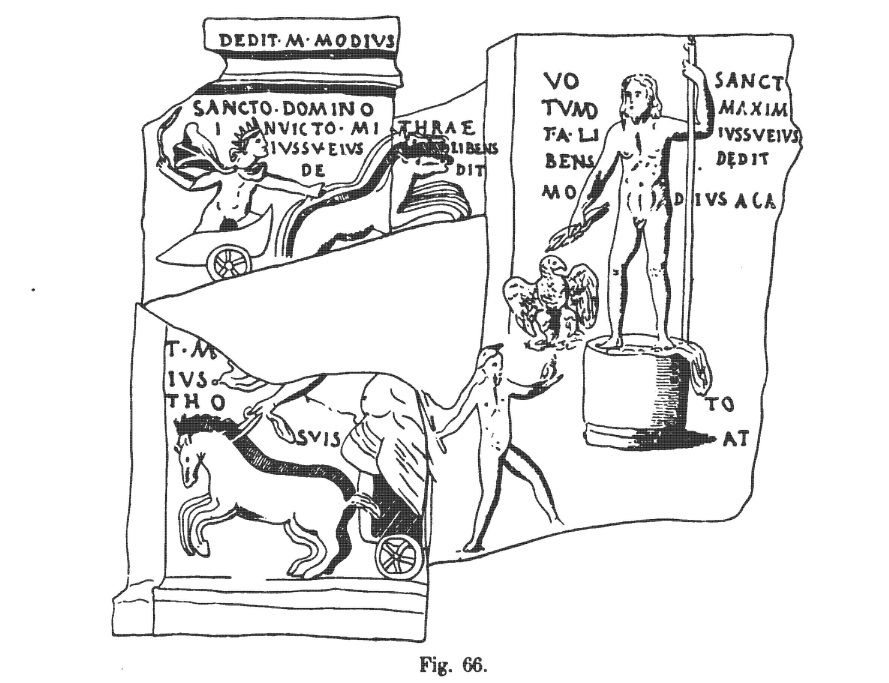
These three fragments of carved marble depict Jupiter, Sol, Luna and a naked man wearing a Phrygian cap, with inscriptions calling Mithras Sanctus Dominum.
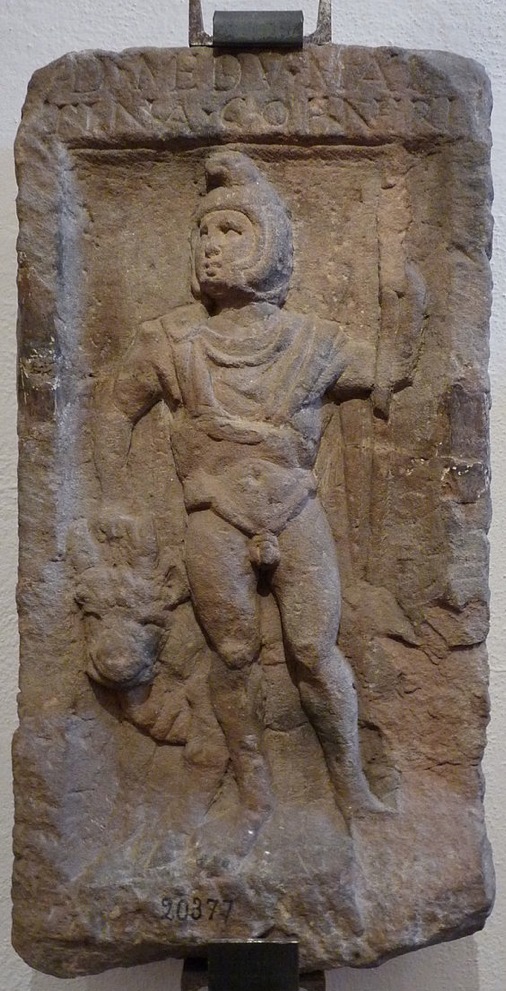
The relief of naked Roman soldier, wearing a mantle and a Phrygian cap, has been related to the Mithras' cult.
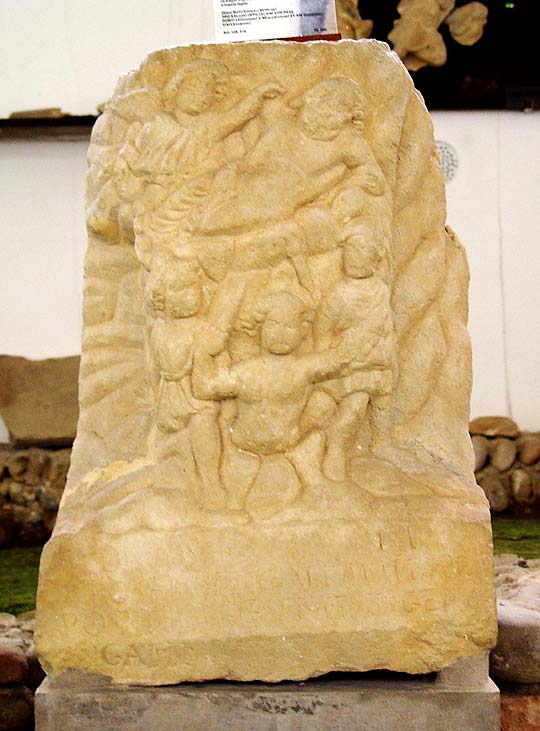
Cautes and Cautopates attend the birth of Mithras from the rock in the Petrogenia of the third Mithraeum of Ptuj.
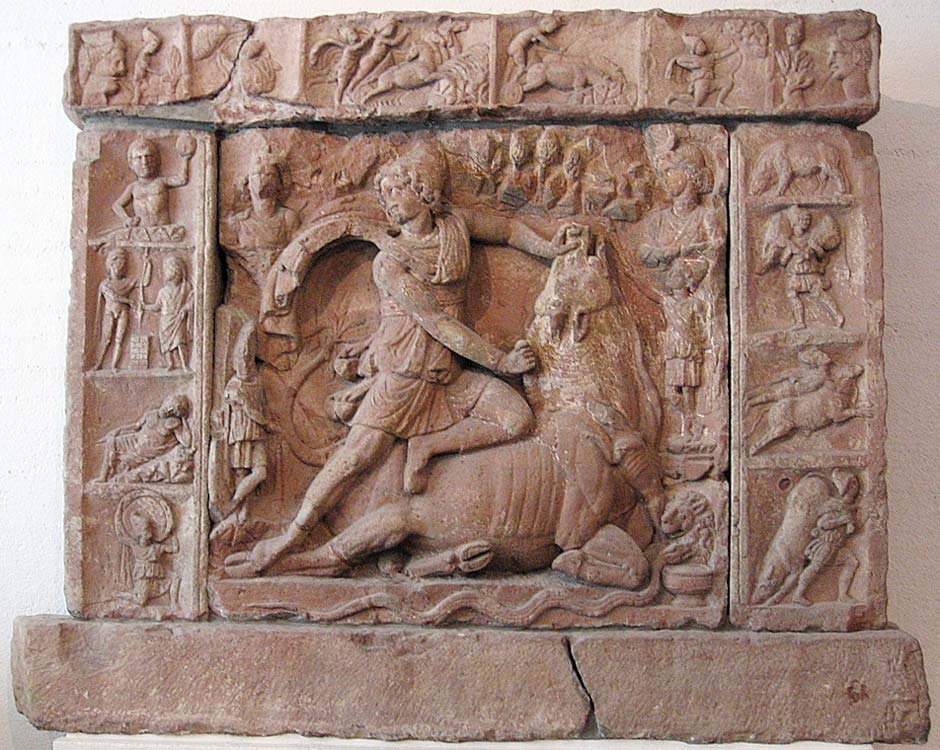
The Tauroctony relief of Neuenheim, Heidelberg, includes several scenes from the deeds of Mithras and other gods.
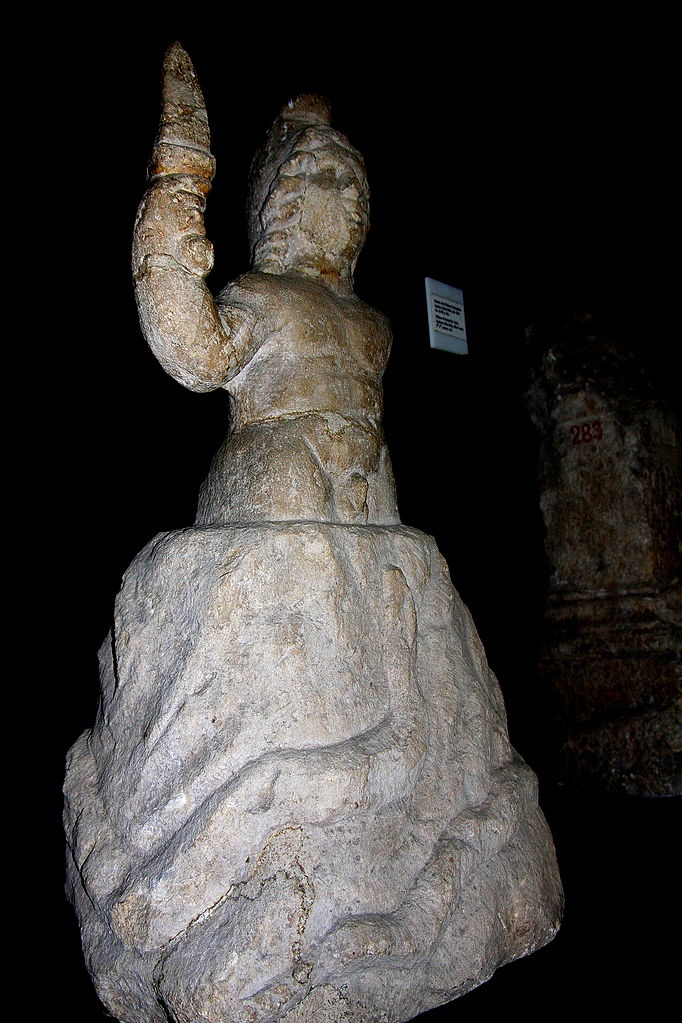
As usual, the solar god rises a dagger with one of his hands while emerges from the rock.
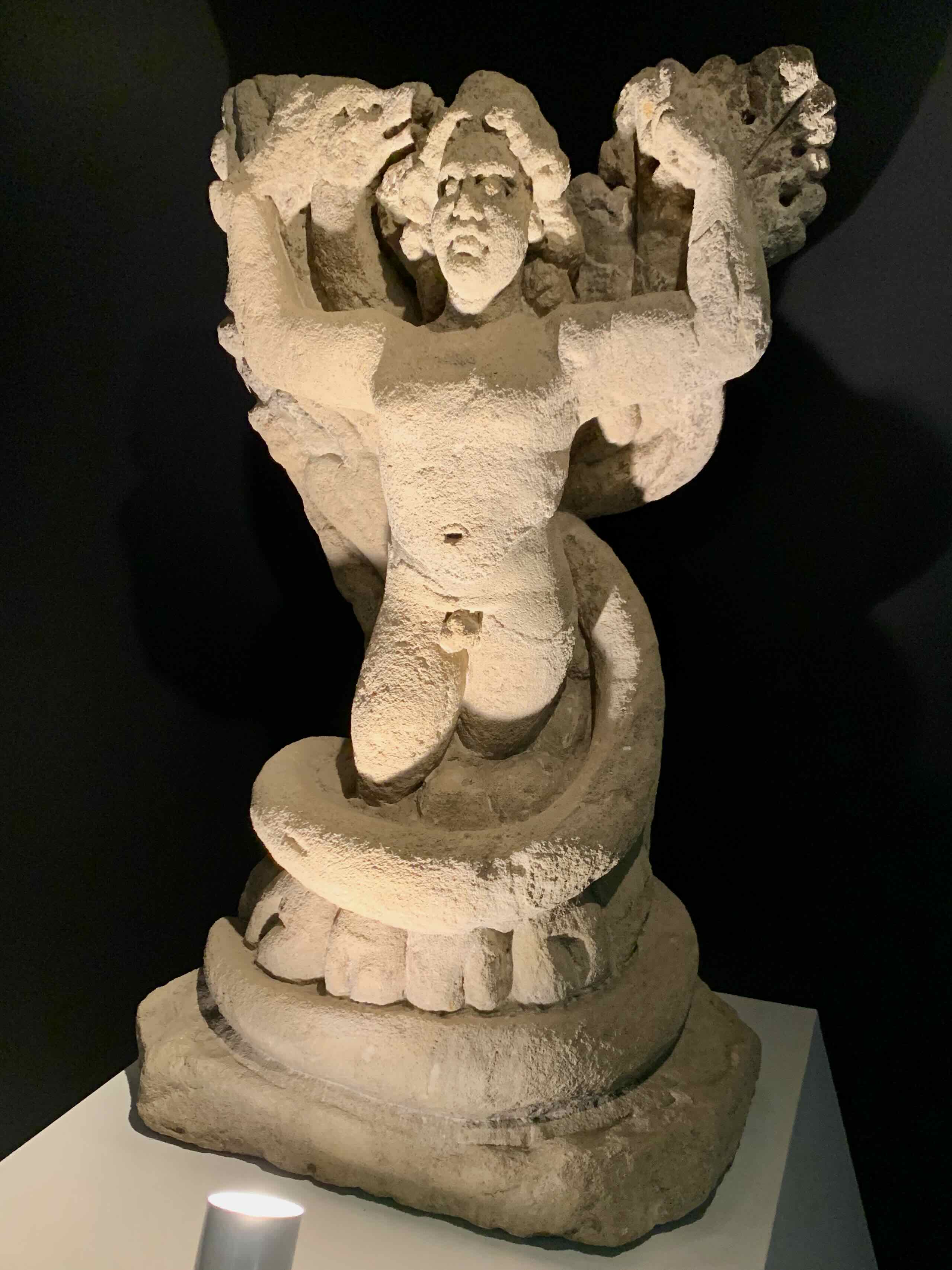
Mithras Petrogenitus, born from the rock, from the Mithraeum of Carnuntum III.
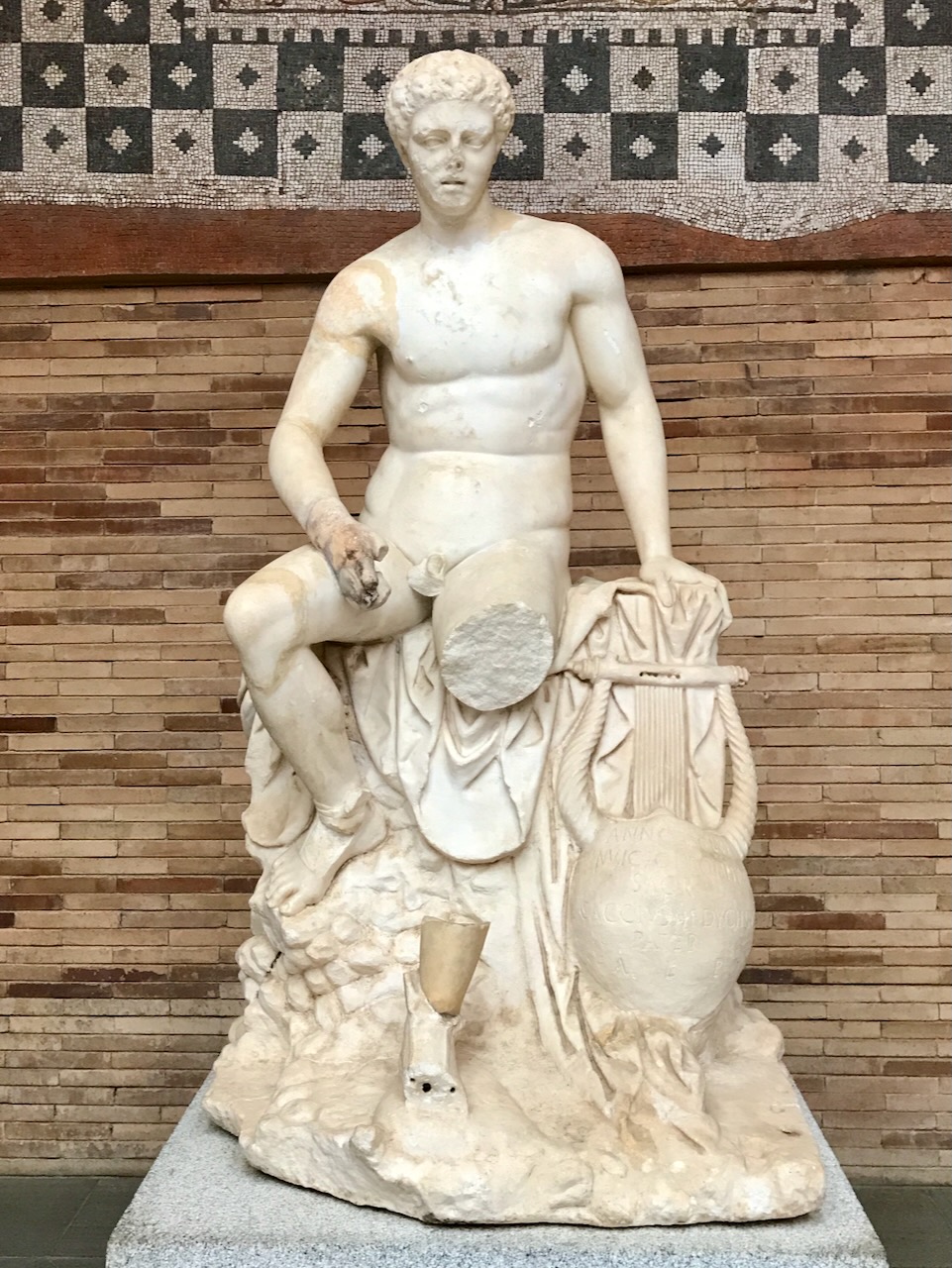
The statue of Mercury in Merida bears a dedication from the Roman Pater of a community in the city in 155.
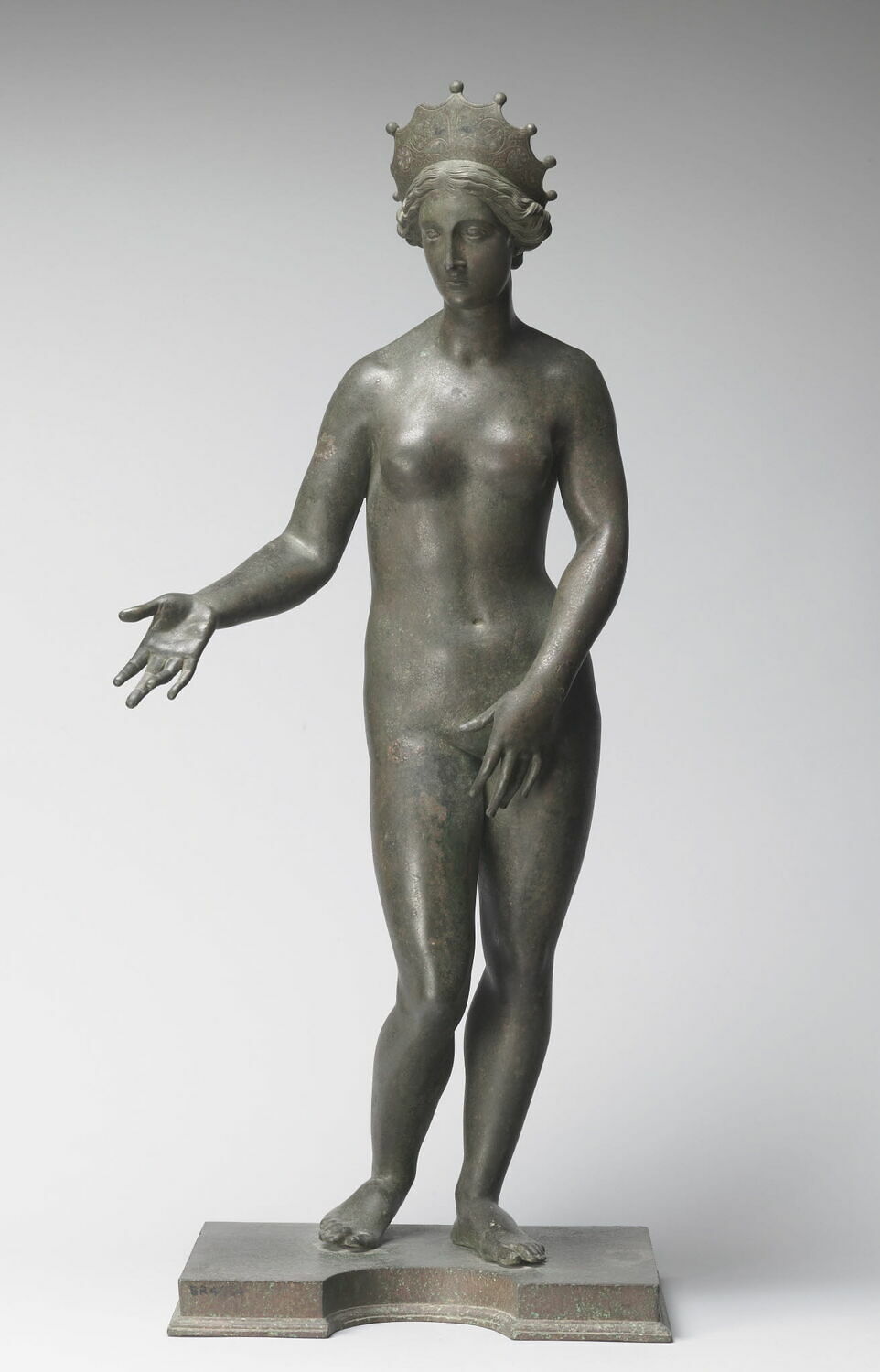
There are two Venus from the Mithraeum of Sidon, one in bronze and the other in Parian marble.
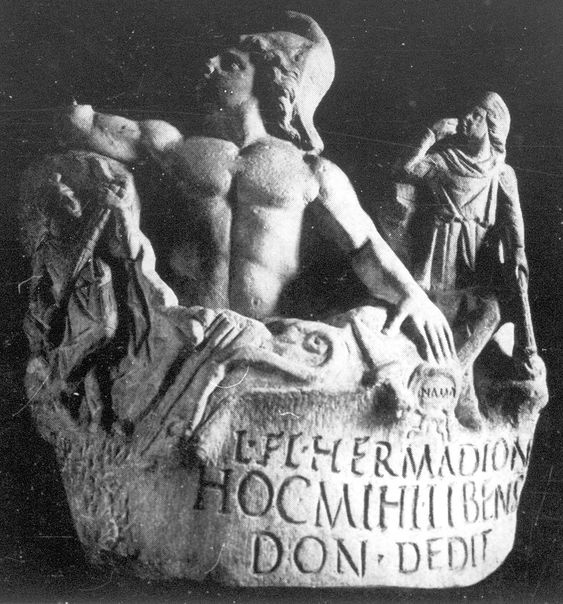
Mithras rock-born from Villa Giustiniani was holding a bunch of grapes in its raised right hand instead of a torch, probably due to a restoration.
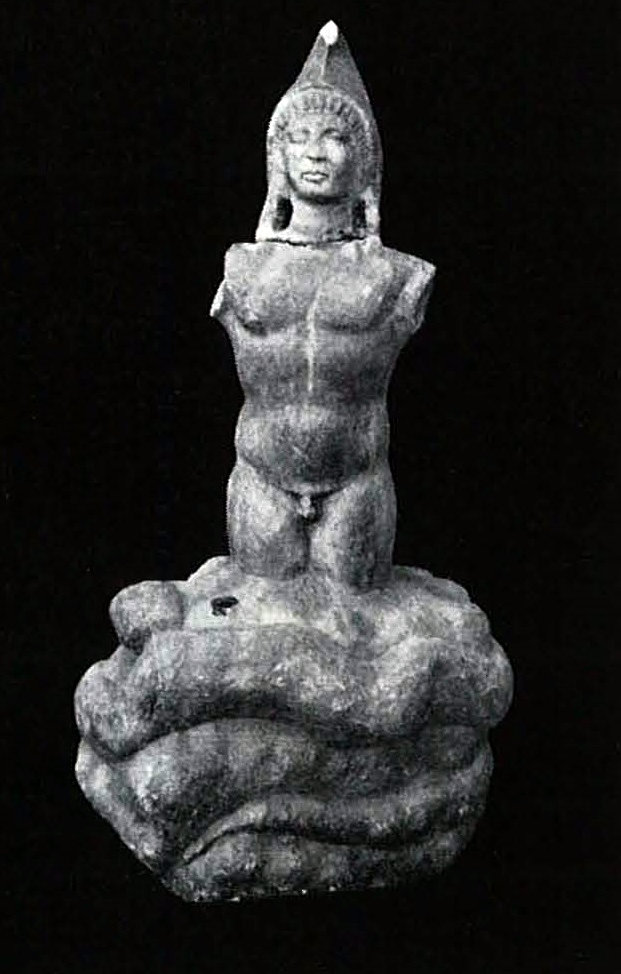
The rock of Mithra's birth in the Petrogenia of Sarmizegetusa is surrounded by a snake.
