This site uses cookies to offer you a better browsing experience.
Find out more on how we use cookies in our privacy policy.

 
Support The New Mithraeum The New Mithraeum is an independent, non-profit project dedicated to Mithraic studies, ancient religions and classical culture. Developed and maintained independently since 2007, the site exists without advertising, paywalls or institutional funding. If you have found value in its articles, interviews, photographs or database, please consider supporting the project with a contribution. Every contribution helps keep The New Mithraeum open, free and alive. Thank you.
Support us →
Acta diurna

Daily Gazette/13

Acta diurna is our Mithraic social stream for keeping up to date with what is happening in The New Mithraeum.

avatar
Sep 2025
NewTextus

Du Mithraïsme à la Franc-maçonnerie. Une histoire des idées

Douze siècles séparent le déclin du Mithraïsme romain de l’aube de la Franc-maçonnerie. Douze siècles pendant lesquels les mystères de Mithra sont restés plus secrets que jamais.
avatar
Sep 2025
NewTextus

Del mitraísmo a la masonería. Una historia de las ideas

Doce siglos separan el ocaso del mitraísmo romano del alba de la masonería. Doce siglos durante los cuales, los misterios de Mitra han permanecido más secretos que nunca.
Alex Cruz
Excelente trazado de arquitectura, agradezco que la hayan compartido.
Gracias a ti, Alex. Me alegra que te resulte interesante.
Braulio
Gracias por compartir luz con tu trazado.
avatar
Sep 2025
NewTextus

From Mithraism to Freemasonry. A history of ideas

Twelve centuries separate the decline of Roman Mithraism from the dawn of Freemasonry. Twelve centuries during which the mysteries of Mithras have remained more secret than ever.
I appreciate this article as it spawned and actual (gasp!) conversation on the facebook group. Mithraists are such a secretive bunch. 😉 There were a few bits I didn't agree with, but in the main, I too feel that when Mithras could no longer command the members it once had, it simply changed its outward appearance and kept going as the Masons. A fresh coat of paint, a change of clothes, and TA DA! Easy peasy.
Pattie, you and I need to talk about those bits one of these days. I'd be glad to know more about them.
Roberto R. Violat
Excelente su artículo que confirma la teoria del profesor Russell, del cual me basé en parte en la realización de mi artículo: https://web.archive.org/web/20190924092431/https://rrviolat.files.wordpress.com/2014/11/mitraismo-masoneria.pdf
Es evidente que la masonería introdujo elementos en sus rituales procedentes del mitraismo a lo largo del siglo XVIII y XIX conforme fueron avanzando las investigaciones sobre los hallazgos arqueológicos.
Gracias por compartir tu artículo, Roberto. Es difícil determinar en qué momento la masonería especulativa incluyó tantos aspectos de los misterios de Mitra, si fue desde el origen a través —como mencionas en tu escrito— de otras corrientes medievales que conservaron un saber más antiguo o durante su evolución en siglos posteriores, pero lo cierto es que cuesta creer que tantos paralelismos se deban al azar.
Ricardo Restaldi
Excelente artículo Hermano. La Masonería sigue siendo la gran heredera de los antiguos misterios. Mitraístas y masones son hermanos a través del tiempo. Pensar que nuestros antepasados fueron muchos de ellos adoradores de Mitra. Saludo fraternal a todos!
Un saludo fraternal a ti, Ricardo.
Hello Gabriel,
the article you present on the relationship between the religion of the unconquered sun and 18th-century English Masonry notes the similarity of the (supposed) rituals. It is possible to draw attention to a few visual aspects:
- the followers face each other
- initiation was secret
- there are several levels of progression in the ritual
- temples are small and often private
- the temples are oriented according to the sun, and the place of the Pater (with his solar crown) is theoretically in the east (rising sun).
- In 1976, Richard Gordon showed that each Mithraic grade corresponded to a star, in particular the sun and the moon, and had a specific place in the lodge. Similarly, Masonry has retained references to the moon and the sun, and a specific place for each officer.
- Mithraism works according to the path of the souls in the rotating wheel of the Zodiac. Particularly the cycle of resurrection, Masons also venerate the 'Eternal East'. The Orthodox make the Pilgrimage of the 12 Prayers, which recalls the 12 signs of the Zodiac.
- Finally, the Masonic ritual uses a biblical esotericism with the use of many Hebrew words that have nothing to do with Judaism. The link between these two secret societies is missing. It is probably to be found in the organisation of Chapters within Catholic monasteries, reserved for monks, and secrets, whose rituals and organisation are also close to Mithraism. Mithraic symbols can also be found in medieval sculpture.
All this points to the survival of Mithraism after the 6th century in a pseudo-biblical form that had nothing to do with the religion of Moses. It would have constituted the esoteric side of Catholicism, hidden in the form of 'crypts', which, as the name suggests, were secret.
Salve Dominique and thank you for all the additional parallels you mentioned. Since I wrote this little article, I have indeed found new examples here and there. Quite a fascinating subject, isn't it? I hadn't heard much about the links between Mithraism and Monachism, though. I have read about survivals of Mithraism in the Middle Ages. Certainly Richard Veymiers has written about it. I think there is even a filmed conference on the web where he explores the subject in depth, but I would love to know more about Monachism and Mithraism if you have more of it.
One hypothesis is that the mythology of the Roman secret society of Mithras was transformed into an esoteric society, still secret, using the Bible as a screen. Let's take an example: a secret password for today's Masonic lodges is 'Shiboleth'. Shiboleth' means 'ears of wheat', i.e. abundance. Is not the tail of the bull of Mithras an ear of wheat? There are probably dozens of passwords like that. So Hebrew became a secret language for the followers of Mithras, who continued the cult after the fall of Rome, in sanctuaries located near springs or spas, at the same time as the cult of Hercules. Many of these places can be found in France, dating from the 7th to the 10th century. Crypts dating from the 8th and 9th centuries can also be found under Romanesque churches (the church at 'Saint Savin sur Gartempe' has a crypt dating from 800 AD, and a church built above it in 1030 AD). This crypt has a clear mithraeum shape. The modern Masonic rites were probably written in the 15th or 16th century in certain monks' chapters in France or Germany. This would explain why in the 17th century 'pro-Masonic' lodges sprang up in several different parts of Europe: Germany, Ireland, Scotland etc.... the French lodges or guilds were destroyed by Louis XV.
It makes perfect sense. My hesitation would lie in the time gap that separates Mithraism and Freemasonry. I admit that certain knowledge has been passed down through the centuries in oral form from all sorts of mystical traditions that spread from the Middle Ages to modern times, including the Cathars, the Bogomiles, even the Knights Templar if you like, but I think there is a missing piece and that is perhaps the greatest Mithraic scholar of all time, Monsieur Franz Cumont. Even if he wasn't a Freemason, he was a pretty good friend of some notorious ones at the time he was rediscovering the Mysteries. Among them was Eugène Goblet d'Alviella, Grand Maître du Grand Orient de Belgique from 1884 to 1886 and Souverain Grand Commandeur du Suprême Conseil in 1900.
The modern Masonic lodge is organised around the starry vault, but the officers are still arranged in a very similar way to the Mithraeum, respecting the two solstices and the two equinoxes. The Venerable Master in the East is at the spring equinox, the first sign of the ancient Zodiac, and the seat of Mithras, from where he intervenes in the journey of souls.The modern Masonic lodge is organised around the starry vault, but the officers are still arranged i…
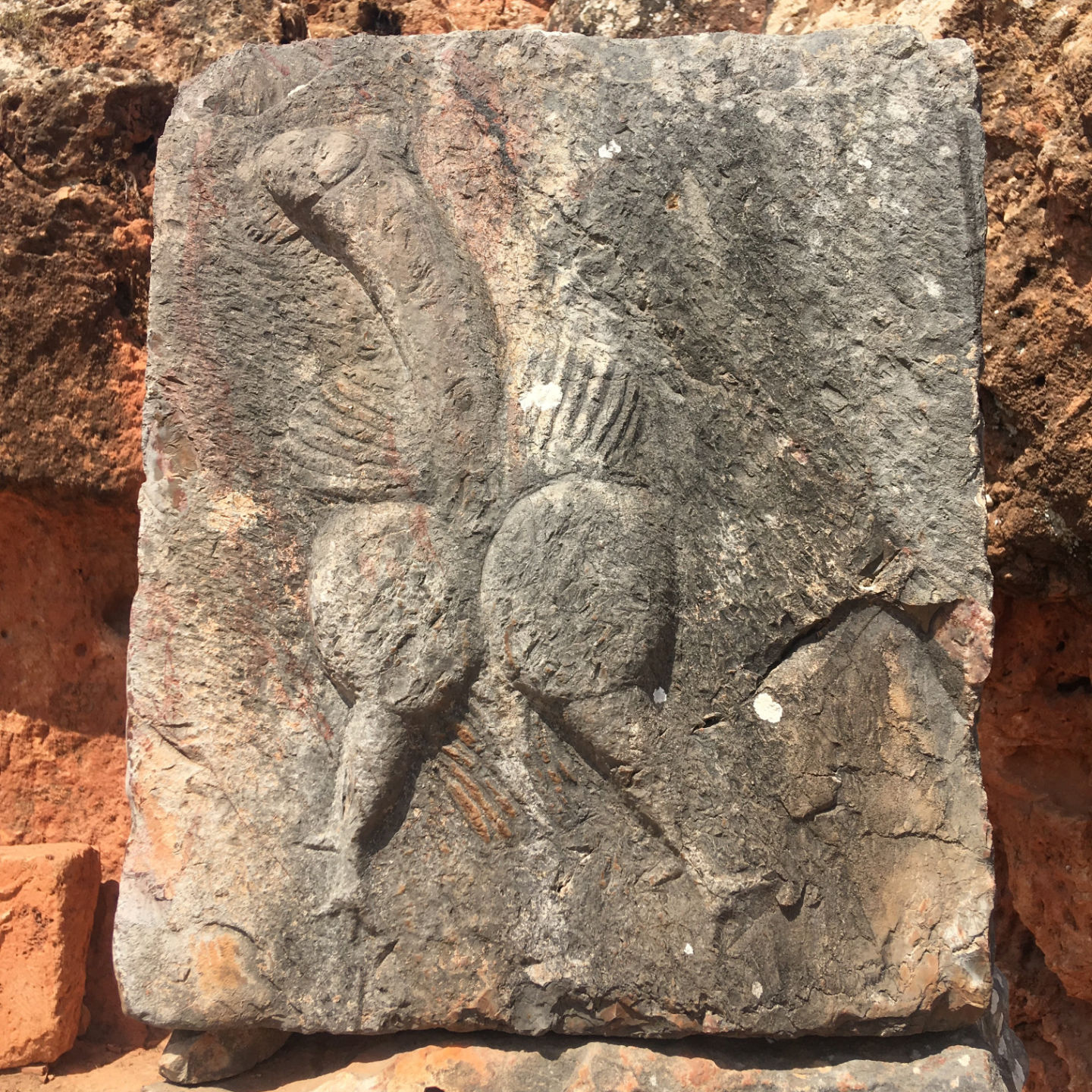
this capital from the cloister of the abbey of Monreal in sicily dates from the 12th century and is very disturbing. It’s exactly Mithras (upside down). This means that, contrary to the idea we have of the past, the cult of Mithras was known and understood in the 12th century. Probably less violently than we do today. All this had to be known and respected.
Monreal monastery 12th century AD ...
Monreal 12th centyry AD. 1,000 years after mithraism...Monreal 12th centyry AD. 1,000 years after mithraism...
I knew this amazing capital in Monreale. In Sicily, isn’t it? It’s quite remarkable, even if Mithras has lost his usual Phrygian cap for a turban, which makes sense if we consider that the eastern stereotype changes over time and a turban would be a better way to represent him in the 12th century. We could theorise that the oriental nature of the god was better known than most scholars now assume, at least to the stonemasons who worked on the building of Monreale Cathedral. There is a lot to say about this. Thanks for sharing.
By the way, there is this video by Nicolas Amoroso that tells a lot about mithraic images in the medieval times: Des images mithriaques à l’époque médiévale ?
avatar
 
Sep 2025
NewScriptum
Aula Gotica
avatar
Sep 2025
NewSocius
I was born in 1975 in Gaziantep. I graduated from the Department of Public Administration in 2005. In 2009, I started working at the Municipality of Şehitkamil
Sep 2025
NewSocius
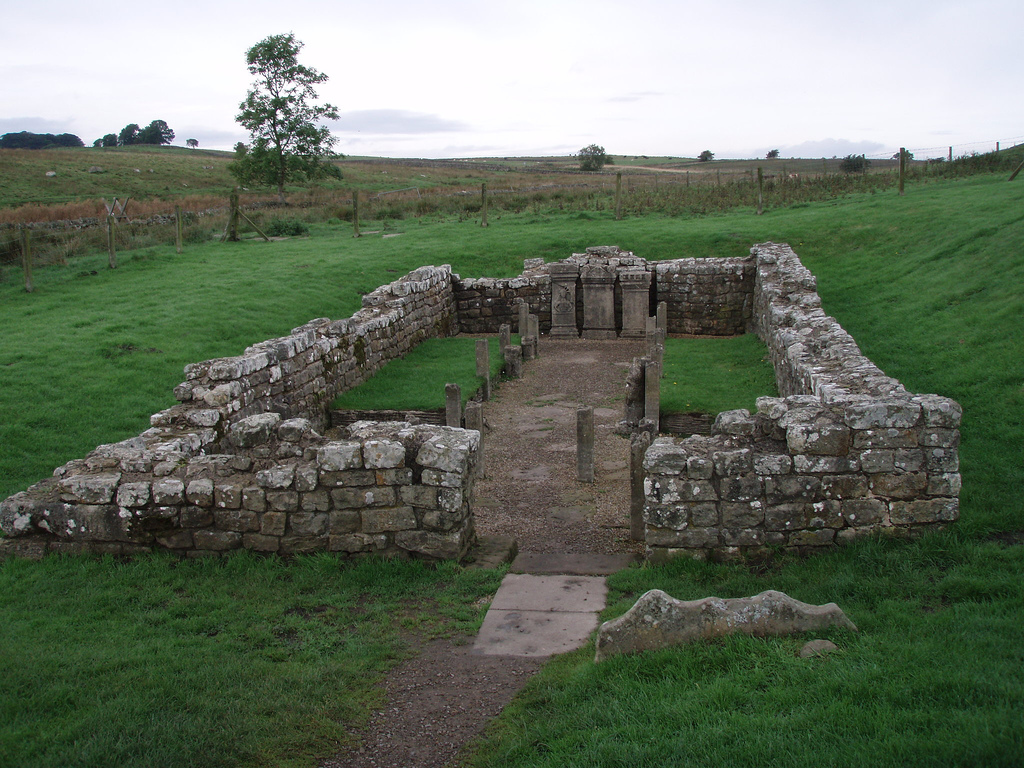
I am a visitor tour guide up on Housesteads Fort on hadrians Wall
Sep 2025
NewSocius
PhD in Archaeology
PhD in Archaeology
Sep 2025
Liber

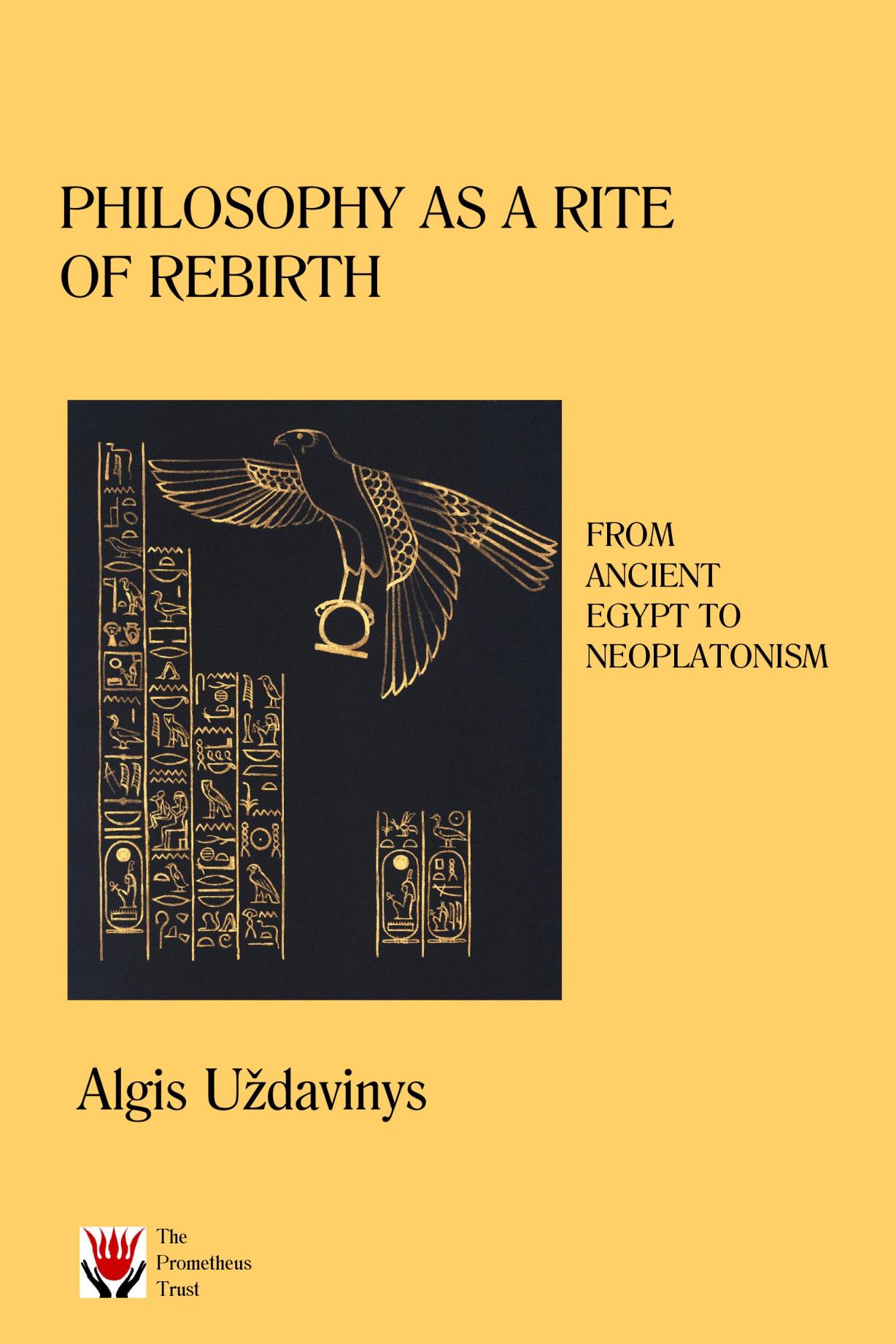
The Mystery of Mithras. Exploring the heart of a Roman cult

This catalogue proposes, thanks to the contributions of some 75 international experts, a new synthesis for a complex and fascinating cult that reflects the remarkable advances in our knowledge in recent decades.
avatar
Sep 2025
NewMonumentum

CIMRM 1020

Sepulchral limestone inscription from the vicinity of the Mithraeum at Colonia Agrippina (Germania Inferior), mentioning the Mithraic grade Corax.
avatar
Aug 2025
NewSocius

~ A modern syndexios ~

Aug 2025
Liber

Mithras, de geheimzinnige god

De oorspronkelijke Nederlandse uitgave van 1959 introduceerde het werk van Vermaseren, dat als klassiek geldt in de populaire studie van het mithraïsme en dat de belangstelling voor deze cultus blijvend heeft gevormd.
avatar
Aug 2025
Syndexios

Μᾶρκος Αὐρήλιος Σέλευκος

Lifelong pater of Mithras in Anazarbus, holding the civic title Father of the Homeland.
avatar
Aug 2025
NewSocius
student of religion
Aug 2025
Tractatus

Against the errors of the profane religions

Mithras the Cattle-Rustler: The Persian Cult of Fire as Divided into Sexed Powers and the Hidden Cave Rites of the Magi.
avatar
Aug 2025
NewTextus

El padre de Mitra

Es bien sabido que Mitra nació de una roca. Sin embargo, menos se ha escrito acerca del padre del dios solar, y especialmente sobre cómo lo concibió.
avatar
Aug 2025
NewMonumentum

Intaglio of Abraxas and Mithras

Gnostic amulet found in the ancient Agora of Athens, depicting Abraxas on one side and a Mithraic inscription on the other.
avatar
Aug 2025
NewSocius

~ A modern syndexios ~

Aug 2025
NewTractatus

Life of Alexander

In Plutarch’s Life of Alexander, the grieving Darius binds the eunuch Tireus by the light of Mithras to reveal the truth about his captive wife Statira, a solemn appeal that leads to unexpected praise for Alexander’s honor and restraint.
avatar
Aug 2025
NewTractatus

De Iside et Osiride

Of Isis and Osiris or Of the Ancient Religion and Philosophy of Egypt, Plutarch, The Moralia.
avatar
 
Back to Top