Mithras, a glocal god?
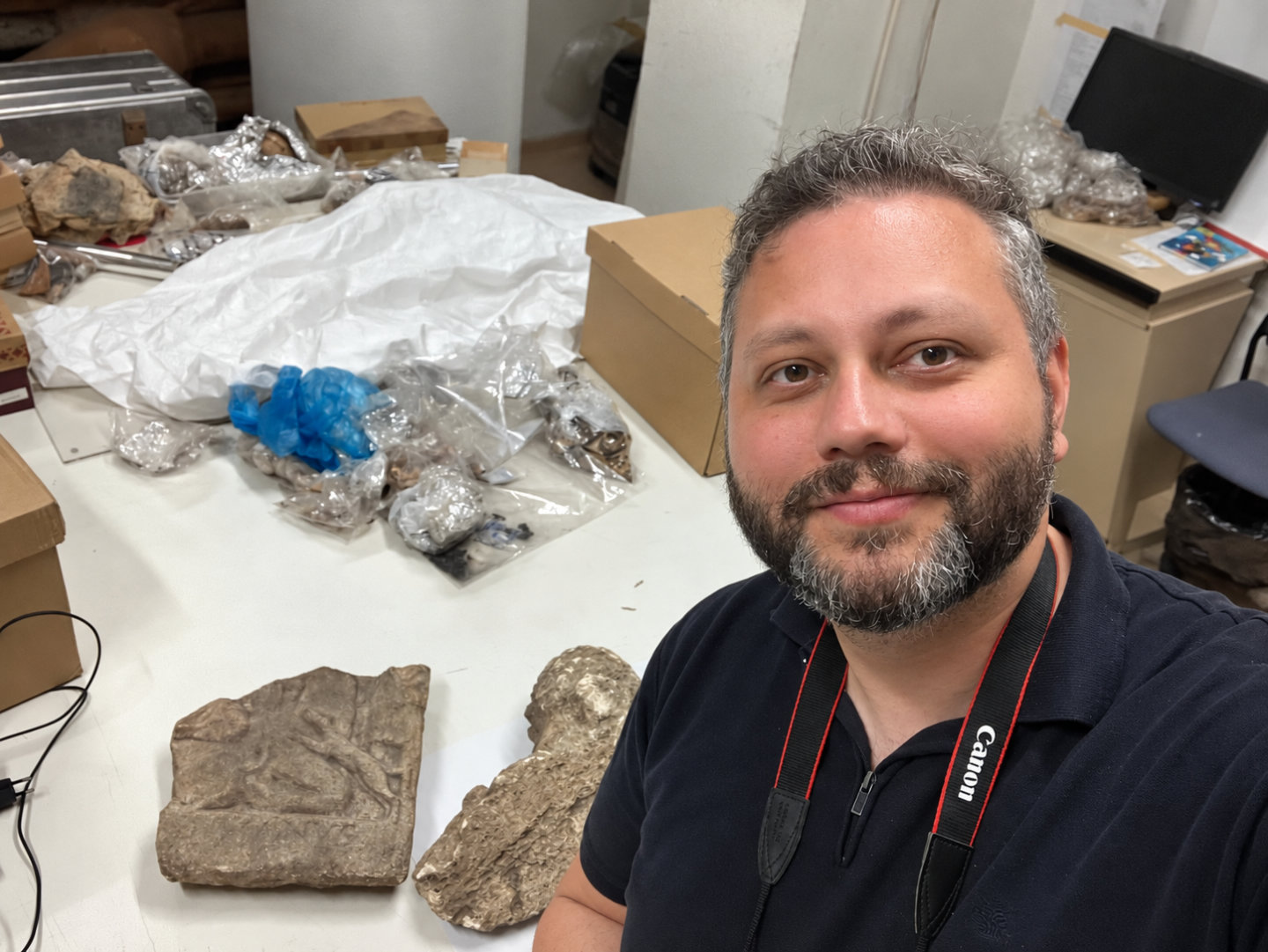
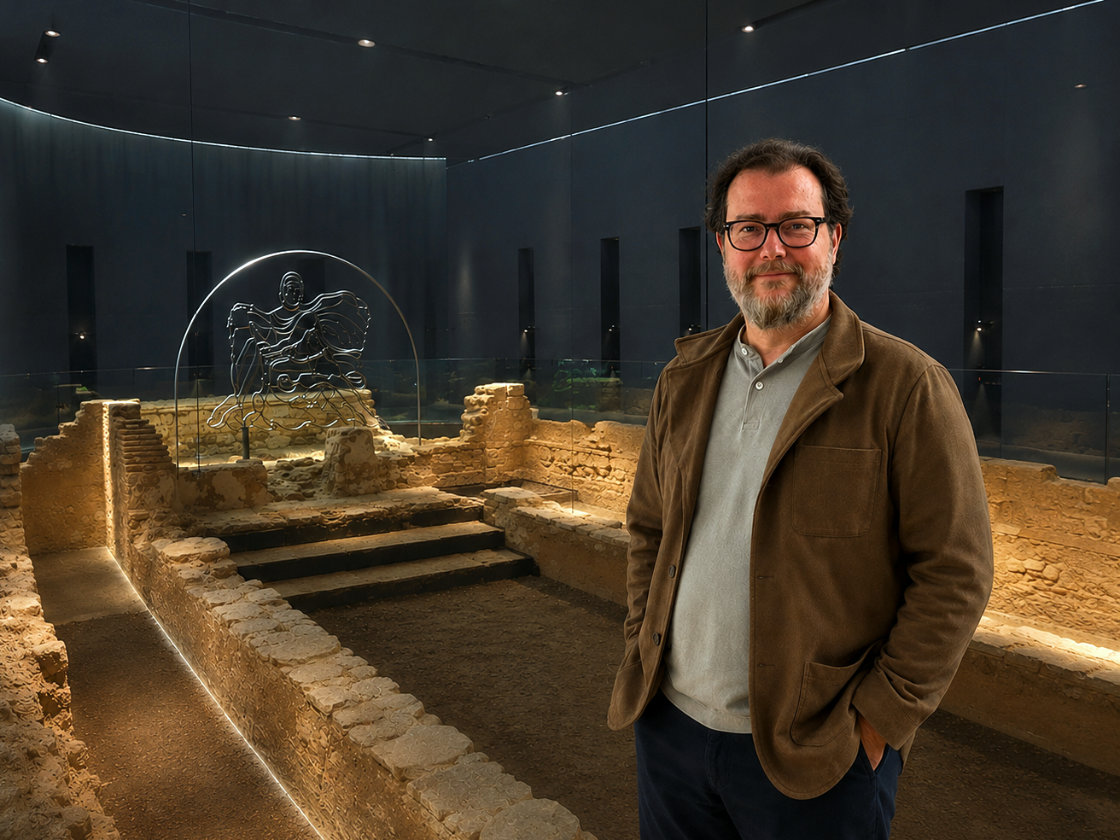
Csaba Szabó documenting the Mithraic collection at the Museum of Deva, August 2026.
Csaba Szabó
With the publication of Mithras in Roman Dacia: Local Appropriations of a Universal God, Csaba Szabó brings together decades of research into one of the richest bodies of Mithraic evidence in the Roman Empire the first English monograph devoted to the cult of Mithras in Roman Dacia. Drawing on archaeological and epigraphic material, the book explores the cult through the lens of religious glocalism, looking at the interplay between shared Mithraic traditions and the ways in which they were appropriated and reshaped by local communities.
For The New Mithraeum, I spoke with Szabó about what the Dacian evidence can tell us about Mithraism beyond its borders. We discussed the possibility of an original Mithraic theology, how the cult and its knowledge developed as it spread across the Empire, and what the surviving evidence can tell us about initiation, ritual, masculinity and even sexuality. We also return to Sarmizegetusa and its nearly one hundred fragmented reliefs, which may not all have belonged to a single Mithraeum.
Your book insists on the universal, but especially on the “glocal” dimension of Mithras. How do these two dimensions work together? What makes Mithras universal while allowing his cult to take such different local forms?
This is indeed a crucial question, which is addressed at length in the second major section of the volume, extending to almost thirty pages. The Roman cult of Mithras may have emerged during the second half of the first century CE, presumably in Rome or in an environment where the necessary intellectual knowledge, material resources, and human capital were available for a religious movement, most probably initiated by a founding group, to emerge and establish itself successfully.
One of the fundamental elements of the religious-philosophical knowledge drawn upon by this founding group, although only certain aspects of their worldview can be reconstructed with any degree of confidence, is the tauroctony: the bull-slaying by a deity depicted in exotic attire and associated with the Persian world. This act appears to have been conceived as a cosmogonic or world-generating force, presumably affecting all forms of life, including human beings, the natural world, grain, flowers, and water.
The reliefs depicting the life of Mithras contain numerous scenes from which at least a broader message concerning the universal and all-encompassing nature of the deity can be inferred. Although the several dozen subsidiary scenes vary considerably from one region to another, and were gradually modified by local communities and adapted to their own worldviews as well as to local artistic, material, and religious traditions, the tauroctony, the presence of Sol and Luna, and the two torchbearers are found on virtually every relief.
Even on the smallest Mithraic objects, such as gems only a few centimetres in size, the tauroctony is represented. The religious-philosophical essence of the mysteries of Mithras can therefore be expressed through this image, which, with all its associated meanings and messages, became a universal and widespread visual marker, a kind of cultural signifier that was very likely immediately recognisable even to the uninitiated (as suggested, for example, by Statius and, later, by Christian sources).
The tauroctony thus became part of the visual culture of the period, despite the fact that this particular form of the imagery was not known before the first century CE. The bull-slaying of Victoria-Nike, of course, had already anticipated and arguably provided an important iconographic precedent for this representation.
You are quite sceptical about the idea of a fixed Mithraic doctrine. But at the same time, you speak of a central myth, a universal message and even a religious theory. Isn’t there a tension there? How can a cult have a universal message without something resembling a doctrine?
Indeed, this is not a straightforward subject, and our sources are particularly scarce and problematic in this respect. I am convinced that the complexity of Mithras’ iconographic programme, its recurrent elements, and its rapid emergence and diffusion during the period c. 80–110 CE point to a consciously created religious movement, initiated by an individual or a group drawing upon religious and philosophical knowledge already available at the time.
The founding individual or group must have possessed a relatively well-developed theology, narrative framework, and central myth, which could even be described as a doctrine. Yet, just as the teachings of Jesus and the religious-philosophical traditions associated with him diversified during the first centuries, eventually giving rise to numerous Christian groups, Mithraic groups, as autonomous religious communities connected through relatively loose, transprovincial networks, may likewise have developed a certain degree of diversity, already perceptible in the iconography. In other words, they may have produced diverse forms of “Mithraism” that departed to varying degrees from the original theology.
To put the point more simply, and perhaps more explicitly than I did in the book: even if there was a Mithraic “doctrine”, it had already diversified after the first generation, although probably considerably less than the teachings associated with Jesus.
How, then, was Mithraic knowledge transmitted? Are we imagining texts and ritual instruction that have simply disappeared, or could Mithraism have been much less intellectually sophisticated than modern scholars sometimes want it to be?
This is a very difficult question, since we have no detailed literary or epigraphic sources that provide any account of the spread of the cult. In Dacia, as in virtually all of the provinces, the evidence consists primarily of epigraphic material (onomastics and, more rarely, narrative inscriptions), as well as mobility networks that can be inferred from the material remains and iconographic characteristics of the sanctuaries.
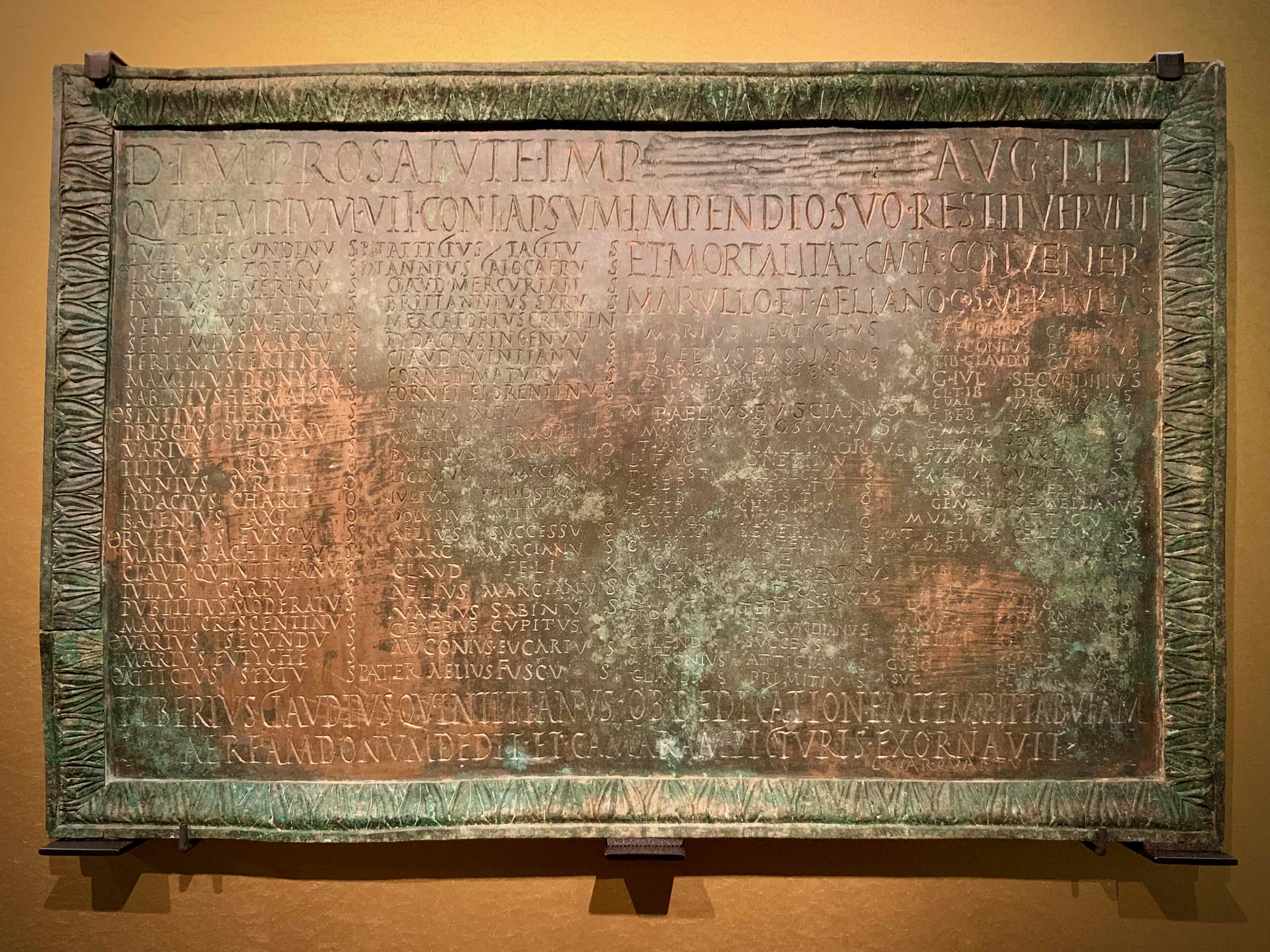
Plaque with list of Mithraic fellows from Virunum
The New Mithraeum / Andreu Abuín (CC BY-SA)
Roger Beck’s seminal studies from the late 1990s make it clear, as also demonstrated by the Virunum album and other comparable monuments, that kinship, friendship, professional connections, and other social networks constituted fundamental channels of recruitment. The mechanisms through which new members were recruited, and the extent to which they were familiar with the original myth and theological knowledge developed by the founders, may have differed considerably from one community to another. István Tóth and others imagined “prophets” of Mithraism, so-called “super-spreaders”, as in virology, who might have played a more important role than an average member. It is hard to identify such persons: two or three dedications by the same person, such as Marcus Valerius Maximianus, and their intra- or even transprovincial mobility are not enough to prove their role within a community.
There are sanctuaries in Rome and Dura-Europos, for example, whose graffiti indicate that some members possessed substantial knowledge of the theological message associated with initiation. At the same time, the epithets and divine names attested in the Pannonian and Dacian material, Arimanius, Nabarze, Deus Genitor, Transitus Dei and others, suggest that certain fundamental elements of the cult’s religious knowledge were known and transmitted within the communities.
The precise manner, mechanisms, and depth of this transmission cannot be reconstructed from the surviving evidence. Nevertheless, a glocal and locally embedded character may reasonably be assumed: a shared body of fundamental religious knowledge appears to have existed, while its transmission and interpretation could vary considerably from one local community to another.
The Mithraic initiatic grades are well attested as a model, but the archaeological and epigraphic evidence seems much less tidy. What do we actually know about how the grades worked in individual Mithraic communities?
We have only a few literary sources that mention all seven grades of initiation. Although these are, in principle, independent, they indicate a certain degree of consistency on this point. The archaeological and epigraphic evidence, however, presents a more complex picture.
Although almost all the grades are attested either epigraphically or in iconographic representations, we know very little about some of them (the nymphus and perses, for example), while the leo and pater are by far the most frequently attested. Dura-Europos has also made it clear that regional hierarchies of initiation could emerge.
On the basis of the limited evidence, it seems highly likely that initiation rituals existed and involved several grades. Their universal character, however, can almost certainly be ruled out. Here too, local and glocal particularities appear to have played a significant role, although these are difficult, if not impossible, to reconstruct from the fragmentary epigraphic evidence.
I do not share Manfred Clauss’s interpretation that these titles represented a priestly hierarchy, although I believe I am far from alone in this respect.
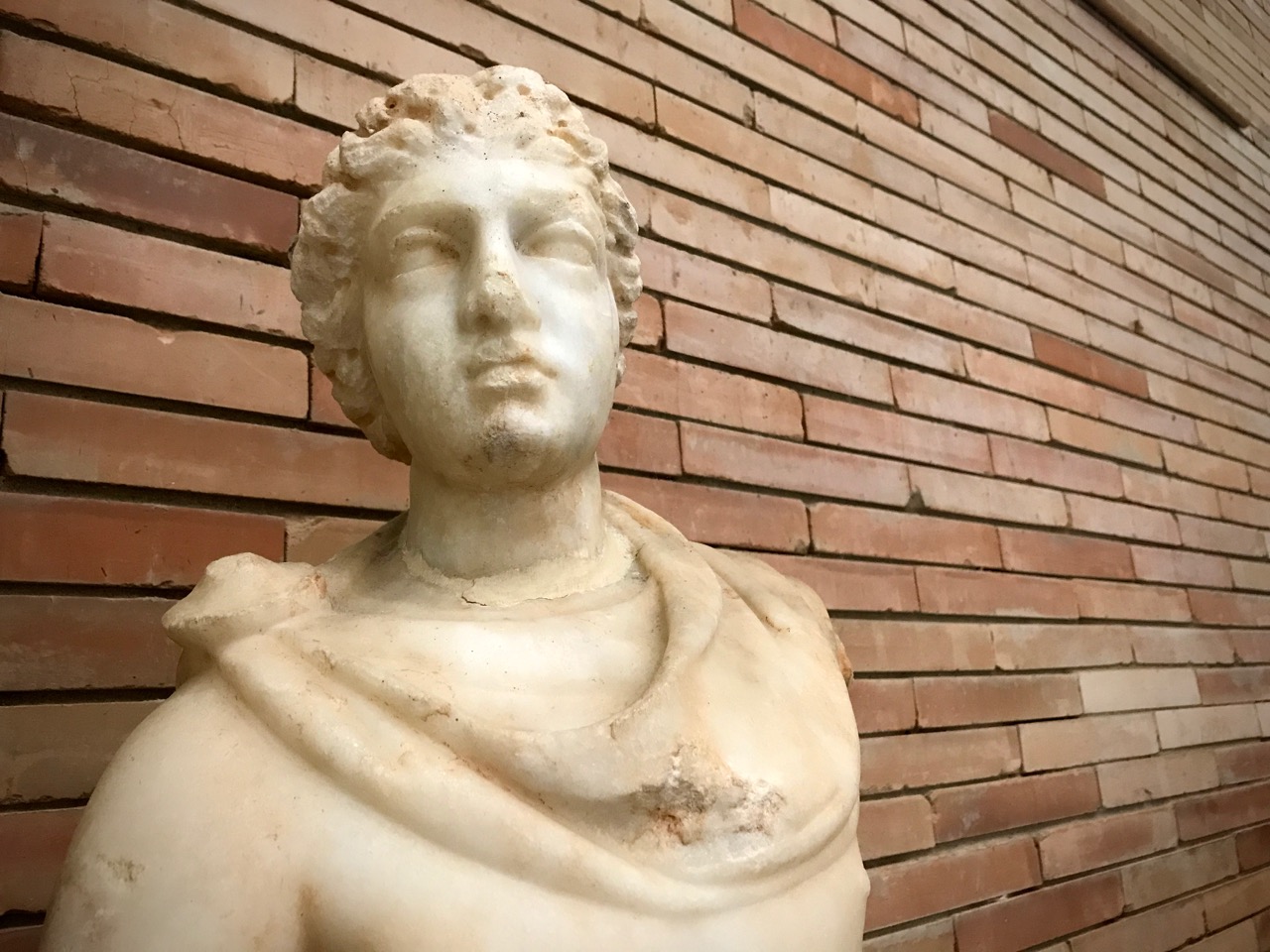
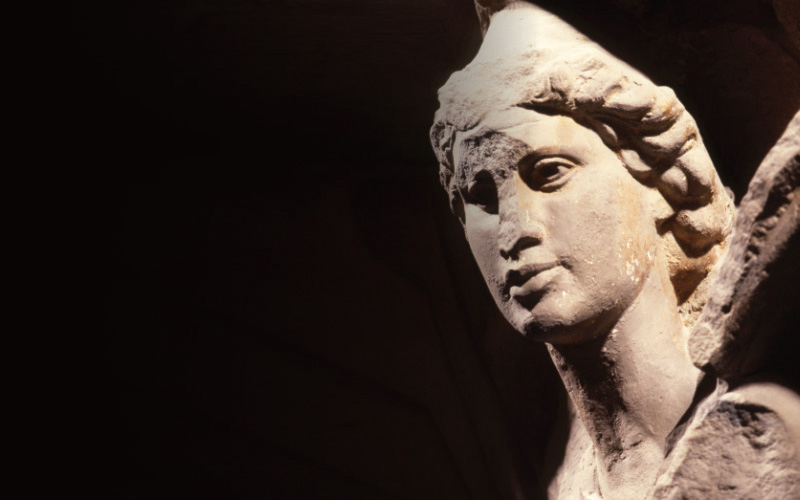
Detail of the naked figure from Mérida
The New Mithraeum / Olivier-Antoine Reÿnès (CC BY-SA)
There is another aspect of initiation that perhaps receives less attention: the body. You describe CIMRM 775, the naked figure from Mérida, as a representation of a newly initiated, “young, naked, virile man”. Should we be thinking more seriously about masculinity, nudity and even intimacy when trying to understand the Mithraic experience?
I wrote this in 2012, in a study in which I analysed the Dragu relief. Today I would perhaps formulate the argument more cautiously. I nevertheless disagree with Nock’s view that this was a cult, or religious movement, entirely devoid of eroticism and sexuality.
This theme appears nowhere explicitly in the narrative of Mithras: he has no mother, and his birth is quasi-asexual, although the stone, the earth, and the tree may be understood as symbols of feminine energy and as possessing female divine attributes. Mithras’ nudity occurs only in this context, accompanied by the frequent emphasis on his masculinity.
The rare and difficult-to-interpret evidence for initiation rituals, from Capua Vetere, Santa Prisca and elsewhere, as well as scenes preserved in the frescoes and on the Mainz krater, makes it clear that the body and nudity played an important role. Unfortunately, it is hardly possible to reconstruct what kinds of rituals were performed or what teachings they conveyed concerning masculinity and the role of men.
Surprisingly few female deities appear in the mythology of Mithras. Luna is the only constant presence; more sporadically, we encounter the Earth Mother, fertility goddesses, Venus, and perhaps Isis.
Masculinity, together with forms of subordination that appear to stand in tension with it, such as kneeling scenes, bound hands, or blindfolded eyes, may itself have constituted one of the ritual expressions of the harmony between oppositional forces that appears to have played an important role within the cult.
We tend to reconstruct Mithraic initiation as an elaborate series of ordeals, gestures and ritual actions. How much of that picture is actually securely attested, and how much results from combining fragmentary evidence from different places and periods?
Until the twentieth century, our knowledge of initiation rituals came almost exclusively from literary sources. In many cases, however, these accounts are subjective and sometimes explicitly apologetic, and therefore need to be interpreted with caution. One need only think of Tertullian’s descriptions of masked initiations, the interplay of light and darkness, lamps, banquets, and blindfolded initiates. Another author even describes an initiate being bound with chicken intestines.

Tauroctony of Sarmizegetusa
The New Mithraeum / Olivier-Antoine Reÿnès (CC BY-SA)
Archaeological traces of such practices have emerged only fragmentarily. The shackles from the Mithraeum at Sarmizegetusa, the metal crown and swords from Güglingen, the rotating reliefs from Germania and Dalmatia, osteological evidence associated with communal banquets, lamps, and pierced altars and reliefs all suggest various forms of ritual performativity, although we cannot reconstruct their precise details.
The exceptional sanctuaries at Capua Vetere, Santa Prisca, and Dura-Europos remain fundamental points of reference because of the frescoes and graffiti preserved there, complemented by regionally variable archaeological evidence from elsewhere.
Philippa Adrych’s and Nicole Belayche’s recent studies have demonstrated just how difficult it remains to identify initiation rituals, even after a century and a half of archaeological research.
For a long time Mithras was almost synonymous with the Roman army. Your Dacian material gives us customs officials, urban elites, commercial networks and soldiers. So who spread the cult of Mithras?
Richard Gordon’s seminal 2009 study had already demonstrated that the cult of Mithras was neither exclusively nor primarily military in character, although its social composition varied considerably from one province and sanctuary to another. The evidence from Dacia and the Danubian region shows that the military played an important role, but was not the only social group involved.
Several sanctuaries in Dacia appear to have been associated with military communities. In Apulum, for instance, the so-called Oancea Mithraeum was located in the canabae. The evidence suggests that military communities only rarely interacted with civilian cult communities within the same sanctuary. In most cases, however, Mithraic communities appear to have included merchants, customs officials, and other members of the civilian population.
The Dacian evidence thus reflects a broader pattern across the Roman Empire: Mithras worshippers came from a broad range of social strata and occupational groups. This even included members of the senatorial elite, as demonstrated by Marcus Valerius Maximianus.
Sarmizegetusa may be the most spectacular example of how uncertain our reconstructions can become. Almost a hundred reliefs helped create the image of an enormous, exceptionally decorated Mithraeum. But what if they didn’t all belong to that Mithraeum at all? What do you now think most likely happened there?
The Mithraeum at Sarmizegetusa, discovered in 1882, and its extraordinarily rich assemblage of altars, columns, statues, and nearly one hundred reliefs deliberately broken into small fragments constitute perhaps the largest concentration of Mithraic material ever recovered from a single sanctuary in Europe.
Unfortunately, the archaeologists who excavated the site had no opportunity to document it in detail. The area is now occupied by houses and adjoining courtyards, making further archaeological investigation virtually impossible.
In the volume, I republish a study from 2024 in which I argued that it is difficult to envisage such an enormous quantity of material as the decoration of a provincial sanctuary, even one as large as the famous Mithraeum III at Carnuntum. The quantity seems disproportionate to what could reasonably have belonged to a single cult community.
Several explanations are possible: material from several sanctuaries may have been brought together there at the end of the third century; we may have uncovered the remains of a workshop; or the reliefs may have been collected as raw material for lime production. I consider the first the most likely, since the evidence consists of a deliberately accumulated assemblage of relief fragments deposited in a clearly defined pit.
In the absence of new excavations, it is unlikely that we will determine much more about the nature and history of this assemblage.
You are now leading the MTA–SZTE Mithras Research Group. Could you tell us a little about the project and what you hope to achieve with it?
The research project was launched at the end of 2025, funded by the Hungarian Academy of Sciences and hosted by the Department of Religious Studies at the University of Szeged, and is expected to run until the end of 2030. Its primary aim is to comprehensively document the Mithraic evidence from Pannonia Superior, Pannonia Inferior, Moesia Superior, Moesia Inferior, and Dacia, using new photography, 3D photogrammetry, and video documentation. We will visit approximately 50–60 museums in six countries in Central-Eastern Europe, making this the largest fieldwork documentation project since Vermaseren’s paradigmatic work.
The project also incorporates the newly discovered Mithraeum at Aquincum, excavated in 2023, in collaboration with the archaeological team responsible for its excavation. The research team includes epigraphists, archaeologists, an art historian, a scholar of religion, a classical philologist, information specialists, and museum professionals.
In addition to documenting and cataloguing the material remains, the project will create two digital databases: a comprehensive bibliography of scholarship on the cult of Mithras and a detailed, searchable catalogue of the Mithraic material evidence from the Danuvian provinces.
Several volumes on the cult of Mithras in Pannonia are also planned, and a number of studies are already forthcoming. We are also planning a travelling poster exhibition to be hosted by regional museums between 2027 and 2029. The results of the project can also be followed on our Facebook page and on our website.
And finally, beyond the project itself, what’s next for you? Are there other publications or longer-term plans already taking shape?
The project will occupy me fully until 2030. In addition to my regular teaching obligations, conferences, and writing, it entails a considerable amount of fieldwork. During this period, I simply do not have the capacity to take on much else. Researchers are human beings too, and we all too often forget the personal and financial price we pay for a relentlessly demanding lifestyle and the pressures of academic life.
Over the next four to five years, I expect to publish a few articles each year together with members of my research team. An English-language monograph on the cult of Mithras in Pannonia is currently in preparation in collaboration with the Leibniz Institute of Archaeology in Mainz, as part of a Humboldt Research Fellowship. There will also be a detailed monograph in Hungarian on the subject.
One of my longer-term ambitions is to develop and submit a European Research Council project proposal.